
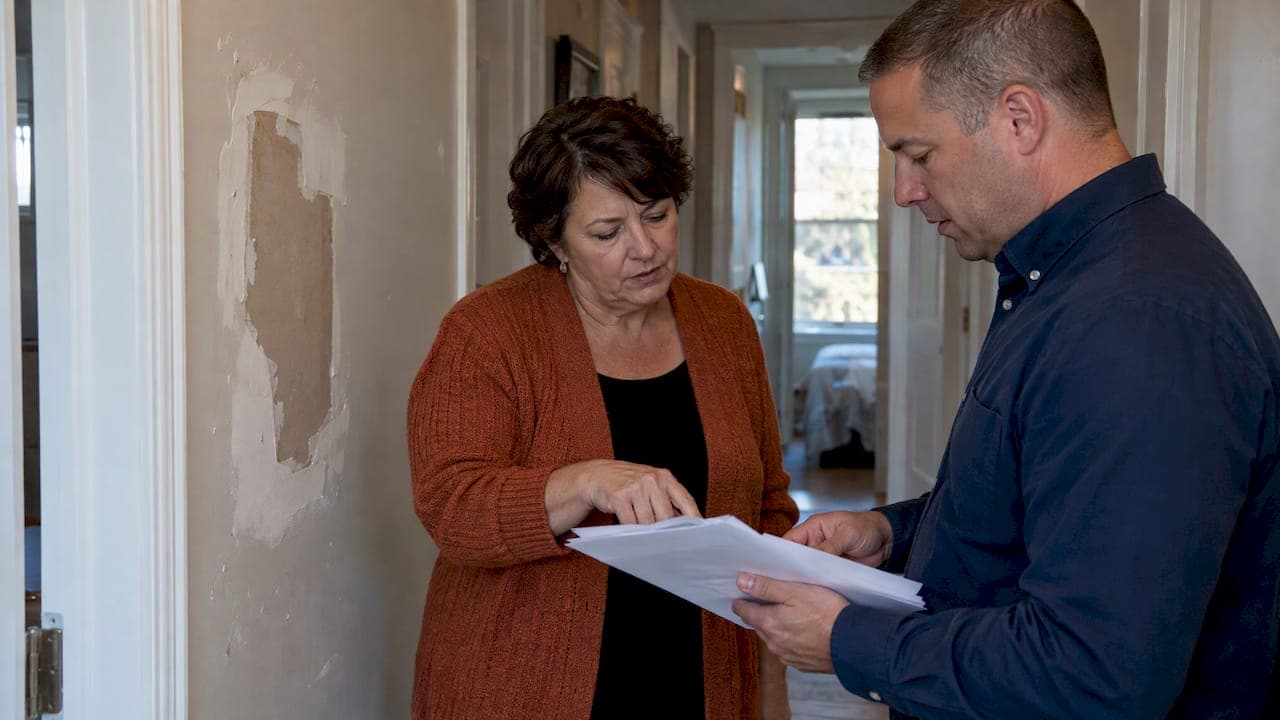
An escrow holdback for repairs is money set aside at closing, usually from the seller's proceeds, and kept by a neutral third party until agreed repairs are finished and approved. It lets a sale close on time when work remains undone. It also costs you more than the repair bill, takes extra paperwork, and many lenders restrict it. If your house needs real work, you have three paths: repair first, close with a holdback, or sell as-is. This guide walks through each so you can pick the one that fits your timeline and your wallet.
TL;DR
- A holdback parks part of your sale proceeds in escrow until repairs are completed and signed off. It is a closing tool, not a discount.
- Lenders often require more than the repair estimate. Guidelines in our research point to 110% to 200% of the estimate, so more of your money is tied up than the work will cost.
- Holdbacks suit minor, non-structural fixes. Roof, foundation or safety problems usually push the deal toward repairs before closing or a cash buyer.
- If you do not want to manage contractors, bids and deadlines, selling as-is to a cash buyer removes the holdback entirely.
Table of Contents
- What an escrow holdback actually is
- How the money is calculated
- Rules that limit holdbacks
- Step by step: setting up a holdback as a seller
- The real cost of a holdback
- When a holdback is the wrong tool
- Repair, hold back or sell as-is
- Our perspective: what we see with sellers
- Selling to a cash buyer instead
- Want a number without the repairs?
- Checklist before you agree to any holdback
- FAQ
- Sources
What an escrow holdback actually is
At closing, the title company or escrow agent holds a set amount instead of paying it all out. When the repairs are done and verified, the money goes to the contractor or back to the party who funded it. Rocket Mortgage describes it as money kept in a specific account after closing to guarantee that necessary repairs or unfinished items are completed by a strict deadline.
In most deals the seller funds it. Quicken Loans notes that the extra money is typically collected from the seller and refunded once the problem is resolved and approved.
Common reasons for one:
- Winter or wet weather blocks exterior work such as paint, grading or a deck repair.
- A contractor cannot start before the closing date.
- The buyer's lender requires a fix, but there is no time to do it.
- A minor item turned up in the appraisal or inspection a few days before closing.
A holdback is not the same as the escrow account on a mortgage. The recurring tax and insurance accounts are governed by RESPA's escrow rules, which cap how much a servicer can collect as a cushion at one-sixth of estimated annual payments, according to CFPB examination procedures. A repair holdback is closer to a custom agreement written into the sale, so the terms depend on the contract and the lender.
How the money is calculated
The figure is rarely just the repair estimate. Lenders add a cushion for overruns.

MassHousing's guidelines show the typical lender approach: a clear scope of work, multiple bids, and in some cases a signed contractor agreement before closing is approved. Another lender resource, AmeriSave's glossary, says most lenders want 120% to 150% of the estimated repair costs.
A worked example, using a hypothetical $8,000 bid and a 150% requirement:
| Item | Amount |
|---|---|
| Contractor bid | $8,000 |
| Holdback at 150% | $12,000 |
| Actual final invoice | $8,400 |
| Released to contractor | $8,400 |
| Returned to the funding party | $3,600 |
You get the unused part back, but only after the work is completed and approved. Until then, $12,000 of your proceeds is not in your account. If you need that money to pay off another house, cover a move or settle a lien, that delay matters.
Rules that limit holdbacks
The loan type of the buyer shapes what is possible. Figures change, so check them with the buyer's lender before you sign.
- Conventional loans: AmeriSave reports that Fannie Mae-backed loans limit holdbacks to 10% of appraised value, with repairs finished within 180 days.
- FHA loans: Mortgage Research explains that an FHA repair escrow covers up to $5,000 in minor repairs, the home must be habitable without them, and the work happens after closing.
- Health and safety items: Structural, foundation or roof problems generally rule out the FHA repair escrow route, as the HUD handbook treats non-critical repairs differently from items that threaten habitability.
- Some lenders ban them: One wholesale lender's policy says that every effort should be made to finish repairs before loan closing, with a holdback allowed only as an exception.
Release usually needs proof. According to the MassHousing guidelines, funds are generally released after repairs are confirmed complete, often with a final invoice and a completion certificate such as Fannie Mae Form 1004D. Deadlines are often around 60 days under that program.
A holdback can also make a deal harder. Rocket Mortgage points out that it requires extra legal agreements and documentation, and a lender who suspects a safety or habitability problem may refuse it.
Step by step: setting up a holdback as a seller
- Document the problem. Get photos and a written description of each item. A pre-listing inspection helps: the National Association of Realtors recommends knowing your home's condition early so a buyer's inspection does not spring surprises and force renegotiation.
- Collect bids. Get at least two or three written estimates from licensed contractors. For a small job, a local handyman can give you a scoped quote. If you are in central Illinois, a handyman walkthrough service in Peoria is one example of the kind of local pro who can walk the house and write up what needs doing.
- Ask the buyer's lender first. Confirm whether they allow a holdback, the percentage they require, and the completion deadline.
- Write it into the contract. Use an addendum that names the repairs, the amount, who holds the funds, the deadline and who approves the work. Have your agent or a real estate attorney review it.
- Choose the escrow holder. Typically the title company or closing attorney.
- Finish and prove it. Keep invoices, photos and any completion certificate the lender asks for.
- Get the balance. Once approved, any unused funds are returned under the agreement terms.
The real cost of a holdback
The holdback line item is not the only price. Consider:
- Cushion money tied up. As shown above, you may wait on an extra 10% to 100% of the estimate.
- Your time. Someone has to schedule contractors and chase inspectors, often after you have moved.
- Overrun risk. If the real cost exceeds the held amount, the contract usually decides who pays the difference. Write that down.
- Deal risk. More paperwork gives the buyer or lender more places to walk away.
- Buyer discounts anyway. Realtor.com notes that buyers often overestimate repair costs, so a fixer-upper tends to sell at a markdown even when the work is modest. Professional estimates help counter that.
When a holdback is the wrong tool
A holdback works best for a short, specific list of minor jobs with a buyer using a program that allows it. It is a poor fit when:
- The house has structural, foundation, roof, mold, termite, asbestos or septic problems. Lenders often will not finance these. Realtor.com says many conventional lenders disqualify properties with major structural, roof or foundation issues, which narrows your buyers to cash investors.
- The house is vacant, damaged by fire or has code violations.
- Tenants are living in it and access is difficult.
- You are facing foreclosure, probate or a lien payoff and cannot wait for funds.
- You live in another state and cannot oversee contractors.
In those cases the real choice is between repairing before you list, or selling as-is.
Repair, hold back or sell as-is
| Repair before listing | Escrow holdback | Sell as-is for cash | |
|---|---|---|---|
| Upfront cash from you | Yes | No, but proceeds held | No |
| Works for major defects | Yes, if you can fund it | Rarely | Yes |
| Lender approval needed | Only for the buyer's loan | Yes | No lender in a cash purchase |
| Your time and oversight | High | Medium to high | Low |
| Sale price | Highest potential | Mid to high | Lower, with no repair cost, commissions or fees |
The tradeoff with as-is is price. We have broken down the numbers in our guides on when a 15% to 25% as-is discount nets sellers more and when a discount makes a cash sale smarter. Run your own numbers: add repair costs, carrying costs such as taxes, insurance and utilities while you wait, agent commissions, and the risk that a buyer's financing falls through. Then compare that to a firm cash number.
Our perspective: what we see with sellers
We buy houses, land and small apartment buildings directly from owners, for cash, in as-is condition. Most owners who contact us have already tried the repair route in their heads and found it heavy. A holdback sounds like a clever middle path, but it still asks you to hire contractors, wait for a lender and trust a buyer's financing.

Our view is simple. If your repairs are small, cheap and the house is otherwise in good shape, a traditional sale with a holdback or a quick fix can bring the highest price. If the house is vacant, inherited, tenant-occupied, behind on payments or needs work you cannot afford or manage, certainty is worth more than squeezing out the last dollar. We explain the offer in numbers, charge no commissions or fees, let you pick a closing timeline, and keep the conversation confidential without pressuring you.
We would rather you make the right decision than sell to us when a repair-and-list approach suits you better. Work out the net on each path before you choose.
— Alek
Selling to a cash buyer instead
With a cash purchase there is no lender underwriting the property, so no appraisal-driven repair demands and no holdback to negotiate. The buyer inspects, makes an offer for the house as it stands, and you choose a closing date. Our write-up on how inspections work in a cash sale covers what to expect, and how cash sale escrow works explains the closing side.
If your problem is specific, these guides may help: selling a home without repairs, a house with mold, termite damage, asbestos, a failed septic system or a fixer-upper in New Jersey.
Want a number without the repairs?
If your house needs work and you would rather skip contractors, lender conditions and held-back proceeds, tell us about the property. We buy nationwide, with a strong focus on New Jersey, Texas, Florida and Tennessee. See how selling as-is to us works, or start with our Cash Offer Program if foreclosure is part of the picture.
Checklist before you agree to any holdback
- Is the buyer's loan type one that allows it, and at what percentage?
- Are the repairs minor and non-structural?
- Do you have two or three written bids?
- Is the completion deadline realistic for your contractor and the season?
- Who pays if the work costs more than the amount held?
- Who approves the finished work, and what proof is needed?
- Can you live without those proceeds until release?
If you answer no to more than one, price the as-is route before signing.
FAQ
Who pays for an escrow holdback for repairs?
Usually the seller, because the funds come out of sale proceeds at closing. In some negotiated deals the buyer funds part of it, or the price is lowered instead. The purchase contract and the lender's rules decide, so get it in writing.
How long does the seller wait to get holdback money back?
It depends on the deadline and the proof required. Some programs set around 60 days, and Fannie Mae-backed loans can allow up to 180 days according to AmeriSave. Release follows final invoices and an approved completion certificate, so delays in either extend the wait.
Can I use a holdback if my house needs major repairs?
Often not. Structural, foundation, roof and safety issues usually disqualify a property from FHA repair escrows, and many conventional lenders will not accept them either. Major repairs generally have to be completed before closing, or the house sold to a cash buyer.
Is a holdback the same as a repair credit?
No. A credit lowers the price or gives the buyer cash at closing, and the buyer decides what to do with it. A holdback keeps money in escrow and releases it only when the repairs are verified. Ask your agent or attorney which one the buyer's lender will accept.
Sources
- Rocket Mortgage: Escrow holdback
- Quicken Loans: Escrow holdback
- MassHousing escrow holdback guidelines
- AmeriSave: Escrow holdback glossary
- Mortgage Research: FHA escrow holdback
- HUD handbook 4435.01 REV-1
- Cardinal Financial escrow holdback policy
- CFPB RESPA examination procedures
- Realtor.com: Sell your house even if it needs fixing
- NAR: Consumer guide to preparing to sell your home