
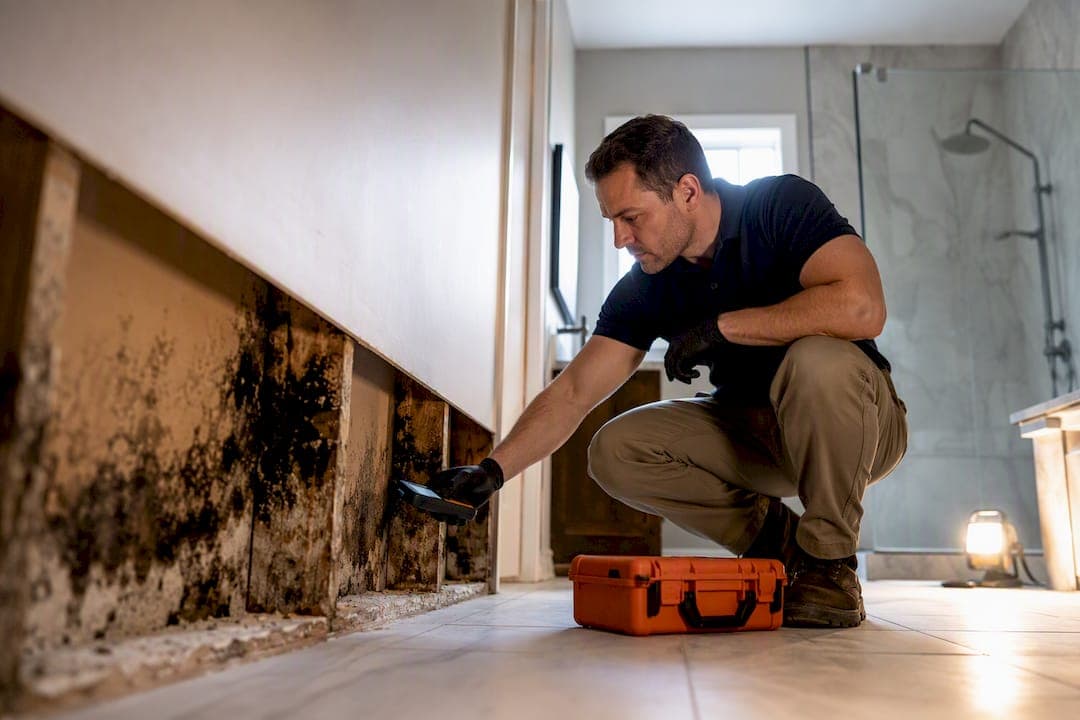
Yes, you can sell a house with mold. You must disclose what you know, but you have three practical paths: remediate and list on the open market, sell as-is (or offer a repair credit), or sell to a cash buyer who takes the problem off your hands. Which one makes sense depends on the scope of the mold, your equity, and how fast you need to close. Financing rules will shape your buyer pool no matter which route you pick.
TL;DR:
- Remediating small, contained mold issues allows FHA and VA loan eligibility, but extensive repairs are better sold as-is or with a credit.
- FHA and VA appraisers typically flag visible mold as a health risk, which can delay or block loans unless addressed with proper documentation.
- Professional remediation costs can range from a few hundred dollars for small spots to over five figures for extensive or HVAC-related mold.
- Sellers must disclose known mold or past remediation on the appropriate forms, supported by documentation to protect against future legal issues.
- Selling to a cash buyer is often the fastest and simplest route for homes with structural or water damage that are too costly or complex to remediate beforehand.
Table of Contents
- Which Selling Option Fits Your Situation?
- How Mold Affects Home Value, Financing, and Your Buyer Pool
- What Remediation Actually Costs and How Long It Takes
- Do You Have to Disclose Mold When Selling a House?
- Three Paths to a Sale: What Each One Actually Requires
- Your Pre-Sale Decision Checklist
- Why Sellers Choose a Cash Sale for Mold-Affected Homes
- Sell Your Mold-Affected House As-Is, Without the Repair Bill
- Where to Verify the Rules and Get Professional Guidance
- Where Sellers Get This Wrong
- Sources
- FAQ
Which Selling Option Fits Your Situation?
Most sellers land in one of three lanes once they know the size and cost of the mold problem. Here's how to sort yourself quickly.
- Remediate then list fits homes where the mold is contained (a bathroom ceiling, a small closet, one basement wall) and the repair cost is small relative to your equity. This path keeps the door open to buyers using FHA or VA loans, who often can't close on a home with visible active mold.
- Sell as-is or offer a credit makes sense when the repair bill is large, you're selling to an investor-heavy market, or you need to close faster than a full remediation and re-inspection cycle allows. You disclose the issue, price accordingly, and let the buyer decide how to handle it.
- Sell to a cash buyer is the practical move when you don't have the cash for repairs, the mold traces back to structural or water damage you can't quickly fix, or you're dealing with a house you inherited, a tenant situation, or a looming foreclosure deadline. Cash buyers typically purchase the property in its current condition and skip the inspection back and forth entirely.
None of these paths require you to hide anything. The choice is really about who absorbs the repair cost and how much time you're willing to spend getting there.
How Mold Affects Home Value, Financing, and Your Buyer Pool
Buyers discount for mold because they're pricing in two things at once: the actual repair bill and the uncertainty of not knowing how far the damage extends behind the walls. That uncertainty premium is often bigger than the remediation cost itself, especially when a buyer's agent flags "possible additional damage" in the inspection notes.
Financing narrows your buyer pool fast. FHA and VA appraisers are instructed to flag visible mold as a health and safety issue, and loans typically can't close until it's addressed. That knocks out a meaningful slice of buyers in many markets, since FHA and VA loans account for a large share of first-time and veteran purchases. Conventional loan appraisers have more discretion, but many will still require a repair addendum or hold funds in escrow until remediation is verified.
The numbers that actually move a deal: a home with a documented, contained mold issue and a clearance report often sells within a normal timeframe and price range. A home with undisclosed or unresolved mold that surfaces during inspection frequently sees the deal renegotiated, delayed by weeks, or walked away from entirely, particularly with FHA and VA buyers who have no flexibility on the financing side.
A house with mold behind a leaking shower pan might need $1,500 in repairs but scares off three buyers before the seller drops the price $10,000 to reflect the risk they're taking on. That gap between real repair cost and buyer discount is where most negotiating friction lives.
What Remediation Actually Costs and How Long It Takes
The EPA's guidance on mold cleanup sets a useful benchmark: homeowners can typically handle cleanup themselves for moldy areas under about 10 square feet. Beyond that, or if the mold has reached your HVAC system or structural framing, you're looking at a professional job.
Cost ranges vary widely depending on scope:
- A small, contained spot (a shower corner, a window sill) often runs a few hundred dollars in materials if you do it yourself, following EPA cleanup steps.
- A single room with drywall and insulation removal typically falls into a few thousand dollars once you bring in a licensed remediation company.
- Whole-house remediation, especially anything involving HVAC contamination or extensive black mold, can climb into five figures, particularly when the source is long-term water intrusion.
Pro Tip: Get a written scope of work before any remediation starts. Contractors sometimes price the visible mold and leave HVAC or crawl space contamination out of the quote, which turns into a second invoice right when you're trying to close.
A full professional remediation contract usually includes containment barriers, HEPA air filtration, safe disposal of contaminated materials, and a post-job clearance test confirming the space is clean. That clearance documentation matters more than almost anything else in this process. The EPA notes there's no federal standard for acceptable indoor mold levels, which is exactly why a clearance report from a certified inspector is what actually reassures a buyer, their agent, and their lender.
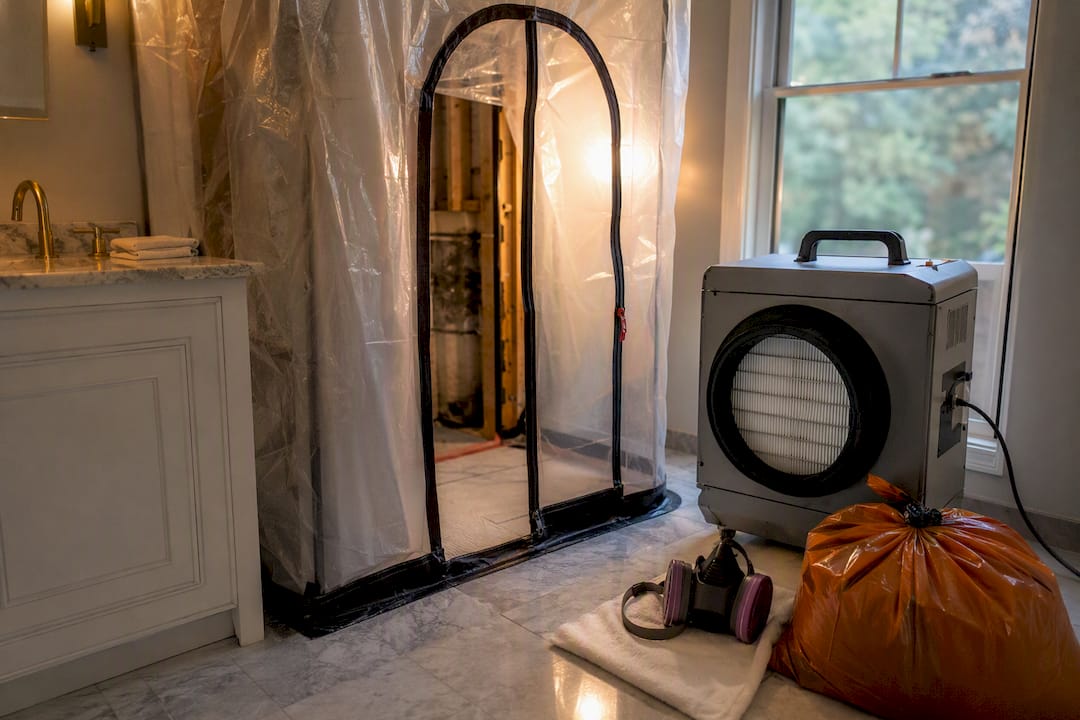
Timeline-wise, expect roughly one to two weeks for a contained job (inspection, moisture source repair, remediation, clearance test) and three to six weeks or more for anything involving structural drying, HVAC cleaning, or repeated moisture events.
Do You Have to Disclose Mold When Selling a House?
There's no single federal law requiring mold disclosure, but nearly every state requires sellers to disclose known material defects, and mold almost always qualifies. Your state's seller disclosure form is the legal document that matters here, and skipping a "yes" box you know should be checked is how sellers end up in court after closing.
- Disclose what you know, even after cleanup. If you had a leak, treated visible mold, or had a remediation company out to your house, that goes on the disclosure form. Buyers in most states can still ask questions about past issues, and a paper trail showing you handled it properly protects you far more than silence does.
- Check your state's specific disclosure form language. Some states use broad "material defect" categories that include water damage and mold; others list mold explicitly. HUD's guidance for sellers dealing with environmental issues outlines the kind of documentation buyers and their lenders will expect to see regardless of your state's exact form wording.
- Talk to a real estate attorney if the history is complicated. Multiple remediation attempts, an insurance claim, a lawsuit with a contractor, or a tenant dispute involving mold are all situations where an hour with an attorney is cheaper than a post-sale lawsuit.
- Build a documentation file before you list. Keep photos of the affected area before and after treatment, itemized contractor receipts, the original inspection report that flagged the mold, and the clearance test results. This file does double duty: it satisfies disclosure obligations and it's your best negotiating tool when a buyer's inspector finds evidence of past treatment and starts asking questions.
Disclosure isn't optional and it isn't really the risky part people assume it is. The risk is in disclosing vaguely, or not backing up your disclosure with paperwork, because that's what turns a routine "yes, we had mold, here's proof it's resolved" into a "what else weren't they telling us" conversation with a plaintiff's attorney.
Three Paths to a Sale: What Each One Actually Requires
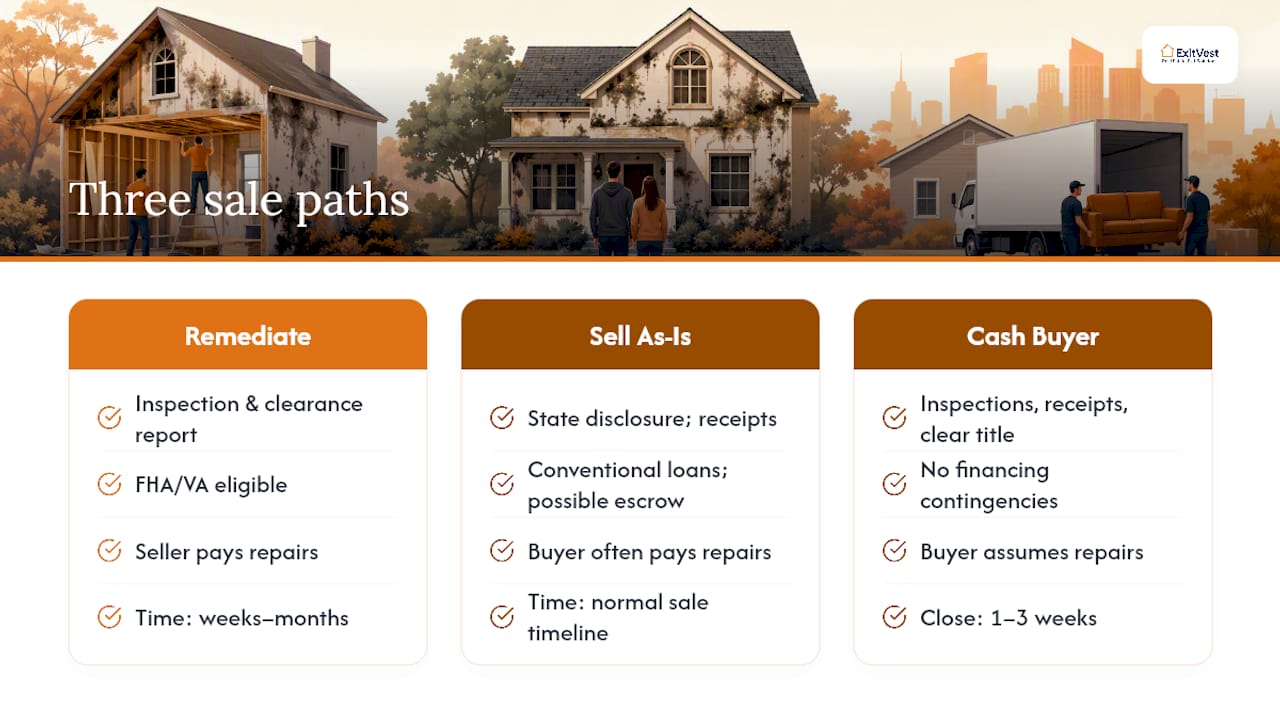
Remediate then list. Start with an inspection to confirm scope, then fix the moisture source (leaky pipe, roof, grading issue) before any mold treatment, since remediating without stopping the water just buys you a repeat problem. Hire a licensed remediation company for anything over the EPA's 10-square-foot DIY threshold, get a written clearance report when the job's done, and keep every receipt. Listing with that documentation in hand lets your agent market the house to the full buyer pool, FHA and VA included.
Sell as-is or offer a credit. This means disclosing the mold clearly on your state's form and either pricing the home to reflect the repair cost or negotiating a credit at closing so the buyer handles remediation themselves. Credits are common with conventional buyers but conventional lenders may still require an escrow holdback until the work is verified complete, so confirm that with the buyer's loan officer before you agree to terms.
Sell to a cash buyer. This route skips financing contingencies entirely, which is exactly why sellers with unresolved mold gravitate toward it. Expect an offer below full retail value that reflects the buyer's own repair cost and risk, but also expect a faster close, often in one to three weeks, and no lender-driven inspection demands. You'll still want basic documentation ready: past inspection reports, any remediation receipts, and a clear title.
Your Pre-Sale Decision Checklist
Work through this before you sign with an agent or call a buyer.
- Compare repair cost to your equity. If remediation costs more than 10% of your expected sale price, as-is or cash sale routes usually make more financial sense than fronting the repair.
- Identify your likely buyer type. A starter-home price point in most markets skews toward FHA buyers, which means unresolved mold will actively shrink your pool. Higher-end homes see more cash and conventional buyers with flexibility.
- Factor in urgency and health concerns. Active water intrusion, a tenant with respiratory complaints, or a foreclosure deadline all push toward the faster paths.
- Screen contractors properly. Ask for their IICRC certification, proof of liability insurance, a written scope of work, whether clearance testing is included, and what warranty covers reoccurrence.
- Screen cash buyers and investors. Ask for proof of funds, a sample purchase agreement, their typical closing timeline, and whether any fees come out of your proceeds.
Pro Tip: If a contractor won't put clearance testing in writing as part of the contract, that's your signal to call someone else. Verbal promises about "checking it's clean" don't help you at closing or in a disclosure dispute later.
Walk away from any buyer who won't provide proof of funds or pressures you to skip a title search, and loop in a real estate attorney if a contractor's invoice doesn't match what was verbally promised.
Why Sellers Choose a Cash Sale for Mold-Affected Homes
Some property buyers work with owners facing decisions about houses with mold tied to roof leaks, foreclosure deadlines, or inherited properties that are difficult to fix up. These sellers usually aren't choosing between "remediate perfectly" and "sell as-is." They're choosing between spending months and thousands of dollars chasing a financed buyer, or closing quickly and moving on.
When a property buyer evaluates a property with mold or water damage, the offer often reflects the home's condition as it stands, without requiring the seller to fix the moisture source, treat the mold, or produce a clearance report first. Sellers get a cash offer and a proposed closing timeline built around their situation, whether that's fast because of a foreclosure deadline or flexible because probate is still working its way through the courts.
Sell Your Mold-Affected House As-Is, Without the Repair Bill
If remediation costs, financing headaches, or a buyer pool that keeps shrinking are making a traditional sale feel impossible, there's a more direct route. Some property buyers purchase houses, land, and small apartment buildings directly from owners for cash, in as-is condition, without requiring repairs, remediation, or a clearance report first. There may be no agent commission and no financing contingency to worry about, because the buyer is not relying on a bank to approve the property's condition.

This path tends to fit sellers dealing with foreclosure timelines, inherited homes nobody wants to renovate, problem tenants complicating a listing, or mold tied to water damage that's simply too expensive to chase down before selling. If you're weighing this option, gather what you have: photos of the affected areas, any past inspection or remediation reports, and utility or repair receipts if you have them. None of that is required to get an offer, but it helps speed up the process once you're ready to move forward. You can see how the process works from request to closing and get a sense of what a cash offer on your specific property might look like.
Where to Verify the Rules and Get Professional Guidance
A few government and industry sources cover the technical and legal ground better than any single article can, and they're worth bookmarking if you're mid-decision.
The EPA's mold cleanup guidance is the baseline for understanding DIY thresholds, cleanup steps, and when a professional is necessary. The CDC's page on mold and health explains the health effects that drive both buyer anxiety and your own decision about how urgently to act. For sellers specifically, HUD's guidance on environmental issues walks through documentation expectations that align closely with what most state disclosure forms ask for.
On the contractor side, the IICRC sets the certification standard most reputable remediation companies carry, and it's a fair question to ask any contractor bidding your job. Before you assume insurance will cover any part of the remediation bill, review the Insurance Information Institute's overview of homeowners coverage, since most policies exclude mold caused by neglect but may cover it when tied to a sudden, covered event like a burst pipe.
Where Sellers Get This Wrong
Most advice on selling a house with mold treats it as a binary: fix it perfectly or hide it and hope. Neither reflects how this actually plays out. The sellers who get burned aren't the ones who disclose mold, they're the ones who disclose it vaguely, without documentation, and then get treated as if they were hiding something even when they weren't.
The other mistake I see constantly is sellers assuming remediation is always the "responsible" choice and a cash sale is somehow cutting corners. That's backwards. A cash sale with full disclosure of a known issue is just as honest as a remediated listing, and it's often the more rational choice when the repair math doesn't work. Spending $15,000 to remediate a house you're selling for $180,000, when a cash buyer will take it as-is for a fair discount and close in two weeks, isn't corner cutting. It's math.
Where I'd push back hardest on conventional wisdom: the EPA's 10 square foot DIY threshold gets treated like a hard legal line, and it isn't one. It's a practical guideline for homeowners doing their own cleanup safely, not a certification that a house under that threshold is "clean enough" for a buyer's lender. Appraisers and buyers don't care about square footage; they care about whether the moisture source is fixed and whether there's paperwork proving it. Chase the documentation, not the threshold.
— Alek
Sources
FAQ
Can a Seller Sell a House With Mold?
Yes. Nearly every state allows the sale as long as the seller discloses known mold on the required disclosure form, and buyers remain free to accept the risk, negotiate a credit, or walk away.
Can I Sue if I Bought a House With Mold?
Buyers can potentially sue if a seller knowingly failed to disclose mold that was a material defect, which is exactly why documented disclosure and remediation receipts matter so much for sellers trying to protect themselves.
How Much Mold Can Affect Selling a House?
Even mold in an area smaller than the EPA's 10-square-foot DIY threshold can affect a sale if it's visible during an appraisal, since FHA and VA loans commonly require it addressed before closing regardless of the affected square footage.
Do You Have to Disclose Mold Remediation When Selling a House?
In most states, yes. Past remediation, leaks, and mold history typically belong on your state's seller disclosure form even if the issue has been fully resolved, since HUD's guidance treats this kind of environmental history as material information for buyers.
Is a Cash Sale a Good Option if I Can't Afford Remediation?
For many sellers facing a large repair bill, foreclosure deadline, or an inherited property, selling to a cash buyer like Exitvest avoids the remediation cost and financing contingencies entirely, trading some sale price for speed and certainty.