
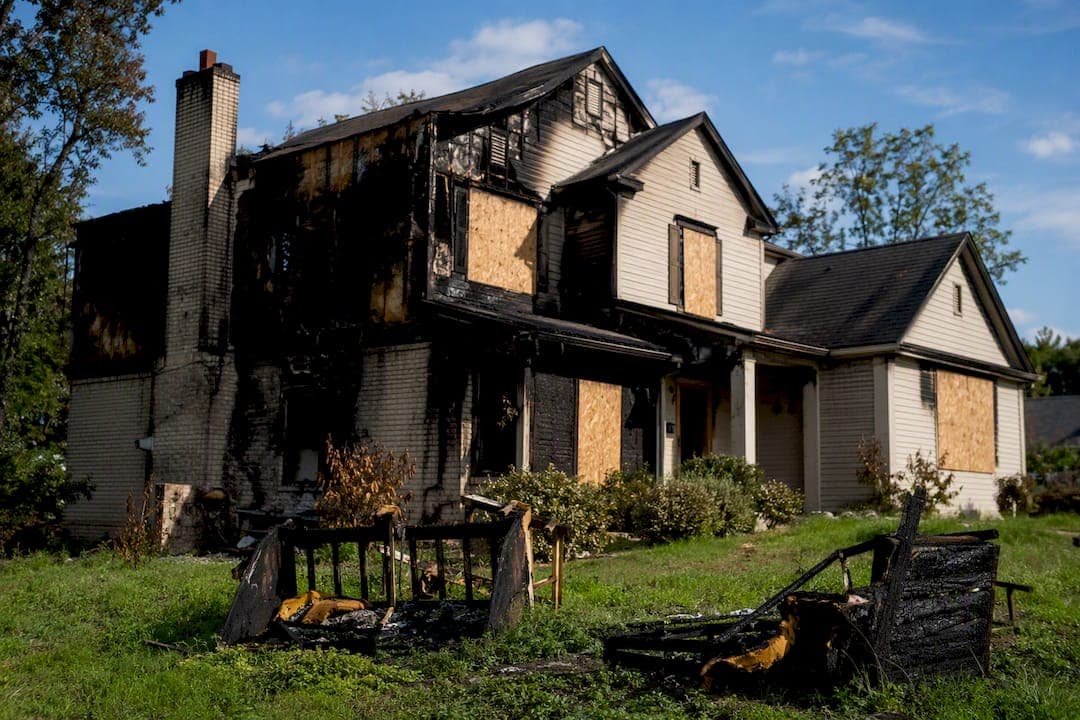
Yes, you can sell a fire-damaged house, and you don't need to repair it first if you don't want to. Sellers typically choose from three practical routes: repair and list on the open market, sell as-is to a cash buyer or investor, or sell the land alone when the structure is a total loss. The right path depends on how much equity you have, how much insurance money is coming, and how fast you need to close.
Before you decide anything, take these steps:
- Photograph and video every room, inside and out, before cleanup starts
- Request the fire marshal's incident report from your local fire department
- File your insurance claim immediately if you haven't already
- Order a professional damage assessment from a licensed contractor or structural engineer
Each of those documents becomes leverage later, whether you're negotiating with a buyer or defending your disclosure statement.
Key Takeaways
Selling a fire-damaged house comes down to comparing your net proceeds across repair-and-list, as-is cash sale, and land-only routes before you commit to one.
| Point | Details |
|---|---|
| Three routes exist | Repair and list, sell as-is to a cash buyer, or sell the land depending on damage and equity. |
| Run the net-proceeds math | Compare after-repair sale price minus repair and holding costs against a cash offer plus insurance proceeds. |
| Disclosure is mandatory | Every state requires disclosing known fire damage; withholding it risks a post-sale lawsuit. |
| Documents build buyer trust | Gather the fire marshal report, adjuster report, permits, and invoices into one packet. |
| Exitvest offers a fast, as-is path | Exitvest buys fire-damaged properties nationwide for cash with flexible closing timelines and no repair requirements. |
This article is general information, not a substitute for advice from a qualified lawyer. Consult a qualified legal professional about your own circumstances before acting on anything here.
Table of Contents
- How Do You Determine the Value of a Fire Damaged House?
- Does Fire Damage Lower a Home's Sale Price?
- Three Ways to Sell a Fire Damaged House
- How Do You Calculate Net Proceeds After a Fire?
- What Happens to Insurance Money When You Sell?
- Do You Have to Disclose Fire Damage When Selling?
- What Is the Step-by-Step Process for Selling a Fire Damaged House?
- How Do You Stage a Fire Damaged Home to Reassure Buyers?
- How Do You Find a Real Estate Agent Who Handles Fire-Damaged Homes?
- What Legal Risks Come With Selling a Home After a Fire?
- Are There Tax Deductions for Selling a Fire Damaged House?
- When Does an As-Is Cash Sale Actually Make Sense?
- Sources
How Do You Determine the Value of a Fire Damaged House?
You need two numbers before you can make a smart decision: what the house is worth right now, in its damaged condition, and what it would be worth fully repaired. Appraisers call the second figure the after-repair value, or ARV. Without both, you're guessing.
1. Order an as-is appraisal. A qualified appraiser will value the land, the surviving structure, and any usable components, then compare your property to similar damaged homes that have sold nearby. This is a different exercise than a standard appraisal because there often aren't many comparable sales to pull from, so appraisers lean more heavily on land value and replacement cost estimates.

2. Get a pre-incident or ARV estimate. This tells you what the home would fetch on the open market if it were fully restored. Some appraisers offer this as a separate report; others fold it into the as-is appraisal as a projected value.
3. Collect at least two contractor bids. Get itemized, line-by-line estimates, not ballpark numbers, and insist each bid include a contingency line for hidden damage. Smoke and water often travel further than the visible char, and a bid that doesn't account for that will blow past budget the moment demolition starts.
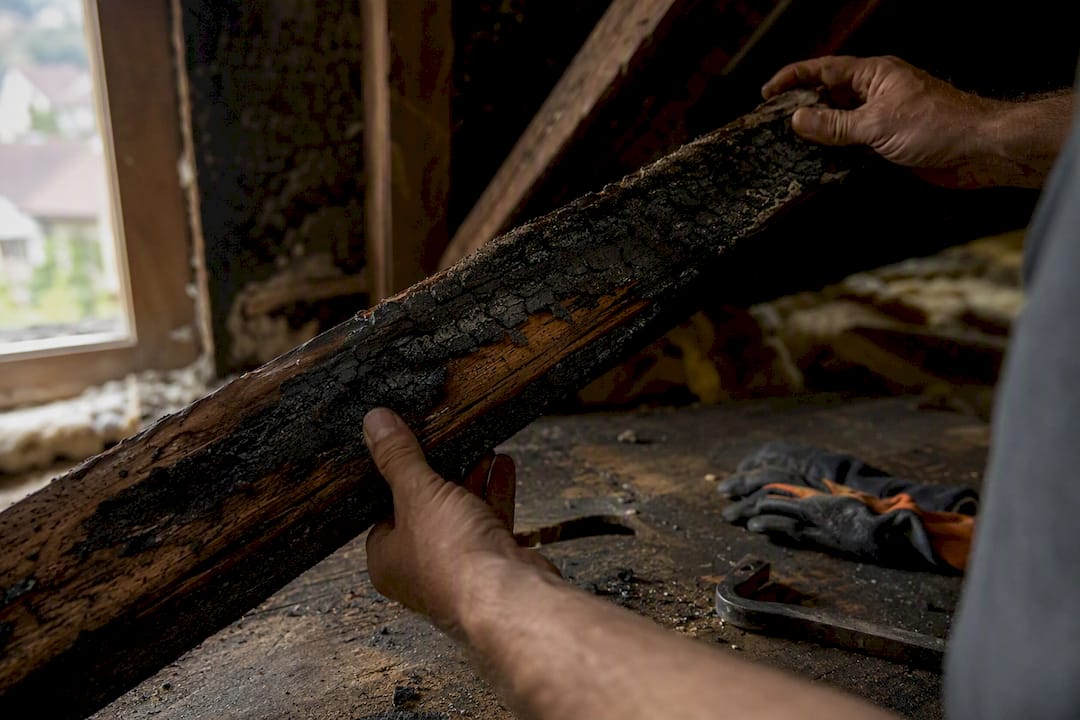
Pro Tip: Ask each contractor to separate "known damage" repairs from "contingency" repairs on the bid. That split alone tells you how confident they are in the scope, and a contractor who won't break it out is one to be cautious about.
Once you have the appraisal and the bids, subtract total repair costs from your ARV. That gap is the real number you're working with, not the sentimental value of the house you remember before the fire.
Does Fire Damage Lower a Home's Sale Price?
Fire damage doesn't apply a single, predictable discount. It shrinks your buyer pool, and the size of that shrinkage depends entirely on the type of damage.
Cosmetic and smoke-only damage, meaning charring limited to one room with no structural compromise, tends to scare off far fewer buyers than damage that touches framing, roofing, or foundation elements. Recouping a strong share of pre-fire value from minor repairs is realistic when the fix is mostly cleaning, paint, and drywall. Structural damage or a total loss is a different situation entirely: many conventional lenders won't finance a home that isn't habitable, which knocks FHA, Fannie Mae, and VA buyers out of your pool before they ever see the listing.
That financing gap is the single biggest reason fire-damaged homes sell for less than their appraised repair value would suggest. It's not that buyers don't want the house. It's that most of them can't get a mortgage on it.
A few problems tend to hide underneath the obvious damage and quietly expand the repair scope:
- Smoke odor absorbed into insulation, subflooring, and ductwork
- Water damage from firefighting efforts, which often exceeds the fire damage itself
- Electrical system damage that isn't visible until an inspector opens the panel
- Mold growth that starts within 24 to 48 hours of water exposure
Any one of these can turn a "minor repair" estimate into a five-figure surprise.
Three Ways to Sell a Fire Damaged House
You have three real paths forward, and each one fits a different financial situation.
1. Repair and list on the open market
This route makes sense when you have equity to work with, insurance proceeds that cover most of the repair cost, and enough runway to wait out permitting and construction. You'll need building permits for structural work, inspection sign-offs at each phase, and ideally a contractor's warranty you can hand to the buyer. The payoff is access to the full buyer pool, including conventional and FHA financing, and typically the highest sale price available to you. The cost is time and cash flow: permitting alone can take weeks, and construction on fire damage routinely runs months, not weeks.
2. Sell as-is to a cash buyer or investor
This is the route for sellers who need speed, don't have cash for repairs, or simply don't want to manage a construction project on top of everything else. Cash sales close in about two to three weeks, compared to months for a repair-and-list approach. There's no lender appraisal to clear and no financing contingency to worry about falling through. Cash buyers calculate their offers by starting with the ARV, subtracting rehab costs, subtracting their required profit margin, and landing on a number, which explains why offers land below what a fully repaired sale would bring. You can read more about how cash buyers evaluate damaged properties before you request an offer.
3. Sell the land only
When the fire caused a total loss, or when demolition plus rebuild costs exceed what the finished home would be worth, selling the land alone is often the most rational move. This means getting demolition cost quotes, checking your local code for demolition permitting requirements, and confirming whether the lot itself has development or resale value independent of any structure. Some buyers specifically look for cleared or clearable lots and won't pay a premium for a structure they're planning to tear down anyway.
How Do You Calculate Net Proceeds After a Fire?
Run the math before you run to a decision. The formula is simple, but the inputs are where sellers get it wrong.
For the repair-and-list path: expected after-repair sale price minus (repair costs plus holding costs plus selling costs).
For the as-is path: cash offer plus remaining insurance proceeds minus mortgage payoff.
Holding costs are the line item people forget. While repairs are underway, you're still paying loan interest, property taxes, insurance premiums (often higher on a vacant or damaged home), and utilities to keep the property secure. Add a 5% to 6% agent commission on top if you're planning to list traditionally, and the gap between the two paths narrows fast.
Here's how that plays out across three damage levels:
- Minor, cosmetic damage: Repair costs are modest and largely covered by insurance. Repairing and listing usually nets more.
- Moderate, structural damage: Repair costs climb into the tens of thousands, repair estimates for fire and smoke damage vary widely depending on scope, and holding costs stack up over a longer timeline. This is where the math genuinely could go either way, and it depends on your specific bids and insurance payout.
- Total loss or near-total loss: Repair costs typically exceed ARV once demolition and full rebuild are factored in. Selling as-is or selling the land almost always nets more once you account for the months of holding costs a rebuild would require.
Run your own numbers with your actual bids and your actual insurance payout. Don't borrow someone else's percentages.
What Happens to Insurance Money When You Sell?
The insurance payout belongs to you, the policyholder, but your mortgage lender may have a say in how it's distributed. Many mortgages include a clause requiring insurers to issue damage checks jointly to you and your lender, particularly for claims above a certain threshold. Call your loan servicer early and ask directly whether they'll require a joint check or a payoff before releasing funds.
You can sell a home while a fire insurance claim is still open. You generally have a few ways to structure it:
- Complete the claim, keep the proceeds, and use them independently of the sale
- Assign the remaining claim to the buyer, who then handles repairs after closing
- Coordinate directly with your lender so payoff and payout happen in the same closing transaction
There's a tax wrinkle worth knowing about. Involuntary conversion rules under Section 1033 can let you defer taxable gain on insurance proceeds if you reinvest in a replacement property within the allowed window. This gets complicated fast, especially if you're also selling the underlying property, so loop in a tax professional before you file anything.
Do You Have to Disclose Fire Damage When Selling?
Yes, and this isn't optional. Every U.S. state requires sellers to disclose known material defects on the property disclosure form, and fire damage is about as material as a defect gets. Withholding it, or downplaying it, doesn't just risk the deal falling apart. It exposes you to a lawsuit after closing if the buyer discovers damage you knew about and didn't report.
1. Fill out your state's disclosure form completely and honestly. Don't leave sections blank because you're not sure how to phrase something. Ask a real estate attorney if you're unsure.
2. Attach supporting documentation. Buyers and their agents expect to see the fire marshal report, the insurance adjuster's report, repair permits, and paid invoices for any work already completed. Photos of the original damage and the completed repairs round out the file.
3. Keep copies of everything you submit. If a dispute ever surfaces down the road, your disclosure packet is your evidence that you acted in good faith.
Pro Tip: Even if your state's form only asks about "known defects affecting habitability," disclose the fire anyway. A buyer's attorney arguing that a fire "should have been disclosed" in hindsight is a fight you don't want to have after the money has already changed hands.
Some states also fold fire history into broader natural hazard disclosure rules, particularly in wildfire-prone regions, so check your state's specific hazard disclosure requirements if you're in an affected area.
What Documents Convince Buyers to Trust a Fire-Damaged Listing?
Buyers hesitate on fire-damaged homes because they can't tell what's really wrong under the surface. Close that gap with paper.
- Fire marshal or incident report confirming the cause and extent of the fire
- Insurance adjuster's report detailing the damage assessment and payout
- Contractor bids and paid invoices for any completed repairs
- Building permits and inspection sign-offs for structural or electrical work
- Specialized clearances: electrical, HVAC, structural engineer, mold or air-quality testing, and chimney inspection where relevant
Assemble these into a single "damage and repair packet" you can hand to any serious buyer or investor. It answers their questions before they have to ask, which speeds up offers and reduces lowball bids based on assumed worst-case scenarios.
What Is the Step-by-Step Process for Selling a Fire Damaged House?
Work through this in order, and don't skip steps just because you're in a hurry.
- Follow fire department safety guidance and do not re-enter the property until officials clear it.
- Photograph and video all damage before any cleanup begins.
- Request the fire marshal's incident report and file your insurance claim.
- Order a professional damage assessment from a contractor or structural engineer.
- Collect at least two itemized contractor bids with contingency lines included.
- Get an as-is appraisal and an ARV estimate to establish your value range.
- Call your mortgage lender to ask about insurance payout requirements.
- Run your net-proceeds calculation to decide between repairing, selling as-is, or selling land.
- Request cash offers if speed or limited funds points you toward that route.
- Complete full disclosure paperwork and assemble your damage and repair packet.
- Prepare closing documents and finalize with your buyer, agent, or attorney.
How Do You Stage a Fire Damaged Home to Reassure Buyers?
Staging a fire-damaged property isn't about hiding what happened. It's about proving the problem is contained and understood.
Start with a professional deodorization treatment before anyone walks through the door. Smoke odor is often the first thing a buyer notices, and it colors everything they think about the rest of the house, even rooms the fire never touched. Ozone treatment or thermal fogging from a certified restoration company handles this far better than air fresheners or a fresh coat of paint alone.
Third-party inspections do more to build confidence than any amount of cleaning. A structural engineer's letter stating the framing is sound, or an electrician's sign-off confirming the wiring is safe, gives a nervous buyer something concrete to point to. Without it, buyers assume the worst and negotiate accordingly, or walk away entirely.
If you're repairing before listing, stage only the rooms untouched by fire and let the repaired areas speak for themselves with visible finish work and fresh materials. Don't try to disguise where the fire happened. Buyers who find out later that a room was staged specifically to obscure fire history will assume you hid other things too, which undermines trust right when you need it most.
For homes selling as-is, a clean, secured property (boarded windows, cleared debris, mowed lawn) signals that you're a serious seller managing the situation responsibly, even if the interior still needs work.
How Do You Find a Real Estate Agent Who Handles Fire-Damaged Homes?
Not every agent has dealt with a fire-damaged listing, and the ones who haven't often price and market it exactly like a standard home, which usually backfires.
Ask directly, in your first conversation, how many fire-damaged or distressed properties they've closed in the past two years. An agent who hesitates or pivots to talking about their general sales volume hasn't done this before. You want someone who can speak specifically to comparable damaged-property sales in your area, not just comparable homes in good condition.
Ask how they plan to market a property with visible or disclosed damage. A good agent has a strategy for this: targeting investor networks alongside traditional buyers, writing listing descriptions that address the damage honestly rather than burying it, and setting a price that reflects real comparable sales instead of hoping a full-price offer shows up.
Ask what network of contractors, appraisers, and inspectors they can connect you with. Agents who work this niche regularly tend to have relationships that speed up your damage and repair packet, since they've built the same document trail for other sellers before you.
If your local search comes up short, expand it. Some investors and cash buyers work directly without an agent involved at all, which sidesteps this problem entirely if speed matters more to you than agent representation.
What Legal Risks Come With Selling a Home After a Fire?
Beyond disclosure, a handful of legal issues are specific to fire-damaged property sales and worth addressing before you sign anything.
Liens are the first thing to check. Unpaid contractor invoices, code violation fines, or municipal cleanup charges can attach to the property and complicate or delay closing if they surface late. Pull a title report early so nothing catches you off guard at the closing table.
Permitting compliance matters more here than on a typical sale. If repairs were started without proper permits, or completed without final inspection sign-off, that unpermitted work becomes a disclosure item and a potential deal killer for buyers relying on conventional financing. Lenders routinely require proof of permit closure before funding.
If your property is in probate, or if you inherited it after a fire, coordinate with the estate's executor and an attorney before listing, since ownership and authority to sell can get tangled quickly in that situation.
Insurance assignment agreements, if you're transferring an open claim to a buyer, need to be drafted carefully. A poorly worded assignment can leave you liable for repair issues the buyer discovers after closing, even though you no longer own the property. A real estate attorney experienced in distressed sales is worth the fee here, particularly when liens, probate, or open claims overlap.
Are There Tax Deductions for Selling a Fire Damaged House?
Selling a fire-damaged home can trigger a few distinct tax questions, and they're worth understanding before you file, even though none of them substitute for advice from a licensed tax professional.
If your insurance payout doesn't fully cover your loss, you may be able to claim a casualty loss deduction on your federal return, though rules have tightened in recent years and generally require the loss to stem from a federally declared disaster to qualify. Check current IRS guidance or ask your accountant whether your specific fire qualifies.
The bigger issue for most sellers is the involuntary conversion provision under Section 1033, which can let you defer capital gains tax on insurance proceeds if you reinvest in a similar replacement property within the required timeframe. This applies specifically to gain from the insurance settlement itself, not necessarily to gain from the property sale, and the two can interact in ways that are easy to get wrong without professional guidance.
If you sell at a loss relative to your original purchase price and adjusted basis, that loss may or may not be deductible depending on whether the property was your primary residence or a rental or investment property. The rules diverge significantly between those two categories, so don't assume a loss automatically translates into a deduction. Bring your closing statement, insurance settlement documents, and repair invoices to whoever prepares your return. All three affect your final basis calculation.
When Does an As-Is Cash Sale Actually Make Sense?
Exitvest buys houses, land, and small apartment buildings directly from owners, including properties with fire damage, code violations, or open insurance claims, and we've watched sellers work through this exact decision enough times to know the pattern. Sellers who repair first usually have equity, time, and a contractor they trust. Sellers who need a fast, certain close, without fronting repair money or waiting through permitting, tend to gravitate toward a direct cash sale instead.
Exitvest operates nationwide, with a concentrated focus in New Jersey, Texas, Florida, and Tennessee, and closing timelines flex to what the seller needs. If you're weighing your numbers and want a real offer to compare against a repair estimate, request one and see where it lands.
— Alek
How Do You Request a Cash Offer From ExitVest?
Exitvest is the option worth considering when speed and certainty matter more than squeezing out the last dollar of sale price, especially if repair costs, an open insurance claim, or a lien are standing between you and a normal listing. There's no need to fix anything, cover contractor bids out of pocket, or wait through a buyer's financing approval, because there isn't one to wait on.

The process starts with a quick property review and a cash estimate, usually within a day or two of reaching out. No repairs, no staging, no open houses. You choose the closing timeline that fits your situation, whether that's two weeks or two months, and Exitvest handles the rest, including coordinating with your lender on any outstanding mortgage payoff. If you're ready to see what your fire-damaged property is worth as-is, request a cash offer or explore how the as-is process works before you commit to a repair timeline you may not need.
Sources
- Realtor
- Selling a House with Fire Damage — Redfin
- Ready
- How to Sell a Fire-Damaged House: Options and Tax Rules — LegalClarity