
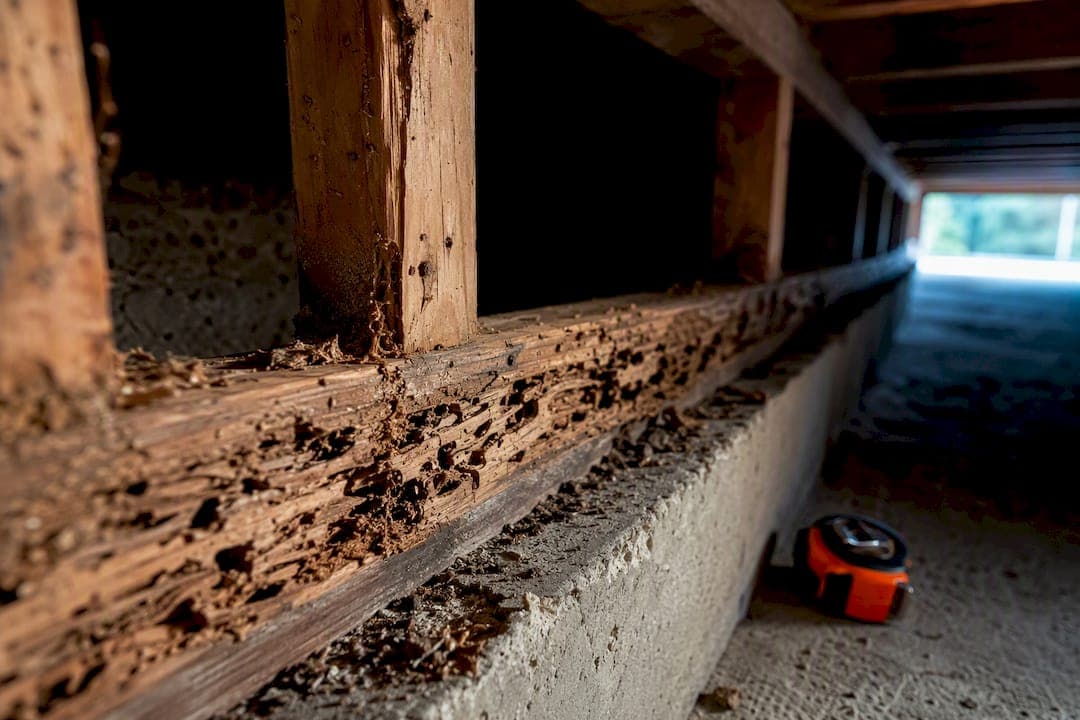
Yes, you can sell a house with termite damage. Start by getting a licensed termite inspection (called a WDI report) and pulling together any past treatment invoices or warranties. From there you have two real paths: fix the damage and list traditionally, or sell as-is to a cash buyer who accounts for the repair cost in the offer.
TL;DR:
- Repairing termite damage can cost from a few hundred dollars for minor spots to tens of thousands for structural repairs, influencing your decision.
- Selling as-is to a cash buyer avoids repair costs and quickens closing times, but results in a lower offer reflecting the damage and associated risks.
- The presence of a transferable warranty or recent treatment report can significantly increase a home's value and buyer confidence.
- FHA and VA loans require pest clearance before closing, making active termite issues a potential hurdle for financed buyers.
- Disclosing termite history accurately and providing all relevant inspection and repair documents strengthens legal protection and trust with buyers.
Table of Contents
- How Do You Sell With Termite Damage: Repair vs. As-Is?
- Which Inspections and Documents Do Buyers Expect?
- What Do Termite Repairs Cost, and Are They Worth It?
- What Must You Legally Disclose About Termite Damage?
- How Much Does Termite Damage Lower Your Sale Price?
- How Should You Market a Home With Termite History?
- How Does Termite Damage Affect Mortgage Approval?
- Termite Sale Checklist: What to Do and When
- When Selling As-Is Honestly Beats Repairing First
- Get a Cash Offer on a Termite-Damaged Home
- Where to Verify Termite Disclosure Rules
- Sources
How Do You Sell With Termite Damage: Repair vs. As-Is?
Every seller facing termite damage lands on one of two roads, and the right one depends on how much cash you have, how much time you have, and how bad the damage actually is.
Repair-and-list means fixing the wood, treating the infestation, documenting everything, and putting the house on the open market with a full disclosure packet.
- Pros: typically nets a higher sale price, opens the buyer pool to traditional financed buyers, and lets you set the narrative with fresh reports.
- Cons: requires upfront cash for treatment and repairs, can take weeks to schedule contractors and re-inspections, and structural work sometimes uncovers more damage once walls or subfloors open up.
- Best fit: sellers with equity, time before they need to move, and damage that's mostly cosmetic or limited to a single area.
Sell as-is to a cash buyer means skipping repairs entirely and pricing the sale to reflect the home's actual condition.
- Pros: no repair bills, no waiting on contractor schedules, and a close that can happen in days instead of months.
- Cons: the offer will be discounted for the damage and the buyer's risk, and you're trading top-dollar price for speed and certainty.
- Best fit: sellers dealing with foreclosure timelines, inherited property they don't want to manage, or structural damage too extensive to finance repairs for.
Financed buyers using an FHA or VA loan often trigger mandatory pest clearance before closing, which slows the traditional path further if active termites turn up during underwriting. A cash sale sidesteps that entirely, since there's no lender requiring a clean WDI report before funding.
Which Inspections and Documents Do Buyers Expect?
A recent Wood-Destroying Insect (WDI) inspection is the single document that does the most work here. It tells a buyer, an agent, or a lender exactly what's active, what's old damage, and what's already been treated. Scheduling one costs $75 to $150 and takes under an hour for most homes, and getting it done within 30 to 90 days of listing keeps the findings current enough that buyers trust them.
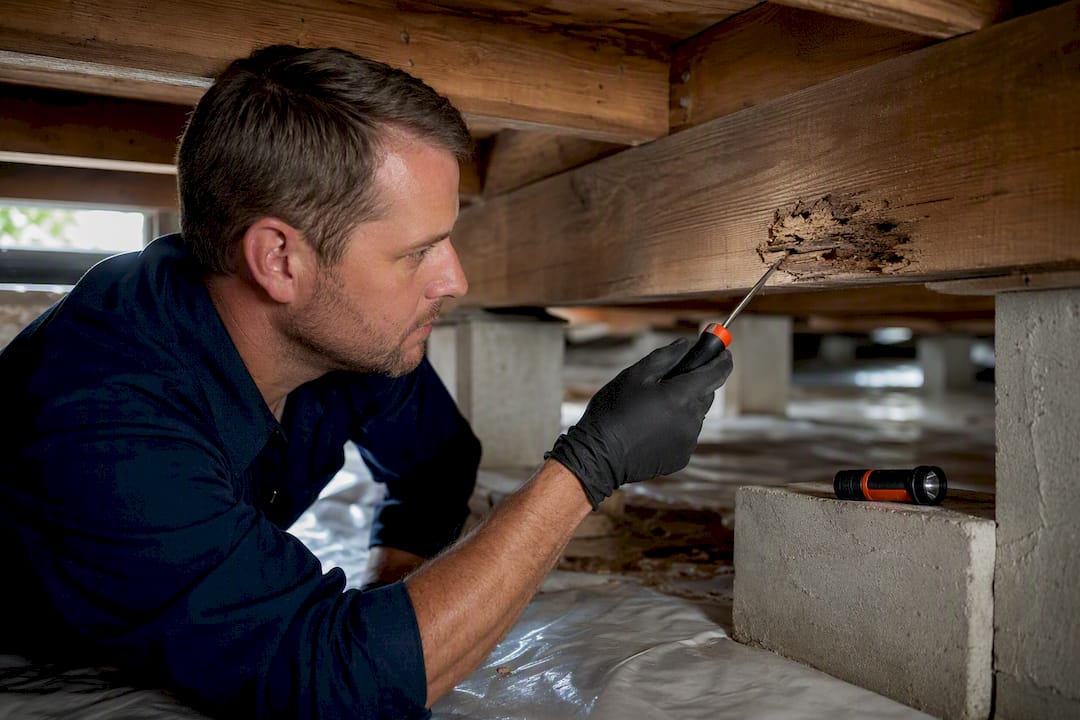
A statistic worth building your timeline around: getting that inspection early, before you list, lets you resolve lender contingencies before a buyer even makes an offer instead of scrambling after an accepted contract falls apart.
Beyond the WDI report itself, buyers and their lenders typically want to see:
- The full inspection report, including any diagrams marking affected areas.
- Treatment invoices from the pest-control company, dated and itemized.
- Permits and receipts for any structural repair work performed.
- A transferable warranty, if one exists, showing coverage continues for the new owner.
- Before-and-after photos of repaired areas, especially if walls or framing were opened up.
Keep all five in a single digital folder you can hand to your agent or a buyer's attorney the moment they ask. Sellers who show up with a complete packet on day one negotiate from a stronger position than those who produce documents piecemeal after each buyer question. Industry groups like PestWorld recommend confirming your inspector is licensed in your state before you rely on their report for a sale.
What Do Termite Repairs Cost, and Are They Worth It?
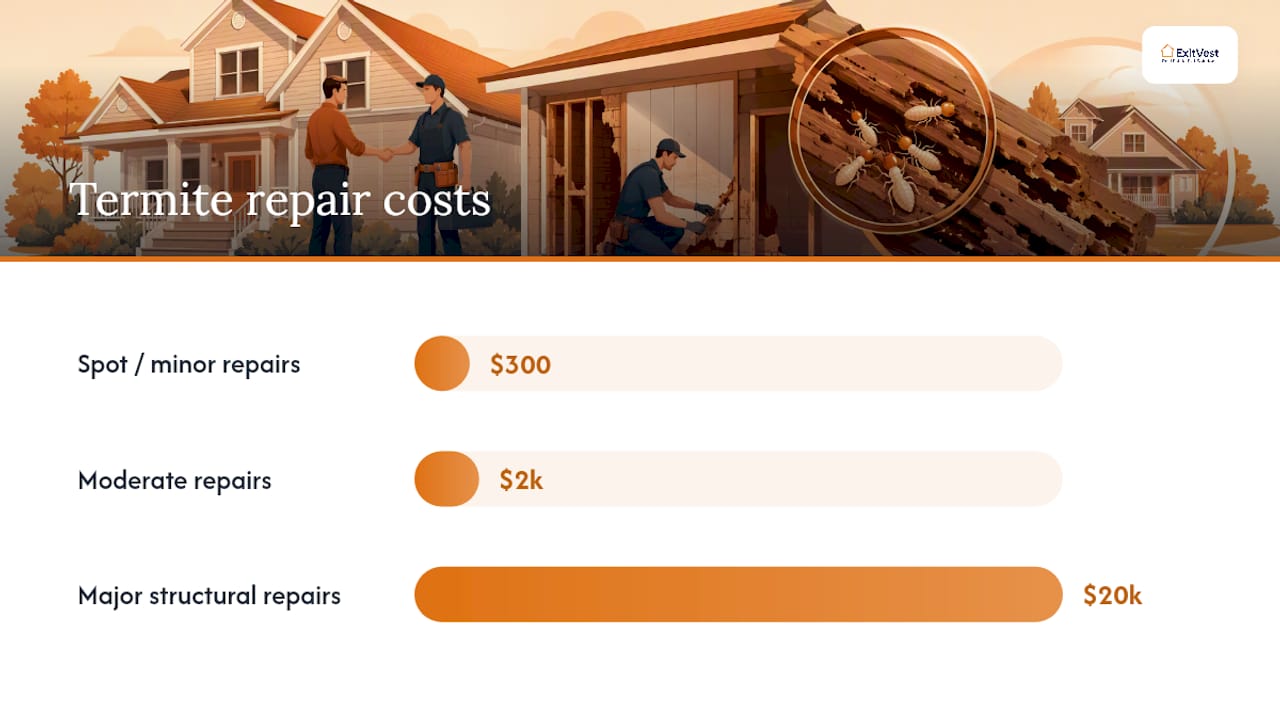
Repair costs swing enormously based on how far the damage spread before anyone caught it. Spot treatments and minor wood repairs can run a few hundred dollars. Moderate damage involving a section of subfloor, a door frame, or exterior trim usually lands in the low thousands once you add labor and materials. Major structural repairs, the kind that touch load-bearing beams or foundation sill plates, can climb into the tens of thousands, especially once a contractor opens a wall and finds the damage extends further than the visible signs suggested.
Termites go after specific wood components for a reason. USDA research on termite feeding behavior helps explain why sill plates, floor joists, and other structural softwood take the worst damage while denser trim wood often survives untouched. That's useful to know before you assume a small surface hole means a small repair bill.
Before you commit to any contractor, run these checks:
- Get at least three bids for anything beyond spot treatment, since pricing varies widely by region and contractor.
- Confirm the contractor pulls a permit for structural work. Unpermitted repairs create a disclosure headache later.
- Ask each bidder for references tied specifically to termite repair, not general pest control.
- Request a written scope that separates treatment cost from structural rebuild cost.
Pro Tip: Keep the damaged wood samples and photos before any repair begins. If a dispute ever surfaces after closing, that physical evidence shows you addressed a real, documented problem rather than covering something up.
The decision rule is simple: if repairs cost less than the price gap a damaged listing would create, and you have the cash and time, repair first. If the repair estimate approaches what the house would sell for as-is, or a lender won't finance around active findings, selling as-is likely nets you more than sinking money into a fix that a buyer would negotiate down anyway.
What Must You Legally Disclose About Termite Damage?
Concealment, not the damage itself, is what creates legal exposure for sellers. Courts have found that hiding known termite history can void as-is protections a seller thought they had, opening the door to fraud or misrepresentation claims after closing. Most states require disclosure of known termite activity, treatment history, and any structural repairs on standard seller disclosure forms, and termite history specifically shows up as a line item in transactions across the country.
Rules vary by state. California, for example, requires a Real Estate Transfer Disclosure Statement that treats termite history as a required disclosure item, and lenders or purchase contracts there can independently require a fresh inspection regardless of what the seller already knows. Other states handle the disclosure form differently, so check your state's specific requirements or ask your agent before you fill anything out.
Sellers who document precisely what they knew, when they treated it, and what areas were affected put themselves in a far stronger legal position than sellers who describe damage vaguely or omit it altogether. The distinction the law draws again and again is between an honest seller who disclosed what they knew and one who tried to hide it.
Practical steps that keep you out of legal trouble:
- Attach the actual inspection and treatment reports to your disclosure form rather than summarizing them in your own words.
- Note specific dates and specific areas affected. Vague language like "some past termite issue" invites more scrutiny than precision does.
- If you're unsure whether something needs disclosing, ask a local real estate attorney or your listing agent rather than guessing.
- Never claim a treatment happened if you don't have the invoice to prove it.
How Much Does Termite Damage Lower Your Sale Price?
There's no fixed discount percentage that applies everywhere. The price impact depends on how visible the damage is, whether it's active or resolved, whether a transferable warranty exists, and how tight your local buyer pool is for that price range. A house with a fully treated infestation, a clean recent inspection, and a transferable warranty often sells close to comparable homes without termite history. A house with unresolved active termites and no documentation scares off financed buyers entirely, which is what actually drives the steepest discounts, not the damage itself.
Here's the finding that should change how you negotiate: a transferable termite warranty or an offer to pre-pay a buyer's first year of pest inspections frequently restores buyer confidence more cheaply than cutting the price to compensate for the same fear. A warranty might cost you a few hundred dollars annually. A price cut to address the same buyer hesitation often runs into the thousands.
Negotiation tools worth using, roughly in order of how much they preserve your net proceeds:
- Offer a transferable warranty from a licensed pest-control company covering the new owner.
- Pre-pay the first one or two years of annual inspections as a closing gift.
- Provide a seller credit at closing sized to the actual repair estimate, which lets the buyer choose their own contractor instead of trusting yours.
- Only drop the list price outright if the buyer's lender is requiring repairs you can't complete before closing.
Credits usually beat repairs when the buyer's lender doesn't mandate specific fixes before funding, since the buyer controls the money and the contractor relationship. Repairs make more sense when a loan program requires clearance before closing regardless of what either party prefers.
How Should You Market a Home With Termite History?
Honesty and framing aren't opposites. A listing that says "recently treated, transferable warranty in place, full inspection reports available" reads completely differently than one that says nothing and lets a buyer's inspector deliver the news mid-contract. Lead with the resolution, not the problem.
Documents to have ready for your seller packet:
- The WDI inspection report, dated as close to listing as possible.
- Treatment invoices showing the pest company, method used, and date completed.
- Permits and inspection sign-offs for any structural repair work.
- The transferable warranty document, if one exists, with clear terms for the new owner.
Curb appeal matters more than usual here, since buyers who've read "termite" on a disclosure form arrive primed to scrutinize the exterior closely. A professional exterior inspection or cleaning before showings can catch smaller issues before a buyer's inspector does, and it signals that you've kept the property maintained rather than ignored. Skip staging tricks that hide areas near past damage. A buyer who feels misled during a walkthrough wastes everyone's time when the inspection contradicts what they saw.
How Does Termite Damage Affect Mortgage Approval?
FHA and VA loans are the strictest here. Both typically require pest clearance before closing, meaning any active termite activity found during the appraisal process has to be resolved first. Conventional loans give lenders more discretion, so requirements vary by the individual underwriter and the property's condition.
The key distinction is active versus past damage. A lender reviewing a report showing old, treated damage with a transferable warranty usually proceeds without issue. A lender seeing active infestation on a current inspection will typically require treatment, and sometimes repairs, before funding.
Three workarounds keep a financed deal alive without derailing your timeline: an escrow holdback that sets aside funds for repairs completed after closing, scheduling the treatment and any required repairs before the closing date, or offering a seller-paid warranty that satisfies the lender's risk concern without a full price renegotiation.
Termite Sale Checklist: What to Do and When
Whichever path you choose, the sequence of tasks looks similar. What changes is how long each stage takes.
- Days 0 to 30: Schedule your WDI inspection, pull any existing treatment records, and decide between repair-and-list or as-is.
- Days 15 to 45 (repair path): Get contractor bids, pull permits, and complete treatment and structural work.
- Days 30 to 60 (repair path): Reinspect to confirm clearance, then list with the full documentation packet attached.
- Days 1 to 14 (as-is path): Gather your existing reports and photos, then request offers from cash buyers directly.
| Path | Typical timeline | Key documents needed |
|---|---|---|
| Repair and list | 45 to 75 days | WDI report, contractor permits, reinspection, warranty |
| Sell as-is (cash) | a few weeks | Existing reports, treatment invoices, property photos |
Cash buyers generally ask for the same core documents as a traditional buyer's inspector, just faster and without requiring you to fix anything first: whatever inspection reports and invoices already exist, and basic property details to size up the offer.
When Selling As-Is Honestly Beats Repairing First
Repairing a termite-damaged home before selling makes sense for plenty of homeowners, but it assumes something a lot of sellers don't actually have: spare cash and spare time. Foreclosure timelines don't wait for contractor schedules. Heirs managing an inherited property from three states away don't want to coordinate treatment crews. Someone underwater on repairs they can't afford shouldn't be pushed toward a traditional listing just because it's the "proper" way to sell.
That's the seller a cash buyer like ExitVest exists for. Buying as-is isn't a workaround. It's an honest transaction where the price reflects the real condition of the home, documented upfront, with no repair demands and no financing contingencies to survive. If you contact a buyer like this, expect to share basic property details, any existing inspection reports or photos you have, and get a straightforward offer back without needing to fix a single board first.
The math that matters isn't "as-is versus full price." It's "as-is now versus repair costs, carrying costs, and months of uncertainty later." For a lot of termite-damaged homes, that comparison isn't close.
— Alek
Get a Cash Offer on a Termite-Damaged Home
If you've read this far and the repair math isn't working in your favor, there's a faster route. Cash buyers like ExitVest buy houses with existing termite damage exactly as they sit, no contractor bids, no reinspections, no waiting on a financed buyer's lender to clear a pest report.

Before requesting an offer, gather what you already have: basic property details, a few photos of the damage, and any inspection reports or treatment invoices sitting in a drawer somewhere. You don't need a clean bill of health first. Such buyers factor the damage into the offer itself, which is the entire point of selling as-is. See exactly how the process works and what to expect from your first call to your closing date, or check the specific situations cash buyers often purchase in if you're also dealing with foreclosure, an inherited property, or a home that's simply outlived your ability to fix it. Reach out and get a no-pressure cash offer on the property as it stands today.
Where to Verify Termite Disclosure Rules
State disclosure requirements and lender rules shift often enough that it's worth checking primary sources before you finalize anything. Review your state's termite inspection and disclosure requirements if you're in California, since its rules illustrate how specific state statutes can get. For finding a licensed inspector, PestWorld's guidance walks through what credentials to check. For regional termite prevalence data, Orkin's termite statistics break down which parts of the country see the heaviest activity. None of these replace a conversation with a local real estate attorney or your listing agent about the rules specific to your state and situation.
This article is general information, not a substitute for advice from a qualified lawyer. Consult a qualified legal professional about your own circumstances before acting on anything here.
Sources
- Seller Didn’t Disclose Termite Damage: Can You Sue? - LegalClarity
- From Problem to Profit: The Complete Guide to Selling a House with Termite History - Redfin
- Keys to finding a qualified pest professional - PestWorld
- Termite statistics - Orkin