
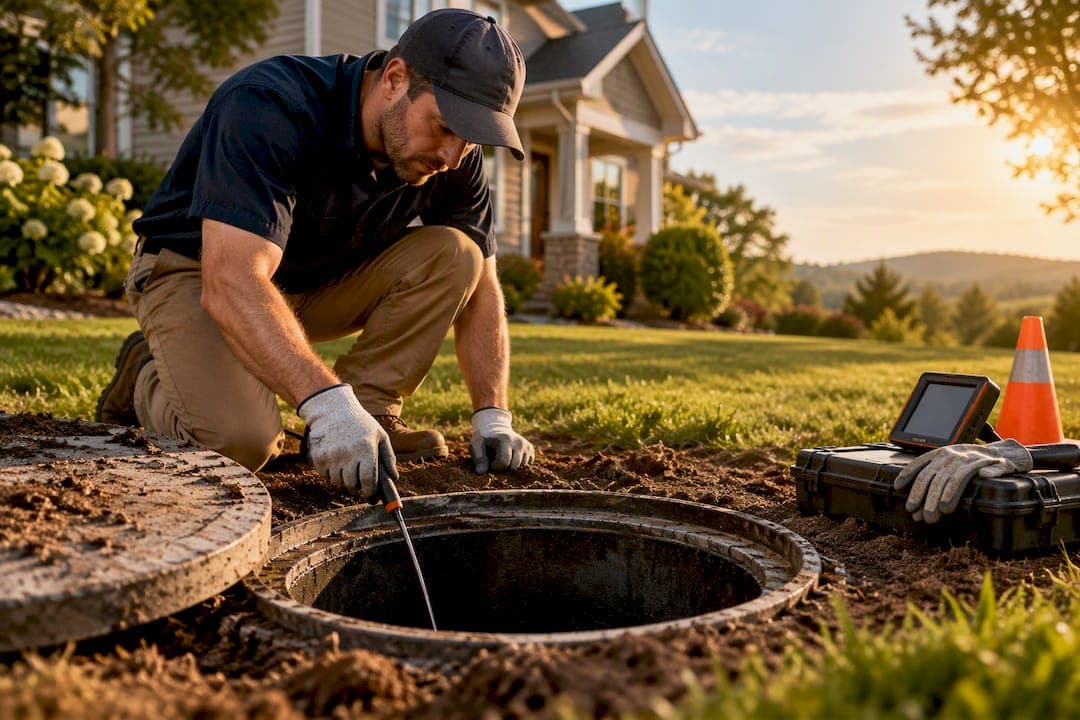
Yes, you can sell a house after a failed septic inspection, and most transactions still close. The outcome usually comes down to three paths: repairing the system before closing, negotiating a credit or repair escrow, or selling as-is to a cash buyer who skips financing contingencies altogether. Get formal contractor bids immediately, disclose the failure in writing, and decide fast, because timeline pressure kills more failed septic house sale deals than cost ever does.
TL;DR:
- Most failed septic inspections trigger repair timelines of two to four weeks for permits, often causing sale delays due to local health department processes.
- Legal disclosures require written, immediate notification of septic failures, with specific rules varying by state, especially in Massachusetts where upgrades are mandatory before transfer.
- Repair costs for drainfield replacements can exceed $15,000, and rushed or informal inspections may lead to inaccurate results that misguide repair decisions.
- Conventional lenders may allow repair escrow agreements, but FHA and VA loans typically demand a passing septic system at closing, risking loan denial if repairs are delayed.
- Selling as-is to a cash buyer offers a quick, no-repair solution when permit delays and repair costs threaten to stall traditional sales.
Table of Contents
- What Happens After a Failed Septic Inspection
- Legal Disclosure and State Rules Sellers Must Follow
- Septic Inspection Levels, Costs, and What They Actually Find
- How Lenders and Appraisals React to a Failed Septic System
- Repair, Credit, or Sell As-Is: Which Option Actually Fits You
- The Seller Playbook: Documentation and Contract Moves That Work
- What Buyers Actually Worry About When a Septic System Fails
- Marketing a Property With a Known Septic Failure
- How a Failed Septic System Affects Valuation and Appraisal
- Getting a Second Opinion on a Septic Inspection
- Author Perspective: Common Seller Mistakes and How to Avoid Them
- Sell Your House As-Is Without Fixing the Septic System
- Sources
- FAQ
What Happens After a Failed Septic Inspection
A septic inspection report doesn't just say "pass" or "fail." It documents specific conditions: sewage backing up into the house, effluent surfacing on the lawn, liquid levels sitting too high in the tank, or a cesspool sitting too close to a well or property line. Some reports land in a gray zone called a "conditional pass," meaning the system works today but won't meet code much longer, or it needs a minor fix like a baffle replacement before anyone signs off on it.
Buyers who receive a failed report generally do one of three things, and none of them are good news for a seller trying to keep momentum.
- Request repairs be completed and re-inspected before closing.
- Ask for a credit or reduced price instead of handling repairs themselves.
- Walk away entirely if their contract has an active inspection contingency.
Here's what surprises most sellers: it's rarely the repair estimate itself that kills the deal. A licensed contractor might quote $8,000 to replace a distribution box, which sounds manageable. What derails the sale is the permit and repair timeline sitting behind that number. Local boards of health often require an engineered design for drainfield replacements, and that alone can take two to four weeks before a shovel touches dirt. Add site work, weather delays, and re-inspection scheduling, and a buyer's 30-day closing window evaporates.
Industry data backs this up: inspection issues are a leading cause of failed pending sales, and recent market reporting found nearly 60,000 home purchases were called off in a single month, with inspection and repair disputes cited as the top driver. A septic failure sits squarely in that category. If your buyer's loan commitment has a fixed expiration date, every week the repair timeline stretches is a week closer to that buyer losing their rate lock, not just their patience.
Legal Disclosure and State Rules Sellers Must Follow
Every state requires sellers to disclose known material defects, and a failed septic inspection almost always qualifies. What varies dramatically is how strict the process is once that failure is on paper. Some states leave disclosure to a simple checkbox form. Others, like Massachusetts, build an entire regulatory framework around the sale itself.
- Disclose in writing, immediately. Once you have inspection results, most states require you to put the findings on your disclosure form before accepting an offer or amending an existing contract. Silence or a verbal mention doesn't count as legal disclosure.
- Check whether your state mandates a transfer inspection. Massachusetts is the strictest example in the country. Under Mass, most property transfers require a passing septic inspection within a set window before the sale closes, and a failed system may trigger mandatory upgrades before the deed can transfer. Inspection costs there typically run $300 to $700, with pumping adding another $200 to $500.
- Contact your local board of health before you do anything else. Rules differ not just by state but often by county and town, and local health departments issue the permits that dictate your actual repair timeline, not your contractor.
- Document every communication and permit application. Keep dated records of every call, email, and filed permit. If a buyer later claims you concealed a defect, a documented disclosure trail is what protects you legally.
Nondisclosure isn't a gray area worth risking. A buyer who discovers a known septic failure after closing can sue for damages, and in states with strict transfer laws, a seller who skipped a mandated inspection can face fines or a forced retroactive fix, on top of legal fees.
Septic Inspection Levels, Costs, and What They Actually Find
Not all septic inspections test the same thing, and the level you get determines how much you can trust the result. A basic visual check can miss problems that only show up under load, which is exactly why so many failed septic house sale disputes start with a buyer demanding a second, deeper test.
- Visual inspection: A walkthrough of accessible components and surface conditions. Cheap, fast, and easy to miss hidden failures.
- Dye and loading test: Water and dye are run through the system to see if effluent surfaces or backs up under simulated use.
- Pump-and-inspect: The tank is emptied so the inspector can physically check baffles, walls, and the tank's structural condition.
- Level 3 / percolation testing: The most rigorous option, evaluating the drainfield's actual absorption capacity, often required when a system has already failed once.
These stages roughly track industry-standard inspection procedures documented by Oklahoma State University, which lay out why each level exists and when it's appropriate.
Cost snapshot: Transfer-specific inspections can run $500 to $800 in some markets, and if the drainfield itself needs replacing, that repair alone can exceed $15,000. That single number is often what pushes a seller from "fix it" to "sell as-is."
A loading test that uses too small a water volume can produce a false pass, which means a rushed or discounted inspection can hand you a report that doesn't hold up once a buyer's own inspector re-tests it. The most common failure points are the tank itself (cracks, corrosion), broken baffles, a shifted distribution box, or a saturated drainfield, and repair complexity climbs sharply once you move from "baffle" to "drainfield" on that list.
How Lenders and Appraisals React to a Failed Septic System
Loan type determines a lot about whether your buyer can even close after a failed inspection. FHA and VA loans generally require a functioning septic system at closing, with little flexibility for post-closing repairs, because both programs are underwritten around habitability standards that a failed system technically violates. Conventional loans have more room to maneuver, and some lenders will accept a signed repair escrow or an indemnification agreement, though this flexibility varies by lender and isn't guaranteed.
A failed inspection also affects the number the appraiser turns in. Appraisers who learn of a septic failure will often lower the property's valuation or flag it as a condition requiring repair before the loan can fund, which can trigger a second round of lender conditions even after everyone thought the deal was moving forward.
Practical ways to keep a financed deal alive:
- Negotiate a lender-approved repair escrow that holds back funds until the work is complete.
- Extend the closing date in writing to match a realistic permit and repair timeline.
- Add explicit contract language covering what happens if remediation runs past the extension.
- Push for a cash buyer if your buyer's loan program has zero tolerance for a failed system.
That last option is worth taking seriously earlier than most sellers do, because a financing fallout after weeks of repair work is far more costly than pivoting at the start.
Repair, Credit, or Sell As-Is: Which Option Actually Fits You
Once you know your inspection results and your buyer's loan type, four real paths open up. None of them is universally "best." Each one solves a different combination of time pressure, cash reserves, and how much certainty you need.
- Repair before closing. This works when the fix is small, like a baffle or a distribution box, and your local board of health can turn around permits quickly. It preserves your full asking price and keeps FHA or VA buyers in play, but it only makes sense if you can get licensed work scheduled and inspected before your contract's closing date, or you've successfully extended it.
- Credit or repair escrow. This suits sellers whose buyer's financing allows it, and it lets you close on schedule while the repair happens after the fact. It requires signed, specific contract language, lender sign-off in most cases, and it hinges entirely on trust that the repair actually gets done. Conventional loans tolerate this more than FHA or VA.
- Price reduction or concession. The fastest fix on paper. You lower the price to reflect the estimated repair cost and let the buyer handle it themselves after closing. The tradeoff is real money off your net proceeds, and it doesn't solve an appraisal gap if the lender still won't fund against a failed system.
- Sell as-is to a cash buyer. This is the right call when repair costs and permit timelines exceed what's practical, when a buyer's financing keeps falling through over the septic issue, or when carrying costs (taxes, insurance, an empty house) are eating into any theoretical gain from waiting. A company like ExitVest buys properties in as-is condition for cash, which removes financing contingencies and inspection re-negotiation from the equation entirely.
Pro Tip: Set a hard threshold before you start negotiating: if your best repair bid plus expected permit delays would eat more than roughly 15 to 20% of your expected net proceeds, or push your closing past 60 days, treat that as your signal to seriously consider an as-is sale instead of chasing a repair.
The Seller Playbook: Documentation and Contract Moves That Work
Move fast once you have a failed report in hand. Get at least two itemized bids from licensed, bonded septic contractors rather than relying on one verbal estimate. A single informal quote won't hold up with a lender or a skeptical buyer's attorney, and lenders typically want documented numbers before they'll approve any escrow arrangement.
- Preserve the original inspection report and every follow-up communication with your buyer and their agent.
- Contact your local board of health before you sign any contract amendment, since their rules govern your actual repair timeline.
- Disclose the failure in writing immediately, don't wait for a buyer to ask.
- Attach contractor bids directly to any contract amendment requesting a closing extension or repair escrow.
If your repair estimate starts climbing past what your net proceeds can absorb, or your permit timeline threatens your buyer's rate lock, that's the moment to pivot toward an as-is cash sale rather than gambling more weeks on a repair that might still fall through.
What Buyers Actually Worry About When a Septic System Fails
Buyers rarely walk away from a failed septic report because of the repair cost alone. What spooks them is uncertainty: they don't know if the fix will actually happen, whether it'll happen on time, or whether a "repaired" system will fail again in two years. That fear is rational. A drainfield that failed once due to age or soil saturation carries a higher risk of recurring problems than one that's never had an issue.
Buyers using FHA or VA financing face an even sharper concern, since their loan programs generally won't fund at all until the system passes. That turns a routine negotiation into a binary outcome: fix it now, or lose this buyer. Cash buyers and investors approach the same failure differently. They're often pricing in the repair cost from the start and see a failed system as a negotiating data point rather than a dealbreaker, which is part of why as-is sales move faster through this exact scenario.
Sellers who get ahead of buyer anxiety tend to do one thing well: they hand over documentation before it's requested. A signed contractor bid, a copy of the inspection report, and a written timeline for repairs tells a nervous buyer that the seller isn't hiding anything and has already started solving the problem. Buyers who feel informed negotiate. Buyers who feel blindsided cancel.

Marketing a Property With a Known Septic Failure
Trying to hide a septic failure from your listing almost never works, and it exposes you to legal risk once a buyer's own inspection turns up the same result you already knew about. The smarter move is to market around the issue rather than despite it.
Price the listing to reflect the repair cost upfront, rather than listing at full market value and hoping nobody notices during due diligence. A buyer who sees a fair, pre-adjusted price is far less likely to walk after their own inspection confirms what you disclosed. Pair that pricing with a folder of documentation ready to hand over: the failed inspection report, at least one contractor bid, and a written repair timeline if you have one. Agents who market these listings successfully often frame the septic issue as a known, quantified cost rather than an open question, because open questions are what make buyers nervous enough to cancel.
Some sellers target investor and cash-buyer audiences specifically, since that pool of buyers is less likely to need financing that a failed system would block anyway. That doesn't mean abandoning traditional buyers, but it does mean setting realistic expectations about your buyer pool shrinking somewhat until the repair is either completed or fully priced into the deal.
How a Failed Septic System Affects Valuation and Appraisal
A failed septic system doesn't just complicate financing, it directly lowers what an appraiser is willing to say your home is worth. Appraisers who learn of a failed inspection typically either subtract the estimated repair cost from their value opinion or flag the property as needing repair before the loan can fund at all, depending on the loan program and lender requirements.
This creates a specific risk: your buyer's loan amount gets calculated against the lower appraised value, not your negotiated sale price. If the gap is large enough, your buyer may need to bring more cash to closing than they planned, or the deal may need to be renegotiated from scratch. This is part of why septic-related appraisal issues show up so often on lists of reasons pending sales fall through, alongside general inspection disputes.
The safest way to protect your sale price is getting your own contractor bid and inspection documentation into the appraiser's hands before the appraisal happens, not after. A well-documented repair plan with a firm cost estimate gives the appraiser something concrete to work with, rather than an open-ended unknown that pushes them toward a worst-case number.
Getting a Second Opinion on a Septic Inspection
A second opinion is worth the cost whenever the first inspection used a small or rushed loading test, when the inspector isn't licensed or bonded in your state, or when the report's findings seem inconsistent with the system's known maintenance history. Testing that skips an adequate water-loading volume can produce a misleading result in either direction, a false pass that collapses later, or a false failure driven by an undersized test.
Ask directly whether the inspector performed a full loading test or just a visual walkthrough, and request the specific volume of water used during testing. If the answer is vague, that's a signal to get a second inspector, ideally one recommended by your local board of health rather than one suggested by the other party's agent. A second, independent Level 3 or percolation test costs money, but a $500 second opinion is cheap insurance against making a $15,000 repair decision based on flawed data.
Timing matters here too. Schedule a second inspection as early as possible once you suspect the first result is unreliable, since inspection scheduling backlogs can add real delay to an already tight closing window.
Author Perspective: Common Seller Mistakes and How to Avoid Them
The biggest mistake sellers make isn't the septic failure itself, it's reacting to it emotionally instead of procedurally. Acting on a single informal quote, starting unpermitted repairs to save time, or quietly hoping the buyer's inspector won't notice the same issue are the three moves that turn a manageable problem into a legal liability.
The better path is boring and it works: get licensed, itemized bids, document every conversation, and disclose everything in writing before it's requested. When the math stops working, when repair costs and permit delays outpace what the sale can absorb, a cash-as-is sale isn't a failure, it's the rational choice. Sellers who treat that decision as a strategic pivot rather than a last resort come out ahead more often than the ones who keep gambling on one more repair estimate.
— Alek
Sell Your House As-Is Without Fixing the Septic System
If your repair bids and permit timelines have already blown past what a normal sale can absorb, you don't have to keep chasing contractors and re-inspections to close. ExitVest buys houses, land, and small apartment buildings directly from owners for cash, in as-is condition, including properties with a failed septic system, code violations, or repairs no traditional buyer wants to touch.

Unlike a repair-then-list approach or a price-reduced listing that still has to survive a buyer's lender and appraiser, an as-is cash sale skips financing contingencies entirely, since there's no bank waiting on a passing septic inspection. That matters most if your carrying costs are climbing, your buyer pool has already thinned out, or you simply don't have the weeks a permitted drainfield replacement requires. ExitVest works nationwide and offers flexible closing timelines with no commissions or agent fees. If a failed septic inspection has your sale stalled, get a cash offer from ExitVest and find out what a fast, no-repair closing actually looks like for your property.
Sources
- Mass
- Septic inspection fact sheet — Oklahoma State University (PSS-2924)
- From pending to closing: why housing deals fall through - Virginia REALTORS®
- Redfin Reports Nearly 60,000 Home Purchases Were Called Off in August — BusinessWire
- Buying or Selling a Home With a Septic System: The Complete Real Estate Guide – Septic Clarity
This article is general information, not a substitute for advice from a qualified lawyer. Consult a qualified legal professional about your own circumstances before acting on anything here.
FAQ
Is It Possible to Buy a House With a Failed Septic System?
Yes, buyers purchase homes with failed septic systems regularly, though the loan type matters a lot. FHA and VA buyers usually can't close until the system passes or is fixed, while conventional loans sometimes allow a repair escrow, and cash buyers can close regardless of the septic condition.
Is It Hard to Sell a House With a Septic Tank?
Selling with a septic tank in good working order isn't harder than selling with city sewer. The difficulty only shows up when the system fails inspection, since inspection issues are one of the leading reasons pending sales fall through and buyer financing can hinge entirely on a passing result.
Is It a Bad Idea to Buy a House With a Septic System?
Not inherently. A well-maintained septic system can outlast a mortgage with no issues, and many buyers specifically look for septic properties in rural or suburban areas without sewer access. The risk rises specifically with an older, failing, or undersized system, which is why a thorough inspection before purchase matters more than the presence of septic itself.
Can You Sell a House in Massachusetts With a Failed Septic System?
Yes, but Massachusetts requires a passing Title 5 transfer inspection in most property sales, and a failed system generally needs repair or upgrade before the deed transfers, unless the buyer and seller negotiate a specific arrangement acceptable to the town's board of health. Selling as-is to a cash buyer remains an option even under Title 5, since it avoids the financing contingencies tied to a passing inspection.
What Does ExitVest Cost to Use as a Seller?
Some companies buying properties directly for cash do not charge commissions or agent fees, as they purchase rather than list properties. Current cash offer terms and pricing depend on your specific property and situation, and you can request a no-obligation offer directly through ExitVest's site.