

Selling a fixer upper in NJ is defined as transferring ownership of a distressed residential property, typically one requiring significant repairs, without completing those repairs before closing. New Jersey homeowners in this situation face a specific set of legal disclosure requirements, pricing challenges, and buyer pool limitations that differ sharply from standard home sales. The good news: you can sell a distressed property quickly and legally, often for cash, by understanding exactly what the state requires and which selling method fits your situation. This guide covers every step, from mandatory disclosures to closing day.
What legal disclosures are required to sell a fixer upper in NJ?
New Jersey's Real Estate Consumer Protection Enhancement Act mandates a comprehensive seller disclosure covering property defects, liens, radon, flood risks, and lead water lines for all residential sales. This requirement applies regardless of how you sell, including as-is sales to cash buyers. Skipping or falsifying this form exposes you to lawsuits long after closing.
The disclosure form requires you to report on:
- Structural defects: Foundation cracks, roof damage, water intrusion
- Environmental hazards: Radon levels, asbestos, mold, lead paint or lead water lines
- Liens and encumbrances: Unpaid taxes, contractor liens, HOA debts
- Flood zone status: Whether the property sits in a FEMA-designated flood zone
- Open permits: Any unresolved building permits from past renovation work
The "AS IS" Residential Contract is a separate document that tells buyers you will not make repairs. Completing it correctly is critical. It does not release you from disclosure obligations. It simply sets buyer expectations about the property's condition going into the deal.
Failing to disclose known defects gives buyers legal grounds to cancel the sale or sue for damages after closing. Seller transparency in disclosures directly reduces deal cancellations and produces smoother negotiations in distressed home sales. That means honesty upfront saves you time and money.
Pro Tip: Hire a real estate attorney to review your disclosure form before you list. Attorney fees in NJ typically run $1,000–$1,500 and are far cheaper than a post-closing lawsuit.
How to price and prepare your fixer upper for a faster NJ sale
Pricing a fixer upper correctly is the single biggest factor in how fast it sells. Proper pricing requires analyzing local comparables, foundation age, flood zone status, property taxes, and insurance costs to balance attractiveness and return. Overpricing a distressed home kills buyer interest fast. Underpricing leaves money on the table.
Follow these steps to price and prepare your property:
- Pull local comps. Find recent sales of similar homes within a half-mile radius. Adjust downward for repair costs buyers will face.
- Order a pre-listing inspection. A pre-listing home inspection identifies major issues affecting sale feasibility and reduces buyer surprises that kill deals.
- Decide what to fix. Focus only on repairs that cost less than they add in value. A fresh coat of paint and cleared-out clutter cost little and improve first impressions significantly.
- Check flood zone maps. FEMA flood zone designation affects insurance costs and buyer financing. Disclose this clearly and factor it into your price.
- Research property tax history. High property taxes in NJ reduce what buyers can afford to pay for the home itself. Price accordingly.
- Set a cash-buyer price range. Cash buyers and investors expect a discount. Knowing your floor number before negotiations start keeps you from accepting a bad offer under pressure.
Market timing matters too. Spring and early summer bring more buyers to the NJ market. Listing in those months increases your odds of multiple offers, even on distressed properties.
Pro Tip: Do not spend money on cosmetic renovations before getting at least two cash offers. You may find buyers willing to pay more than you expect without any repairs at all.

What are your selling options for a fixer upper in New Jersey?
You have four realistic paths to sell a fixer upper in New Jersey. Each has a different cost structure, timeline, and buyer pool.

Traditional MLS listing puts your home in front of the widest audience. The tradeoff is that most retail buyers using mortgage financing cannot purchase homes with structural or safety issues. NJ mortgage lenders often refuse to finance properties with structural or safety defects, which limits your buyer pool to cash or investor-funded offers. A traditional listing also means paying a buyer's agent commission, typically 2.5%–3%.
Flat Fee MLS services let you list on the MLS and reach over 100 platforms while avoiding traditional listing agent fees. You handle showings and negotiations yourself. This option works well for sellers who are organized and comfortable with paperwork.
FSBO (For Sale By Owner) without MLS access limits your exposure to buyers who find your property through yard signs, social media, or direct outreach. The upside is zero commission costs. FSBO sellers can save approximately $14,000 in commissions by managing sales themselves. The downside is a smaller buyer pool and more work on your end.
Cash buyers and investors offer the fastest path to closing. The tradeoff is price. Cash buyers in NJ typically offer 30%–70% of a home's fair market value for as-is fixer uppers. iBuyers may offer around 80% but apply stricter property condition criteria. That discount reflects the risk and renovation costs the buyer absorbs. For sellers facing foreclosure, liens, or urgent financial pressure, the speed and certainty of a cash sale often outweigh the lower price.
Key factors to consider when choosing your selling method:
- Timeline: Cash buyers close in days to weeks. MLS listings average 30–90 days in NJ.
- Condition: Severely distressed homes rarely attract retail buyers regardless of price.
- Financial pressure: Tax liens, foreclosure deadlines, or probate timelines may force a faster exit.
- Effort: FSBO and Flat Fee MLS require active seller involvement. Cash buyers handle most of the process.
Step-by-step process to sell your fixer upper quickly in New Jersey
Selling a distressed property in NJ follows a clear sequence. Skipping steps creates legal exposure or closing delays.
- Prepare and price the home. Use local comps and factor in repair costs, flood zone status, and property taxes. Set a realistic asking price with a cash-buyer floor in mind.
- Complete all required disclosures. Fill out the NJ seller disclosure form fully and accurately. Attach the AS IS Residential Contract if you are not making repairs.
- Choose your marketing channel. List on the MLS via a Flat Fee service, post on online marketplaces, or contact cash buyers directly. Use professional photos even for distressed homes.
- Manage showings. Allow buyers and their inspectors access. Restricting access signals problems and reduces offers.
- Evaluate offers carefully. Look beyond the price. Check contingencies, financing type, and proposed closing timeline. Cash offers with no inspection contingency close faster and more reliably.
- Negotiate with focus. Fixer upper buyers will negotiate hard after inspection. Know your bottom line before you enter those conversations.
- Work with a title company or closing attorney. Most NJ real estate sales involve a title company or closing attorney to manage paperwork and fund transfer. Do not skip this step even in cash sales.
Common pitfalls to avoid:
- Accepting a verbal offer without a written contract
- Ignoring open permits until closing (they surface in title searches and delay closings)
- Failing to clear liens before listing (buyers' lenders will require it)
Pro Tip: Request proof of funds from any cash buyer before accepting their offer. Legitimate investors provide bank statements or a letter from their funding source within 24 hours.
How to handle common challenges when selling distressed homes in NJ
Distressed property sales come with predictable obstacles. Knowing them in advance lets you prepare rather than react.
Inspection rights in as-is sales catch many sellers off guard. Selling as-is in NJ means you are upfront about not making repairs, but buyers still retain full inspection rights and can withdraw based on findings. Buyers' inspections typically cover structural integrity, roof condition, plumbing, and environmental hazards. If findings are severe, buyers can recover their deposit and walk away. Disclosing known issues upfront reduces this risk significantly.
Property tax liens are a serious obstacle in NJ. Unpaid property taxes become liens with up to 18% interest and can lead to foreclosure auctions. That interest rate compounds quickly. Sellers with tax liens should act fast to sell and recover surplus equity before the municipality moves to auction. Exitvest works with sellers in exactly this situation. For more detail on navigating this issue, the guide on selling a house with liens in NJ covers the full process.
Open permits surface during title searches and can halt closings. A contractor pulled a permit for work that was never inspected or finalized? That permit stays open until a municipal inspector signs off. Resolve open permits before listing or disclose them clearly and price accordingly. The guide on homes with open permits in NJ explains your options.
Buyer financing limitations shrink your buyer pool. Most lenders will not approve mortgages on homes with structural or safety defects. This is not a negotiating point. It is a hard underwriting rule. Your realistic buyers are cash purchasers, house flippers, and investors.
"The biggest mistake sellers make with distressed properties is assuming that 'as-is' means 'no disclosure.' In New Jersey, you must disclose known defects regardless of sale terms. Transparency protects you legally and builds the buyer trust that gets deals closed."
Key takeaways
Selling a fixer upper in New Jersey requires full legal disclosure, realistic pricing based on local comps and cash-buyer expectations, and a clear-eyed choice of selling method that matches your timeline and financial situation.
| Point | Details |
|---|---|
| Disclosure is mandatory | NJ law requires full property disclosure even in as-is sales; skipping it creates legal liability. |
| Price for your actual buyer pool | Cash buyers offer 30%–70% of fair market value; price with that range as your floor. |
| Pre-listing inspection pays off | Identifying issues before listing reduces buyer surprises and deal cancellations. |
| Open permits and liens delay closings | Resolve or disclose these issues before listing to avoid last-minute deal failures. |
| Cash sales close fastest | For sellers under financial pressure, the speed of a cash sale often outweighs the lower offer price. |
What I've learned from watching sellers navigate NJ fixer upper sales
Most sellers I've seen struggle with the same mistake: they wait. They wait to see if the market improves. They wait to decide whether to renovate. They wait until a tax lien gets worse or a foreclosure notice arrives. Waiting almost always costs more than acting.
The sellers who come out ahead are the ones who get honest about the property's condition early, complete their disclosures accurately, and choose a selling method that matches their actual timeline, not the timeline they wish they had. A Flat Fee MLS listing makes sense if you have 60–90 days and the energy to manage the process. A direct cash sale makes sense if you need to close in two weeks.
The other pattern I've noticed: sellers consistently underestimate how much a pre-listing inspection helps. Buyers who discover problems themselves negotiate aggressively and sometimes walk. Buyers who see a seller-ordered inspection report feel more confident and make cleaner offers. That confidence translates directly into better terms for you.
Selling a distressed home in NJ is not complicated. It requires honesty, preparation, and the right buyer. Those three things are entirely within your control.
— Alek
Exitvest makes selling your NJ fixer upper straightforward
Exitvest works with New Jersey homeowners who need to sell distressed properties quickly, without repairs, agent commissions, or drawn-out timelines. Whether you are dealing with a tax lien, an inherited property, problem tenants, or a home that simply needs more work than you can afford, Exitvest provides fair cash offers and flexible closing dates built around your situation.
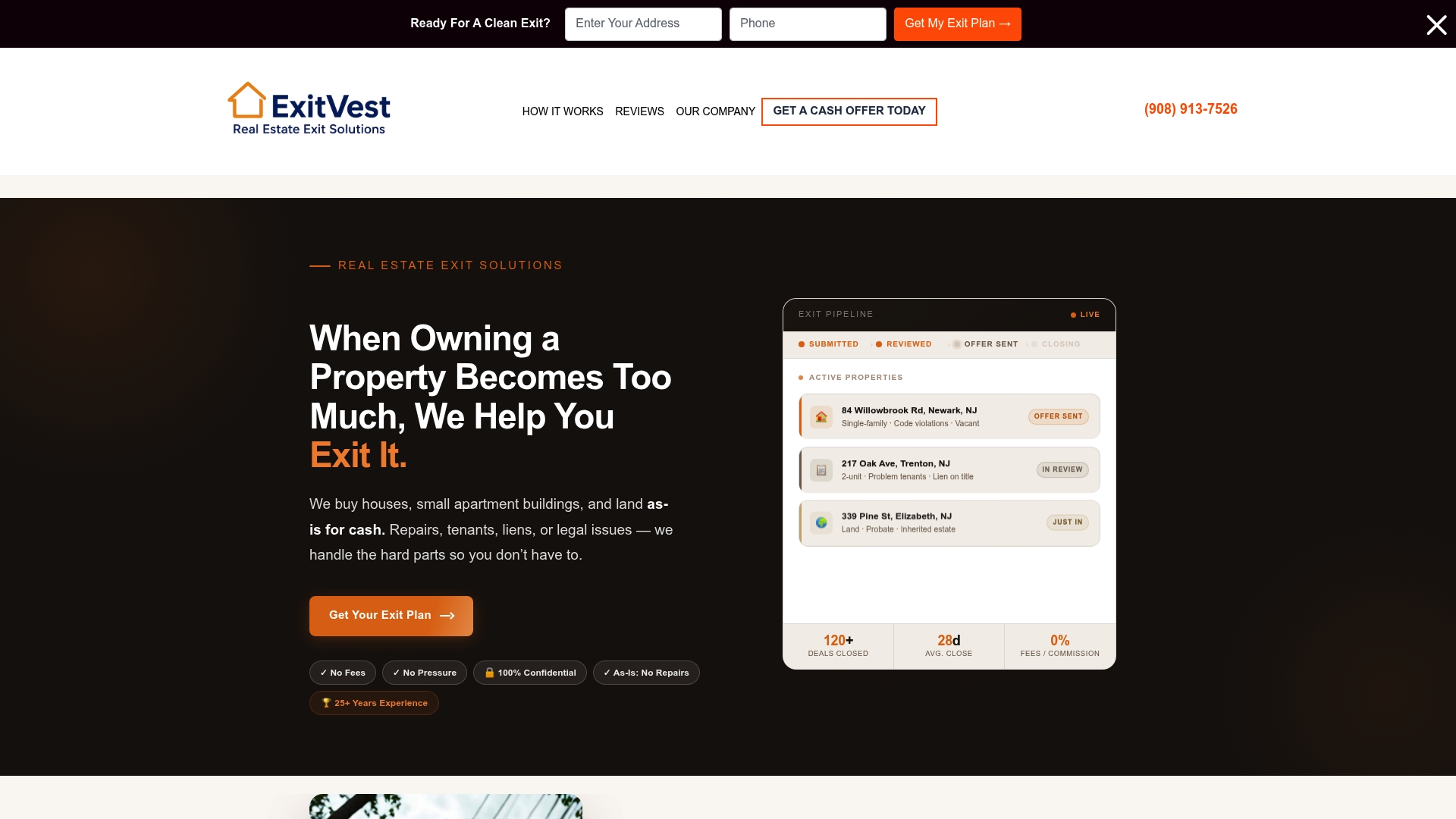
The process is direct. You describe your property, receive a cash offer, and choose your closing date. Exitvest handles the paperwork, coordinates with title, and guides you through the required NJ disclosures so nothing falls through the cracks. There are no listing fees, no repair demands, and no pressure. Learn exactly how it works and see if a cash sale is the right fit for your property and timeline.
FAQ
What disclosures are required to sell a fixer upper in NJ?
New Jersey requires sellers to complete a comprehensive disclosure form covering property defects, liens, radon, flood zone status, and lead water lines under the Real Estate Consumer Protection Enhancement Act. This applies to all sales, including as-is transactions.
Do buyers still get an inspection on an as-is NJ sale?
Yes. Selling as-is does not waive buyer inspection rights in New Jersey. Buyers can still inspect the property and withdraw with their deposit if findings are severe enough.
How much do cash buyers pay for fixer uppers in NJ?
Cash buyers in NJ typically offer 30%–70% of a home's fair market value for as-is fixer uppers. iBuyers may offer closer to 80% but apply stricter property condition requirements.
Can I sell a fixer upper in NJ if it has a tax lien?
Yes, but the lien must be resolved at or before closing. Unpaid NJ property taxes accrue interest at up to 18% and can lead to foreclosure if left unaddressed. Selling quickly is often the best way to recover remaining equity.
What is the fastest way to sell a fixer upper in New Jersey?
Selling directly to a cash buyer or investor is the fastest method, with closings possible in days to weeks. Traditional MLS listings take 30–90 days on average and attract fewer qualified buyers for distressed properties.