
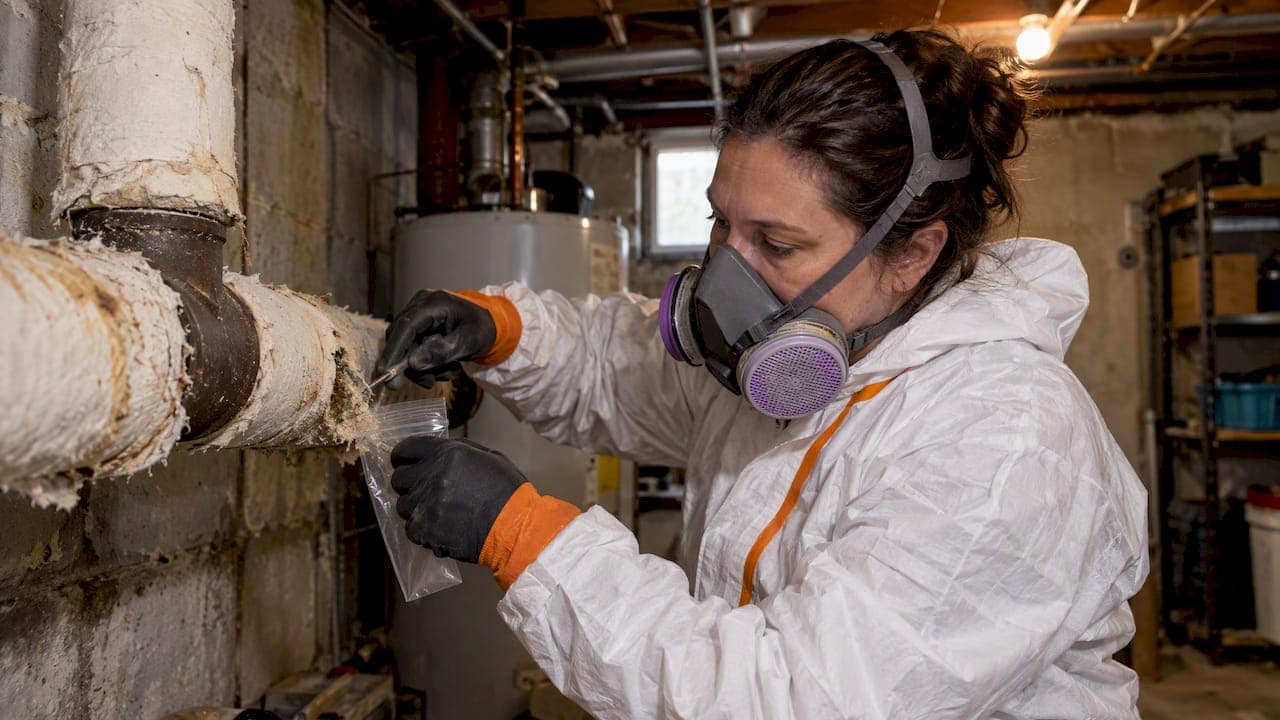
In most of the U.S., you can sell a house that contains asbestos. Your real legal exposure comes from hiding what you know where state rules require disclosure. You have three practical paths: sell as-is to a cash buyer, offer the buyer a credit for remediation, or hire licensed professionals to remediate before listing. If you see damage or plan renovations, get a written professional inspection first.
TL;DR:
- Federal law sets no national seller disclosure rule for asbestos, so check your state form and consult a local attorney before describing known materials.
- Intact asbestos usually can remain undisturbed, but damaged materials or planned renovations warrant sampling by trained, accredited professionals rather than do it yourself testing.
- Minor professional containment may start around $1,500, while large removal can cost $15,000 to $30,000 or more and take weeks to months.
- A written report with lab results, condition notes, and clearance records can address lender or insurer requests and give buyers a concrete basis for negotiation.
- Cash buyers often face fewer contingencies and close faster, but may pay less; credits preserve a wider buyer pool, while remediation requires upfront spending.
Table of Contents
- What asbestos is and why its condition matters when you sell
- Disclosure duties in the U.S.: federal context and state variation
- When to test, who to hire, and how to use the report
- Remediation options: leave it, encapsulate it, or remove it
- Selling options and trade-offs: as-is cash, credits, or remediate first
- Costs, timeline, and what asbestos does to financing and price
- Seller checklist: from discovery to closing
- A seller's view: document, disclose, then pick the path that fits
- Selling as-is for cash with ExitVest
- FAQ
- Sources
What asbestos is and why its condition matters when you sell
Asbestos-containing material (ACM) is any building product with asbestos fibers mixed in. Presence alone is not the problem. The EPA explains that risk is driven by the condition of the material and whether it gets disturbed. Intact, undisturbed ACM is generally safest, and repair or removal is indicated mainly when material is damaged, crumbling, or about to be disturbed by renovation.
If your home is older, these materials are worth knowing about, and worth mentioning if you disclose:
- Pipe and boiler insulation
- Textured or "popcorn" ceilings
- Vinyl floor tiles and the adhesive beneath them
- Roofing and siding products
- Vermiculite attic insulation
The EPA recommends leaving undamaged asbestos alone rather than testing or removing it just to improve how the property looks for a listing. That matters because many sellers assume removal is mandatory. It usually is not, and clumsy removal can release fibers and make things worse.
Measured indoor air levels also vary with the amount, type, and condition of the material, and federal toxicology data shows fiber release is sporadic and rises when materials are disturbed.
Disclosure duties in the U.S.: federal context and state variation
Federal law does not set one national seller disclosure rule for asbestos. The EPA's asbestos FAQ states that sellers are not required at the national level to disclose asbestos or vermiculite, though state or local requirements may apply.
What federal law does regulate is work. The Asbestos NESHAP sets inspection, notification, and work-practice requirements for demolition and renovation. Some residential buildings are generally exempt from some requirements, but that exemption is narrow. The EPA has clarified that several buildings under one owner, or a demolition that is part of a larger project, can still be regulated.
State law is where most sellers feel the obligation. Disclosure forms commonly ask about known hazardous materials, and the wording and form differ from state to state. Our overview of as-is disclosure laws across states shows how much the rules vary. An as-is sale does not erase what you know.
To confirm what applies to you:
- Read your state's seller disclosure form line by line.
- Ask a local real estate attorney how known asbestos should be worded.
- Check with your state environmental agency about local rules.
- Keep copies of any prior inspection or contractor records you already have.
Lead paint is a useful comparison if your home predates 1978. Federal rules require sellers of that housing to disclose known lead-based paint, provide records and a pamphlet, and allow a 10-day testing window. Asbestos has no equivalent federal script, but the same habit of full, documented disclosure protects you.
When to test, who to hire, and how to use the report
Testing is not automatic. It makes sense in a few situations: visible damage to suspect materials, planned renovations, a request from a buyer or lender, or a wish to document condition before listing. Visual inspection alone usually cannot confirm asbestos, because identification generally requires sampling and lab analysis.

Hire trained, accredited people. The EPA strongly recommends trained and accredited professionals for sampling, repair, or removal. Do not scrape samples yourself.
A useful report gives you something to hand a buyer. Look for these elements:
- A list of the materials sampled and where they were taken
- Laboratory results for each sample
- A condition assessment of the materials, intact or damaged
- Recommended next steps
- Clearance documentation from the contractor if any work was completed
Pro Tip: Ask the inspector to write the report so a buyer's lender can read it. A clear, dated document often does more to calm a negotiation than a verbal explanation.
Remediation options: leave it, encapsulate it, or remove it
Pick the least invasive route that fits the material's condition and your timeline.
- Encapsulate or repair. For damaged material, trained contractors can seal or enclose it to limit fiber release without full removal.
- Abate or remove. Extensively damaged materials, or anything a buyer plans to demolish or heavily renovate, may need full removal by trained professionals, with permits and clearance testing. A licensed abatement contractor handles abatement and disposal as a defined scope of work.
Improper removal by unqualified people can increase exposure by putting fibers into the air, so this is not a weekend project.
Selling options and trade-offs: as-is cash, credits, or remediate first
Your best path depends on three things: how fast you need to close, how much cash you can spend now, and how much uncertainty you can tolerate.
- As-is cash sale. A direct or investor buyer typically brings fewer contingencies and a faster close. The net price is often lower, but you skip remediation, repeat showings, and long financing timelines. Our guide to what an as-is sale involves walks through the mechanics.
- Offer a credit. You list normally and give the buyer a credit toward remediation. This keeps the buyer pool wide, but you need precise contract language and likely a contingency tied to the inspection.
- Remediate first. A completed abatement with a clearance report can appeal to conventional buyers and smooth financing. The tradeoff is upfront cost and a longer road to listing.
If your problem is bigger than asbestos alone, the same logic applies to other hazards. We cover similar reasoning in our piece on selling a house with mold and on selling without repairs.
Costs, timeline, and what asbestos does to financing and price
Plan around real figures. EPA guidance indicates that minor containment or sealing jobs can start around $1,500, while large-scale removal projects can range from $15,000 to $30,000 or more.
Minor professional containment can start around $1,500, and large removal projects often reach $15,000 to $30,000 or more. Your scope, material, and location move the number, so collect written quotes before deciding.
Timelines depend on the scope. Allow time for:
- Inspection and lab turnaround
- Contractor quotes and scheduling
- Any permit window your jurisdiction requires
- Clearance testing after work is done
Plan for weeks to months, not days, if you remediate before listing.
Asbestos can also affect the money side of a sale. Some lenders or insurers may ask for remediation or documentation, and buyers often negotiate price when they hear the word. A clearance report reduces friction because it replaces an unknown with a record. When a buyer pays cash and skips lender conditions, many of those hurdles disappear, which is one reason as-is sales move faster.
Seller checklist: from discovery to closing
Work through these steps in order so nothing is missed.
- Stop disturbing suspect materials and restrict access to the area.
- Document the visible condition with dated photos and keep any records you have.
- Get a professional inspection if materials are damaged or a buyer or lender asks.
- If remediation looks likely, gather written quotes from trained asbestos contractors.
- Check your state's disclosure form and confirm the wording with a local attorney.
- Include asbestos information and reports in your disclosure package.
- Put clear language in the contract for any credit or contingency.
- Keep remediation and clearance records through closing and after.
Pro Tip: Do not sand, drill, or scrape suspect flooring or ceilings to "check" it. Disturbance is what turns a manageable material into a problem.
If your situation also involves other paperwork gaps, our guide to selling with unpermitted work covers disclosure wording and when to call an attorney.
A seller's view: document, disclose, then pick the path that fits
Asbestos sales can become more difficult when sellers stay silent about what they know. Write down what you know, share it, and let a professional report back you up. That record protects you and gives buyers a reason to negotiate calmly. If speed and simplicity matter more than top dollar, an as-is cash sale is a lawful and sensible choice. A good report works twice: it documents safety and strengthens your hand at the table.
— Alek
Selling as-is for cash with ExitVest

We buy houses, small apartment buildings, and land as-is for cash, with flexible closing timelines and no agent commissions. This fits owners facing foreclosure, an inherited property, expensive repairs, or a need for a faster route than a traditional listing.
- Request a written cash offer through our Cash Offer Program.
- Ask us how we document condition and handle disclosures.
- Compare our timeline with the other paths above.
See how our as-is process works or get a cash offer today.
This article is general information, not a substitute for advice from a qualified doctor. Consult a qualified healthcare professional about your own circumstances before acting on anything here.
FAQ
Is it possible to sell a house that contains asbestos?
Yes. Selling a house with asbestos is generally allowed in the U.S., and removal is not a standard requirement for a sale. Your main duty is to follow your state's disclosure rules for anything you know about.
Does a seller have to declare asbestos?
It depends on your state. Federal law does not impose a national seller disclosure requirement, but state or local rules may. Check your state's disclosure form and ask a local attorney how to word it.
Is it safe to buy a house that has asbestos?
Often, yes, when the material is intact and left undisturbed. Risk rises when materials are damaged or disturbed, so buyers should plan renovations around professional assessment and licensed abatement.
How much does asbestos affect house value?
There is no single figure, because the effect depends on the material's condition, the buyer pool, and the cost to address it. Written quotes and a clearance report give buyers a concrete number to negotiate around instead of a fear.