

An as-is home sale is defined as a transaction where the seller offers the property in its current condition, with no obligation to make repairs, upgrades, or improvements before closing. The buyer accepts the property exactly as it stands, taking on full responsibility for any repairs after the purchase. Sellers still carry legal disclosure duties, which is a critical point many homeowners miss. As-is sales are commonly used in situations involving foreclosure, inherited properties, financial pressure, or homes that simply need more work than the seller can afford or wants to manage. This guide explains what the term means in practice, how it affects pricing, what the law requires, and how to sell a home as-is successfully.
What is an as-is home sale and what does it really mean?
An as-is home sale means the seller will not repair, replace, or credit anything before closing. The property transfers in whatever condition it is in on the day of sale. This is the standard industry definition used in real estate contracts across the United States.
The phrase "as-is" appears as a clause in the purchase agreement. It signals to buyers that the seller has no intention of negotiating repairs after an inspection. As-is sales offer relief for sellers who need to close quickly or who lack the funds to fix problems before listing.
What this does not mean is that sellers can hide known problems. The as-is property sale meaning is often misunderstood as a legal shield. It is not. Sellers must still disclose material defects they are aware of, regardless of the as-is status. The clause limits repair obligations, not honesty obligations.
How does selling a home as-is affect price and market value?
As-is homes typically sell at a lower price than comparable turnkey properties. As-is homes command lower prices because buyers factor in the cost and risk of repairs they will need to make after closing. That discount is not arbitrary. It reflects real money the buyer expects to spend.
The size of the price gap depends on the property's condition. A home needing only cosmetic work will sell closer to market value than one with structural issues, a failing roof, or outdated electrical systems. Sellers who price realistically attract serious buyers faster and avoid deals falling apart mid-contract.
Here is what typically affects as-is pricing:
- Repair severity: Major structural or mechanical issues create larger price reductions than cosmetic flaws.
- Local market conditions: In a seller's market, as-is homes still attract strong offers because inventory is tight.
- Buyer pool: As-is listings draw investors and flippers who calculate offers based on after-repair value, not sentiment.
- Comparable sales: Nearby sold prices set the ceiling, and condition adjustments pull the as-is price below that ceiling.
Pro Tip: Get a pre-listing inspection before you set your price. Knowing the repair costs lets you price with confidence and prevents buyers from using unknown defects to negotiate you down further after their own inspection.
Setting realistic price expectations aligned with the property's actual condition is the single most effective way to attract serious buyers and close without drama.
What are the legal obligations when selling a home as-is?
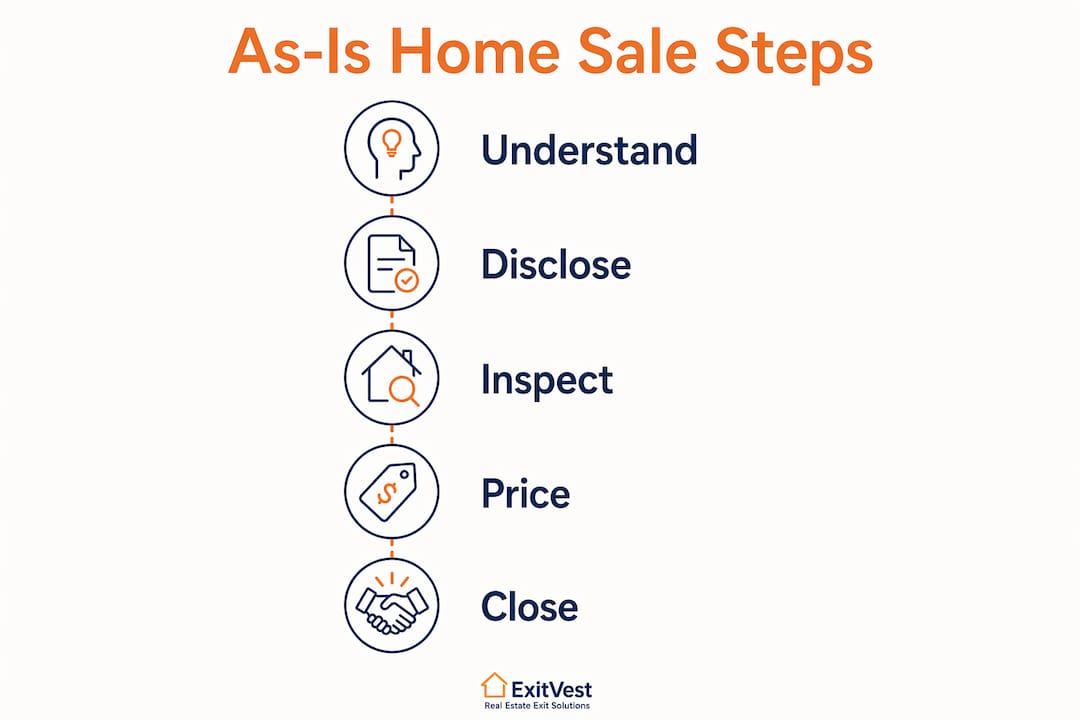
Selling as-is does not mean selling blind. The law in every U.S. state requires sellers to disclose known material defects. Federal law adds additional requirements, such as lead paint disclosure for homes built before 1978. An as-is clause changes repair obligations, not disclosure obligations.
The distinction between an as-is clause and a no-inspection-contingency clause is one sellers frequently confuse. These are two separate contract terms. Buyers retain inspection rights even when a property is listed as-is, unless the contract explicitly waives the inspection contingency. Most standard purchase contracts include a 10–17 day inspection period during which buyers can inspect and withdraw without penalty.
Here is what sellers must understand about their legal position:
- Disclose known defects in writing. Use your state's standard disclosure form and list every material issue you know about, from roof leaks to foundation cracks.
- Do not confuse as-is with no-inspection. Buyers can still inspect. If they find something alarming, they can walk away during the contingency period.
- Understand fraud exposure. Concealing known defects despite an as-is clause can result in post-closing lawsuits for fraud or misrepresentation.
- Use precise contract language. Ambiguous as-is clauses create legal disputes. Work with a real estate attorney to define exactly what the clause covers.
"An as-is clause protects sellers from warranty obligations but does not eliminate buyers' rights to withdraw if inspections uncover unacceptable defects." — LegalClarity
The safest approach is full transparency paired with clear contract language. Sellers who try to use as-is status as a way to hide problems face far greater legal and financial risk than the repair costs they were trying to avoid.
Who buys as-is properties and what do they expect?
The buyer pool for as-is properties is different from the pool for turnkey homes. Understanding who is likely to make an offer helps sellers negotiate smarter and set realistic timelines.
Investors and flippers are the most common as-is buyers. They look for properties where the purchase price plus renovation costs leaves room for profit or strong rental yield. Their offers are calculated, not emotional. They will inspect thoroughly and price their bids based on what the property will cost to bring to market condition.
Other common buyer types include:
- Owner-occupants seeking fixer-uppers: Buyers who want to customize a home and are willing to do the work in exchange for a lower purchase price.
- Cash buyers: Buyers who do not need mortgage approval, which matters because FHA and VA loans often require repairs before funding. Cash buyers sidestep that hurdle entirely.
- Developers: Buyers interested in the land or in tearing down and rebuilding, where the existing structure's condition is irrelevant.
Every one of these buyer types expects a price that reflects the property's condition. They will conduct inspections. They will use findings to negotiate. Sellers who understand this going in avoid being caught off guard when buyers come back with repair credits or revised offers after the inspection period.
How to sell a home as-is and improve your outcome
Selling as-is does not mean doing nothing. Sellers who take a few deliberate steps close faster and at better prices than those who list and wait.
Full disclosure builds trust. Pre-inspection and full disclosure reduce the chance of deal-breaking surprises. When buyers already know what they are getting, they are less likely to panic after their own inspection and walk away.

Low-cost cosmetic improvements widen your buyer pool. Deep cleaning, fresh paint, and lighting updates can attract buyers beyond just investors and flippers. A home that looks cared for, even if it needs structural work, signals that the seller was responsible. That perception matters.
Here is a quick comparison of seller approaches:
| Approach | Effort Required | Likely Buyer Pool | Price Impact |
|---|---|---|---|
| List as-is, no prep | Minimal | Investors, flippers only | Lowest offers |
| Add cosmetic fixes | Low cost, low effort | Investors plus owner-occupants | Moderate improvement |
| Pre-inspection + disclosure | Time investment | Broader, more confident buyers | Stronger, cleaner offers |
| Full repairs before listing | High cost, high effort | Full market | Closest to market value |
Pro Tip: Work with a real estate agent who has closed as-is transactions before. They know how to write the listing description honestly without scaring off buyers, and they understand how to handle inspection negotiations specific to as-is contracts.
Experienced sellers use as-is status as a marketing tool while protecting themselves with clearly defined contract language. That combination, honest positioning plus precise legal terms, is what separates smooth as-is closings from contentious ones.
Key takeaways
Selling a home as-is requires honest disclosure, realistic pricing, and clear contract language to protect both parties and close successfully.
| Point | Details |
|---|---|
| As-is means no repairs, not no disclosure | Sellers must still disclose all known material defects in writing. |
| Price reflects condition | As-is homes sell below comparable turnkey properties; price accordingly from the start. |
| Buyers can still inspect | An as-is clause does not remove the buyer's right to inspect and withdraw during the contingency period. |
| Cosmetic prep pays off | Low-cost fixes like cleaning and paint expand your buyer pool beyond investors alone. |
| Cash buyers solve financing gaps | FHA and VA loans often won't fund as-is purchases, making cash buyers the most reliable path to closing. |
The part most sellers get wrong about as-is sales
I have worked through enough of these transactions to say this plainly: most sellers who choose as-is status do so for the right reasons but execute it poorly. They price too high because they do not want to accept what the market will actually pay. Then they sit on the market for months, eventually drop the price anyway, and close for less than they would have gotten with a realistic starting price.
The second mistake is treating as-is as a legal escape hatch. It is not. I have seen sellers skip disclosure forms, assume the clause protects them, and end up in post-closing disputes that cost far more than the repairs they were avoiding. The clause limits what you have to fix. It does not limit what you have to say.
The sellers who do this well share one trait: they are honest about the property's condition from day one, with buyers and with themselves. They get a pre-inspection, price based on real numbers, and use clear contract language. That approach attracts buyers who are already prepared for what they are getting. Those deals close. The ones built on vague language and wishful pricing do not.
If you are weighing as-is versus making repairs, run the actual numbers. Get contractor estimates. Compare them against the likely price difference. Sometimes repairs pencil out. Often, especially for major structural issues, they do not. The decision should be financial, not emotional.
— Alek
How Exitvest helps you sell as-is without the stress
If you are a homeowner dealing with foreclosure, an inherited property, problem tenants, or a home that needs more work than you can manage, Exitvest offers a direct path forward.

Exitvest buys houses, land, and small apartment buildings as-is for cash, with no agent commissions, no repair requirements, and no drawn-out timelines. You get a fair cash offer based on your property's current condition, and you choose the closing date that works for your situation. Exitvest operates nationwide, with strong coverage in New Jersey, Texas, Florida, and Tennessee. If you want to understand exactly what selling your property as-is for cash looks like in practice, or if you want to see how the process works from offer to close, Exitvest makes it straightforward. No pressure, no obligation.
FAQ
What does as-is mean in real estate contracts?
As-is in real estate means the seller will not make repairs or provide credits for defects before closing. The buyer accepts the property in its current condition, though sellers must still disclose known material defects.
Can a buyer still inspect an as-is home?
Yes. An as-is clause and a no-inspection-contingency clause are separate terms. Most contracts include a 10–17 day inspection window during which buyers can inspect and withdraw if they find unacceptable issues.
What are the main advantages of as-is sales for sellers?
The primary advantages of as-is sales include faster closings, no repair costs, and a simpler transaction process. They work especially well for sellers facing time pressure, financial constraints, or properties in poor condition.
Do FHA or VA loans work for as-is home purchases?
Often not. FHA and VA loans frequently require repairs as a condition of funding, which means buyers using these loan types may be unable to purchase properties with significant defects. Cash buyers are the most reliable option for as-is transactions.
What happens if a seller hides defects in an as-is sale?
Concealing known defects despite an as-is clause exposes sellers to fraud and misrepresentation claims after closing. The as-is clause does not protect sellers who fail to disclose problems they were aware of.