
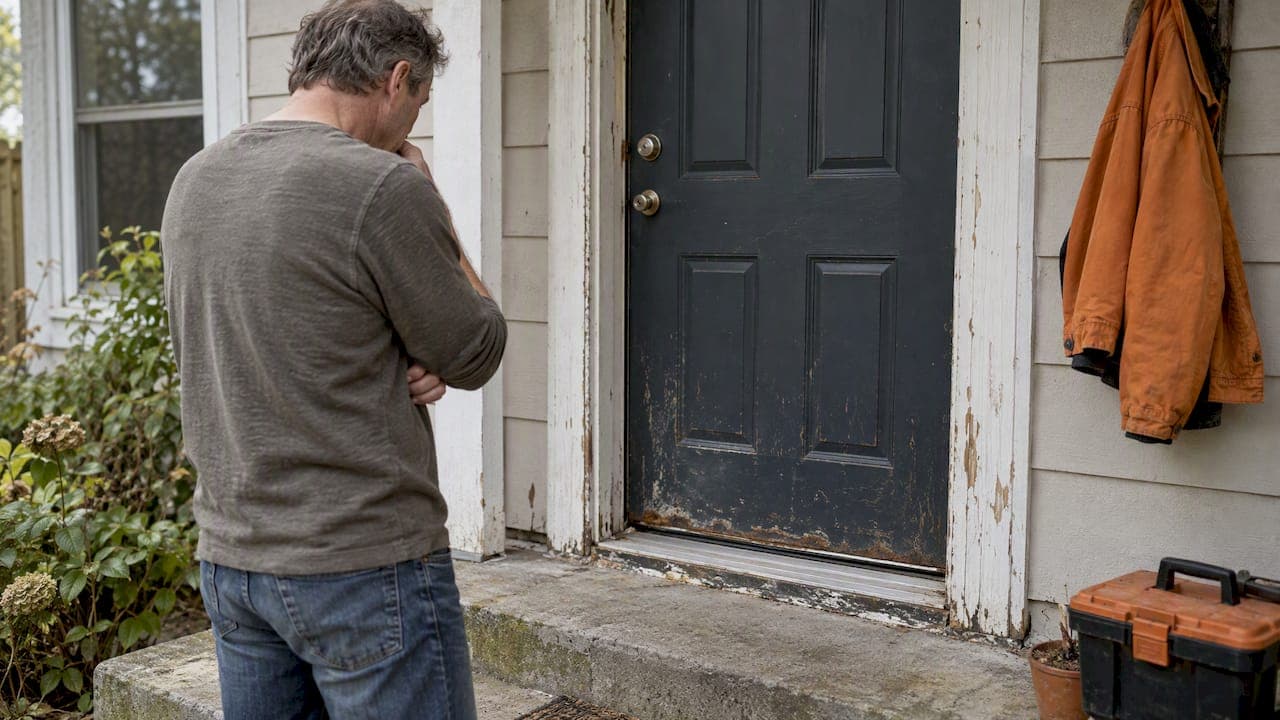
Sellers who need speed or cannot front repair money should sell as-is, while those with equity, time, and strong local comps often come out ahead repairing first. The right call depends on net proceeds, your timeline, and whether buyers will need financing. The 2025 Remodeling Impact Report, IRS Publication 523, and cash buyers like ExitVest all shape that math.
TL;DR:
- Selling as-is offers faster closing and lower upfront costs but typically results in lower offers and negotiations after inspection.
- Repairing first can increase sale value and attract financed buyers, but it involves higher initial expenses, carrying costs, and potential extra repairs.
- Homeowners with urgent needs, such as foreclosure or problematic tenants, benefit more from an as-is sale to speed up the process.
- Repairs like a new steel front door often recoup their entire cost, while larger projects may not yield enough return to justify the investment.
- Financed buyers introduce risk for repairs or as-is sales, as lender requirements and inspections can derail closings regardless of the sale method.
Table of Contents
- Quick pros and cons of selling as-is vs. repairing first
- Who benefits from selling as-is and who benefits from repairing first
- Repair cost vs. value: NAR figures and how to use them
- How inspections, appraisals, and lender rules affect financed buyers
- Legal duties and disclosures for U.S. sellers using an "as-is" label
- Tax and closing-cost considerations that affect the repair decision
- A practical step-by-step decision checklist
- Why many sellers choose a cash as-is buyer
- Get a cash offer for your home as-is
- FAQ
- Sources
Quick pros and cons of selling as-is vs. repairing first
Selling as-is trades some sale price for speed and fewer headaches. Repairing first can raise your sale price, but only if the increase covers the cost plus the time you spend waiting.
- As-is pros: faster closing, no contractor coordination, smaller buyer pool but often includes cash buyers who skip financing contingencies.
- As-is cons: typically lower offers, and some buyers still negotiate price after inspection even without repair promises.
- Repair-first pros: broader buyer pool, potential for a higher appraisal, and access to financed buyers who need move-in-ready condition.
- Repair-first cons: upfront cash outlay, carrying costs while work is done, and the risk that inspections or appraisals demand even more repairs.
Hidden costs often decide the outcome: mortgage payments, taxes, and insurance while the home sits, plus the chance a lender-driven appraisal forces additional work you did not budget for. That tension is exactly why the repair ROI numbers in the next sections matter so much.
Who benefits from selling as-is and who benefits from repairing first
Your personal situation usually points to one path more clearly than the market does.
- Facing foreclosure or a tight deadline: as-is sales remove the repair timeline entirely and let you close on your own schedule.
- Inherited a property you don't want to manage: as-is avoids coordinating contractors for a home you may not know well.
- Dealing with problem tenants or code violations: as-is sidesteps the access and liability issues that come with renovating an occupied or flagged property.
- Have equity, savings, and time: repairing first lets you target the projects with the strongest payback.
- Local comps show renovated homes selling faster or higher: check days on market and recent sale prices for updated versus dated homes in your area before committing cash to repairs.
If your neighborhood's buyers are overwhelmingly financed and picky about condition, repairs may pay for themselves. If buyers are flexible or investor-heavy, as-is rarely costs you as much as you'd expect.
Repair cost vs. value: NAR figures and how to use them
The 2025 Remodeling Impact Report tracks what percentage of a project's cost typically comes back at resale. A new steel front door recovers about all of its cost, making it one of the rare repairs that can pay for itself, while bigger projects return less.
To decide if a repair is worth doing, use a simple formula: expected price uplift minus repair cost, minus carrying costs, minus transaction costs, equals your incremental net proceeds. If that number is negative, selling as-is protects more of your equity than renovating does. NAR's list of resale-friendly projects also notes that homeowners often love larger remodels for personal enjoyment even when they recover less money, so keep emotional value separate from the resale math.

How inspections, appraisals, and lender rules affect financed buyers
An inspection tells a buyer about the home's condition; an appraisal tells their lender what it's worth. Both can derail a sale if problems surface, according to CFPB guidance on inspections and appraisals.
- Roof, foundation, or active safety hazards commonly trigger lender conditions before closing, regardless of how the listing is worded.
- HVAC or electrical issues flagged in an inspection can stall financing even when the buyer is otherwise satisfied.
- When repairs block closing, sellers can lower the price, offer a repair credit, set up an escrow holdback, or pivot to a cash buyer who doesn't need lender sign-off.
Financed buyers add real risk to an as-is strategy, since their lender, not just the buyer, ultimately decides whether the sale can close as agreed.
Legal duties and disclosures for U.S. sellers using an "as-is" label
Labeling a sale "as-is" does not erase your disclosure obligations. According to NCREC bulletins on as-is sales, as-is signals that you won't make repairs, but you still must disclose known material defects, and buyers retain the right to inspect the property.
- Complete seller disclosure forms honestly, even for a property you're selling without repairs.
- Keep records of past repairs or known issues, including anything like water intrusion covered in a mold disclosure checklist.
- Consider a pre-listing inspection so you know what a buyer's inspector will likely find.
- Consult a local real estate attorney when defects, liens, or title issues are unclear.
Pro Tip: Disclose what you know in writing, even informally, before listing; it's far cheaper than a dispute after closing.
Tax and closing-cost considerations that affect the repair decision
IRS Publication 523 allows many sellers to exclude up to $250,000 of gain ($500,000 for joint filers) on a primary home sale, but keeping clear records still matters for anything beyond that threshold.
- Save every invoice for capital improvements, like a new roof or an addition, since these can adjust your cost basis.
- Routine repairs, like patching drywall or repainting, generally don't count as capital improvements for tax purposes.
- Talk to a tax professional before a large renovation, especially if your gain is near the exclusion limits.
Good records protect you either way, whether you repair first or sell as-is and let a buyer handle the work later.
A practical step-by-step decision checklist
Running the numbers takes less time than most sellers expect, and it removes the guesswork.
- Get two value estimates: a current as-is value from a comparative market analysis or broker price opinion, and an after-repair value (ARV) from an appraiser or agent familiar with renovated comps.
- Collect contractor bids and realistic timelines, then add carrying costs like your mortgage, taxes, and insurance for that period.
- Calculate net proceeds both ways, subtracting repair costs, carrying costs, and transaction costs (commissions, closing fees) from each scenario's expected sale price.
- Weigh the nonfinancial factors: your tolerance for stress, disclosure risk on an older home, and how urgently you need to move, then set a fallback plan if repairs run over budget.
Pro Tip: When a repair's ROI is marginal, offering a buyer credit or trimming your list price is often cheaper and faster than hiring a contractor. For a deeper look at how a 15-25% discount compares to retail pricing, it helps to run both numbers before listing.
Why many sellers choose a cash as-is buyer
Across foreclosure timelines, inherited properties, and homes with safety or code issues, the same pattern shows up: sellers trade some sale price for certainty and speed. A cash as-is sale skips financing contingencies and repair negotiations entirely, which matters most when a deadline is fixed, like a foreclosure auction date or a probate timeline. The tradeoff is real. You typically net less than a fully repaired, retail-listed sale, but you also avoid months of carrying costs, contractor risk, and the chance a buyer's lender kills the deal at the last minute.
— Alek
Get a cash offer for your home as-is
If reading through the repair math leaves you leaning toward as-is, some companies buy houses, small apartment buildings, and land directly from owners, with no commissions or agent fees eating into your proceeds. Some buyers work with sellers facing foreclosure, problem tenants, code violations, liens, or inherited properties nobody wants to manage, and handle properties most traditional buyers pass on.

- Flexible closing timelines that match your situation, whether you need to close in days or need more time to coordinate a move.
- A straightforward cash offer with no pressure to accept.
If your property fits any of these situations, you can get a cash offer today and see what a no-repair sale looks like for your specific home.
FAQ
Is it better to sell a house as-is or fix it up?
It depends on whether your expected price increase from repairs exceeds the repair, carrying, and transaction costs combined. If you need to sell quickly or lack repair funds, as-is typically nets you more in practice once holding costs are considered.
Is it wise to sell a house as-is?
Selling as-is is a sound choice when you need speed, want to avoid contractor coordination, or own a property with issues like code violations or problem tenants. According to NCREC guidance, you still must disclose known material defects even in an as-is sale.
Is it risky to buy a house as-is?
Buying as-is carries more uncertainty since the seller won't commit to repairs, but buyers retain inspection rights under most contracts. Financed buyers face extra risk because a lender's appraisal, per CFPB guidance, can still require repairs before closing.
How much do I lose if I sell my house as-is?
The gap between an as-is sale and a fully repaired sale depends on your specific repair costs versus the value they would add, which the NAR cost-recovery data can help estimate project by project. Factoring in carrying costs and transaction fees often narrows that gap more than sellers expect.
Sources
- What Does “As Is” Really Mean? — NCREC bulletins
- 2025 Remodeling Impact Report — NAR/NARI
- Schedule a home inspection — Consumer Financial Protection Bureau (CFPB)
- Publication 523, Selling Your Home — IRS