
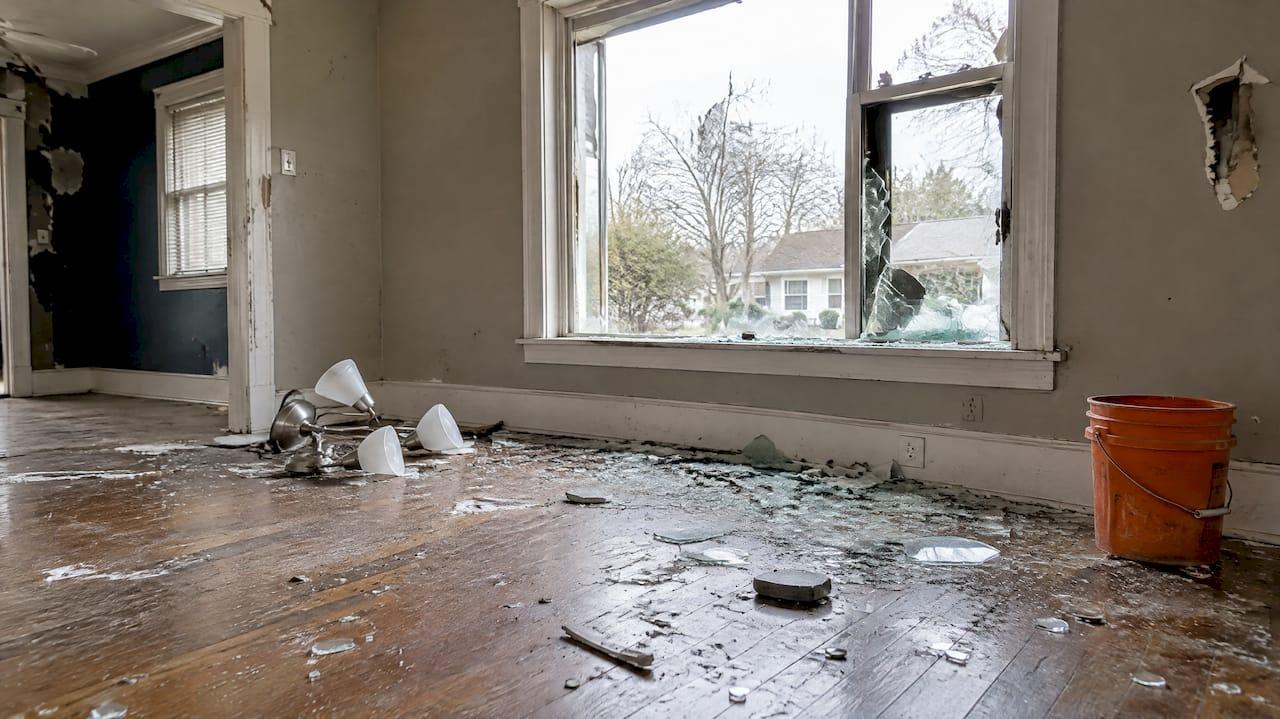
You can sell a vandalized house as-is, with the damage, the debris and sometimes the graffiti still in place. The order matters. Document and secure the property, talk to your insurer before you repair anything, disclose what you know, then choose between repairing for a retail buyer and selling as-is for cash. For most owners who are tired, out of town or short on money, a direct cash sale to a buyer who purchases damaged houses as-is is the shortest path. That is what we do at Exitvest: we buy houses, land and small apartment buildings for cash, in any condition, with no commissions or agent fees.
TL;DR
- Photograph everything, file a police report and call your insurer before you throw anything out or make permanent repairs.
- Board up openings to stop further damage and keep every receipt.
- A cash sale does not erase your duty to disclose known material defects, and liens or title problems can sink a closing.
- Vandalism usually costs a house more than the repair bill, so compare an as-is offer with repair costs plus holding costs and time.
- We make cash offers on vandalized, vacant and distressed houses in New Jersey, Texas, Florida, Tennessee and nationwide, with closing dates set around your situation.
Table of Contents
- Step 1: Document the damage and secure the house
- Step 2: Call your insurer before you fix or sell
- What vandalism does to a house's value
- Repair first or sell as-is?
- What you must disclose, even in an as-is sale
- Liens, code violations and title problems
- How selling a vandalized house to us works
- Ready to sell a damaged house?
- FAQ
- Sources
Step 1: Document the damage and secure the house
What you do in the first days decides how much an insurer pays and how clean your sale file looks later.
Photograph and video first. The Idaho Department of Insurance advises recording the initial damage before any cleanup and not discarding anything until the adjuster says so. Walk every room, shoot close-ups of broken items, and film the exterior and yard.
File a police report. An insurer's guide to vandalism claims notes that the police report number is needed for the claim. The report also gives you a dated record that the damage came from a third party, which helps when you explain the house to a buyer.
Stop the damage from spreading. Board broken windows and doors, and cover holes in the roof. The New York State Department of Financial Services says these protective costs are generally covered and reimbursable if you keep receipts. If water got in, dry it out quickly, because moisture turns a vandalism problem into a mold problem.

Keep the house looking watched. Vacant, damaged houses attract repeat visits. Change locks, keep the lawn cut, and ask a neighbor or family member to check in. If you live far away, say so up front when you talk to any buyer: out-of-state owners are a common case for us.
Step 2: Call your insurer before you fix or sell
Vandalism is a covered peril under many homeowners policies, but coverage depends on your policy, your deductible and whether the house was occupied. Three rules protect you:
- Notify the insurer promptly.
- Make no permanent repairs until the insurer has inspected. The New York regulator warns that a company can refuse to pay for damage that was repaired before it saw the property in its damaged condition.
- Get coverage confirmed in writing before you approve repair work, as the Idaho guidance recommends.
If the house was vacant for a long stretch, read the policy's vacancy language and ask your agent or the claims adjuster how it applies. That is a question for your insurer, and the answer decides whether you have a claim payment to factor in.
An insurance payout and an as-is sale can go together. Some owners take the claim money, handle only the emergency securing, and sell the house to a cash buyer in its current condition. Others sell first and let the buyer deal with it. Which fits depends on your lender (if you have a mortgage, the lender may have a say in claim payments) and your timeline, so ask your insurer how a sale before repairs affects the claim before you sign anything.
What vandalism does to a house's value
The repair bill is only part of the loss. Appraisers describe a loss of value as having two parts: the cost to correct the damage, plus a residual loss in value after repairs are made, often called stigma. A house with a break-in history, mold from a broken window or stripped copper can sell for less than the same house with the same repairs done quietly.
As-is value starts with what comparable, healthy houses sell for, then subtracts repairs, deferred maintenance and vacancy costs. Investors often use the 70% rule: maximum purchase price equals the after-repair value times 0.70, minus repair costs. It is a starting point, not a final underwriting formula, but it shows why as-is offers land below retail value.
Here is a worked example with made-up round numbers. Your house would sell for $240,000 once repaired. Repairs are estimated at $35,000. The rule gives $240,000 × 0.70 = $168,000, minus $35,000 = $133,000. Now compare that with the retail route: $240,000 minus $35,000 in repairs, minus agent commissions, minus months of mortgage, taxes, insurance and utilities on an empty house, minus buyer concessions after their inspection. The gap narrows quickly, and it closes entirely if the repairs turn out larger than the estimate. Our guides walk through estimating your as-is home value in four steps and when a 15 to 25% as-is discount nets sellers more.

Repair first or sell as-is?
Vandalism damage runs from graffiti and broken windows to stripped plumbing and wiring, smashed fixtures, torn-out cabinets and fire. Cleanup crews, contractors, permits and re-inspection all take time, and you carry the house the whole while.
| Factor | Repair and list | Sell as-is for cash |
|---|---|---|
| Upfront money | You pay for cleanup, repairs and often staging | None from you for repairs |
| Time to close | Repairs, listing, showings, buyer financing | Closing date set around your needs |
| Commissions and fees | Agent commissions and closing concessions | No commissions or agent fees with us |
| Uncertainty | Buyer inspection can reopen the price | Offer made on the house as it stands |
| Best when | Damage is light and you have money and time | Damage is heavy, the house is vacant, or you need to move on |
If the damage is light, say a few windows and some paint, and you have the cash and patience, repairing can make sense. If it is heavy, or the house is vacant, inherited, tenant-damaged or already behind on payments, selling as-is avoids spending money on a house you no longer want. Our pages on selling a home without repairs and cash offers with no repairs cover the mechanics, and why cash buyers purchase damaged properties explains why a damaged house is still a normal purchase for the right buyer.
Typical items buyers price in include debris and personal belongings, broken windows, water or fire damage, missing fixtures, and code violations that follow from the damage. You do not need to haul everything out first. Ask any buyer, including us, what condition the house needs to be in at closing.
What you must disclose, even in an as-is sale
"As-is" tells the buyer you will not repair. It does not let you hide what you know. Legal commentary on cash sales states that even in an as-is cash deal the seller must still disclose known material defects, and that undisclosed liens, unpaid taxes or title defects can collapse a closing at the last minute. Our overview of as-is disclosure laws across the states gives the national picture. Vandalism history, broken systems, water intrusion, a roof opened up by intruders and any open insurance claim are the kinds of facts to write down honestly. If a break-in left the roof damaged, it helps to know what roof issues in a home inspection mean so you can describe them accurately.
Rules differ by state. In our four main states:
- New Jersey: a law effective August 1, 2024 requires a signed Property Condition Disclosure Statement from the seller, and unrepresented sellers must give it to the buyer before the buyer is bound to a purchase contract. The state's form says known material defects must be disclosed even if the printed form does not ask about them.
- Texas: Section 5.008 of the Property Code requires a seller's disclosure notice covering material facts and the physical condition of the property.
- Florida: under the Johnson v. Davis rule, a seller must disclose known facts that materially affect the value of the property and are not readily observable to the buyer.
- Tennessee: residential sellers generally complete a state disclosure or exemption form; confirm the current requirements for your sale with a Tennessee real estate attorney or the title company handling the closing.
This is general information, not legal advice. For a specific situation, such as an estate sale or a house with a pending claim, a real estate attorney in your state is the right person to confirm what you must put in writing.
Liens, code violations and title problems
Vandalism often arrives with other trouble: city citations for boarded or unsecured buildings, overgrown lots, unpaid taxes, or a mortgage in default. These do not stop a sale, but they must be dealt with at closing. Unpaid liens are paid from the sale proceeds, and a title company finds them before the deal closes. Read our guides on selling a house with a lien, selling with a judgment and title issues in cash sales to see how payoffs work. We buy properties with liens, code violations and foreclosure pressure, so tell us about them at the start rather than the end.
How selling a vandalized house to us works
We buy houses directly from owners for cash, as-is. Our process page explains the steps. In short:
- You tell us about the property, its condition and your timeline.
- We explain our cash offer numerically, with no fees or commissions.
- If it works for you, we set a closing date that fits your situation. We do not pressure sellers with urgency.
- You close and are paid in cash.
If foreclosure is part of the picture, our Cash Offer Program is built for owners behind on payments. Your conversations with us are confidential.
Our view on vandalized houses
Owners of vandalized houses usually describe the same feeling: the damage is bad, but the real weight is everything attached to it. The insurance calls, the city notices, the carrying costs, the fear of the next break-in. Those costs are what make a slow retail sale expensive.
That is why we put the numbers on the table at the start. A clear cash offer, no commissions or agent fees and a closing date that suits you let you compare an as-is sale against repairs with real figures instead of guesses. We take on distressed and complex properties that traditional buyers and agents often avoid, and you deal directly with decision-makers.
Document the damage, talk to your insurer, disclose honestly, and then choose the route that gets you out cleanly. For many owners that route is a direct cash sale.
Alek
Ready to sell a damaged house?
If you want to know what your vandalized house could fetch as-is, we buy houses, small apartment buildings and land in any condition. Start with our house buying page, tell us where the property is and what happened, and we will come back with a straightforward cash offer.

FAQ
Can I sell a vandalized house if it still has trash and belongings inside?
Yes. Many buyers who purchase as-is will take a house with debris or leftover belongings, and the cleanout is reflected in the offer. Photograph the contents first for your insurer, and confirm with the buyer what must be removed before closing.
Should I file an insurance claim before I sell?
Notify your insurer promptly and do not make permanent repairs before an inspection, since insurers can refuse to pay for damage repaired before they see it. Ask how a sale before repairs affects your claim. Your insurer and, if you have a mortgage, your lender can answer that for your policy.
Do I have to tell a cash buyer about the vandalism?
Yes. Cash and as-is sales still require you to disclose known material defects, and each state has its own form or rule. Being open about the damage also keeps the deal from falling apart later.
Will vandalism lower my offer more than the repair cost?
Often, yes. Appraisers treat the repair cost and a residual loss in value as separate parts of the loss. A fair as-is offer reflects repairs, holding costs and the house's condition, which is why it comes in below retail value.
Can I sell if the house has liens or code violations from the damage?
Yes. Liens are normally paid from the sale proceeds at closing, and code violations are priced into an as-is offer. We buy properties with both, so share them early.
Sources
- New York State DFS: Managing and Mitigating Losses
- Idaho Department of Insurance: Home and Renters Claims
- Does Homeowners Insurance Cover Vandalism?
- Post-Repair Diminution in Value (JurisPro)
- Market Value vs. As-Is Value vs. ARV
- New Jersey DOBI Bulletin 24-11
- New Jersey Seller's Property Condition Disclosure Statement
- TREC Seller's Disclosure Notice
- Knowledge of Defects Standard (Florida)