
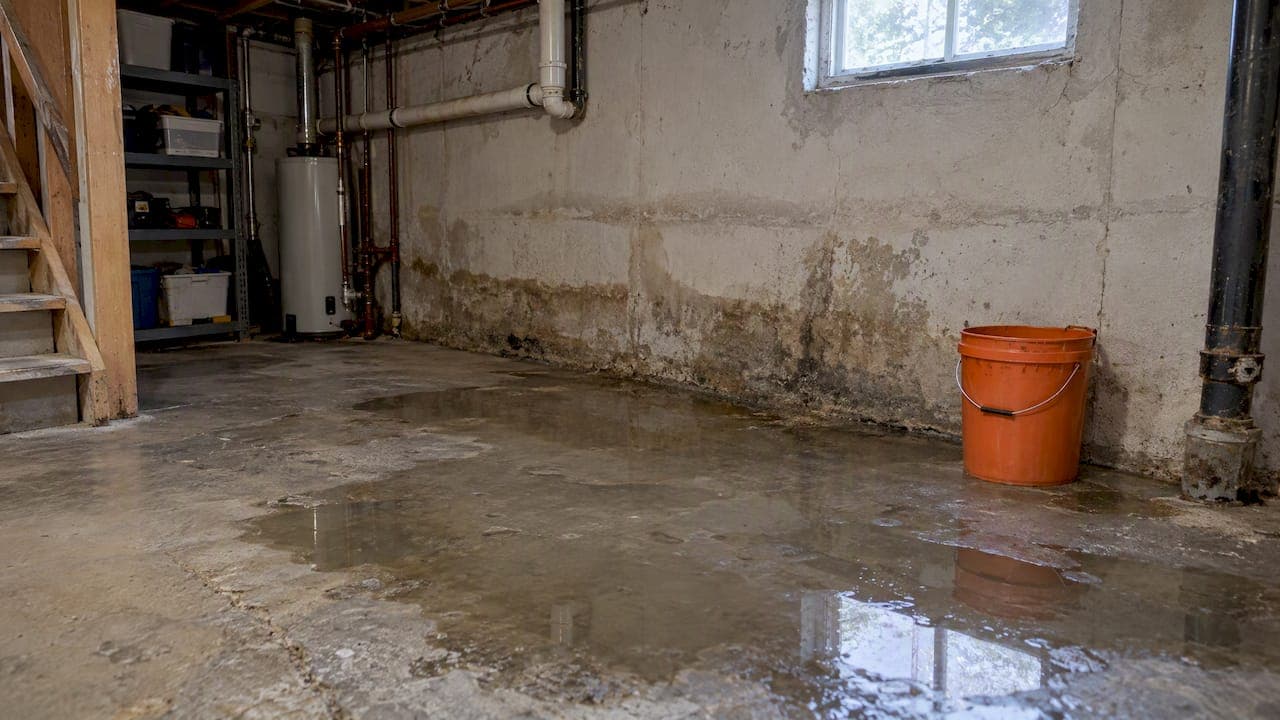
You can sell a water-damaged house, and you do not have to fix it first. Your realistic routes are three: repair and list on the open market, list it as-is and accept a lower price and fewer buyers, or sell as-is directly to a cash buyer. Whichever you choose, you have to disclose what you know about the damage. That rule does not go away when you sell "as-is."
This guide walks through how to size up the damage, what the law and lenders expect, how the three routes compare, and what paperwork to pull together before you talk to anyone.
TL;DR
- Water damage is sellable. The price and your buyer pool depend on how deep the damage goes, whether the moisture source is fixed, and whether mold is present.
- Selling "as-is" limits repairs. It does not erase your duty to disclose known problems.
- Lenders can be the real obstacle: a house with active leaks, rot or mold may not qualify for certain mortgages, which narrows you toward cash buyers.
- Gather inspection reports, repair invoices, photos and your insurance claim history before you list or request offers.
- If time, repair costs or a tight budget are the problem, a direct cash sale skips repairs, showings, commissions and buyer financing fallout.
Table of Contents
- How serious is water damage when you sell?
- Start by finding out what you actually have
- What you have to disclose
- Your three routes, compared
- Why financing matters more than most sellers expect
- Pricing a water-damaged house
- Documents to gather before you list or ask for offers
- Special cases: storm, flood, smoke and fire
- Our perspective
- Selling your water-damaged house to ExitVest
- Checklist: your next seven days
- FAQ
- Sources
How serious is water damage when you sell?
Very, but it is a spectrum. A stained ceiling from a roof leak that was repaired two years ago is a small negotiation point. A basement that floods every spring, a slab with a supply line leak, or framing that has been wet for months is a different conversation.
Buyers and their inspectors look for three things: whether the water source has been found and fixed, whether the materials that got wet were dried or replaced, and whether the damage will come back. Research from Fannie Mae on homes damaged in Hurricane Harvey found damaged homes were less likely to sell right away, and sold at a steep discount when they did. The price effect shrank over time but was still there at least two years later. That is a storm-scale example, yet the logic carries over: visible damage makes buyers cautious, and caution costs money.
The Consumer Financial Protection Bureau also notes that past disaster damage can signal a higher-risk area, and past insurance claims are likely to raise insurance costs. Informed buyers know this, so expect them to ask about claims.
Start by finding out what you actually have
Before you pick a selling route, you need a clear picture of the damage. Guessing in either direction costs you: overestimate and you sell cheap, underestimate and a buyer's inspector writes the story for you.
Walk the property yourself
Realtor.com's seller checklist suggests looking outside for damaged roof shingles, clogged or damaged gutters, siding and window problems, and standing water. Inside, it points to leaky or sagging ceilings, warped or buckled floors, leaning walls, doors that no longer close, and leaks under sinks or near other water sources. Add a few of your own habits: smell the basement and closets, press on baseboards, and check the water heater and washing machine hoses.

Consider a professional inspection
The National Association of REALTORS® says a pre-sale inspection is not required, but it can identify problems before you list. It can cover structure, roof, plumbing, electrical, HVAC, ventilation and insulation, and possible health issues such as mold, radon, lead paint and asbestos. The value is time. You learn what repairs might cost and how defects could affect your asking price before a buyer's inspector does.
Know when mold means calling a professional
The EPA's mold guide says moisture control is the key to mold control. Fix the water problem, then clean or remove mold promptly, and dry wet materials within 24 to 48 hours where possible. The same guide advises consulting a professional when water damage is extensive, mold covers more than about 10 square feet, HVAC contamination is suspected, or sewage or contaminated water caused the damage.
It also warns that cleaning visible mold without eliminating the moisture source is not enough, because the mold will most likely return. If you are in that situation, our article on selling a house with mold for cash covers the repair-cost tipping point in more detail.
What you have to disclose
Disclosure rules are set by each state, and they differ in form, in what counts as material and in what a seller must put in writing. Some states use a detailed statement, some lean on "buyer beware," and many fall in between. Ask a local real estate attorney or your state's Realtor association for the exact form where you live.
A few principles hold broadly:
- Known problems get disclosed. NAR states that flood damage is considered a material fact in real estate transactions, and that failing to disclose it can result in liability.
- "As-is" is not a shield. As-is means you will not make inspection-based repairs, but it does not erase applicable disclosure duties.
- Agents have limits too. NAR says REALTORS® must disclose reasonably apparent adverse facts, but are not obligated to discover latent or hidden defects. That makes you, the owner, the person who knows the history.
- Flood zones matter. FEMA's guidance says owners should disclose whether a building is in a Special Flood Hazard Area, and that most lenders require the buyer to carry flood insurance before closing in those areas. A moderate- or low-risk designation does not remove the hazard or a lender's ability to require coverage. NAR adds that nearly one-third of flood insurance claims occur in low- or moderate-risk areas.
When in doubt, disclose. A written disclosure of a fixed leak is a minor line item. An undisclosed one found after closing can become a lawsuit.
Your three routes, compared
| Repair, then list | List as-is on the market | Sell as-is to a cash buyer | |
|---|---|---|---|
| Upfront cost | Highest: remediation, rebuild, permits | Low to moderate | None for repairs |
| Timeline | Slowest: repairs plus listing plus financing | Moderate, unpredictable | Fastest, set by you |
| Likely price | Potentially highest, if the local market rewards it | Lower, with negotiation after inspection | Below retail, but with no repair or agent costs |
| Buyer pool | Widest | Narrower: investors, cash buyers, some lenders | One direct buyer |
| Financing risk | Lower once repaired | Higher: lender condition rules can kill deals | Minimal, cash |
| Showings and inspections | Many | Many | Typically one walkthrough |
Route 1: repair first
Repairing can pay when the damage is limited, the source is fixed and your local market is strong enough that buyers will pay for a clean house. One large listing platform notes that sellers can tackle big-ticket items like mold or water damage before listing to appeal to a broader group of buyers and avoid post-inspection renegotiation. The catch is that you front the money and the time, and the cost often runs past the first estimate once walls are opened. For the numbers, see our comparison of as-is versus repaired sales.
Route 2: list it as-is
This keeps you out of the contractor business, but you will price lower and expect fewer buyers. The bigger issue is financing. Realtor.com's guidance says an inspection does not itself legally require repairs, but lenders, building codes, safety rules or a buyer's decision may effectively require action, and it calls ongoing basement water, major foundation movement and rotted framing serious issues. If the buyer's lender will not fund a home with active damage, the deal collapses after you have already spent weeks under contract.
Route 3: sell as-is for cash
A direct cash sale is built for the situation where repairs are not worth it to you. There is no lender appraisal to fail and no condition-based financing, so the damage does not derail the deal. You also skip commissions, staging and repeated showings. The tradeoff is honest: the offer comes in under what a fully repaired house might eventually sell for, because the buyer takes on the repairs, the risk and the holding time. Our guide to selling a home without repairs lays out how to judge whether that tradeoff is right for you.

Why financing matters more than most sellers expect
Most sellers think of the damage as a price issue. In practice it is also a financing issue. Lenders want the collateral to be habitable and insurable. Active leaks, mold, compromised structure or missing systems can stop certain loan types, and an inspection repair request can turn into a hard requirement. If you are selling to a buyer who needs a mortgage, expect the appraisal and inspection to be the moment of truth.
Insurance is the other gate. The CFPB points out that the current homeowner might pay a lower flood-insurance cost than a new owner, who must pay the full risk-based cost. A buyer who learns that late can walk away or renegotiate. Cash buyers price that risk in from the start, which is why they can move when a mortgage buyer cannot.
Pricing a water-damaged house
There is no standard percentage. Price depends on the cost to fully repair, what the house would sell for in good condition nearby, and how motivated and how well informed the buyer is.
A sound way to approach it:
- Estimate the after-repair value from recent sales of similar, undamaged homes on your street or neighborhood.
- Get at least two written repair estimates covering drying, mold remediation if needed, rebuild and any structural work.
- Subtract those costs, then subtract something for the buyer's time, risk and the financing pool you are losing.
- Compare that figure to what you would net after agent commissions, closing costs, holding costs and months of mortgage, taxes and utilities on a repair-and-list path.
Often the gap between routes is smaller than sellers assume once carrying costs are counted. When a house needs substantial work, the net from a direct as-is sale and the net from a discounted listing can land close together, and the faster, more certain one wins.
Documents to gather before you list or ask for offers
A tidy file turns a scary house into an understandable one. It lowers the discount a buyer applies to the unknown.
- Insurance claim records. A CLUE report contains detailed information about homeowners insurance claims on a property within the past seven years, including the date, type of loss and the amount paid. Water damage and foundation troubles show up there, so buyers' insurers see them too. Pull yours first so nothing surprises you.
- Proof of repairs. Invoices from licensed contractors, permits, before-and-after photos, and moisture readings. The EPA says cleanup is finished only after the moisture problem is fixed, visible mold and odors are gone, and a follow-up inspection shows no water damage or mold growth. Documentation of that kind is what a buyer wants to see.
- Inspection and estimate reports. Share them. The CFPB tells buyers to ask whether the property was previously damaged, what the damage was, and how it was repaired, and to have an inspector check the repairs. Answer those questions on paper before they are asked.
- Flood-zone and flood-insurance information. If you have a flood policy, include the declarations page and any claim history. FEMA's standard flood policy requires policyholders to submit proof of loss within 60 days, with detailed repair estimates and evidence that prior damage was repaired, so those records may already exist.
- Mortgage and lender paperwork. If a claim check was issued to you and your lender jointly, sort that out before closing so the title is clean.
Do not hide anything in the packet. Everything in it should match what you disclose.
Special cases: storm, flood, smoke and fire
Storm-driven damage tends to bring multiple issues at once: roof openings, wet insulation, compromised siding, standing water and later mold. For hurricane homes, see our guide to selling a hurricane-damaged house as-is while avoiding legal risk. For rising water specifically, read about selling a flood-damaged house with reports in hand.
Smoke and fire damage follow a similar path, with the added problem of odor, soot and firefighting water. Our article on selling a fire-damaged house covers the options and value questions. In all of these cases the same rules apply: find the source, document the facts, disclose what you know and weigh repair against an as-is sale.
Our perspective
We buy houses with water damage regularly, and the same mistake shows up again and again: owners wait. They hope the stain dries, the buyer's inspector will miss it, or a contractor will find a cheap fix. Meanwhile the house keeps taking on damage, the mortgage and taxes keep running, and mold turns a repair into a remediation.
Our view is plain. If the damage is small and the source is fixed, repair it and list the house. If the damage is large, the repair bill is a gamble, or you need to be done on a schedule, selling as-is for cash is a legitimate and often smarter way out. We do not pressure anyone, we explain our offer numerically, and we never charge fees or commissions. You should get an offer you can compare against the real cost of repairing and carrying the house, then decide with all the figures in front of you.
— Alek
Selling your water-damaged house to ExitVest
If you would rather skip the repair bills, the inspections and the lender risk, we buy houses, land and small apartment buildings directly from owners, in any condition, with no agent fees or commissions. Closing timelines are flexible and set around your situation. You can see how the process works on our as-is cash sale page, or start straight away on the ExitVest home page and tell us about the property. We buy nationwide, with a strong focus on New Jersey, Texas, Florida and Tennessee.
Checklist: your next seven days
- Stop the water. Shut off the source, then dry the area. Dry materials fast, since the EPA's guidance points to 24 to 48 hours.
- Photograph everything with dates, including the source of the leak and any repair work.
- Order a professional inspection if the damage is not obvious or mold is possible.
- Collect your insurance claim records and request your CLUE report.
- Get two written repair estimates.
- Look up your state's seller disclosure form and read it fully.
- Compare the net of three paths: repair and list, list as-is, and a direct cash sale. Use the same carrying costs in each column.
FAQ
Can I sell a house with water damage without fixing it?
Yes. You can sell it as-is, but you must still disclose known damage. Expect a lower price and a smaller buyer pool, since some lenders will not finance a home with active damage. Cash buyers and investors are the usual fit.
Do I have to disclose water damage that was already repaired?
In most states you should. Past water and flood damage is treated as a material fact, and failing to disclose it can create liability. Share the repair invoices, photos and inspection results so the buyer sees the problem was handled.
Is it better to repair or sell as-is?
It depends on the cost of repairs, how long you can carry the house, and how strong your local market is. Repairs can raise the price, but they cost money and time up front, and estimates often grow once walls are opened. Compare your net from each route before you commit.
Can I sell a house that has mold after water damage?
Yes. The EPA says to fix the moisture source first, and it recommends professional help for large areas of mold or contaminated water. If you do not want to remediate, you can sell as-is to a buyer who accepts the condition, with the mold disclosed.
Sources
- NAR: Consumer Guide, Preparing to Sell Your Home
- Realtor.com: Home Inspection Checklist for Sellers
- Realtor.com: Mandatory Fixes After a Home Inspection
- EPA: A Brief Guide to Mold, Moisture, and Your Home
- NAR: Flood Insurance & Disclosures
- NAR: CLUE Reports Explained
- FEMA: Real Estate, Lending and Insurance Professionals
- FEMA: Standard Flood Insurance Policy, Dwelling Form
- CFPB: Questions to ask about flood and disaster risk
- Fannie Mae: Mortgage Performance and Home Sales for Damaged Homes Following Hurricane Harvey
- U.S. News: How Does Selling a House As-Is Work?
- Zillow: How to Sell a House As-Is When it Needs Repairs