
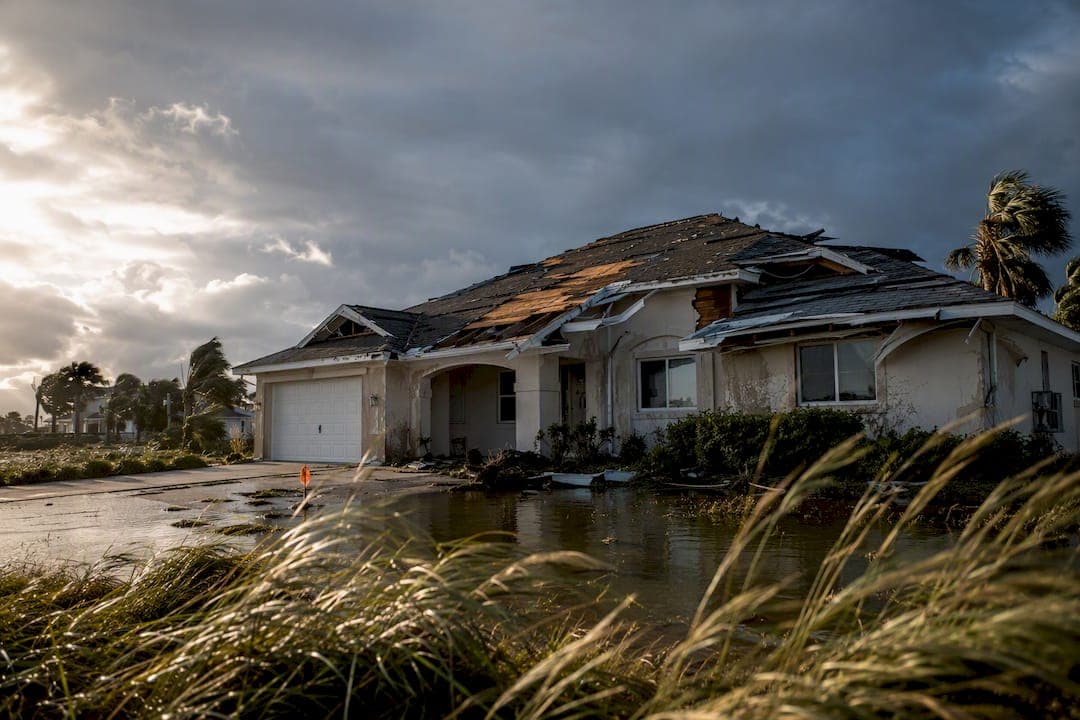
Yes, you can sell a hurricane-damaged house in the United States, and you don't have to fix it first. The fastest lawful path is to document every bit of damage with photos and a written inspection, disclose it honestly, and weigh cash or investor offers against the cost and time of repairs before you sign anything.
TL;DR:
- Sellers should obtain a professional repair estimate to determine if fixing the damage is financially worthwhile before deciding to sell as-is or repair.
- Cash buyers and investors often close in as little as one to two weeks on storm-damaged homes, but they deduct extra for unseen damage and risks.
- Disclosing all known storm damage comprehensively, including photos, invoices, and permits, reduces the risk of post-sale legal disputes.
- FEMA’s 50% rule can force costly rebuilds if repair costs exceed half of the property's pre-damage value, depending on local floodplain regulations.
- Quick cash offers are ideal when the repair costs outweigh potential retail sale profits or when time and management of repairs are limited.
Table of Contents
- How Do You Sell a Hurricane-Damaged House?
- How Do You Price a Hurricane-Damaged Home?
- What Must You Disclose When Selling a Storm-Damaged House?
- How Does FEMA's 50% Rule Affect a Hurricane-Damaged Sale?
- What Documents Do You Need to Sell a Storm-Damaged House?
- What Should You Ask Before Accepting an Offer?
- When Is an As-Is Cash Sale the Practical Choice?
- Get a Cash Offer for Your Storm-Damaged Property
- Where to Verify Legal and Insurance Details
- Sources
- FAQ
How Do You Sell a Hurricane-Damaged House?
Owners with storm damage generally choose from four paths, and the right one depends on how much cash you have on hand, how much time you can afford to wait, and how bad the damage actually is.
Sell as-is to a cash buyer or investor. This is the route most homeowners with real structural or flood damage end up taking, because investors and cash buyers close quickly and accept properties as-is, skipping the financing contingencies and repair demands that sink traditional deals. You lose some money on the sale price, but you avoid pouring more cash into a house you may not want to keep.
Repair and list on the open market. This can net a higher price if your insurance payout covers most of the work and the damage is cosmetic rather than structural. But repairs that cross certain cost thresholds can trigger local code upgrades under FEMA's substantial-damage rule, turning a simple roof fix into a full rebuild. Verify that threshold before you commit a dollar to repairs.
Assign the contract or wholesale it. Less common, but useful if you already have a buyer lined up or want to exit a purchase agreement without closing yourself. This works best when you're not the one holding title long-term.
Sell the land only. If the structure is a total loss, some buyers will pay for the lot and absorb demolition costs themselves, which sidesteps structural disclosure headaches entirely.
- As-is cash sale: fastest, lowest net proceeds, largest buyer pool, high closing certainty
- Repair then list: slowest, highest potential proceeds, smaller buyer pool if repairs are incomplete, moderate closing risk
- Assignment/wholesale: fast, moderate proceeds, narrow buyer pool, depends on your existing contract
- Land-only sale: moderate speed, lower total price, niche buyer pool, simpler closing
Pro Tip: Get a rough repair estimate before you decide anything. It's the single number that tells you whether repairing makes financial sense or whether you're better off selling as-is and letting someone else deal with the rebuild.
How Do You Price a Hurricane-Damaged Home?
Start with a professional inspection or a contractor bid. You need a real dollar figure for repairs before you can price anything with confidence, not a guess based on how bad the damage looks from the driveway.
- Pull comparable sales for undamaged homes in your area over the last three to six months.
- Subtract the repair estimate from that comparable value.
- Subtract a risk discount, typically covering the buyer's holding costs, financing, and the uncertainty of unseen damage (mold behind drywall, compromised framing).
- Compare the result to local cash-offer patterns so your price isn't wildly out of step with what investors in your market are actually paying.
The math investors use is straightforward: they estimate the after-repair value, subtract projected repair costs and their margin, and offer what's left. A house worth $300,000 fully repaired, with $60,000 in storm damage and a buyer margin built in, will not net anywhere close to $300,000 as-is. Buyers commonly deduct extra for mold, structural cracking, roof damage, electrical issues, and any history of flooding, since those items carry hidden costs that a quick walkthrough won't reveal. Selling without repairs tends to shorten timelines considerably. In some markets, cash buyers close in as little as 7 to 14 days, though the tradeoff is a lower offer reflecting that speed and risk.
What Must You Disclose When Selling a Storm-Damaged House?
Full disclosure isn't optional. Sellers in the United States must provide written documentation of known material defects, including storm damage, prior repairs, insurance claims, and issues like mold or structural compromise. Skipping this step doesn't make the problem disappear. It just moves the lawsuit from "before closing" to "after closing," and post-sale litigation over undisclosed damage is one of the most common and expensive disputes in residential real estate.
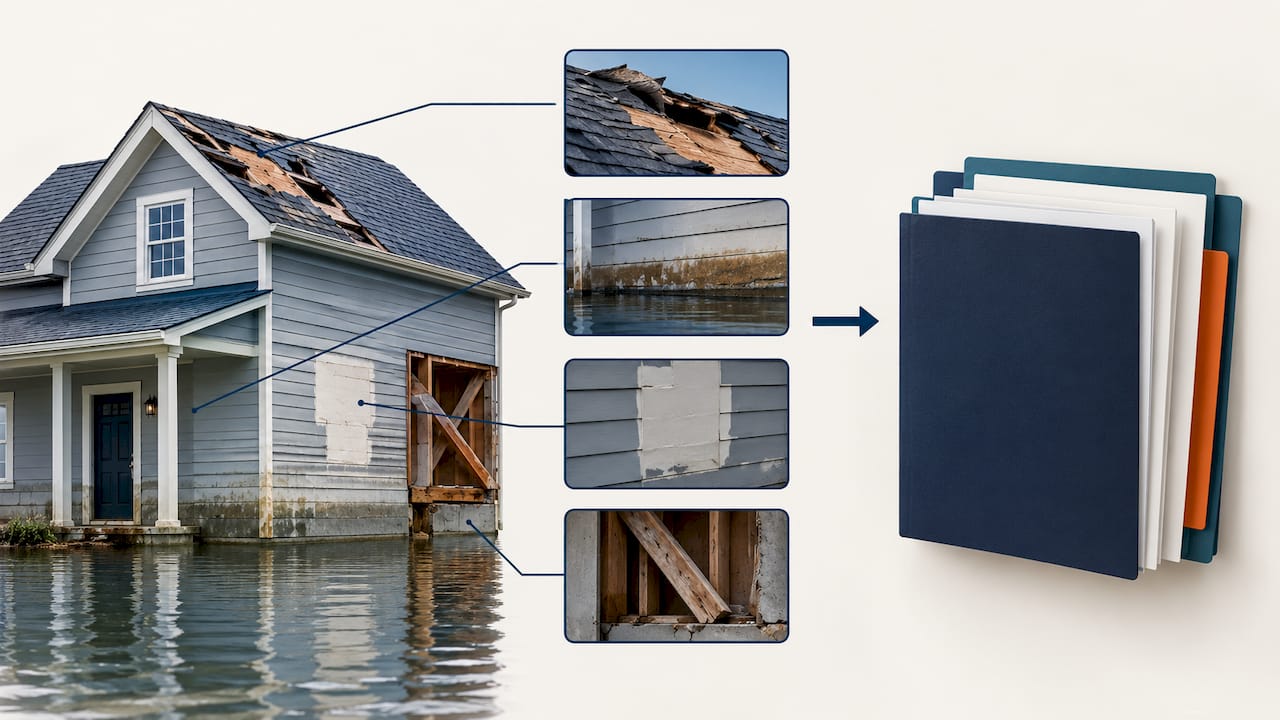
Some states go further. Florida's HB 1049, for example, requires explicit disclosure of flood damage and any federal disaster assistance received on top of the general disclosure duty. Check your own state's requirements, since disclosure statutes vary and a form that satisfies one state's law may fall short in another.
Protect yourself with a simple documentation habit:
- Photograph and video every damaged area before and after any work
- Keep contractor invoices, permits, and insurance claim numbers together
- Attach that documentation directly to your disclosure form rather than summarizing it
- Consider a seller affidavit or an escrow holdback if a buyer wants assurance that a specific repair will get finished
Agents and insurers alike warn that incomplete disclosures create outsized legal exposure, often more than the repair itself would have cost. Undocumented "fixes" done under the radar, without permits, are a frequent source of buyer lawsuits months after closing.
Pro Tip: If your damage touches structural elements, flood history, or anything the insurance company disputed, talk to a real estate attorney before you list. An hour of legal advice is cheap next to a post-closing lawsuit.
How Does FEMA's 50% Rule Affect a Hurricane-Damaged Sale?
Homeowner and flood insurance claims interact with your sale in ways that catch people off guard. An unresolved claim, one still under appeal or waiting on an adjuster's final number, can spook buyers who don't want to inherit a dispute along with the house.
The bigger issue is FEMA's substantial-damage rule, which kicks in when repair costs exceed 50% of the home's pre-damage market value. Cross that line, and local code often requires the structure to meet current floodplain and building standards, not just get patched back to what it was. That can turn a $40,000 repair job into a six-figure rebuild once elevation and code requirements enter the picture.
- Get a written substantial-damage determination from your local building department before assuming repairs are simple
- Ask your floodplain manager whether your property sits in a zone with stricter rebuild rules
- Factor claim timing into your sale strategy; buyers move faster when the insurance picture is settled
What Documents Do You Need to Sell a Storm-Damaged House?
Buyers move faster and negotiate less aggressively when you hand them a complete paper trail instead of making them guess. Assemble a professional inspection report, contractor repair bids, any permits pulled for prior work, insurance claim documentation, and clear photos or video of every affected area, including mold or waterline marks.
- Schedule a professional inspection and get it in writing
- Collect contractor bids that itemize repair costs
- Pull permit records for any past work, especially electrical or structural
- Organize insurance claim paperwork by date and outcome
- Photograph visible hazards and label them clearly for buyer safety
Pro Tip: Package everything into one folder, digital or physical, before you list. A flood-damaged house sale moves faster when buyers don't have to chase you for basic paperwork.
What Should You Ask Before Accepting an Offer?
Not every cash offer deserves the same trust, and not every retail offer is worth the wait. Verify proof of funds before you take any offer seriously, and pin down the exact length of any inspection contingency so a "quick close" doesn't quietly stretch into six weeks.
- Ask for proof of funds in writing, not a verbal assurance
- Negotiate escrow holdbacks or seller credits instead of doing repairs yourself under pressure
- Weigh a lower guaranteed cash offer against a higher offer that carries financing and inspection contingencies
- Walk away from buyers who push vague timelines or, worse, suggest you skip disclosure paperwork
Pro Tip: A buyer who asks you to hide known damage isn't doing you a favor, they're setting you up to be the one holding the liability after closing. Understanding why cash buyers purchase damaged properties in the first place helps you spot a legitimate offer versus a lowball attempt dressed up as urgency.
When Is an As-Is Cash Sale the Practical Choice?
Some companies see the same pattern after hurricane seasons: owners holding damaged homes often lose more money waiting and repairing than selling as-is. Structural risk, mold exposure, and legal disclosure duties tend to increase the longer a damaged house sits unsold. A transparent cash offer with clear math and a closing timeline based on the seller's situation can be helpful.
— Alek
Get a Cash Offer for Your Storm-Damaged Property
Some services buy houses in as-is condition, damage and all, without charging commissions or agent fees. Direct cash sales can skip inspection contingencies and financing delays that often delay retail deals on damaged properties.

This route makes the most sense when time matters, when the repair bill outweighs what a retail buyer would pay for a fixed-up home, or when you simply don't want to manage contractors and permits on a house you're ready to let go of. Before you request an offer, gather your inspection report, any contractor estimates, and your insurance claim documentation. Having that paperwork ready speeds up the process and gives you a clearer picture of where your offer will land. Start by requesting a cash offer today and see the number before you decide anything.
Where to Verify Legal and Insurance Details
- Nolo's guide to required disclosures explains the general U.S. seller disclosure duty
- HouseDigest's guide on disclosing hurricane damage covers value impact and practical steps
- Pie-Sun's breakdown of the FEMA 50% rule walks through substantial-damage triggers
- Contact your local building department for a property-specific substantial-damage determination
This article is general information, not a substitute for advice from a qualified lawyer. Consult a qualified legal professional about your own circumstances before acting on anything here.
Sources
- Required disclosures when selling real estate (Nolo)
- Do You Have To Disclose Hurricane Damage When Selling & How Does It Impact Home Value? (HouseDigest)
- How to sell a storm-damaged home when you can’t afford repairs because of the FEMA 50% rule (St. Pete-Clearwater Sun / Pie-Sun)
FAQ
How Hard Is It to Sell a House in a Flood Zone?
It's harder than selling a comparable house outside a flood zone, mainly because flood zone status must be disclosed and buyers often factor in higher insurance costs, but flood-zone homes sell regularly, especially to cash buyers and investors who account for that risk in their offer.
How Long Are You Liable for a House After You Sell It?
Liability depends on your state's statute of limitations for fraud or nondisclosure claims, often several years, which is why complete, documented disclosure at the time of sale matters more than any deadline.
What Happens if My House Gets Destroyed by a Hurricane?
You can still sell it, either as a teardown to a land buyer or as-is to an investor who plans to rebuild; your insurance claim status and any FEMA substantial-damage determination will shape which buyers are interested and at what price.
What Is the Hardest Month to Sell a House?
Timing varies by market, but homes damaged in hurricane season often face a slower buyer pool in the immediate aftermath simply because so many storm-damaged properties hit the market at once, which is one more reason cash buyers who don't wait on financing tend to move faster during that window.