
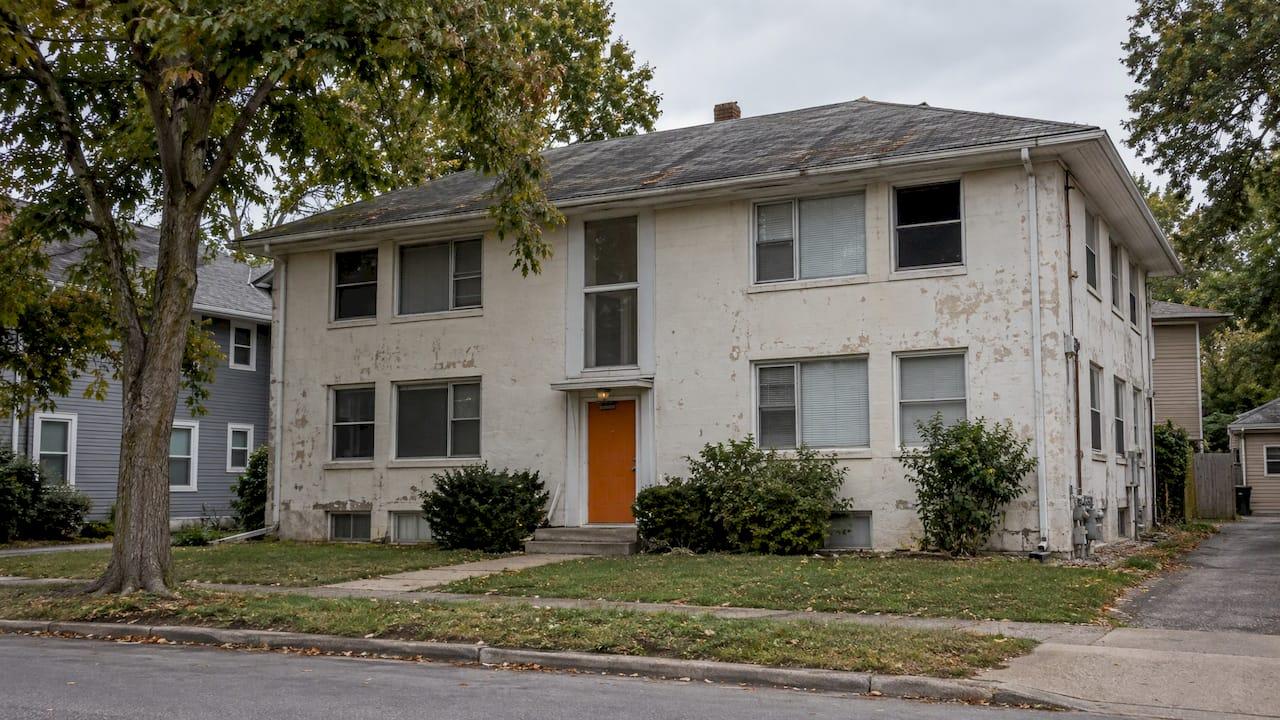
You can sell a duplex, a fourplex or an eight-unit building in its current condition: no repairs, no renovation, no staging. The catch is that "as-is" changes who pays for repairs, not what you must disclose, and a building with tenants, liens or code violations adds steps a house sale never has. A direct cash buyer who purchases small apartment buildings as they stand, like ExitVest, removes most of that friction, because there is no listing, no buyer's lender and no repair negotiation to survive.
This guide covers what as-is means for a small multifamily owner, how the price is built, what you still owe the buyer in disclosure, what happens to tenants and deposits, and how closing works.
TL;DR
- As-is means the buyer takes the building in its current condition and you do not repair or credit for it. It does not erase your duty to disclose known material problems.
- The price is driven by income, occupancy, repair needs and comparable sales, so a vacant or half-empty building is priced on what it earns today and what it will cost to stabilize.
- Leases and security deposits go with the building. Tenants keep their rights after the sale.
- Liens, back taxes and code violations are normally paid from your proceeds at closing, so you need payoff figures early.
- We buy small apartment buildings for cash, with no commissions or agent fees and a closing timeline built around your situation.
Table of Contents
- What "as-is" really means for an apartment building
- How an as-is price is set
- What you still have to disclose
- Documents to pull together
- Tenants, leases and deposits
- Liens, back taxes and code violations
- Steps and timeline for an as-is sale
- Why selling directly can beat listing
- Our perspective
- Get a cash offer for your building
- FAQ
- Sources
What "as-is" really means for an apartment building
An as-is sale is a sale in which you tell the buyer up front that you will not fix anything or give credits for what an inspection finds. The buyer decides whether the building's condition works at the price. That is the whole bargain.
It is not a free pass on honesty. The Wisconsin Real Estate Commission's guidance says an as-is clause does not stop a seller from being liable for concealing defects, making false statements, or failing to disclose material conditions the buyer is poorly placed to find. State rules differ, so the safe habit is to write down everything you know about the building and hand it over.
For a deeper look at the idea across property types, see our guide to what an as-is home sale is.
Does the size of the building matter?
Yes, for rules and for pricing. In California, for example, the statutory Transfer Disclosure Statement covers one-to-four unit properties, so a fourplex is inside it and a five-unit building is not. Five units and up are also valued differently, as the next section shows. If you own an eight-unit building, expect commercial-style questions about rents, expenses and leases rather than a simple home inspection.
How an as-is price is set
A house is priced mostly on what similar houses sold for. An apartment building is priced mainly on the income it produces. Knowing the logic lets you read an offer instead of just accepting or rejecting it.
Income and the cap rate. Value is roughly net operating income (rent collected minus operating expenses, before debt payments) divided by a capitalization rate, the return the market expects from comparable buildings. Peak Multifamily's valuation guidance stresses that the cap rate should come from verified sales of competing properties, and that unreliable income figures make a cap rate weak evidence. Clean books raise a buyer's confidence in your numbers.
As-is versus stabilized value. Appraisal standards separate what a building is worth today from what it would be worth once repaired and fully leased. Freddie Mac's multifamily guide requires appraisers to report both an as-is value and an as-completed value, estimate the cost of repairs plus entrepreneurial profit, and explain how code violations and deferred maintenance affect value. Freddie Mac's guidance on non-stabilized properties adds that vacancy, rent changes and higher expenses such as taxes and repair reserves all need extra analysis.
In plain terms, a buyer starts from the value of the repaired, full building and subtracts:
- the cost of the repairs,
- the rent lost while units are empty or below market,
- the time and risk of getting there, and a profit for doing the work.
A worked example
Say a six-unit building would be worth $900,000 repaired and fully rented. Two units are vacant and need work, the roof is near the end of its life, and one tenant is behind on rent. A buyer might subtract roughly $120,000 for repairs, $30,000 for lost rent during the work, and a margin for the work and risk. These numbers are illustrative, not a quote, but this is the shape of every as-is offer. The point is that each deduction should be explainable. When we make an offer, our approach is to explain the figure numerically so you can see where each number comes from.

If you want to judge whether selling without repairs beats fixing first, our piece on when a 15 to 25% as-is discount nets more walks through the arithmetic.
What you still have to disclose
Disclosure law is set by state, and some states are stricter for small buildings than others. Three examples:
- California: the Transfer Disclosure Statement under Civil Code §1102 applies to one-to-four unit properties, and a waiver of it is void.
- Florida: Florida Statute §689.261 requires disclosure of known material defects across all units of one-to-four unit properties, and sellers are also expected to share lease terms, unpaid rent, evictions, deposits and code violations, per the same research summary.
- Federal: for housing built before 1978, lead-based paint disclosures apply even in as-is sales.
Our overview of as-is disclosure laws across the states lists the rules by state, and our Florida guide to selling as-is in Florida goes deeper there.
The practical rule: if you know about it and a buyer could not easily see it, write it down. That covers old leaks, unpermitted work, past fires, pending violations and tenant disputes. Unpermitted work in particular is common in older small buildings; see how to sell with unpermitted work. Where a state or deal is complicated, a real estate attorney in your state is the right person to confirm what applies to you.
Documents to pull together
You do not need a perfect binder, but the sooner a buyer sees real numbers, the sooner an offer firms up. Multifamily purchase contracts typically ask the seller to stand behind statements about title, compliance, environmental matters, litigation, the rent roll, taxes, operating statements and mechanical condition. Gather:
- A current rent roll: each unit, tenant, rent, lease end date, deposit held and any arrears. A certified rent roll states it is true and complete, so make sure it is.
- Copies of all leases and any side agreements or concessions.
- Twelve months or more of income and expenses: taxes, insurance, utilities, repairs, management.
- Notices: code violations, inspection orders, open permits, insurance claims.
- Mortgage and lien statements: payoff figures, tax liens, municipal charges.
- Deed or title information, and for inherited property, the paperwork showing who has authority to sell.
Missing items do not stop a cash sale, but they widen the gap between what a buyer assumes and what you can prove.
Tenants, leases and deposits
This is where small-building sales differ most from house sales.
Leases survive the sale. In Texas, the buyer takes the property subject to existing leases and becomes the landlord bound by them. Under Property Code §92.105, the buyer is liable for deposits from the date title passes, and the seller is released only when the buyer signs an acknowledgment stating the exact deposit amount or the seller transfers the deposit with written notice to the tenant. In Florida, the buyer inherits lease terms and deposit obligations, and late rent or active evictions should be disclosed early.
Deposits must be handled correctly. In Colorado, for example, whoever holds a deposit when the landlord's interest ends must either transfer it, less lawful deductions, to the new owner and notify the tenant by mail, or return it to the tenant. Closing statements normally credit the buyer with deposits held.
Tenants pay the old landlord until told otherwise. Rent keeps going to you until the tenant receives written notice naming the new owner, so send that notice promptly at closing.
Non-paying tenants and vacant units
A tenant behind on rent does not have to be removed before you sell. Disclose the arrears, and note that closing paperwork can let the seller keep the right to collect past-due rent. Vacant units are simpler: they transfer empty, and in an as-is sale you do not have to renovate or even clear them to a rentable standard. If a vacant unit is full of debris, property cleanout and debris removal is a way to get the space ready, though a cash buyer will take it as it stands.
If tenants are the main reason you want out, our guide to selling a rental property as-is, fast covers the landlord side.
Liens, back taxes and code violations
These items do not usually kill a sale. They reduce what you take home, and they need to be known before closing, not discovered at it.
- Mortgage and liens: paid from the sale price at closing, based on payoff letters. If you are behind or in foreclosure, a cash sale that closes before the auction date can stop the process; our Cash Offer Program is built for that situation.
- Back property taxes and municipal charges: also paid from proceeds.
- Code violations: disclosed to the buyer and priced into the offer as repair cost. Appraisal practice treats them the same way, as a deduction from value.
- Hazards like asbestos: priced in as well. See the options in our asbestos guide.
- Unsafe structures: in New Jersey, see selling unsafe structures to cash buyers.
Taxes are the other piece of your net. If you claimed depreciation, the gain tied to it can be taxed at up to 25% as unrecaptured §1250 gain. A CPA should model your own number before you accept an offer.
Steps and timeline for an as-is sale
The order below is typical. Traditional timelines depend on a buyer's financing and appraisal; a cash sale removes those.
- Decide your goal. Speed, certainty, top dollar and tax outcome pull in different directions. Rank them.
- Gather the documents listed above.
- Get an offer. With a direct buyer, you share the address, unit count, condition, and tenant situation. We then give a cash offer with the math laid out.
- Choose your closing date. Flexible closing timelines are part of how we work: some owners need weeks, others need time to move tenants' notices or settle an estate.
- Open escrow with a title company. Title is searched, liens are identified, and payoffs are ordered.
- Sign and close. Closing deliveries typically include the deed, bill of sale, assignment of leases and service contracts, title affidavit and a closing statement, with taxes, rents and utilities prorated and deposits credited.
- Notify tenants in writing of the new owner and where to send rent.
With a listing, add time for marketing, showings, the buyer's inspection and lender approval, any of which can reopen the price. A cash buyer removes the commission too: we charge no fees or commissions, so the offer is the starting point for your proceeds, less only what is owed on the property.
Why selling directly can beat listing
A listed apartment building draws investors who will each run their own numbers, send inspectors, and ask for credits. Vacancy, deferred maintenance and problem tenants are exactly the items that start renegotiation. Direct sale to a buyer who already prices those things in keeps the number steady from offer to closing. You also keep the sale private, which matters when tenants, neighbors or lenders are involved. Our positioning is simple: clear, upfront offers, direct access to decision-makers, full confidentiality and no pressure.

For inherited buildings, where several heirs may need to agree, see our guide to selling an inherited house as-is; the same decision logic applies to inherited small apartment buildings. If your main issue is the work a building needs, selling without repairs explains your options.
Our perspective
Most owners who call us about a small apartment building are tired, not careless. The roof needs work, a tenant has stopped paying, the numbers stopped making sense, or an estate landed in their lap. The traditional route asks them to fix first, list, wait and negotiate, which is the opposite of what they need.
Our view is that a fair as-is offer should be explainable line by line: what the building is worth in good shape, what it needs, and what that leaves. We buy houses, land and small apartment buildings for cash in current condition, across the country, with a focus on New Jersey, Texas, Florida and Tennessee. There are no commissions or agent fees, closing dates are set around your situation, and you deal directly with the people deciding.
Foreclosure, liens, code violations, probate and difficult tenants are the situations we are set up for. We never pressure sellers with urgency, and your sale stays confidential.
Alek
Get a cash offer for your building
If you own a duplex, a fourplex or an eight-unit building and want to sell it as it stands, we will make you a cash offer with the numbers explained. Start on our site to see how selling as-is for cash works, or go straight to our Cash Offer Program if foreclosure is on the calendar.
FAQ
Can I sell an eight-unit building as-is?
Yes. There is no unit-count limit on as-is sales. Buildings of five or more units are typically valued on income, so expect questions about your rent roll, expenses and vacancy. You still disclose known material problems.
Do I have to evict tenants before I sell?
No. Leases generally transfer with the building, and the buyer becomes the landlord. Disclose any late rent or active eviction, and expect it to be reflected in the price. Your state's landlord-tenant rules govern the details, and an attorney can confirm them for your case.
Will I pay commissions or repair costs?
With ExitVest, there are no commissions or agent fees, and you do not make repairs because we buy in as-is condition. Costs that remain are the ones tied to the property itself, such as mortgage payoff, liens and back taxes, paid from the proceeds at closing.
What if I am behind on the mortgage?
A sale before a foreclosure auction can pay off the loan and stop the process. Share your timeline when you ask for an offer so the closing date can be set around it. A housing counselor or attorney can also review your rights in your state.
Sources
- Wisconsin Real Estate Commission, Disclosure Obligations
- Romo Law Group, Commercial and Multifamily Disclosure Duties in California
- Freddie Mac, Multifamily Seller/Servicer Guide, Chapter 60
- Freddie Mac, Valuing Non-stabilized Multifamily Properties
- Peak Multifamily, Value Multifamily With NOI and Cap Rate
- Cook Keith & Davis, Texas Property Sale and Lease Survival
- City of Longmont, Rental Property Handbook for Landlords and Tenants
- Weissmann, Fundamental Considerations in a Real Estate Transaction
- Section 1250 Recapture Explained