
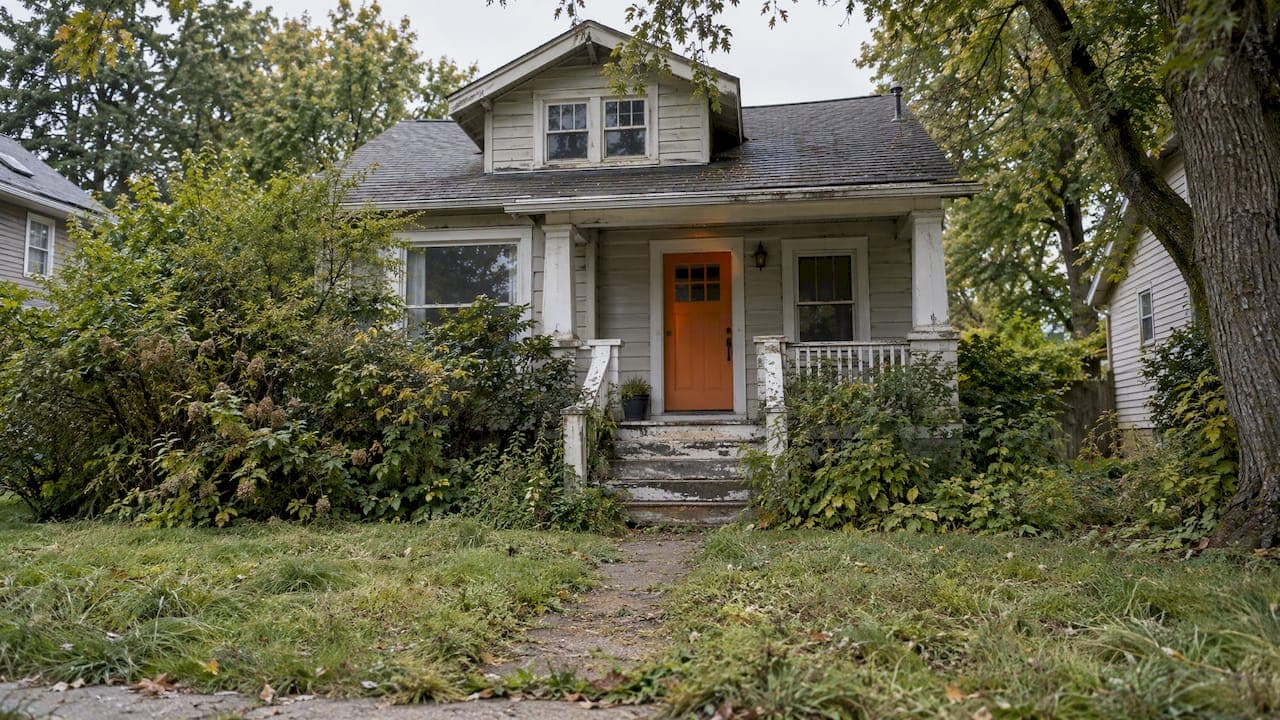
Yes, you can generally sell an inherited house as-is. That means you sell it in its current condition and do not agree to fix anything before closing. What you still need to settle first is who has legal authority to sell, what the house must disclose, and what the sale does to your taxes. This guide walks through each of those in the order you will meet them.
TL;DR
- An as-is sale means no repairs or upgrades on your side. It does not erase your duty to disclose problems you know about, and buyers can still inspect.
- Before anyone can sign a deed, confirm who has authority: an executor, a personal representative, a trustee, or all the heirs together.
- Inherited property generally takes a tax basis equal to its value on the date of death, so a prompt sale often produces little or no taxable gain. Get a date-of-death appraisal.
- Belongings, a reverse mortgage, or a tenant can slow things down. Deal with them early, or choose a buyer who takes the house as it stands.
- A cash sale to a direct buyer skips repairs, showings and agent commissions. A traditional listing may fit better when the house is in good shape and you have time.
Table of Contents
- What "as-is" actually means for an heir
- Step 1: Confirm who can legally sell
- Step 2: Secure the house and sort the belongings
- Step 3: Understand disclosure and inspections
- Step 4: Know the tax picture
- Your options for selling as-is
- Selling during or without probate
- A practical checklist from first call to closing
- Our perspective
- Get a cash offer for the inherited house
- FAQ
- Sources
What "as-is" actually means for an heir
Selling as-is is a decision about repairs and price. You market the property in its current physical state and tell buyers up front that you will not fix anything. Realtor.com's guide to as-is sales makes the key point: the buyer does not give up the right to inspect, negotiate or exercise contractual rights. A buyer can still walk away if the inspection turns up something serious, and can ask for repairs or a credit. You are free to say no.
In practice, "as-is" covers a lot of ground for inherited homes:
- Deferred maintenance: an old roof, outdated kitchen, worn flooring, aging HVAC.
- Major problems: foundation cracks, water damage, fire damage, mold.
- A house full of furniture, papers and decades of belongings.
- A vacant property that has sat for months.
- Code violations or liens attached to the address.
Many heirs inherit a house they never planned to own, in a town they no longer live in, with no budget for a renovation. Selling as-is fits that situation. The trade-off is that buyers price in the work they will have to do, so the offer reflects the condition. That is the honest math of any as-is sale, and it is worth comparing with the cost, time and risk of preparing the house yourself.
Step 1: Confirm who can legally sell
This is where most inherited sales stall, and it has nothing to do with the condition of the house.
The Consumer Financial Protection Bureau's guide for heirs explains that state law may require the home to go through probate before heirs receive it. Probate is the court process that recognizes the will and appoints an executor or personal representative to distribute property. The same guide notes that property held in a living trust generally passes outside probate, and that transfer-on-death deeds are not available in many states.
So your first question is: how was the house titled when the owner died?
| How the house was held | What it usually means for a sale |
|---|---|
| In the deceased person's name alone | Probate is often needed before title can pass. The executor or personal representative typically signs the sale documents. |
| In a living trust | The trustee can usually sell without going through probate. |
| With a transfer-on-death deed (where the state allows it) | Title can pass to the named beneficiary without probate. |
| Jointly with another owner | The rules depend on how the title was written and on state law. An attorney can tell you. |
The rules differ by state, so a local probate or estate attorney is the right person to confirm your situation. If the house is in New Jersey, our executor's legal guide for selling a house in NJ covers the local steps. For a general overview of what the law asks of sellers, see our inherited property sale legal requirements guide.
Tangled titles
Older family homes sometimes have unclear ownership: a deed never updated after a parent died, a relative's name still on the record, or several generations of heirs who never opened an estate. The Administration for Community Living's summary on tangled title describes how these problems can limit a family's ability to access equity, sell the property or protect its value. If you suspect this, say so to your attorney at the start. Resolving it takes time, and no as-is sale can close until it is cleared. Our piece on selling heir property as-is explains how families approach it.
When the executor and the heirs disagree
One person usually has authority to sign, but the family still has opinions. One sibling wants the money now, another wants to keep the house for sentimental reasons, a third lives overseas and is hard to reach. A written plan and clear communication help more than anything else. We walk through the common patterns in selling a house with siblings.
If the family cannot agree, a court may need to step in, and that adds time and legal fees. This is a good reason to talk early, before anyone lists or signs anything.
Step 2: Secure the house and sort the belongings
While you sort out authority, the house still needs looking after. A vacant home is a target for break-ins, burst pipes and insurance trouble. A practical list for the first weeks:
- Change the locks and keep a record of who has keys.
- Call the insurance company. Standard homeowner policies often change when a house sits vacant, so ask specifically about vacant-property coverage.
- Forward the mail and cancel deliveries.
- Keep utilities running at a basic level so the pipes do not freeze and you can show the house.
- Photograph every room before anything is moved, which helps with disputes and with disclosure later.
- Give relatives a clear deadline to claim keepsakes, then stop negotiating over items.
The belongings are often the hardest part emotionally and logistically, particularly if you live far away. You have three choices: clear the house yourself, hire a cleanout service, or sell to a buyer who takes the property with everything inside. The third is one reason heirs choose cash buyers. If you want to compare approaches, our guide on selling a home without repairs covers what you do and do not have to touch.
Check for a reverse mortgage
If the person who died had a reverse mortgage, the loan does not disappear. According to the CFPB, heirs who want to keep or sell the home must repay the full balance, or, if they sell and the balance is higher than the home's value, at least 95% of the appraised value. After the lender sends a due-and-payable notice, heirs have 30 days to respond, which can be extended up to six months. The CFPB's rights and responsibilities booklet adds that if the home sells for at least its appraised market value, mortgage insurance pays any remaining balance the sale does not cover. Call the loan servicer as soon as you find the paperwork, because those deadlines matter.

Step 3: Understand disclosure and inspections
"As-is" is not a shield for hiding problems. Realtor.com states that selling as-is does not relieve sellers of disclosing known defects, and that disclosure rules vary by state. It also notes that an heir who has never lived in the house may genuinely not know its condition and could be exempt from providing a property disclosure in some places. Knowingly withholding a problem, though, may give the buyer legal recourse.
What this means in practice:
- Tell what you know. If a neighbor mentioned a basement that floods, or a contractor once flagged the foundation, that counts as something you know.
- Do not guess, and do not cover up. If you truly do not know, say so honestly.
- Expect an inspection. A buyer may inspect, then walk away or request repairs or a credit. As-is means you are not obliged to agree.
- Ask your attorney or agent which form your state requires. Requirements differ, and some states exempt estates or personal representatives from certain forms.
A cash buyer who purchases as-is will still look at the property before making an offer. The difference is that the offer is already built around the condition, so there is far less renegotiation after an inspection.
Step 4: Know the tax picture
This is the part heirs most often worry about, and the news is frequently better than expected. Under the IRS guidance on gifts and inheritances, inherited property generally takes a basis equal to its fair market value on the date of death, or on the alternate valuation date if the executor files Form 706 and elects it. When you sell for more than that basis, the difference is a taxable gain. The IRS also notes that a 2015 law may require the basis of certain inherited property to be consistent with its final value for federal estate tax purposes.

Here is a simple, made-up example to show the mechanics. Say the house was worth $300,000 on the date of death, and you sell it as-is for $290,000 a few months later. Your basis is $300,000, so there is no gain to report. If it sold for $320,000, the gain would be measured against the $300,000 basis, not against what your parent originally paid decades ago. That is why the date-of-death value matters so much.
Two practical steps follow:
- Get a date-of-death appraisal. It documents the basis in a way you can defend later. A broker's price opinion is not a substitute for tax purposes.
- Talk to a CPA or tax attorney about your own return, state inheritance or estate taxes, and any costs you can account for. Rules differ by state and by estate size, and this article cannot cover your specific numbers.
Other costs to budget for while the house is yours: property taxes, insurance, utilities, lawn and snow care, and any probate or attorney fees. Carrying costs add up month by month, which is why a long wait is rarely free even when the house is paid off.
Your options for selling as-is
Most heirs end up choosing between three routes. Here is how they compare on the things that matter to people in this situation.
| Traditional listing, as-is | Prepare, then list | Direct cash sale, as-is | |
|---|---|---|---|
| Repairs and cleanout | Usually skipped, but belongings are typically cleared before showings | You pay for and manage them | Not required |
| Agent commissions | Yes | Yes | None with us |
| Showings and open houses | Yes | Yes | No |
| Buyer inspection and financing risk | Yes, deals can fall through | Yes | Reduced, because the offer already reflects condition |
| Timeline | Depends on market and buyer financing | Longest | Flexible, set around your situation |
| Best for | Houses in decent shape, no time pressure | Houses with cosmetic issues and a family willing to wait | Houses with repairs, belongings, tenants, liens, or heirs who live far away |
Neither route is right for everyone. A well-kept home in a hot market might do well on the open market. A house with a failing roof, a full attic and three out-of-state heirs usually does better with a simple sale that does not depend on anyone's renovation budget. For a longer look at the choices, read our comparison of top probate property selling solutions.
Selling during or without probate
Probate does not always mean waiting for months with nothing to do. Depending on your state and the type of authority the executor receives, a sale can sometimes happen while probate is open. Some sales need court approval, particularly if they are contested. Our guides explain the typical paths: selling a house during probate without a court hearing and selling an inherited house without probate delay. If speed matters, the fast-track plan for an inherited home sale lays out which tasks to do in parallel.
The state you are in matters a great deal here. Probate procedures, disclosure forms, inheritance or estate taxes, and court approval of sales all vary, so check with a local attorney before committing to a plan. If you also want a general overview of timing, see our guide to the fastest ways to sell an inherited house in 2026.
A practical checklist from first call to closing
- Find the documents. Locate the will, any trust, the deed, the latest tax bill, the insurance policy and any mortgage or reverse-mortgage statements.
- Talk to an estate attorney. Confirm whether probate is needed and who has the authority to sign.
- Secure and insure the house. Locks, vacant-property coverage, mail, utilities.
- Order a date-of-death appraisal. It sets your tax basis and gives you a realistic value to compare offers against.
- Decide what to do with belongings. Set a claim deadline for family, then clear, donate or sell the rest, or sell to a buyer who takes it all.
- List what you know about the condition. Write down defects so your disclosures are accurate and consistent.
- Get offers and compare them in dollars. Compare each net figure after commissions, repairs, carrying costs and closing costs, not just the headline price.
- Choose a closing date that works for the estate. Court timelines and family schedules often decide this.
- Close, then keep records. Save the settlement statement and appraisal for your tax preparer.
Our perspective
We talk with heirs every week, and the pattern is rarely about the house itself. It is about distance, grief, a pile of paperwork and a property that costs money every month it sits.
Our view is simple: you should not have to renovate a house you never asked for in order to sell it. A fair cash offer, explained with real numbers, no commissions or agent fees, and a closing date built around the estate's timeline, takes much of the weight off. We buy properties as they are, including ones with belongings inside, repairs needed, code violations, liens or tenants, and we keep the process confidential and free of pressure.
We also believe in being straight with you. Talk to an attorney about authority and probate, and a tax professional about your basis. Then compare any offer, ours included, against what listing would really net you after costs. If the numbers favor a simple sale, we are glad to help.
Alek
Get a cash offer for the inherited house
If the house needs work, is full of belongings, or you simply do not want to manage a sale from far away, we can help. We buy houses, land and small apartment buildings directly from owners, as-is, with flexible closing timelines and no commissions or agent fees. You can see how our as-is cash sale works or start from our main page for selling property.

If the property is also behind on payments or heading toward foreclosure, our Cash Offer Program is built for that situation.
FAQ
Can I sell an inherited house as-is before probate is finished?
Sometimes, but it depends on your state and on the authority the court has given the executor or personal representative. Some sales need court approval, especially when they are contested. Ask a probate attorney before signing a contract, because an executor without proper authority cannot deliver clear title.
Do I have to disclose problems if I never lived in the house?
You should disclose what you know, and disclosure rules vary by state. Realtor.com notes that an heir who does not know the home's condition may be exempt from providing a property disclosure in some cases, but intentionally withholding known problems can give a buyer legal recourse. When in doubt, ask your attorney which form applies to you.
Will I owe capital gains tax if I sell the inherited house?
Possibly, but often less than people fear. The IRS says inherited property generally takes a basis equal to its fair market value on the date of death, and only a sale above that basis creates a taxable gain. A date-of-death appraisal and a conversation with a tax professional will tell you where you stand.
What if there is a reverse mortgage on the house?
The loan must be repaid after the borrower dies, unless a co-borrower lives in the home. The CFPB says heirs who sell must repay the full balance, or at least 95% of the appraised value if the balance is higher. After a due-and-payable notice, heirs typically have 30 days, which may be extended up to six months, so contact the servicer quickly.
Is selling to a cash buyer better than listing with an agent?
It depends on the house and your priorities. A cash sale avoids repairs, showings, commissions and agent fees, and lets you set a closing date around the estate. Listing may bring a higher price when the home is in good shape and you are willing to wait, so compare net amounts for both before you decide.
Sources
- How to Sell a Home As Is, Realtor.com
- Older Americans Housing Guide: Leaving your home to children and heirs, CFPB
- Tangled Title and Dealing with Probate Issues, Administration for Community Living
- With a reverse mortgage loan, can my heirs keep or sell my home after I die?, CFPB
- You have a reverse mortgage: Know your rights and responsibilities, CFPB
- Gifts and inheritances, Internal Revenue Service