

If you inherited a house with siblings, your fastest paths are: sell and split the proceeds, one sibling buys out the others, mediate an agreement, or if all else fails, seek a court-ordered partition sale. The right choice depends on who has legal authority to act, what the property is worth, and how much everyone actually agrees on right now.
Before anything else, confirm who has legal authority. That means checking the will or trust, verifying whether the property has cleared probate, and seeing whose name sits on the title. Then order an independent appraisal. That single number becomes the foundation for every conversation that follows, whether it's splitting sale proceeds or pricing a buyout.
- Confirm legal authority (executor, trustee, or co-owner title)
- Order an independent appraisal before any pricing talk starts
- Check for liens, mortgage balances, and probate status
- Pick a single point of contact for professionals and paperwork
Court records and real estate attorneys consistently point to the same fact: any co-owner can force a sale through a partition action once the property is out of probate and distributed among heirs. That leverage exists whether siblings want to use it or not, and knowing it's there tends to make everyone more willing to negotiate first.
Key Takeaways
Selling a house with siblings works best when the family confirms legal authority first, gets an independent appraisal early, and puts every agreement about money and process in writing.
| Point | Details |
|---|---|
| Confirm authority before acting | Check the will, title, and probate status so the right person signs and no step gets challenged later. |
| Get an appraisal immediately | An independent valuation anchors pricing talks for a sale, buyout, or mediation session. |
| Try mediation before partition | Mediation is typically faster and cheaper than a court-ordered partition action. |
| Document every expense in writing | Written reimbursement records prevent the most common disputes that surface after closing. |
| Consider a direct cash sale for speed | Exitvest buys inherited houses as-is nationwide, letting siblings skip repairs and set their own closing date. |
Table of Contents
- Who Has the Legal Authority to Sell?
- What Are Your Options for Selling Together?
- How Do You Actually Sell an Inherited House Step by Step?
- How Do You Resolve Disagreements Among Siblings?
- What Are the Tax Rules for Selling an Inherited House?
- How Long Does It Take to Sell an Inherited House?
- Where Exitvest Fits When Siblings Need a Fast, Clean Sale
- What This Guide Gets Right That Most Advice Misses
- Sell Your Inherited House Without the Sibling Headache
- Frequently Asked Questions About Selling a House With Siblings
- Sources
Who Has the Legal Authority to Sell?
Before you and your siblings argue about listing price, figure out who can legally sign anything. This isn't a formality. It determines whether a sale can happen next month or has to wait for a judge's signature.
If the house is still moving through probate, the executor named in the will, or the court-appointed administrator if there's no will, holds decision-making power. Siblings don't get a vote on timing or price during this phase unless the will says otherwise. The executor may need court approval to sell, particularly if the estate needs the proceeds to pay debts or if any heir objects. Probate timelines vary wildly. A clean estate with no disputes might close in a few months, but contested wills or family disagreements can drag it past a year.
Once the property is distributed and retitled in the siblings' names, the rules change completely. Now you're co-owners, typically as tenants in common, and each sibling holds an individual, transferable share. No single sibling can force a sale, but no single sibling can block one forever either. If the property is still in probate, the executor or trustee holds that authority; after distribution, any co-owner can file a partition action if the group can't agree.
Run through this before making any decisions:
- Read the will or trust document for explicit instructions on sale authority
- Check the county recorder's office for the current title and how ownership is held
- Confirm with the estate attorney whether probate has closed
- Identify every legal heir, even ones who haven't been in contact
Ownership form matters more than most families realize. Joint tenancy with right of survivorship behaves differently than tenancy in common, especially if one sibling dies before the sale closes. Get this sorted before you get an appraisal or an offer.
What Are Your Options for Selling Together?
You have five real paths forward, and each one fits a different family situation.
- Sell and split the proceeds. The most straightforward option when everyone agrees on timing and price. One sibling, often whoever lives closest, typically manages the listing, coordinates repairs, and handles buyer showings. Expenses like cleaning, minor repairs, and agent commissions usually get deducted from the sale price before splitting, but agree on this in writing before you list.
- One sibling buys out the others. This works when one heir wants to keep the house and has the means to pay siblings their share. It hinges on a defensible valuation, so an appraisal or comparative market analysis sets the number everyone works from. Funding usually comes through a refinance, a HELOC, a probate or estate loan, or a documented promissory note between siblings.
- Rent and hold. Less common, but some families keep the house as a rental rather than sell right away, splitting income and costs. This only works if everyone agrees on a property manager, a maintenance budget, and an exit date, because open-ended rental arrangements are where sibling disputes tend to fester longest.
- Mediation. When talks stall over price or timing, a neutral mediator often costs far less than litigation and resolves disputes faster. Buyouts frequently emerge as the cleanest resolution once mediation gets everyone talking about numbers instead of grievances.
- Partition action. The last resort. Any co-owner can petition a court to force a sale, but it's expensive, adversarial, and often produces a lower net result than a negotiated sale. Many states have adopted the Uniform Partition of Heirs Property Act, which adds protections like a required appraisal and a right of first refusal for co-owners before a forced sale proceeds.
Pro Tip: Get the appraisal before you pick an option, not after. A firm number often ends arguments about price that would otherwise drag on for months.
How Do You Actually Sell an Inherited House Step by Step?
Once you know who has authority and which option fits, the execution comes down to sequence. Skip a step and you'll likely redo work later or, worse, hand a sibling a legitimate reason to stall.
- Identify every heir and confirm the executor or trustee. Get this in writing, even if it feels redundant among close siblings.
- Open an estate bank account if the estate hasn't distributed the property yet. This keeps sale proceeds and expense reimbursements separate from personal accounts, which matters enormously when it's time to reconcile who paid for what.
- Get an independent appraisal or a defensible comparative market analysis. This becomes the anchor number for pricing a market sale or calculating a buyout, and funding a buyout through refinance, HELOC, an estate loan, or a promissory note all depend on having a credible figure first.
- Clear liens and request payoff statements. If there's a mortgage still attached, notify the lender early. Loan payoffs, tax liens, and judgment liens all need to be resolved before or at closing, and payoff statements can take weeks to arrive.
- Decide between a market sale and a cash buyer. A market listing usually nets more but takes longer and requires repairs, staging, and showings. Selling to a cash buyer closes in days or weeks and skips the prep work entirely, which matters if the estate is bleeding money on an empty house every month.
- Document who signs what. Decide in advance who has signing authority at closing, whether that's the executor, a designated sibling with power of attorney, or all heirs individually.
Keep a running log of every expense as you go:
- Property taxes and insurance premiums paid during the ownership period
- Repair and maintenance costs, with receipts
- Utility bills for keeping the house habitable or secure
- Any funds advanced by one sibling on behalf of the group
Lack of documentation on shared expenses is one of the most common causes of disputes after closing, because memories of who paid for the new roof diverge fast once real money is on the table.
How Do You Resolve Disagreements Among Siblings?
Most sibling disputes over an inherited house aren't really about the house. They're about fairness, old family dynamics, and who feels like they're carrying more of the load. Structure removes a lot of that friction before it turns into a standoff.
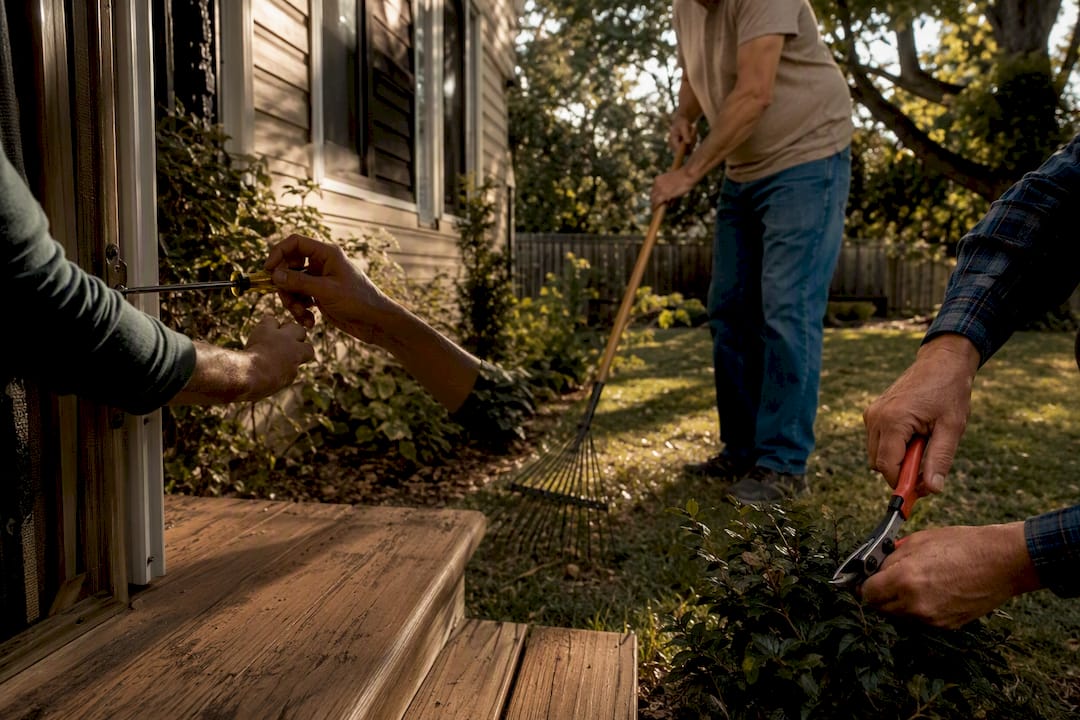
Draft a short co-ownership agreement within roughly 90 days of the estate closing. It doesn't need to run more than a few pages. Cover voting thresholds for decisions like accepting an offer, buy-sell triggers if one sibling wants out early, and how disputes get resolved if you can't agree. Setting this up early acts as a circuit breaker that prevents a disagreement from becoming a lawsuit.
Name one sibling as the single point of contact for the real estate attorney, the appraiser, and any contractors. Fragmented communication with multiple decision-makers reaching out to the same professionals is a common source of delays in transactions involving several owners, and a house sale with three or four siblings is no different.
- Put the co-ownership agreement in writing, even for close-knit families
- Designate one contact person for all outside professionals
- Try mediation before anyone mentions the word "lawsuit"
- Understand partition timelines and costs before threatening one
If talks genuinely break down, mediation almost always beats going straight to court. It's faster, cheaper, and keeps the door open for a working relationship afterward. Partition action should stay on the table only as the actual last resort, since it's costly and tends to produce a lower net sale price than a negotiated exit.
Pro Tip: If your state has adopted the UPHPA, ask your attorney about it before assuming partition means an immediate forced sale. Many adopting states require an appraisal and give co-owners a right of first refusal before the court orders a sale to an outside buyer.
What Are the Tax Rules for Selling an Inherited House?
Most heirs owe far less capital gains tax than they expect, and the reason is a rule called stepped-up basis. When you inherit property, your cost basis resets to the home's fair market value on the date of death, not what your parents originally paid decades ago. Sell close to that appraised value and your taxable gain is small or nonexistent. Sell years later after the market climbs, and you'll owe capital gains tax only on the appreciation since inheritance, not the entire increase since the original purchase.
Net proceeds math looks like this: sale price, minus any remaining mortgage or liens, minus real estate commissions and closing costs, minus documented reimbursements for repairs or carrying costs one sibling fronted, equals the amount actually split among heirs.
- Get the appraised value at date of death in writing for tax records
- Track every reimbursable expense with receipts, not memory
- Ask a tax professional about your specific state's rules before filing
- Put every sibling's share and every reimbursement in a written accounting
Selling to a family member, including one sibling buying out the others, carries its own wrinkles. The IRS expects a fair-market transaction even between relatives, so an appraisal matters here too. State estate and inheritance tax rules vary significantly, so a conversation with a tax professional familiar with your state is worth the cost before you finalize any distribution.
How Long Does It Take to Sell an Inherited House?
Timing shapes everything from carrying costs to how much stress the sale puts on family relationships. A vacant house doesn't stop costing money just because probate is still sorting out who owns it.
| Sale Method | Typical Timeline | Trade-Off |
|---|---|---|
| Cash buyer | 1 to 4 weeks | Faster close, but usually a lower net than a market sale |
| Market listing | 2 to 4 months | Higher potential net, but requires repairs, showings, and agent commissions |
| Probate sale | Months to over a year | Timeline depends heavily on will disputes and court schedules |
| Partition action | Many months to years | Legal fees and court costs often shrink the final payout |
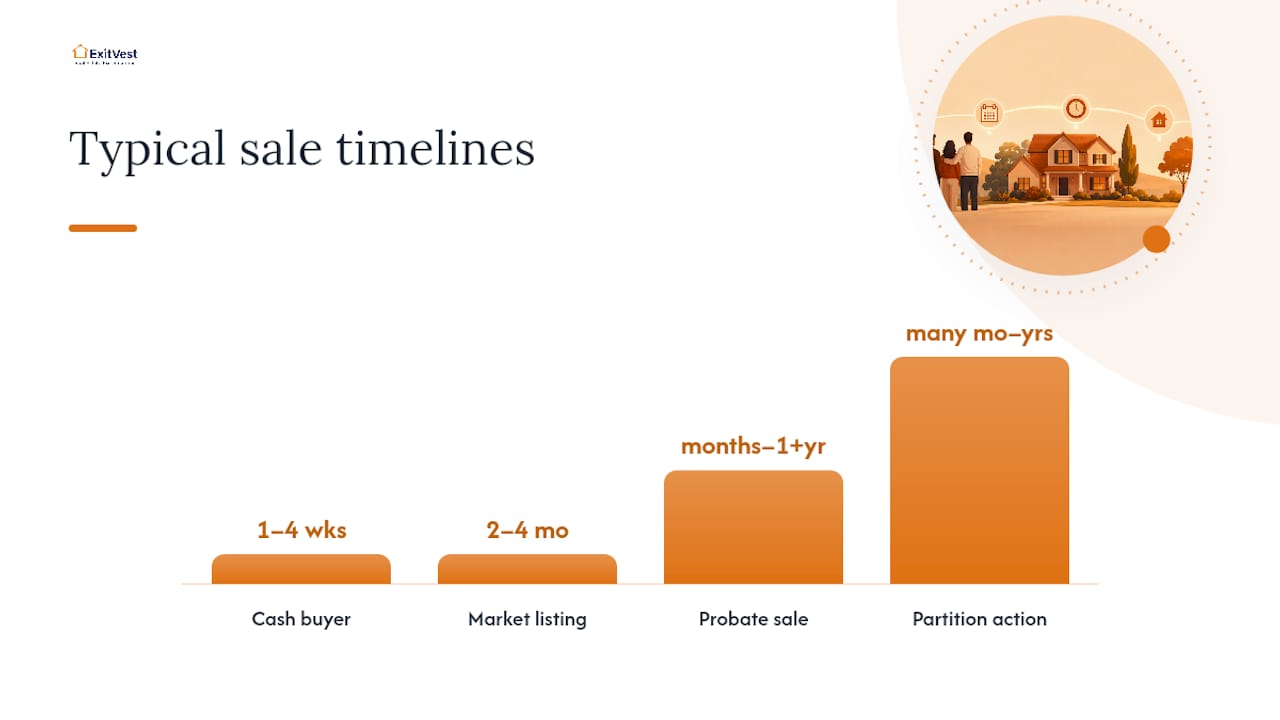
Every month a house sits empty costs money in taxes, insurance, and upkeep. That's part of why choosing a cash sale becomes appealing to heirs facing carrying costs or probate delays, even when the market sale would technically net more on paper. Speed has real financial value once you factor in months of holding costs against a slightly higher hypothetical sale price.
Where Exitvest Fits When Siblings Need a Fast, Clean Sale
Not every family wants to spend months coordinating repairs, showings, and buyer negotiations while also managing sibling logistics. That's where a direct cash sale earns serious consideration, especially when the house needs work, sits vacant, or carries liens that complicate a traditional listing.
Exitvest buys houses, land, and small apartment buildings directly from owners for cash, in as-is condition. That includes inherited properties tangled up in probate, homes with deferred maintenance, or situations involving liens and problem tenants that would scare off a typical buyer. Exitvest operates nationwide, with particular focus in New Jersey, Texas, Florida, and Tennessee, and works with sellers who want a fair offer and a closing date they can actually plan around rather than a mystery timeline set by financing contingencies.
For siblings who've already agreed to sell and just want it done, this route sidesteps the repair budget, the staging, and the weeks of showings entirely.
- Skip repairs, cleaning, and staging before a sale
- Get an offer without listing, showings, or agent commissions
- Set a closing timeline that matches the estate's needs
- Avoid the carrying costs of a vacant house sitting on the market
Contributor Alek covers inherited property sales and fast-selling strategies for Exitvest's blog, including guidance on selling an inherited house without probate delay and fastest paths to closing in 2026.
What This Guide Gets Right That Most Advice Misses
Most articles on this topic treat partition action like a scary footnote and spend the rest of their word count on generic "communicate with your siblings" advice. That's backwards. The families who avoid disaster are the ones who treat legal authority and valuation as administrative tasks to knock out in week one, not emotional conversations to have eventually.
The conventional wisdom oversells mediation as a cure-all. Mediation works when siblings disagree on price or timing but still basically trust each other. It does far less for a sibling who's been unreachable for months or who genuinely wants to block a sale out of spite. In those cases, understanding partition, and specifically whether your state has adopted the UPHPA, isn't pessimism. It's leverage that often gets a stalled negotiation moving again.
If you take one thing from this guide, make it this: confirm who can legally sign, get the appraisal, and name one point person before the first family group text turns into a fight about who's "the executor now, apparently."
Sell Your Inherited House Without the Sibling Headache
If your family has already agreed to sell but nobody wants to spend the next four months coordinating contractors and buyer walkthroughs, a direct cash sale skips that entire phase. Exitvest buys inherited properties as-is, liens and repair needs included, and works around the estate's actual timeline instead of a buyer's mortgage approval schedule.

That matters most when siblings live in different states, when the house has sat vacant and needs work nobody wants to fund upfront, or when carrying costs are eating into what's left to split. Exitvest makes a cash offer, and the closing date gets set to fit the estate's needs rather than a financing contingency that could fall through in week six of a traditional sale.
If that fits your family's situation, request a cash offer today and see what a straightforward, no-repair sale looks like for your specific property.
Frequently Asked Questions About Selling a House With Siblings
Can one sibling force the sale of an inherited house? Once the property is out of probate and distributed among heirs as co-owners, any sibling can file a partition action asking a court to order a sale. It's a last resort because it's costly and often produces a lower net than a negotiated sale.
What happens if siblings can't agree on a price? Get an independent appraisal to set a neutral, defensible number. If disagreement continues, mediation typically resolves pricing disputes faster and cheaper than heading to court.
Do all siblings have to sign to sell an inherited house? Yes, if the property has been distributed and siblings hold it as co-owners, every owner generally needs to sign off on a sale unless one has been granted power of attorney by the others.
How is the money split when siblings sell an inherited house? Net proceeds, sale price minus liens, commissions, closing costs, and documented reimbursements, typically get split according to each sibling's ownership share as defined in the will, trust, or state inheritance law.
Is selling to a cash buyer a bad idea for an inherited house? Not necessarily. A cash sale usually nets less than a market listing but closes in days or weeks and avoids repairs, showings, and ongoing carrying costs, which can outweigh the lower offer for many families.
This article is general information, not a substitute for advice from a qualified financial advisor. Consult a qualified financial professional about your own circumstances before acting on anything here.
Sources
For deeper legal reading, City National Bank's overview of inheriting a house with siblings covers executor authority and partition basics, while LegalClarity's guide to selling an inherited house breaks down partition action costs and UPHPA protections state by state.
- What to Do When Inheriting a House with Siblings | City National Bank
- What happens if I inherit a house and sell it? | LegalClarity
- Realtor
- I Inherited a House and Want to Sell It: Follow These 10 Steps | HomeLight