

The fastest reliable ways to sell an inherited home are an as-is cash sale and a trustee or executor-led listing when legal authority is already confirmed. If multiple heirs are involved and one wants to keep the property, a buyout supported by an independent appraisal often resolves things without a court. Before you do anything else, run through these three steps:
- Confirm legal authority. If the estate is in probate, you need Letters Testamentary or Letters of Administration before any buyer or title company will move forward. If the decedent used a revocable living trust or a transfer-on-death deed, the successor trustee or beneficiary can usually sell without probate at all.
- Get a quick valuation. Order a broker price opinion or a formal appraisal. This sets your stepped-up basis baseline and gives you a floor when evaluating offers. The IRS bases inherited property at fair market value on the date of the decedent's death, which often means little or no capital gains tax if you sell soon after.
- Decide: speed or net proceeds. A cash buyer closes quickly, often within days to a few weeks. A traditional MLS listing takes 60–120+ days but typically nets more. Pick your priority, then pick your method.
Key Takeaways
Selling an inherited home quickly comes down to two things: confirmed legal authority and a sale method matched to your timeline. Heirs who resolve Letters Testamentary, title issues, and the stepped-up basis question before marketing consistently close faster and with fewer surprises.
| Point | Details |
|---|---|
| Confirm legal authority first | Letters Testamentary or Administration are required for probate sales before any buyer or title company will close. |
| Stepped-up basis reduces tax | The IRS resets your basis to fair market value at the decedent's death, so capital gains are often minimal when selling soon after inheriting. |
| Fastest method: cash buyer | As-is cash sales close in 7–30 days with minimal seller effort, though proceeds run below full market value. |
| Traditional listing maximizes price | MLS listings take 60–120+ days but typically yield the highest net proceeds when time is not the constraint. |
| Exitvest for speed and simplicity | Exitvest buys inherited homes as-is for cash with flexible closing timelines and no agent commissions. |
Table of Contents
- What are the top inherited home sale methods?
- What legal authority and tax basics do you need before selling?
- How do you pick the right method and what should you do in the next 90 days?
- What happens to sale proceeds after closing?
- What actually works when selling an inherited home fast
- Exitvest can help you close fast without the usual friction
- Sources
What are the top inherited home sale methods?
Most heirs choose among five core approaches, each with a distinct speed-versus-price trade-off.
As-is cash buyer. A direct cash buyer purchases the property in its current condition, no repairs, no showings, no contingencies. Closings typically happen in 7–30 days. The trade-off is that cash offers are typically lower than market value since buyers factor in repair costs and profit margins. For heirs who need to settle an estate fast, cover carrying costs, or are managing a property from out of state, this is often the most practical route.
Traditional MLS listing with a probate-aware agent. Listing on the open market usually yields the highest net proceeds, but this process typically takes 60–120+ days from listing to close, plus repair requests, staging, and buyer financing contingencies. A probate-aware agent knows which court approvals may be required and can sequence the process correctly.
Fix-and-sell / rehab-fronting brokerage. Some brokerages front the cost of repairs, then list at a higher price and recoup from proceeds. Timeline: several months. This works when the property needs significant work and heirs have no capital to invest upfront, but the brokerage fee structure eats into the premium.
Heir or family buyout. When one heir wants to keep the property, an independent appraisal sets a fair price and the buying heir pays out the others. Mediation is usually faster and cheaper than a partition lawsuit. Timeline depends on financing, but a cash buyout can close in weeks.
Auction or estate sale. Auctions create urgency and a hard closing date, which suits estates with a firm deadline. Reserve prices protect against lowball bids. Net proceeds vary widely.
Partition action (court-ordered sale). When co-heirs cannot agree and mediation fails, a court can order the property sold and proceeds split. This is the slowest and most expensive fallback, often taking a year or more and consuming a meaningful share of proceeds in legal fees.
| Method | Typical time to close | Expected net after fees | Upfront seller effort | Legal steps | Certainty of close |
|---|---|---|---|---|---|
| As-is cash buyer | 7–30 days | Below market | Minimal | Low (authority required) | Very high |
| Traditional MLS listing | 60–120+ days | Highest | Moderate to high | Moderate | Moderate |
| Fix-and-sell brokerage | 60–120+ days | Above as-is, below peak | High | Moderate | Moderate |
| Heir/family buyout | Weeks to months | Negotiated | Low to moderate | Low to moderate | High if financed |
| Auction | about one to two months | Variable | Low | Low | High |
| Partition action | about a year or more | Reduced by legal costs | High | Very high | Certain but costly |
What legal authority and tax basics do you need before selling?
Selling an inherited property requires legal standing, which varies depending on how the decedent held title.
Probate vs. non-probate transfers. If the property passed through a will or intestacy, it likely requires probate. The court appoints an executor (named in the will) or an administrator (when there is no will) and issues Letters Testamentary or Letters of Administration. Without those letters, title companies and buyers will refuse to close. Whether the executor has independent authority or is under dependent administration matters enormously: independent executors can sell without court approval for each transaction; dependent administrators often need a separate court order for every major step, which can add months.
If the decedent used a revocable living trust or a transfer-on-death instrument, the successor trustee or beneficiary can typically sell without probate, which is one of the fastest routes to market.
Title and liens. Order a title search before you list or accept offers. Unresolved liens, unpaid property taxes, or clouds on title are a leading cause of deals collapsing days before closing. Title insurance requires a clean chain of title, and resolving encumbrances takes time you may not have budgeted.
Tax basics. The IRS sets the basis for inherited property at fair market value on the date of the decedent's death. That stepped-up basis means heirs who sell shortly after inheriting often owe little or no capital gains tax, since the gain is measured from that reset value, not the original purchase price. Any taxable gain must be reported on Schedule D and Form 8949. Consult a tax professional if the estate was large enough to require an estate tax return, since basis rules can interact with estate tax values.
Documents checklist before marketing:
- Certified death certificate (multiple copies)
- Will or trust document (if any)
- Letters Testamentary or Letters of Administration
- Current deed showing title vesting
- Recent mortgage statement and payoff figure
- Property tax records and any outstanding tax bills
- HOA statements (if applicable)
- Utility account information
Pro Tip: Contact a probate attorney and a title company simultaneously. The title company's preliminary report will surface encumbrances the attorney needs to clear, and running both tracks in parallel can shave weeks off your timeline.
How do you pick the right method and what should you do in the next 90 days?
Match your priority to the method. If speed is the primary concern, a cash buyer is the answer. If you want to balance speed and net proceeds, a probate-aware agent or a fix-and-sell brokerage makes sense. If maximizing price is the goal and you can absorb a longer timeline, a traditional MLS listing is the path.
When evaluating buyers or agents, ask: Is the title clear or are there encumbrances to resolve first? Does the sale require court approval, and if so, who manages that process? What contingencies are in the offer, and who pays closing costs? A cash buyer with no financing contingency and a flexible closing date is a fundamentally different proposition from a retail buyer whose loan could fall through in week six.
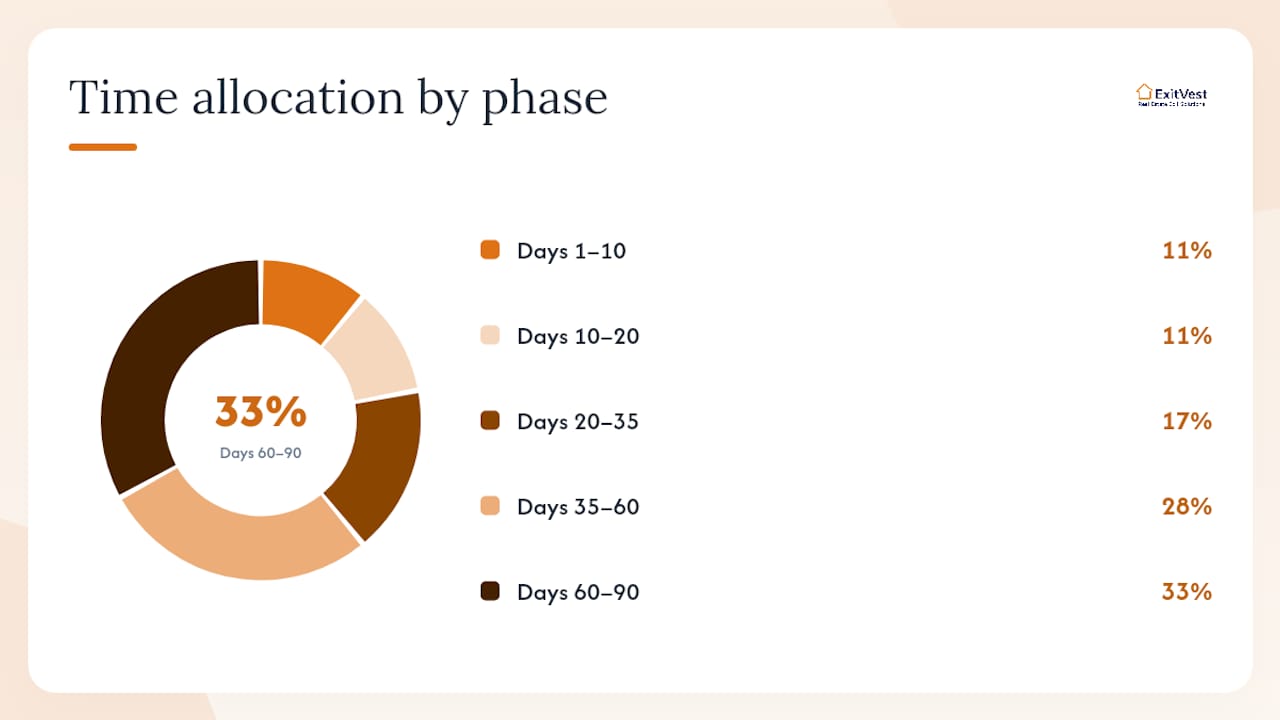
30–90 day action plan:
- Days 1–10: Confirm legal authority. Locate the will and deed. File for probate if required or confirm trust/TOD status. Engage a probate attorney.
- Days 10–20: Order a title search and a property valuation (appraisal or broker price opinion). Identify and begin resolving any liens or encumbrances.
- Days 20–35: Decide on your sale method. Get at least two written offers or agent proposals. If you need immediate liquidity, get a vetted cash offer to use as a floor in any negotiation.
- Days 35–60: Accept an offer or sign a listing agreement. Coordinate with the title company and escrow. If probate applies, confirm whether court confirmation of the sale is required.
- Days 60–90: Close. Escrow distributes proceeds in the required order (see below). Heirs receive net distributions.
Red flags that should change your plan: unresolved liens that the seller cannot fund to clear; dependent administration requiring court approval at every step; a co-heir actively opposing the sale (partition risk); a deed that does not match the decedent's legal name or shows a prior owner with no recorded transfer.
If managing the sale from another state, a local fast-sale resource or a probate-aware local agent can handle showings, inspections, and court filings on your behalf.
What happens to sale proceeds after closing?
Escrow does not hand heirs a check for the full sale price. Proceeds flow out in a specific order before anyone receives a distribution.
Mortgages and deeds of trust are paid off first, followed by any recorded liens (mechanic's liens, judgment liens), unpaid property taxes, and valid creditor claims recognized by the probate court. Real estate commissions, closing costs, title insurance premiums, and probate attorney fees come next. What remains is the net estate, which the executor or trustee distributes to heirs according to the will, trust, or state intestacy law.
| Cost item | Comes from sale proceeds? | Who negotiates or pays |
|---|---|---|
| Mortgage payoff | Yes | Title/escrow pays lender directly |
| Recorded liens | Yes | Title/escrow pays lienholders |
| Unpaid property taxes | Yes | Title/escrow pays taxing authority |
| Real estate commission | Yes (if agent used) | Executor negotiates with agent |
| Closing costs | Yes | Split per purchase agreement |
| Probate attorney fees | Yes | Executor pays from estate |
| State inheritance tax | Yes (where applicable) | Estate pays before distribution |
| Net proceeds to heirs | After all above | Executor/trustee distributes |
State inheritance taxes apply in a handful of states (Maryland, Nebraska, Kentucky, New Jersey, Pennsylvania, and Iowa as of current law). Federal estate tax applies only to estates above the federal exemption threshold. Neither should be confused with capital gains tax, which is the heir's individual liability on any gain above the stepped-up basis.
What actually works when selling an inherited home fast
Most heirs underestimate how much the legal track controls the timeline. The sale method matters, but it is secondary to having clean authority and a clear title. Heirs who spend the first two weeks confirming their Letters Testamentary and ordering a title search consistently close faster than those who rush to market without those pieces in place, regardless of which method they choose.
The scenario that works best in practice: an executor with independent authority, a property with no major encumbrances, and a cash buyer who can close on a flexible date. That combination can take an inherited home from offer to closed escrow in under 30 days. The scenario that drags: dependent administration, a contested will, two or three liens to negotiate, and a retail buyer whose lender requires repairs the estate cannot fund. That combination can stretch past a year.
One pattern worth noting: heirs who obtain a cash offer early, even if they ultimately list on the MLS, use that offer as a negotiating floor and a deadline motivator. It keeps agents and retail buyers honest about timelines and price.

Exitvest can help you close fast without the usual friction
Selling an inherited property under time pressure, with probate still open and repairs deferred, is exactly the situation Exitvest is built for. Exitvest buys houses as-is for cash, with no agent commissions, no repair requirements, and closing timelines that flex around your probate schedule.

The process is direct: share basic property details, receive a cash offer, and choose a closing date that works for the estate. Exitvest works with executors, administrators, and trustees across New Jersey, Texas, Florida, Tennessee, and beyond. If you need to settle an estate, cover carrying costs, or simply want the property sold without months of uncertainty, request a cash offer and get a number you can act on today.
Sources
- How to Sell an Inherited House: Probate, Taxes & Closing - LegalClarity
- Gifts & Inheritances FAQs - IRS
- Best Way to Sell Inherited Property: 5 Options Compared | Inherited Property Match
This article is general information, not a substitute for advice from a qualified financial advisor. Consult a qualified financial professional about your own circumstances before acting on anything here.