
Who buys unsafe structures in NJ, and how does the process work?
You can sell a home with unsafe structures or code violations in New Jersey without making a single repair. Cash buyers who specialize in distressed properties will purchase your home as-is, taking on the risk, the violations, and the remediation costs themselves. The trade-off is a lower offer than you'd get on the open market, but for many sellers, speed and certainty matter more than squeezing out every dollar.
Here's what the process typically looks like:
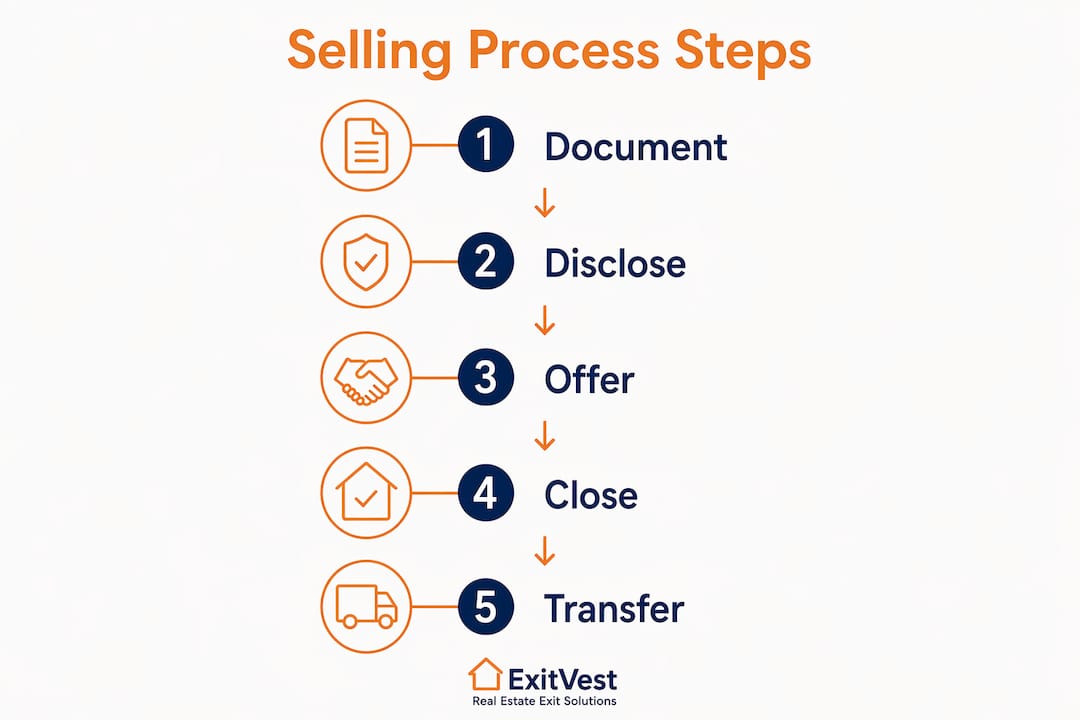
- Contact a cash buyer who focuses on unsafe or code-violating properties in New Jersey.
- Receive a cash offer based on the property's current condition, not its potential value after repairs.
- Complete required disclosures under New Jersey law, even in an as-is sale.
- Negotiate terms, including who handles open permits, municipal liens, or condemnation orders.
- Close in as little as two to three weeks, with no lender approvals or inspection contingencies slowing things down.
New Jersey law still requires you to disclose all known defects, violations, and condemnation notices to the buyer, even when selling as-is. Skipping that step creates real legal exposure after closing.
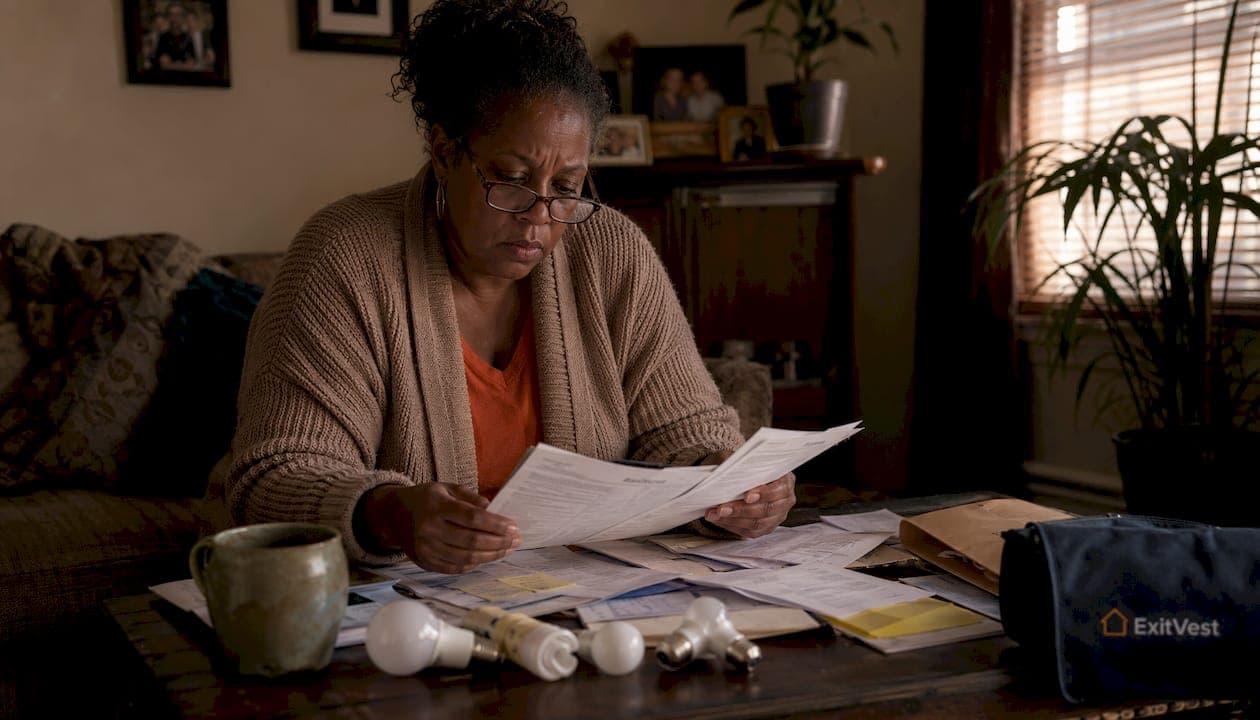
Pro Tip: Gather your municipal violation notices, open permit records, and any condemnation orders before you contact buyers. Buyers who specialize in unsafe properties will ask for these documents immediately, and having them ready speeds up the offer process.
What does selling a home as-is actually mean in New Jersey?
Selling as-is means you transfer ownership of the property in its current condition, with no obligation to repair, renovate, or bring the home up to code before closing. The buyer accepts whatever defects exist. That said, "as-is" is not a legal shield against disclosure obligations.
New Jersey law requires sellers to disclose all known material defects, regardless of the contract type. That includes structural problems, code violations, fire damage, and any condemnation notices the property has received. The as-is clause tells the buyer you won't fix anything. It does not tell the buyer you don't have to tell them what's wrong.
Key points sellers should understand before signing an as-is contract:
- No repair obligation: You are not required to fix defects or bring the property into compliance before closing.
- Disclosure still required: Known defects, violations, and municipal orders must be disclosed in writing.
- Title transfer: Ownership transfers with all existing liens, violations, and encumbrances unless the contract specifies otherwise.
- Buyer assumes risk: After closing, the buyer is responsible for remediation, code compliance, and any municipal orders.
- Contract clauses: As-is contracts in NJ often include a "Transfer of Title Only" provision when a home fails a C.O. inspection, shifting post-closing compliance responsibility to the buyer.
What types of unsafe structures and conditions do cash buyers accept in NJ?
Under N.J. Admin. Code § 5:23-2.32, an unsafe structure is legally defined as a building that is dilapidated, unsanitary, or dangerous to the point it endangers life or health. Cash buyers who work in this space buy across the full spectrum of that definition.
Conditions commonly accepted by buyers purchasing damaged properties in NJ include:
- Structural defects: Crumbling foundations, sagging roofs, leaning or unstable walls, and compromised load-bearing elements.
- Environmental hazards: Mold infestations, lead paint, asbestos, and underground oil tank contamination, where cleanup costs can run from $10,000 to over $100,000.
- Code violations and open permits: Unpermitted additions, unresolved building permits, and work done without proper certificates of approval.
- Utility failures: Properties with no functioning heat, water, or electricity, which NJ inspectors treat as grounds for condemnation.
- Condemned and fire-damaged properties: Homes that have received official condemnation notices or sustained fire damage that makes them structurally unsafe.
If your municipality has ordered demolition and you haven't complied, the town can carry out the demolition and place a lien on the property for the full cost, sometimes exceeding the land's value. Selling before that happens is almost always the better financial outcome.
What are NJ's disclosure requirements when selling an unsafe home as-is?
Selling as-is does not exempt you from New Jersey's mandatory disclosure rules. Sellers must disclose all known material defects in writing before closing. That covers structural failures, active code violations, condemnation notices, fire damage, environmental hazards, and any open municipal orders.
Documents sellers should prepare for disclosure:
- Written list of all known structural defects and their approximate severity.
- Copies of any municipal violation notices, condemnation orders, or stop-work orders.
- Records of open permits and any unpermitted work completed on the property.
- Environmental reports if underground oil tanks, mold, or lead paint are present.
- Any prior inspection reports, even unfavorable ones.
Buyers will factor every disclosed defect into their offer. Disclosing a problem upfront typically results in a lower offer, but concealing it risks a lawsuit that costs far more. Cash buyers who specialize in as-is sales are accustomed to working with full disclosure packages and won't walk away from a deal simply because the property has problems.
Common structural defects and environmental hazards in NJ homes sold as-is
The defects that most often trigger condemnation or force an as-is sale in New Jersey fall into predictable categories. Knowing what you're dealing with helps you set realistic expectations for pricing and buyer interest.
Structural failure is one of the leading causes of condemnation in NJ, including crumbling foundations, sagging roofs, and walls that visibly lean or bow. These conditions develop gradually, often accelerated by water infiltration and deferred maintenance, and inspectors treat them as immediate safety threats.
Environmental hazards add another layer of complexity:
- Mold: Black mold is a common cause of health-related condemnation. It spreads rapidly when plumbing leaks or moisture problems go unaddressed, and remediation can be extensive.
- Lead paint: Present in most homes built before 1978, it requires specific disclosure and handling protocols.
- Underground oil tanks: Abandoned tanks that have leaked into the soil create environmental liability that follows the property through ownership transfers.
- Asbestos: Found in insulation, floor tiles, and roofing materials in older NJ homes, requiring licensed abatement before renovation.
Open permits and unpermitted work are a separate but equally serious issue. If a previous owner finished a basement or added a structure without pulling permits, the municipality can require demolition or costly remediation after closing. Cash buyers price this risk into their offers, which is why an OPRA (Open Public Records Act) search is standard practice before any distressed property transaction.
How does selling as-is to cash buyers differ from a traditional NJ home sale?
The differences are significant, and they run in both directions. You give up price; you gain speed and certainty.
In a traditional sale, buyers typically require a home inspection, an appraisal, and lender approval. Any defect discovered during inspection becomes a negotiating point, and lenders routinely refuse to fund mortgages on homes with safety hazards or code violations. That means a property with structural problems or active violations effectively has no traditional buyer pool.
Cash buyers work differently:
- No lender involvement: Cash transactions skip the appraisal and underwriting process entirely.
- No repair contingencies: Buyers accept the property in its current condition without demanding fixes.
- Faster closing: Traditional sales in NJ typically take several weeks to complete. Cash sales on distressed properties can close significantly faster than traditional sales.
- Lower offers: Cash buyers price in the cost of repairs, fines, remediation, and their own risk margin. Expect offers below market value.
- Flexible title terms: Buyers may negotiate a Transfer of Title Only agreement, assuming responsibility for obtaining a Certificate of Occupancy after closing.
The pricing discount is real, but so is the alternative: a property sitting vacant while municipal fines accumulate, or a condemnation order escalating toward demolition.
How long does it take to sell an unsafe home in NJ?
The timeline depends on how prepared you are and which type of buyer you engage. With a cash buyer who specializes in unsafe or code-violating properties, the process from first contact to closing typically runs two to four weeks.
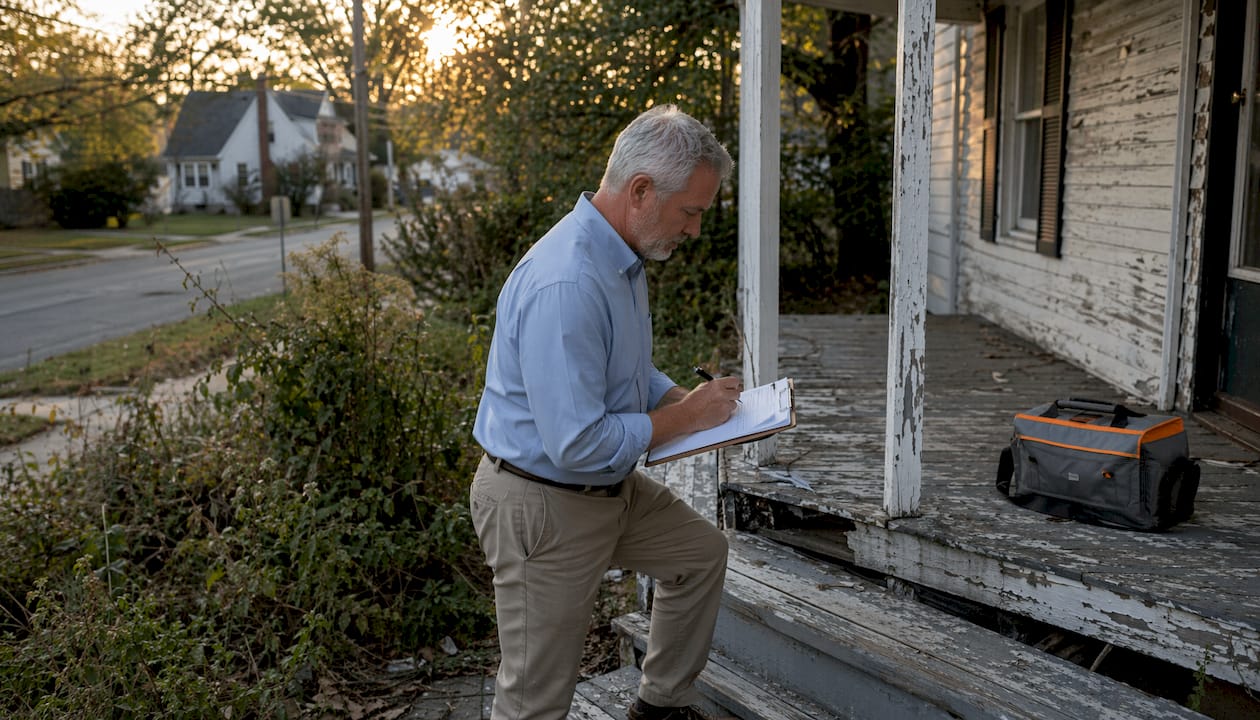
Week one usually covers the initial inquiry, a property walkthrough or virtual assessment, and a cash offer. Week two involves reviewing and accepting the offer, completing disclosure paperwork, and opening title. Weeks three and four cover title search, any lien resolution discussions, and closing.
What slows things down: incomplete disclosure documents, unresolved estate issues if the property is inherited, active bankruptcy proceedings, or title problems like unpaid municipal liens. Sellers who have their paperwork ready, including violation notices, permit records, and any prior inspection reports, consistently close faster. If your property has a condemnation order, check out the NJ condemned property guide for specific steps that apply to your situation.
What legal risks do sellers face when selling unsafe structures as-is in NJ?
The biggest risk is post-closing litigation from a buyer who discovers an undisclosed defect. New Jersey courts have consistently held that an as-is clause does not protect sellers who knowingly concealed material problems. If a buyer can prove you knew about a structural failure, an environmental hazard, or an active condemnation order and didn't disclose it, you face potential fraud claims, contract rescission, and damages.
A second risk involves municipal liens. If your property has accumulated fines for code violations or if the municipality has already performed emergency repairs, those costs attach to the property as liens. Depending on how the sale contract is written, you may be responsible for satisfying those liens at closing. Buyers will typically require a lien search and will negotiate who pays.
A third risk applies specifically to condemned properties. Under N.J.S.A. 40:48-2.5, if you fail to comply with a municipal demolition order, the town can demolish the structure and place the full cost as a lien against the property. That lien can exceed the property's value, leaving you with a debt and no asset. Selling before that process runs its course is almost always the better outcome.
How do you find and evaluate reputable cash buyers for unsafe NJ properties?
Not every cash buyer is equipped to handle properties with active violations, condemnation orders, or environmental hazards. The right buyer has direct experience with NJ municipal code processes, title issues specific to distressed properties, and the capital to close without financing contingencies.
When evaluating buyers, look for these signals:
- Verifiable transaction history with unsafe or condemned properties in New Jersey specifically.
- Clear, written offers with no hidden fees deducted at closing.
- No earnest money games: Reputable buyers don't ask for large deposits before they've done their due diligence.
- Willingness to handle open permits and municipal compliance post-closing, rather than demanding you resolve them first.
- Transparent timeline: A buyer who can't give you a clear closing date is a buyer who may not have the funds ready.
For a broader look at the cash buyer market for damaged NJ homes, including what separates serious buyers from wholesalers who flip contracts, that resource covers the distinctions in detail. Ask any buyer directly whether they purchase with their own funds or assign contracts to third parties. The answer tells you a lot about how reliable the closing will be.
How do unsafe structures affect pricing and negotiation in NJ?
Cash buyers who purchase unsafe or code-violating properties price their offers by working backward from the property's after-repair value, then subtracting estimated repair costs, remediation expenses, carrying costs, and their profit margin. The result is typically well below what the home would fetch in move-in condition.
Industry analysts note that as-is sellers consistently receive discounted offers reflecting the risks and costs buyers assume, particularly for code violations and structural hazards. That discount is not arbitrary. A buyer taking on a property with foundation failure, mold remediation needs, and open permits is absorbing costs that can run well into six figures.
Negotiation leverage for sellers in this market is limited but real. You can:
- Get multiple offers. Even one competing offer changes the dynamic.
- Negotiate closing costs. Some buyers will cover title fees or transfer taxes as part of the deal.
- Push on timeline. If you need more time to vacate or resolve an estate issue, a motivated buyer will often accommodate.
- Clarify lien responsibility in writing. Don't assume the buyer is handling municipal liens. Get it in the contract.
What you generally cannot negotiate away is the price discount itself. Buyers who specialize in distressed properties have firm underwriting models, and a seller who pushes too hard on price will simply lose the buyer to the next property in their pipeline.
How to prepare your documentation for an as-is sale with code violations
Getting your paperwork in order before you contact buyers cuts weeks off the process and signals to buyers that you're a serious seller. Here's the sequence that works:
Step 1: Pull your municipal violation history. Contact your local construction or housing office and request a complete list of open violations, stop-work orders, and any condemnation notices on file. You can also submit an OPRA request to get this in writing.
Step 2: Identify all open permits. Ask the same office for a permit history on the property. Any permit opened but never closed with a final inspection is an open permit that buyers will flag.
Step 3: Gather environmental records. If you know of or suspect underground oil tanks, mold, asbestos, or lead paint, pull any existing environmental reports. If none exist, disclose the known or suspected condition in writing.
Step 4: Compile prior inspection reports. Any inspection done in the past three to five years is relevant. Buyers will want to see them, and withholding them creates disclosure risk.
Step 5: Document the property's condition in writing. A simple written statement of known defects, organized by category (structural, environmental, utilities, code), gives buyers what they need to make an offer and protects you legally.
Step 6: Consult a New Jersey real estate attorney. Before signing any contract, have an attorney review the disclosure documents and the sale agreement. The cost is modest compared to the liability of a post-closing lawsuit. For more on navigating the full process, the distressed house selling guide covers the practical steps in detail.
What happens after closing on an unsafe property in NJ?
Once the deed transfers, the seller's obligations are largely complete, provided disclosures were handled correctly. The buyer assumes responsibility for the property's condition, including any municipal orders, code compliance requirements, and remediation work.
That said, sellers are not entirely off the hook after closing. If a buyer discovers a defect that was known to you and not disclosed, New Jersey law allows them to pursue legal action even after the transaction is complete. The statute of limitations on fraud and misrepresentation claims gives buyers time to act after they discover the problem, not just after closing.
Buyers who purchase unsafe properties in NJ take on specific post-closing obligations. They must address any active condemnation orders, obtain required certificates of occupancy before occupying or renting the property, and resolve open permits through the appropriate municipal offices. In a Transfer of Title Only transaction, all of that responsibility shifts to the buyer by contract, which is why these agreements need to be drafted carefully by a real estate attorney on both sides.
How Exitvest helps NJ sellers move unsafe properties quickly
Exitvest works directly with New Jersey property owners who need to sell homes with structural problems, code violations, environmental hazards, or active condemnation orders. The process is straightforward: you describe the property, Exitvest assesses it, and you receive a cash offer without any obligation to repair, clean, or stage anything.
What Exitvest brings to these transactions:
- Direct cash purchases with no financing contingencies and no lender delays.
- Experience with condemned, fire-damaged, and code-violating properties across New Jersey.
- Flexible closing timelines that work around estate issues, tenant situations, or personal circumstances.
- Transparent offers with no fees deducted at closing and no surprise deductions.
- Guidance through the disclosure process so sellers understand their obligations before signing anything.
If you're ready to move forward, see how it works or explore the seller situations Exitvest handles to see where your property fits.
Key Takeaways
Selling an unsafe or code-violating home as-is in New Jersey is legally straightforward when you disclose everything you know and work with a cash buyer experienced in distressed properties.
| Point | Details |
|---|---|
| As-is sales require disclosure | NJ law requires sellers to disclose all known defects and violations even in as-is transactions. |
| Cash buyers absorb the risk | Buyers specializing in unsafe properties accept code violations, structural defects, and environmental hazards without repair demands. |
| Demolition liens are a real threat | Under N.J.S.A. 40:48-2.5, municipalities can demolish unsafe structures and lien owners for the full cost if orders go unmet. |
| Pricing reflects buyer risk | As-is sellers receive discounted offers because buyers price in repair costs, remediation, and their own risk margin. |
| Documentation speeds closing | Having violation notices, open permit records, and environmental disclosures ready before contacting buyers cuts weeks off the timeline. |