
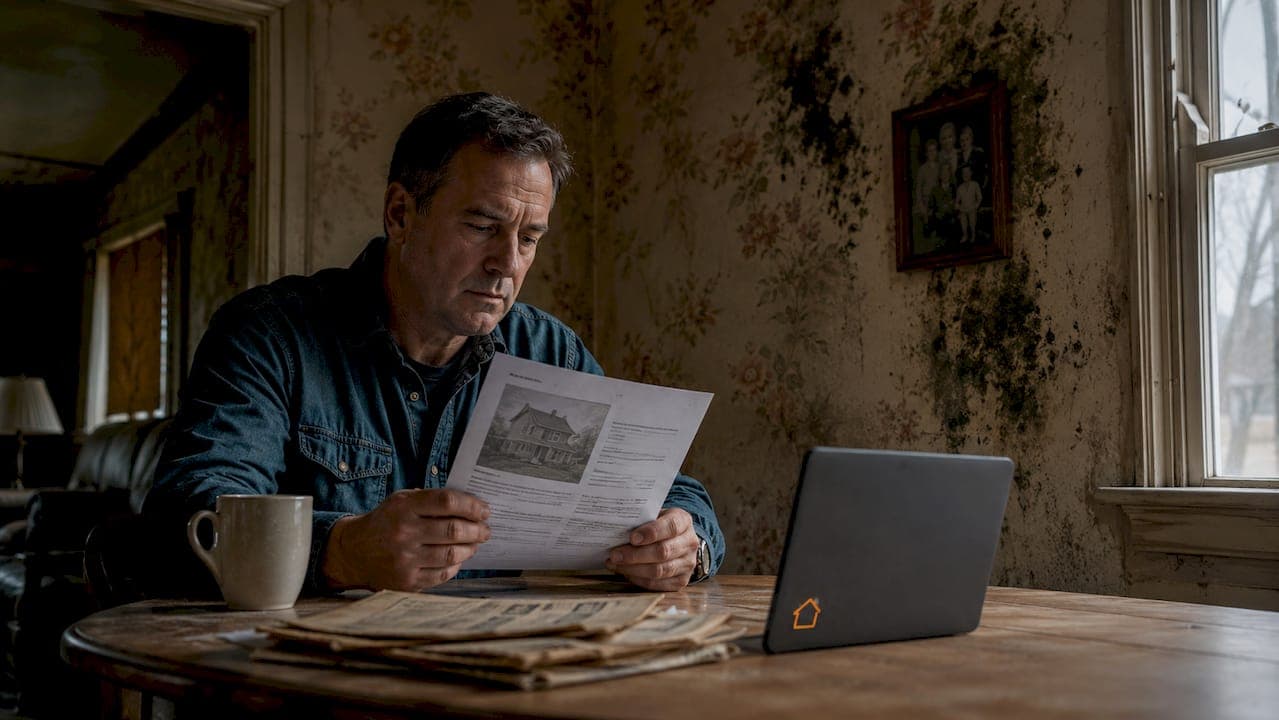
Selling a condemned property in New Jersey is legally allowed, provided you disclose its condition fully and comply with state regulations. The term "condemned" refers to a property that a local government has declared unsafe or unfit for occupancy, typically due to structural failure, code violations, or hazardous conditions. New Jersey law does not require you to repair the property before selling it. You must, however, complete mandatory disclosure forms and work with buyers who understand the property's status. This guide covers your legal obligations, your selling options, and the steps to close quickly without unnecessary stress.
What does it mean to sell condemned property in NJ?
Selling condemned property in New Jersey means transferring ownership of a home or building that a local municipality has officially declared unfit for occupancy. The condemnation order does not strip you of ownership. It does, however, create legal obligations you must meet before any sale can close.
New Jersey law requires sellers to disclose known material defects, flood risks, lead water lines, and code violations when selling any property, including condemned ones. That requirement exists to protect buyers from purchasing a property without understanding its true condition. Skipping or softening those disclosures is not a gray area. It exposes you to contract cancellations and potential legal liability.
The good news is that a condemned status does not make a property unsellable. Cash buyers, real estate investors, and specialized property buyers actively seek these homes. They buy them as-is, handle the permits and renovations themselves, and close on timelines that work for sellers under financial or legal pressure.
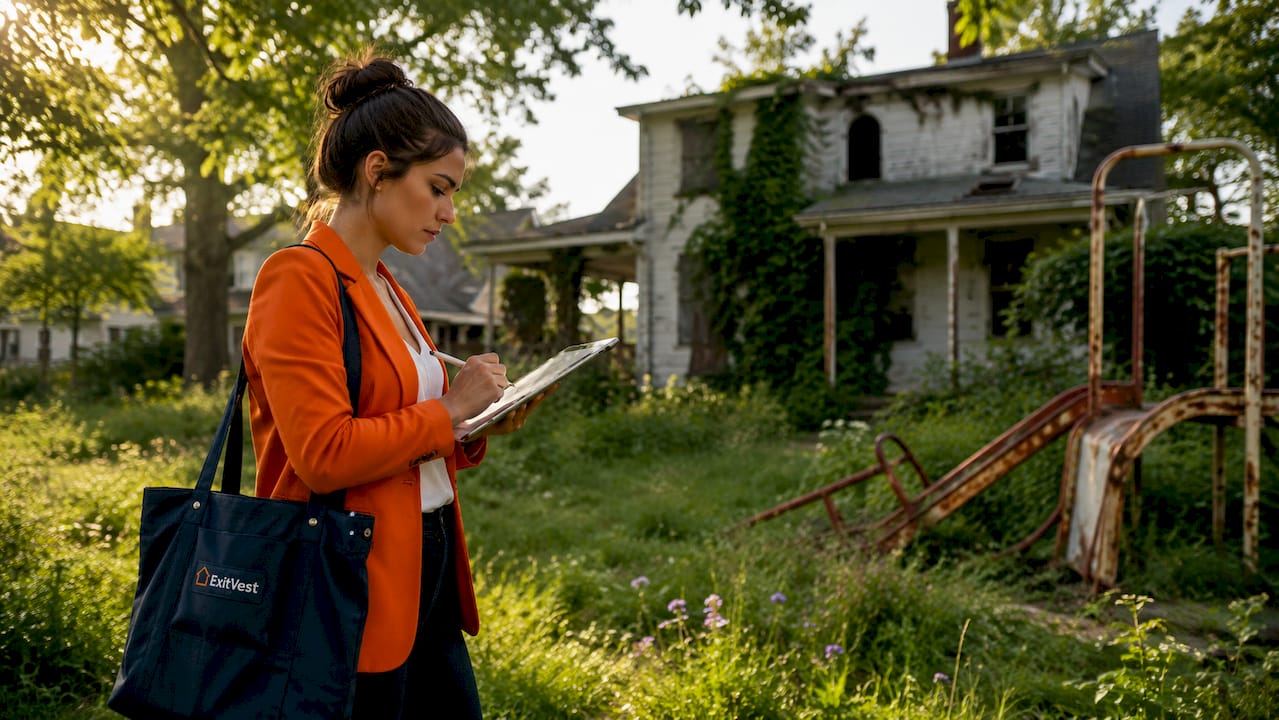
Legal disclosure requirements for selling a condemned home in New Jersey
New Jersey's disclosure rules are specific and non-negotiable. Sellers must provide a completed Seller's Property Condition Disclosure Statement before any offer is accepted. That document covers structural defects, environmental hazards, open permits, flood history, and the condemned status itself.
Key items you must disclose
- Structural issues: Foundation cracks, roof failures, load-bearing wall damage, or any defect that affects the building's integrity
- Environmental hazards: Lead water lines, asbestos, mold, or contaminated soil
- Flood history: Prior flood damage, FEMA flood zone designation, and any related insurance claims
- Code violations: Open building permits, fire code violations, or citations from local housing authorities
- Condemned status: The official condemnation order, including the issuing municipality and the date of the order
Required legal documents
| Document | Purpose |
|---|---|
| Seller's Property Condition Disclosure Statement | Mandatory NJ form covering all known defects |
| Condemnation order copy | Confirms official status and scope of violations |
| Title report | Reveals liens, back taxes, or encumbrances on the property |
| Open permit records | Lists unresolved permits that affect the sale |
| State-specific sale contract | NJ Association of REALTORS contracts are the standard for compliant transactions |
New Jersey requires use of state-specific contracts that comply with state law and outline all terms and contingencies. Using a generic contract from another state creates legal exposure. An attorney familiar with New Jersey real estate law should review every document before you sign.
Failure to provide required disclosures can result in contract cancellation by the buyer and potential legal consequences for the seller. Buyers have a legal right to walk away if disclosures are incomplete or false. Full transparency protects you as much as it protects the buyer.
What are your options for selling a condemned property?
Two primary paths exist for selling distressed property in NJ: selling to a cash buyer or listing with a real estate agent. Each has real trade-offs depending on your timeline, financial situation, and tolerance for uncertainty.
Selling to a cash buyer
Cash buyers often offer around 70% of fair market value for condemned properties, but they provide the fastest closing without repair contingencies. Offers can appear in as little as 24 hours. That speed matters when you are carrying property taxes, facing fines from the municipality, or dealing with liens that grow over time.
Investors buying condemned homes take on renovation, permitting, and demolition costs after purchase. That means you hand over the property in its current condition and walk away. No contractor bids, no permit applications, no cleanup.
Listing with a real estate agent
Selling with a traditional real estate agent may yield a higher price but typically takes longer and may require buyers to meet financing and inspection contingencies. Most lenders will not finance a condemned property. That limits your buyer pool almost entirely to cash purchasers anyway, which reduces the agent's advantage in this specific situation.
For owners of condemned homes, the agent route makes sense only when the property has strong land value or is in a high-demand area where investors will compete aggressively. Otherwise, the time and carrying costs often outweigh the potential price difference.
Pro Tip: If you are unsure which route fits your situation, request cash offers from multiple buyers first. You can always list with an agent afterward, but you cannot undo time lost to a listing that fails to close.
How to prepare and sell your condemned property step by step
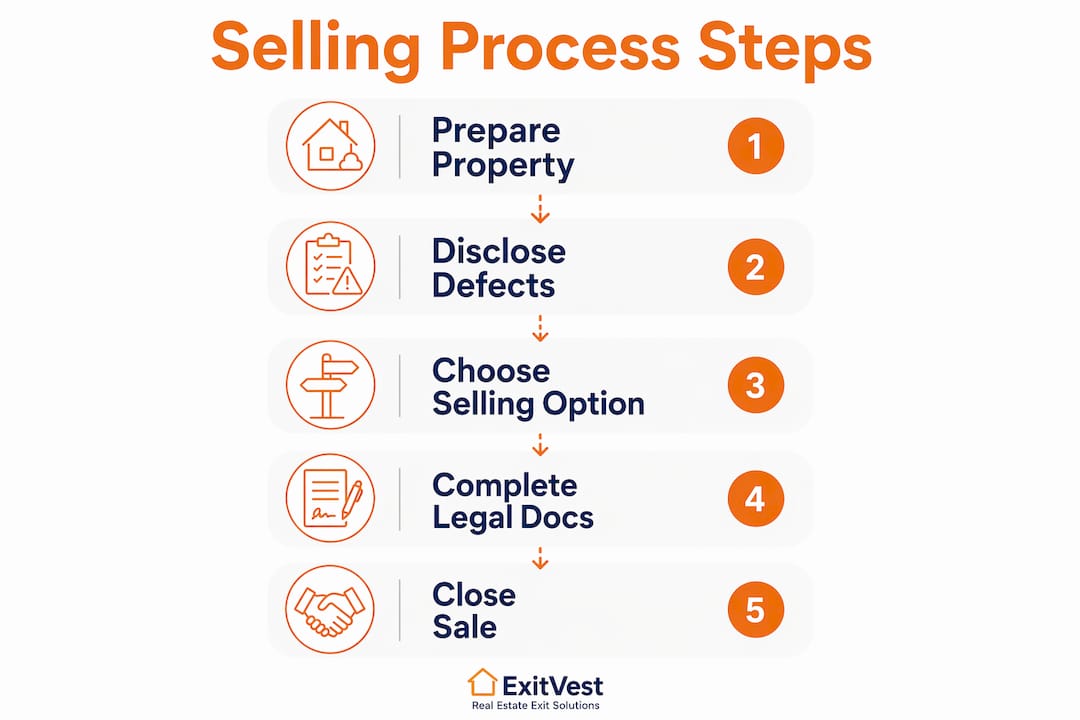
A clear process reduces mistakes and speeds up the sale. Follow these steps in order.
-
Gather all documentation. Collect the condemnation order, title report, open permit records, and any prior inspection reports. Buyers and their attorneys will request these immediately.
-
Order a pre-listing inspection. Pre-listing inspections cost about $355–$485 in New Jersey and help sellers identify issues early and set realistic expectations. Knowing the full scope of problems before you list prevents surprises that derail negotiations.
-
Complete the Seller's Property Condition Disclosure Statement. Fill it out honestly and completely. If you are unsure about a specific defect, disclose it anyway. Omission is treated the same as misrepresentation under New Jersey law.
-
Contact multiple cash buyers or investors. Reach out to at least three buyers to create competition. A single offer gives you no leverage. Multiple offers let you compare terms, timelines, and contingencies side by side. Owners selling distressed property in NJ often find that the highest offer is not always the best one when closing speed and certainty matter more.
-
Negotiate with full transparency. Share all documentation upfront. Buyers who know the full picture are less likely to renegotiate or cancel after the inspection period. Surprises kill deals.
-
Use a New Jersey real estate attorney for closing. An attorney handles escrow, title transfer, lien resolution, and compliance with state-specific contract requirements. Their fee is small compared to the cost of a closing that falls apart due to a paperwork error.
Pro Tip: If the property has back taxes or municipal liens, ask your attorney to negotiate a payoff amount before closing. Many municipalities accept less than the full balance to clear the title and move the property.
Common mistakes to avoid when selling condemned property in NJ
Most failed sales of condemned properties trace back to a small set of avoidable errors. Knowing them in advance puts you ahead of most sellers in this situation.
-
Hiding known defects. Buyers have the right to cancel if disclosures are incomplete. Beyond the lost deal, you face potential fraud claims. Disclose everything, even if it feels like it will scare buyers away. The right buyer expects problems.
-
Dismissing investor offers too quickly. A cash offer at 75% of market value looks low until you subtract repair costs, carrying costs, agent commissions, and the months it would take to find a retail buyer. Run the actual numbers before you decline.
-
Ignoring liens and demolition orders. Some condemnation orders include a municipal demolition timeline. If the city demolishes the structure before you sell, your land value drops and your negotiating position weakens significantly. Check the order for any deadlines.
-
Using the wrong contract. A contract that does not comply with New Jersey law can void the sale or expose you to liability. Always use NJ Association of REALTORS forms or have an attorney draft a compliant agreement.
Selling a condemned property is not about hiding the problem. It is about finding the right buyer who already knows how to solve it. Transparency closes deals faster than any sales tactic.
Owners dealing with foreclosure alongside condemnation face compounding deadlines. In those cases, speed is not a preference. It is a financial necessity. The longer the property sits, the more liens, fines, and carrying costs accumulate.
Key Takeaways
Selling a condemned property in New Jersey is legally straightforward when you disclose its condition fully, use compliant contracts, and work with buyers who purchase as-is.
| Point | Details |
|---|---|
| Disclosure is mandatory | Complete the Seller's Property Condition Disclosure Statement before accepting any offer. |
| Repairs are not required | New Jersey law allows as-is sales of condemned properties with full disclosure. |
| Cash buyers close fastest | Offers can arrive within 24 hours, with no repair or financing contingencies. |
| Liens and orders need attention | Check the condemnation order for demolition deadlines and resolve liens before closing. |
| Use NJ-compliant contracts | State-specific contracts from the NJ Association of REALTORS protect both parties legally. |
What I've learned from watching sellers handle condemned properties
After working with property owners across New Jersey, one pattern stands out clearly. Sellers who struggle the most are not the ones with the worst properties. They are the ones who wait.
A condemned property does not get easier to sell over time. Fines accumulate. Liens grow. Municipalities issue demolition orders. The longer a property sits, the fewer options you have and the lower the offers get. Sellers who move quickly, even at a price below what they hoped for, almost always come out ahead of those who hold out for a number that the market will not support.
The other thing I have seen repeatedly is sellers underestimating how much the disclosure process actually helps them. When you hand a buyer a complete disclosure package upfront, you remove the uncertainty that causes deals to fall apart. Buyers who know exactly what they are getting do not renegotiate at the last minute. They close.
My honest advice: get your documents together this week, not next month. Request at least three cash offers before you decide anything. And use a New Jersey real estate attorney, not just a title company, to close the deal. The cost is worth it.
— Alek
How Exitvest helps NJ sellers move condemned properties fast
Exitvest buys properties as-is across New Jersey, including condemned homes, vacant buildings, and distressed properties that traditional buyers will not touch. There are no repair requirements, no cleanup obligations, and no financing contingencies that can collapse a deal at the last minute.
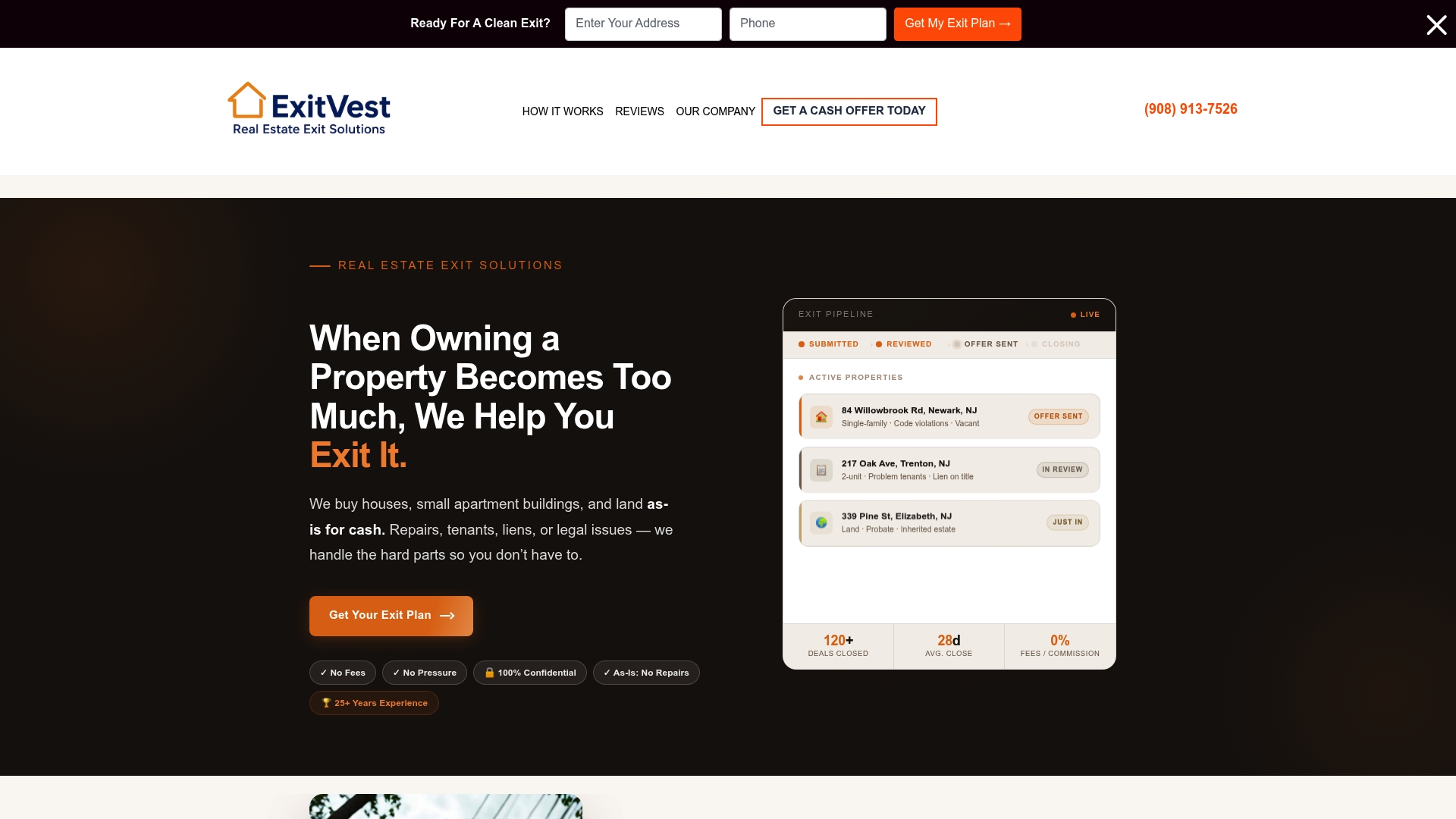
The process is direct. You share your property details, Exitvest reviews the situation, and you receive a cash offer based on the New Jersey market. Closing timelines are flexible and built around your schedule, not a lender's calendar. If you are carrying fines, back taxes, or a condemnation order with a deadline, Exitvest can move as fast as the title allows. See how it works and request your offer without any obligation.
FAQ
Can you legally sell a condemned house in New Jersey?
Yes. New Jersey law allows you to sell a condemned property as-is without making repairs, as long as you fully disclose the condemned status and all known defects to the buyer.
What disclosures are required to sell condemned property in NJ?
You must complete the Seller's Property Condition Disclosure Statement, which covers structural defects, code violations, flood history, lead water lines, and the condemnation order itself.
How much will a cash buyer pay for a condemned property?
Cash buyers typically offer around 70% of fair market value for condemned properties in New Jersey. That discount reflects the buyer's cost to handle repairs, permits, and renovations after purchase.
How fast can you close on a condemned property sale in NJ?
Cash buyers can deliver offers within 24 hours and close in as little as one to two weeks, depending on title clearance and lien resolution.
What happens if you don't disclose a condemned property's status?
Buyers have a legal right to cancel the contract if disclosures are incomplete or false. The seller may also face legal consequences, including fraud claims and financial liability.