

Selling a rental property in as-is condition means listing it in its current state, without making repairs, and completing the sale regardless of tenant occupancy or property damage. This approach is fully legal in all 50 states, and it is the preferred exit strategy for landlords facing financial pressure, inherited properties, problem tenants, or repair costs that simply do not pencil out. The process differs from a standard home sale in two critical ways: you must honor existing lease agreements, and you must still meet all required legal disclosures. Cash buyers like Exitvest specialize in exactly this type of transaction, buying properties nationwide with tenants in place and no repairs required.
How do tenant leases affect selling rental property as-is?
Lease agreements remain binding after a rental property sale. The buyer steps into your shoes as landlord and inherits every obligation in the existing lease. This is not optional and it is not negotiable between seller and buyer alone. State law enforces it automatically.
The type of lease your tenant holds determines how much flexibility you have during the sale:
- Fixed-term leases (for example, a 12-month lease with six months remaining) must be honored by the new owner through the end of the term. You cannot force a tenant out simply because you are selling.
- Month-to-month leases give both parties more flexibility. Most states require 30 to 60 days notice before a tenant must vacate, which means a buyer who wants the property vacant can plan for that timeline.
- Tenant at will arrangements vary by state but generally allow shorter notice periods.
Showings require advance notice too. Proper notice for showings typically means 24 to 48 hours of advance communication to tenants. Skipping this step creates legal exposure and almost always poisons tenant cooperation for the rest of the sale.
One underused strategy is "cash for keys." You offer the tenant a lump sum payment in exchange for vacating early and leaving the property in good condition. This works well when a buyer wants a vacant property and the tenant is open to moving. The amount varies, but covering first and last month's rent at the new place is a common starting point.
Pro Tip: Before you list the property, review every lease document and note the exact end date, any renewal clauses, and any special provisions. Buyers will ask for this information, and having it ready speeds up negotiations significantly.
Treat the sale of a tenanted rental as a tenant management project first and a real estate transaction second. Sales timing depends heavily on tenant cooperation and legal rules, not just market conditions.
What disclosure requirements apply to an as-is property sale?
The as-is label does not exempt you from legally required disclosures. Sellers must fully disclose property issues and hazards despite selling as-is. Skipping disclosures does not transfer liability to the buyer. It transfers it back to you, in the form of penalties, lawsuits, and collapsed deals.
Here are the core disclosure obligations every seller should address:
- Federal lead paint disclosure. For any home built before 1978, federal law requires you to provide the EPA pamphlet Protect Your Family from Lead in Your Home, disclose any known lead hazards in writing, and share any existing inspection records. Verbal notice is insufficient. This disclosure must be delivered before the buyer is legally bound by any contract.
- State-specific condition disclosures. Most states require sellers to disclose known material defects, including roof condition, foundation issues, water damage, mold, and HVAC problems. The exact form varies by state, but the obligation is nearly universal.
- Hazard disclosures. Flood zone status, earthquake risk, and proximity to environmental hazards are required disclosures in many states. Check your state's real estate commission website for the current required forms.
- Tenant status disclosure. Buyers need to know a tenant is in place, the lease terms, and the current rent amount. Hiding this information is a material misrepresentation.
Failing to provide the lead paint pamphlet and disclosures before contract formation can result in civil penalties up to $37,500 per violation. That figure applies per transaction, not per property, so the risk is real even on a single sale.
Lead paint compliance is a particularly common gap for inherited rental properties. If you received the property from a family member and never lived in it, you may not know its full history. Pull any available inspection records and disclose what you know. Disclosing uncertainty is better than disclosing nothing.
How does as-is pricing compare to renovated property pricing?
Selling as-is typically leads to a discounted sales price that varies by property condition and market demand. The discount is not fixed. It is a negotiation that starts with the buyer's estimate of repair costs and their required profit margin.

| Factor | As-Is Property | Renovated Property |
|---|---|---|
| Buyer pool | Primarily investors and cash buyers | Broader pool including retail buyers |
| Price relative to market | Below market value | At or above market value |
| Time to close | Often 7–21 days with cash buyers | 30–60 days typical |
| Repair responsibility | Buyer assumes all repair costs | Seller has already absorbed costs |
| Showing complexity | Tenant coordination required | Standard showing process |
Minor cosmetic issues, such as dated paint or worn carpet, cause small price reductions. Major structural or system problems, like a failing roof, foundation cracks, or outdated electrical panels, cause larger reductions because the buyer's cost exposure is significant.
Hot markets reduce price discounts substantially. In a seller's market, cash investors compete aggressively for available inventory, which compresses the discount they demand. In a buyer's market, investors have more options and negotiate harder. Knowing which market you are in before you price is not optional.
Pro Tip: Get two or three written repair estimates before you list. You do not need to make the repairs. You need the numbers so you can price accurately and counter lowball offers with real data.
Even cash buyers price according to repair scope and marketability. A realistic price that reflects actual condition attracts serious buyers faster than an optimistic price that sits on the market and signals problems.
What are the practical steps to sell your rental home quickly?
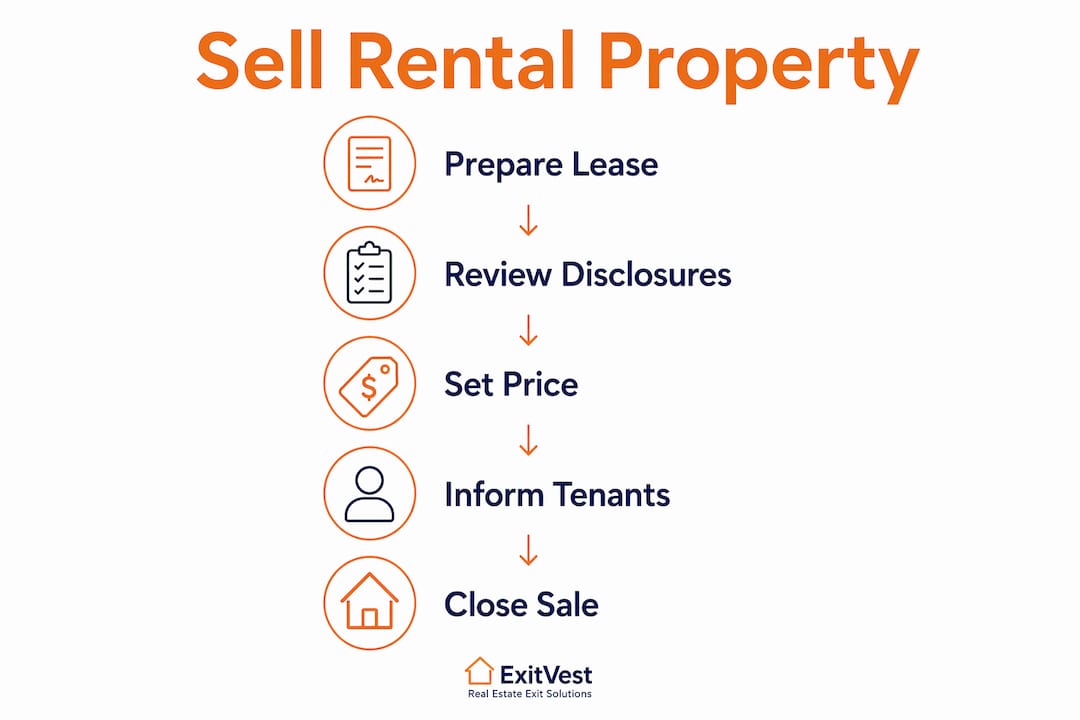
A fast as-is sale requires preparation in three parallel tracks: tenant management, legal compliance, and pricing. Running these simultaneously cuts weeks off your timeline.
- Review all lease documents. Identify lease type, end dates, and any special clauses. Decide whether you will sell with tenants in place or negotiate early termination before listing.
- Prepare all required disclosures upfront. Gather your lead paint records, state disclosure forms, and any known defect documentation before you contact buyers. Delays caused by missing paperwork are the most preventable delays in this process.
- Set a realistic as-is price. Use recent comparable sales of similar condition properties in your market. Adjust for tenant occupancy, which affects a retail buyer's ability to use the property immediately.
- Contact cash buyers and specialized investors. Cash buyers enable faster closing and purchase without requiring seller repairs or tenant displacement. They understand tenant-occupied properties and price accordingly. You can explore working with cash buyers who specifically target rental properties.
- Coordinate inspections and showings with proper notice. Give tenants the legally required 24 to 48 hours notice for every entry. Document every notice in writing. This protects you legally and keeps tenants cooperative.
- Evaluate offers with tenant occupancy in mind. A cash offer with a 14-day close and tenants in place may net you more than a higher retail offer that requires a vacant property and a 60-day escrow.
- Close with complete documentation. Provide the buyer with all lease agreements, security deposit records, rent payment history, and any outstanding maintenance requests. A clean handoff prevents post-closing disputes.
For properties you inherited, the inherited property sale process adds probate and title considerations that can affect your timeline. Address those early.
What mistakes should you avoid when selling a rental property as-is?
Most failed or delayed as-is sales trace back to a short list of avoidable errors. Recognizing them before you list saves time, money, and legal exposure.
- Ignoring lease terms. Attempting to force out tenants or deny showings without proper notice creates legal disputes that can freeze your sale for months.
- Skipping required disclosures. The as-is label does not waive your disclosure duties. Omitting lead paint disclosures or known defects exposes you to penalties and gives buyers grounds to void the contract.
- Overpricing despite condition. Buyers who specialize in as-is rentals know repair costs precisely. An inflated price does not fool them. It just sends them to the next property.
- Failing to notify tenants properly. Surprise showings or inspections damage your relationship with tenants and can trigger complaints to local housing authorities.
- Underestimating coordination complexity. Tenant coordination is often the biggest friction in as-is rental sales, more than property condition alone. Plan for it explicitly rather than hoping it resolves itself.
Pro Tip: Send tenants a written letter at the start of the sale process explaining the timeline, their rights, and what to expect. Tenants who feel informed and respected are far more likely to cooperate with showings and inspections.
Sellers who understand repair risk transfer to buyers price more accurately and close faster. The goal is not to hide problems. It is to price them correctly and find the right buyer for the property as it stands.
Key takeaways
Selling a rental property as-is succeeds when you manage tenant obligations, meet disclosure requirements, and price accurately for the property's actual condition.
| Point | Details |
|---|---|
| Leases transfer to buyers | The new owner inherits all active lease obligations; honor them or negotiate early termination before listing. |
| Disclosures are non-negotiable | Lead paint and condition disclosures must be delivered in writing before any binding contract, regardless of as-is status. |
| Price reflects repair scope | Major defects cause larger discounts; get written repair estimates before listing to counter lowball offers with real data. |
| Cash buyers close fastest | Investors who buy rental properties as-is accept tenants in place and close in as few as 7–21 days. |
| Tenant coordination drives speed | Managing notices, showings, and lease terms is the primary factor in how quickly an as-is rental sale closes. |
What i've learned from as-is rental sales
The sellers who struggle most with as-is rental transactions are not the ones with the worst properties. They are the ones who underestimate tenant coordination. A property with a leaking roof and a cooperative tenant closes faster than a cosmetically clean property with a hostile one.
Transparent communication with tenants from day one changes the entire dynamic. When tenants know what is happening, understand their rights, and feel respected, they show up for inspections and keep the property presentable. When they feel blindsided, they use every legal tool available to slow things down.
On the legal side, I have seen sellers lose deals in the final week because they forgot to prepare lead paint disclosures for a 1965 property. The buyer's attorney flagged it, the contract went into dispute, and the cash buyer walked. That is a completely preventable outcome.
My honest advice: work with buyers who already understand the as-is rental space. They know how to price tenant-occupied properties, they are not surprised by deferred maintenance, and they move fast. Exitvest operates exactly this way, which is why sellers in difficult situations consistently get to closing without the drama that comes with listing on the open market.
— Alek
Ready to sell your rental property without the hassle?
If you are carrying a rental property that needs repairs, has tenants in place, or is simply costing you more than it is worth, Exitvest can help you move forward without pressure or delays.
Exitvest buys rental properties in as-is condition across New Jersey, Texas, Florida, Tennessee, and nationwide. No repairs, no staging, no drawn-out showings. You get a fair cash offer, a flexible closing timeline that works around your tenant situation, and a straightforward process from first contact to closing. If you are dealing with difficult property situations like inherited rentals, problem tenants, or mounting repair costs, Exitvest is built for exactly that.
FAQ
What does it mean to sell a rental property as-is?
Selling as-is means listing the property in its current condition without making repairs or improvements before closing. The buyer accepts the property's condition and assumes responsibility for any repairs after purchase.
Do i have to disclose problems if i sell as-is?
Yes. The as-is label does not remove your legal disclosure obligations. Federal law requires lead paint disclosure for pre-1978 homes, and most states require written disclosure of known material defects before any binding contract.
Can i sell a rental property with tenants still living there?
Yes. Buyers inherit existing leases under state law, so tenants do not have to vacate for the sale to close. Cash investors regularly buy rental property as-is with tenants in place as part of their standard business model.
How much less will i get selling as-is versus making repairs?
The discount depends on the severity of the repairs needed and current market conditions. Minor cosmetic issues cause small reductions, while major structural or system problems cause larger ones. In competitive markets, the gap between as-is and renovated pricing narrows considerably.
How fast can i close on an as-is rental property sale?
Cash buyers can typically close in 7–21 days once disclosures are complete and tenant notice requirements are met. Traditional buyers through the MLS take 30–60 days or longer, especially with tenant coordination involved.