
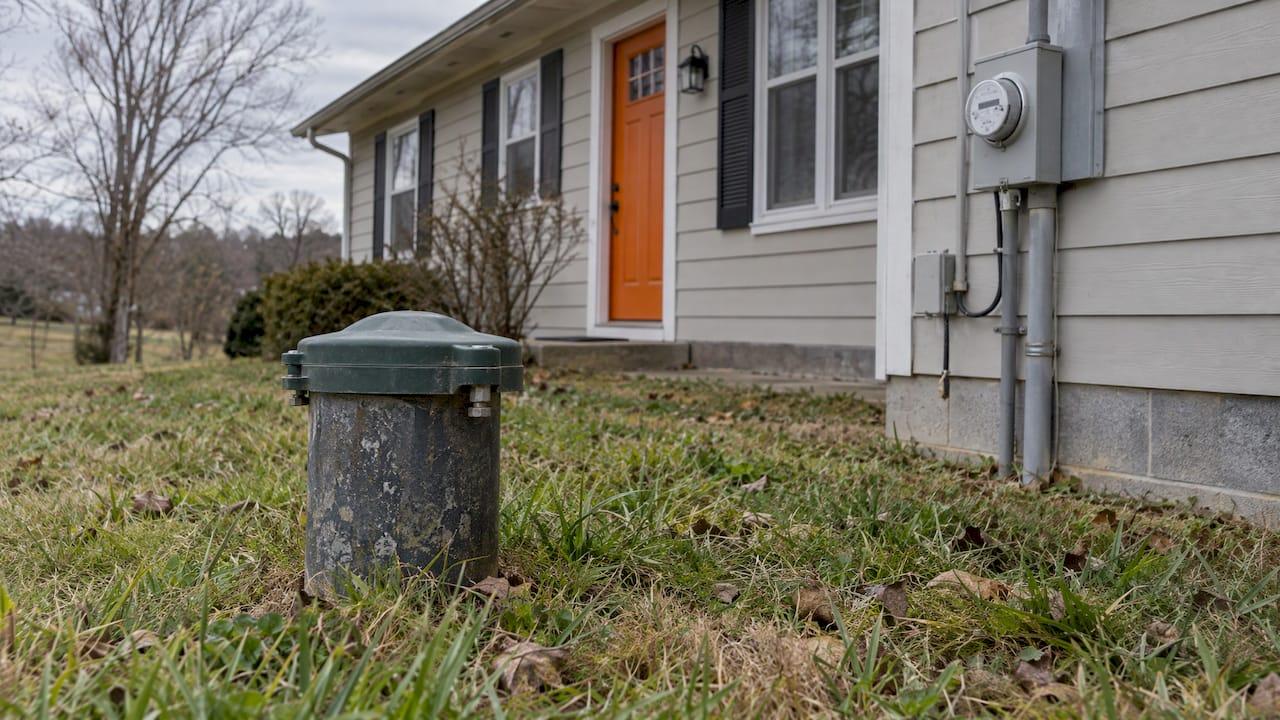
You can sell a house with a failing well or unpaid utility bills. What changes is who can buy it and how long closing takes. A financed buyer's lender may demand that the well be fixed first, and an unpaid utility balance can become a lien that has to be cleared at closing. A direct cash sale in as-is condition removes most of that friction. At ExitVest, we buy houses for cash in their current condition, including homes that need repairs or carry liens, with no commissions or agent fees.
TL;DR
- A failed well test usually does not make a sale illegal. Rules vary by state, and the buyer's lender is often the real obstacle.
- Some states require testing at sale (New Jersey and Oregon do). Others, like Wisconsin and Minnesota, leave it to the parties or the county.
- Unpaid water, sewer, or similar utility charges can become a lien that follows the property, so they must be settled or escrowed at closing.
- Repairing a well or paying off balances before listing costs money and time. Selling as-is for cash lets you skip both.
- Whatever route you take, gather your well records and a final utility bill early.
Table of Contents
- Why a bad well scares buyers and lenders
- Can you legally sell a house with a failing well?
- What to disclose and what records to gather
- Your options when the well fails
- Unpaid utilities: when a bill becomes a lien
- When both problems hit the same house
- How an as-is cash sale works with ExitVest
- Our perspective
- FAQ
- Sources
Why a bad well scares buyers and lenders
A private well is the home's own water supply. There is no utility that tests it for you, so the buyer relies on a lab test and a well inspection. When a test shows contamination, or the pump, casing, or pressure system fails inspection, three things tend to happen: the buyer asks for a lower price or repairs, the lender asks for a fix before it funds the loan, and the closing date slides.
The Wisconsin Department of Natural Resources says that buyer and seller may negotiate whether to correct a noncomplying well feature, and a lender may require correction as part of a financing agreement. That is the pattern across the country: the law rarely forces a repair, but the financing does.
It also helps to know that a bad water sample and a bad well are different problems. The same Wisconsin page explains that a sample can identify a contaminant without showing that the well itself violates construction requirements. A positive bacteria test might be fixed with disinfection or a treatment system, while a cracked casing or an unsealed old well is a construction problem. Knowing which one you have tells you what a fix would cost.

Can you legally sell a house with a failing well?
In most places, yes. The rules differ by state, and sometimes by county.
New Jersey. The state's Private Well Testing Act covers many sales. According to the NJDEP, covered property sales require tests for up to 43 parameters, and buyer and seller must receive and review the results before closing. The same page describes the law as one of disclosure: a sale is not prohibited merely because the well fails a standard, although a lender or the local health department may require treatment. Amendments also added PFOA, PFOS, and PFNA to the list for covered closings on or after December 1, 2021.
Oregon. The Oregon Health Authority says a seller of a property with a domestic well must test for arsenic, nitrate, and coliform bacteria at an accredited laboratory. Under the rules effective January 1, 2026, the seller tests after accepting an offer and submits results to the buyer and the state within 90 days of receiving them. Skipping the test does not invalidate the documents needed to complete the sale. Results stay valid for one year and can be reused for more than one offer, per the OHA's testing page.

Wisconsin. Wisconsin DNR says state law does not require a well inspection or water test to transfer property, and there is no state requirement to bring a well into compliance just to sell it.
Minnesota. The Minnesota Department of Health says there is no statewide water-test requirement at transfer, although some counties require one, so sellers should check local ordinances.
If you live in Texas, Florida, or Tennessee, check your county health department and your state's seller disclosure form. The common thread in every state above is that a seller who knows about a well problem should disclose it.
What to disclose and what records to gather
The Minnesota guide gives a useful seller checklist that applies almost anywhere. Sellers should:
- Disclose every known well on the property and say whether each is in use.
- Provide a Well Disclosure Statement where the state uses one.
- Compile earlier water test results and the well's construction paperwork.
- Seal unused wells.
The guide stresses records and openness about every known well, because old wells may not appear in public records and can require sealing. If you inherited the property and nobody can find the paperwork, that is normal. Write down what you do know: when the pump was last replaced, whether a treatment system is installed, any past complaints about taste, color, or pressure, and any time the well ran dry.
A well inspection, as Wisconsin describes it, is a visual review of the well's construction and pressure-system features, its separation from contamination and flooding sources, and a search for unused wells. It does not cover household plumbing or electrical code. So an inspection report will not tell a buyer everything about the water in the kitchen tap, and a clean report is not the same as a clean test.
Your options when the well fails
When the test comes back bad, a seller generally has three paths.
- Fix it first. Treatment systems, disinfection, a new pump, or a new casing can all satisfy a lender. You pay up front, wait for retesting, and then relist or restart the sale. Every step adds weeks.
- Negotiate with a financed buyer. You can offer a price cut or a repair credit. The buyer's lender still has to approve, and a deal can fall apart late if the retest fails.
- Sell as-is to a cash buyer. No lender is involved, so no lender condition on the well. You sell the property in its current condition and skip the repairs, the retesting, and the waiting.
Our Cash Offer Program is built for the third path. We buy houses, land, and small apartment buildings directly from owners for cash in as-is condition, with flexible closing timelines. If the water problem is one of several, that matters. A failed well often comes alongside an aging septic system, and our guide on selling a house after a failed septic system walks through the repair-or-sell-as-is decision for the same kind of house.
If you are in New Jersey and the well is only one of the issues, these guides cover related problems: selling with code violations, open permits, and selling a fixer-upper for cash.
Unpaid utilities: when a bill becomes a lien
The other half of this search is the unpaid bill. Whether a past-due balance follows the house or stays with you depends on the utility and the local rules, but in many places it follows the house.
The City of Wilmington, Delaware says liens for outstanding city property taxes, utility charges, fines, and fees can carry over to later owners if they are not released at the time of sale. Bay City, Michigan says unpaid water, sewer, electric, and refuse bills can be secured liens against the property. The City of La Crosse, Wisconsin says utility charges can become a property lien and that all outstanding balances for parcels being sold must be resolved before closing.
The practical distinction is between a debt you personally owe a private provider, such as a power or gas company, and a charge from a city or municipal utility that can attach to the property. The municipal kind is the one that shows up in a title search and can hold up a closing.
How to find the balance and clear it
- Ask for a final reading. Cities generally want a final meter read at or before settlement. In La Crosse, the title company or realtor coordinates it.
- Request a payoff in writing. Wilmington asks for a completed Transfer of Ownership Form and a photo of the water meter reading. Its review averages five business days, and it encourages requests two weeks before settlement.
- Know what happens if you skip it. Wilmington states that if you do not request information and submit a form, you must escrow $10,000 at settlement. Other cities hold proceeds in escrow until paid final bills are shown, as Bay City recommends.
- Keep the paid-final-bill proof with your closing documents.
A worked example: say a city holds a $1,850 unpaid water and sewer balance on a home you are selling. On a traditional closing, the title company finds the lien and either collects the $1,850 from your proceeds or holds back funds until it is paid. The sale can still close, but only after the balance is dealt with. The cost to you is the same either way, so the real savings come from catching it early and not being surprised at the table.
These rules vary by city, so call the water or utility office for your own address before assuming any of the figures above apply to you.
When both problems hit the same house
A home with a failing well, overdue utilities, and deferred repairs is the kind many owners end up with after a death in the family, a long vacancy, a divorce, or a tenant who stopped paying. Each problem alone is manageable. Together they turn a standard sale into months of coordination: lab tests, repair bids, payoff letters, and a buyer's lender who needs everything resolved.
If that is your situation, these guides cover the neighboring issues: selling a vacant house in NJ, selling a rental with tenants, and clouded title. Liens of any kind, utility liens included, are part of what we handle in the properties we buy.
How an as-is cash sale works with ExitVest
We buy houses, land, and small apartment buildings from owners for cash, in as-is condition, including homes with repairs needed, liens, code violations, or problem tenants. You pay no commissions or agent fees. Our process is explained numerically, so you see how the cash offer is built. You talk directly with decision-makers, your information stays confidential, and we do not pressure you with urgency. Closing timelines are flexible and based on your situation.
You can see the steps on our how it works page, or start with our Cash Offer Program if time is short. We buy nationwide, with a strong focus on New Jersey, Texas, Florida, and Tennessee.

Our perspective
Most owners we talk to with a well problem or an unpaid utility bill are not trying to hide anything. They inherited the house, moved away, or ran out of money, and now every fix is a new bill before they can sell.
We think the fair way to handle that is to put the numbers in front of you plainly. We buy as-is, so the failed water test, the overdue balance, and the repair list become part of the price conversation instead of a reason the deal collapses. There are no commissions and no agent fees, and you decide the timeline that suits you.
If your situation is straightforward, you will know quickly. If it is messy, that is the kind of property we are set up to handle.
Alek
FAQ
Can I sell a house if the well water failed a test?
Usually yes. State laws like New Jersey's and Wisconsin's focus on testing and disclosure rather than banning the sale. The practical limit is the buyer's lender, which may require treatment or repair. A cash sale in as-is condition does not depend on a lender's approval.
Do I have to disclose well problems to buyers?
In general, yes. Disclose known water quality problems, equipment failures, repairs, and any unused wells, using your state's form where one exists. Minnesota's health department advises disclosing all known wells and gathering past tests and construction records. Check your state or county rules for the exact requirement.
Do unpaid utility bills stop a house sale?
They do not automatically stop it, but they can delay it. Municipal water, sewer, and similar charges can become liens that must be paid or escrowed at closing. Request a final meter read and a written payoff from the utility early, since some cities need about two weeks.
Who pays the unpaid utility bill when a house sells?
Usually the seller, from the sale proceeds. If the balance is a lien on the property, the title company will require it to be settled or held in escrow so the buyer does not inherit it. Local rules differ, so confirm with your city or utility.
Sources
- NJDEP Private Well Testing Act
- NJDEP E2 Reporting System
- Wisconsin DNR: buying or selling a property with a private well
- Minnesota Department of Health: Buying and Selling a Home with a Private Well
- Oregon Health Authority: Well Testing and Real Estate
- Oregon Health Authority domestic well rules, effective January 1, 2026
- City of Wilmington, DE: Property Transfer Settlements
- Bay City, MI: Lien Process Information
- City of La Crosse, WI: Start or Stop a Service