

Selling a tenant-occupied rental property in New Jersey is legally permitted and financially viable when you understand the rules and plan your approach before listing. The New Jersey Anti-Eviction Act gives tenants strong protections, meaning you cannot remove them simply because you want to sell. That legal reality shapes every decision you make, from how you market the property to which buyers you target. The good news: a well-prepared landlord can sell investment property with tenants in NJ quickly, often to investors who actively prefer occupied rentals for the immediate cash flow they provide.
What tenant rights and legal protections affect selling in New Jersey?
New Jersey law is clear: selling a property is not legal grounds for eviction. Tenants keep their leases when ownership transfers, and the new owner steps into your role as landlord with all the same obligations. That means rent amounts, lease terms, and security deposit responsibilities all carry over automatically at closing.
The NJ Anti-Eviction Act covers most residential tenants in the state. It protects renters in multi-unit buildings and most single-family rentals from displacement without cause. The law applies regardless of whether the property is sold to an investor or an individual buyer.
Key protections tenants hold during a sale include:
- Lease continuity. The new owner must honor the existing lease until it expires, including all terms and conditions.
- Security deposit transfer. At closing, you must transfer the tenant's security deposit to the new owner. The new owner then has 30 days to notify tenants in writing, including the name and address of the financial institution holding the funds.
- Right to quiet enjoyment. New Jersey landlords must provide at least 24 hours written notice before entering a unit for showings or inspections. Scheduling showings without proper notice can violate the lease and expose you to legal liability.
- Protection from harassment. Pressuring tenants to leave through repeated unannounced visits or interference with their use of the property violates state law.
The one narrow exception: tenants may be required to vacate in owner-occupied buildings of 1–3 units where the tenant is on a month-to-month or expired lease. Even then, the landlord must provide two months' written notice. This scenario is uncommon and does not apply to most investment property sales.
Preparing your rental property and documents before listing
Buyers and their attorneys will scrutinize your paperwork closely. Missing or disorganized documents slow closings and can kill deals entirely. Assembling everything before you list puts you in control of the timeline.
Four documents every NJ landlord needs before selling a rental property are:
- Seller Property Condition Disclosure. Required by New Jersey law for most residential sales.
- Signed leases for all units. Buyers need to see exact terms, rent amounts, and expiration dates.
- Rent roll. A simple spreadsheet listing each unit, the tenant name, monthly rent, lease end date, and security deposit held.
- Income and profit-and-loss statement. Shows the property's actual revenue and expenses over the past 12–24 months.
Beyond documents, verify that your leases include a clause permitting showings and inspections with proper notice. If they do not, you will need tenant cooperation to schedule viewings, which makes the relationship with your tenants even more important.
Communicate with tenants early. A brief written letter explaining the sale, the showing process, and their rights reduces anxiety and resistance. Tenants who feel respected are far more likely to keep units presentable and accommodate buyer visits.

Pro Tip: Send tenants a written notice of the sale before you list. Explain that their lease is protected and that showings will always be scheduled in advance. This one step prevents most showing conflicts.
What strategies work best for selling tenant-occupied properties in NJ?
The right strategy depends on your tenants, your timeline, and the type of buyer you want to attract. Three main paths exist for selling tenant-occupied property in NJ, and each has a distinct trade-off.
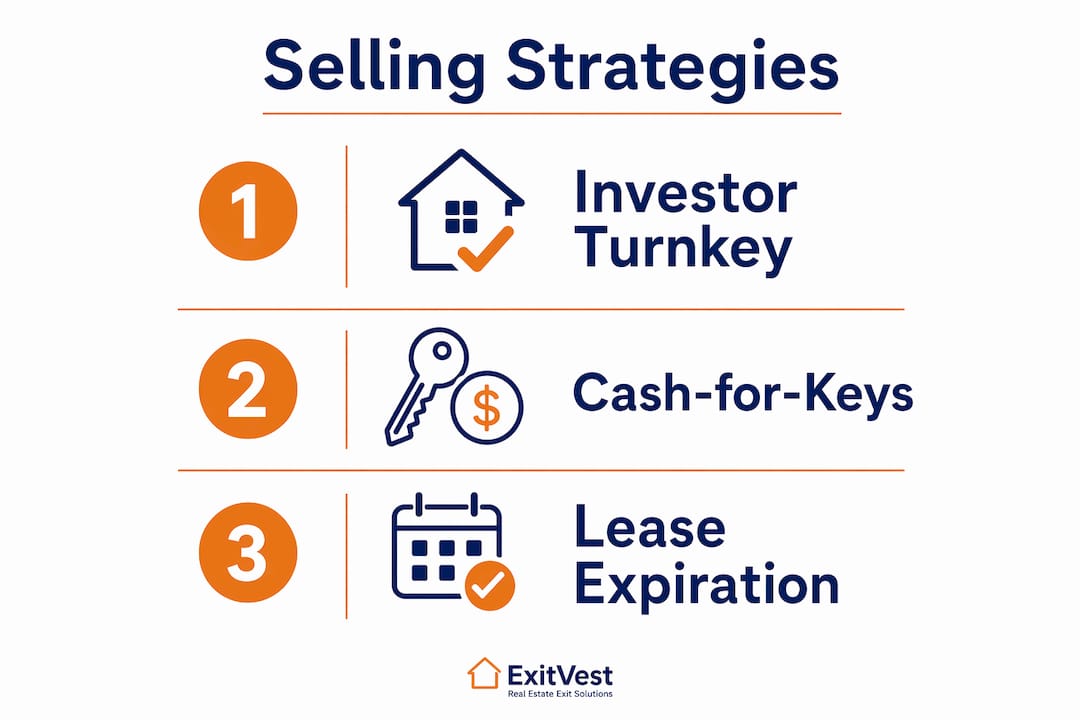
1. Market to investors as a turnkey rental
Investors often prefer properties with stable, paying tenants because it eliminates vacancy risk and delivers immediate income. A property with a solid lease and a reliable tenant is not a liability. It is a cash-flowing asset. Framing your listing that way, with a clean rent roll and income statement attached, attracts buyers who will pay a premium rather than discount for the occupied status.
Marketing to investors and positioning properties as turnkey rentals frequently yields faster sales and stronger offers. This approach works especially well when tenants have long-term leases and a history of on-time payments.
2. Negotiate a cash-for-keys agreement
If you need the property vacant for a broader buyer pool, a voluntary relocation agreement, commonly called cash for keys, is the most practical tool. You offer the tenant a lump-sum payment in exchange for vacating by a specific date and leaving the unit in good condition. The amount varies, but it is almost always cheaper and faster than a formal eviction.
Pre-listing tenant strategy planning prevents sale delays and protects your asking price. Waiting until you have a buyer under contract to address tenant cooperation is the most common mistake landlords make.
3. Time the sale around lease expiration
If your tenant's lease expires within 60–90 days, waiting for natural vacancy is often the cleanest option. You avoid cash-for-keys costs and can list the property vacant, which opens the door to owner-occupant buyers and typically supports a higher sale price.
Pro Tip: If you are targeting investor buyers, attach the rent roll and a 12-month income statement directly to the listing. Investors make faster decisions when the financial picture is clear upfront.
The table below compares the three approaches on the factors that matter most to NJ landlords:
| Strategy | Buyer pool | Timeline | Best for |
|---|---|---|---|
| Investor turnkey sale | Investors | Fast | Stable tenants, long leases |
| Cash-for-keys then list | Broad | Moderate | Cooperative tenants, flexible budget |
| Wait for lease expiration | Broad | Slow | Short lease remaining, no urgency |
Step-by-step process to close the sale with tenants in place
A structured process keeps tenant relations intact and prevents legal missteps between signing a contract and reaching the closing table.
- Notify tenants of the sale in writing. Send a letter before you list. Confirm their lease is protected, explain the showing process, and provide a contact for questions.
- Schedule showings with proper notice. Provide at least 24 hours written notice for every showing. Coordinate with tenants on preferred times when possible. Uncooperative tenants can derail deals if showings become contentious.
- Negotiate move-out terms if needed. If the buyer requires vacant possession, finalize a cash-for-keys agreement before going under contract. Document everything in writing, including the move-out date, payment amount, and unit condition expectations.
- Conduct inspections with tenant coordination. Buyers will want a home inspection. Schedule it like a showing, with proper notice, and communicate the purpose to the tenant clearly.
- Transfer the security deposit at closing. Hand over the full deposit to the new owner as part of the closing process. The new owner must then send written notice to the tenant within 30 days identifying the bank holding the funds.
- Introduce the new owner to tenants. A brief written introduction from you to your tenants, naming the new landlord and providing contact information, reduces friction and sets the new ownership relationship off on the right foot.
The timeline difference between sale methods is significant. Cash investor sales in New Jersey typically close in 2–4 weeks. Traditional MLS listings with tenant-occupied properties close in 45–60 days, with offers generally arriving within 1–2 weeks of listing. That gap matters when you are managing carrying costs, tax timing, or a 1031 exchange deadline.
For landlords who want to sell rental property as-is without repairs or staging, the cash investor route removes nearly every obstacle that slows a traditional sale.
Key takeaways
Selling a tenant-occupied rental in New Jersey requires legal compliance, document preparation, and a clear tenant strategy before you list.
| Point | Details |
|---|---|
| Eviction for sale is illegal | New Jersey law prohibits removing tenants solely because you are selling the property. |
| Leases transfer to new owners | Buyers inherit all existing lease terms and must honor them through expiration. |
| Four documents are required | Prepare the disclosure, signed leases, rent roll, and income statement before listing. |
| Cash sales close in 2–4 weeks | Investor cash buyers close far faster than traditional MLS buyers on tenant-occupied properties. |
| Cash-for-keys avoids eviction | A voluntary relocation payment is the fastest legal way to secure vacant possession. |
What I've learned from watching landlords sell the hard way
Most landlords who struggle with tenant-occupied sales make the same mistake: they treat the tenant situation as a problem to solve after they find a buyer. By then, it is too late to negotiate calmly, and a difficult tenant can kill a deal in days.
The landlords who sell smoothly do the opposite. They decide on their tenant strategy first, whether that is marketing to investors, negotiating a cash-for-keys deal, or waiting for lease expiration. Then they list. That sequence changes everything.
The other shift worth making is how you think about an occupied lease. A signed lease with a paying tenant is not a liability. It is a documented income stream. Investors who buy rental properties understand this immediately. When you present your property with a clean rent roll and a 12-month income statement, you are not apologizing for having tenants. You are proving the asset works.
I have also seen landlords underestimate how much tenant communication matters. A tenant who feels blindsided by a sale becomes uncooperative during showings. A tenant who receives a clear, respectful letter on day one usually stays cooperative through closing. The cost of that letter is zero. The cost of a tenant who refuses showings is enormous.
Finally, if speed matters to you, the cash investor route is not a compromise. It is often the better outcome. You skip repairs, skip staging, skip 45-day MLS timelines, and close in weeks. For landlords managing problem tenants, financial pressure, or inherited properties, that speed has real value.
— Alek
How Exitvest helps NJ landlords sell occupied properties fast
Exitvest buys tenant-occupied rental properties in New Jersey as-is, with no repairs, no staging, and no drawn-out MLS process required.
Exitvest specializes in situations exactly like yours: paying tenants, difficult tenants, inherited rentals, and properties you simply no longer want to manage. The process is straightforward. You share details about the property, receive a fair cash offer, and choose a closing date that works for your situation. Exitvest handles the tenant coordination and legal compliance so you do not have to. See how the process works or explore your options to get started with no pressure and no obligation.
FAQ
Can I sell my rental property in NJ without evicting tenants?
Yes. New Jersey law allows you to sell a tenant-occupied property without evicting anyone. The new owner inherits the existing lease and steps into the landlord role at closing.
How much notice do I need to give tenants for showings in NJ?
New Jersey landlords must provide at least 24 hours written notice before entering a unit for showings or inspections. Failing to do so can violate the lease and expose you to legal liability.
What is a cash-for-keys agreement and is it legal in NJ?
A cash-for-keys agreement is a voluntary deal where you pay a tenant a lump sum to vacate by a specific date. It is fully legal in New Jersey and is the fastest way to secure vacant possession without a formal eviction.
How long does it take to sell a tenant-occupied property in NJ?
Cash investor sales typically close in 2–4 weeks. Traditional MLS listings for tenant-occupied properties take 45–60 days to close, with offers usually arriving within 1–2 weeks of listing.
Do I have to transfer the security deposit when I sell?
Yes. New Jersey law requires you to transfer all tenant security deposits to the new owner at closing. The new owner must then notify each tenant in writing within 30 days, including the name and address of the bank holding the funds.