
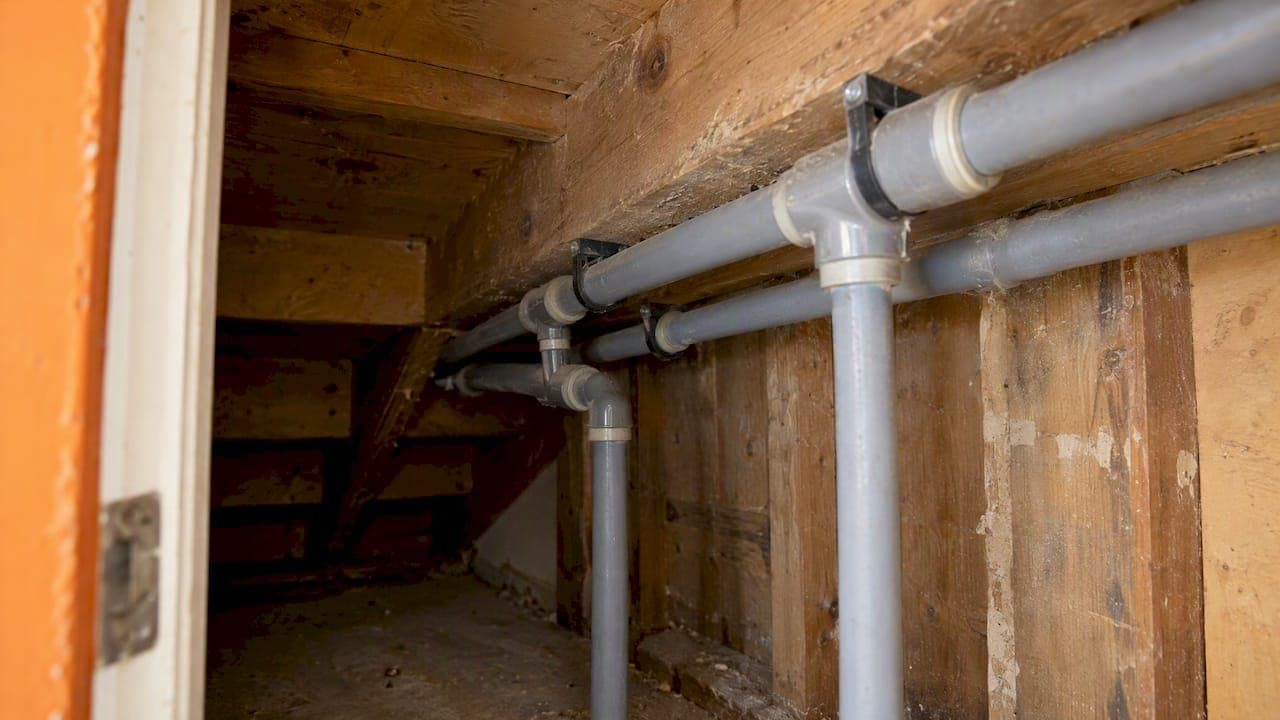
Yes, you can sell a house with polybutylene (PB) pipes. No rule we know of bars the sale. What matters is that you disclose what you know, and that you pick the route that nets you the most: repipe first, sell with a price credit, or sell as-is to a cash buyer. This guide walks through each route, what buyers and insurers do with PB, and how to compare the real numbers.
TL;DR
- Selling a PB house is generally allowed. Disclosure of what you know is the real obligation, and the rules differ by state.
- Buyers get nervous because the pipes sit behind walls and between floors, and some insurers will not write a policy or want a review first.
- Get one licensed plumber's written scope before you decide. Compare the total with a buyer credit or a cash as-is offer, on net proceeds and certainty, not headline price.
- A cash as-is sale can remove financing, inspection and insurance friction. It never excuses truthful disclosure.
- The same logic applies to aluminum wiring and knob and tube: disclose, document, and price the fix honestly.
Table of Contents
- Why polybutylene scares buyers
- Confirm what you actually have
- What you have to disclose
- Insurance: the quiet deal killer
- Your three routes, compared
- How to compare the numbers
- Perspective: what we see from the buyer's side
- When cash makes the most sense
- Aluminum wiring and knob and tube: the same playbook
- What about galvanized pipes?
- A checklist before you decide
- FAQ
- Sources
Why polybutylene scares buyers
Polybutylene is a gray plastic supply pipe that went into American homes in large numbers from the late 1970s into the 1980s. The Illinois Supreme Court's record in the Eljer litigation states that U.S. Brass Qest systems were installed through December 31, 1986 in site-built homes, apartments and condominiums, and continued in mobile and prefabricated housing through 1990. If your house was built or remodeled in that window, PB is worth checking.
The fear is not that every PB line fails. The North Carolina Real Estate Commission has said in its August 2025 bulletin that not all, or even most, PB systems with insert fittings commonly fail, and that defects may not be readily discernible. The fear is that you cannot see a problem coming. The same Illinois record describes systems installed behind walls and between floors, where a defect can stay hidden until a leak does real damage.
Buyers and inspectors price that uncertainty. They are not only pricing a plumber's labor. They are pricing the chance of opening a ceiling, the insurance hassle and the unknowns. Your job as a seller is to replace unknowns with documents.

Confirm what you actually have
Before anything else, confirm that the pipe really is polybutylene. Fittings and pipe markings can mislead, and some homes have a mix of materials after past repairs.
- Identify it. Check the water heater connections, the main shutoff, under sinks and in the basement or crawlspace for gray flexible plastic pipe. A licensed plumber can confirm it in one visit.
- Map it. Note whether PB is exposed or buried, whether the whole house is on it or only one run, and what fittings are used.
- Collect history. Gather leak records, past repairs, invoices, permits and any insurance claims. A documented dry history is more persuasive than saying the plumbing is working fine.
- Ask your insurer. Get the answer in writing, including whether PB affects your own coverage.
This folder becomes your sale file. It helps in every route below.
What you have to disclose
Disclosure is where sellers get hurt, so be careful here. Rules differ by state, and nothing in this article is legal advice. For your specific situation, ask a real estate attorney licensed in your state.
The pattern is consistent, though. Texas's official Seller's Disclosure Notice asks about your knowledge of the property's plumbing system and says the form is not a substitute for inspections or warranties. The NC commission's guidance takes a middle position: in its view the mere presence of PB is not by itself a material fact, but probable defects, leak history, visible water damage or known failures must be disclosed.
So the safe rule is simple:
- If you know of leaks, repairs, water damage or failures, disclose them in detail.
- If you know the house has PB, say so where your state's form or the contract asks about plumbing materials or known issues.
- Do not call the home "insurable," "fully updated" or "problem free" unless you can prove it.
An "as-is" clause does not erase these duties. It shifts the buyer's expectations about repairs, not your obligation to be truthful. Our guide to as-is sale laws and disclosure covers how that works across states.
Insurance: the quiet deal killer
PB often becomes a problem at the insurance step, not the inspection step. Insurers differ. Underwriting guidelines filed in Maine show that at least some insurers list polybutylene or galvanized plumbing as an underwriting concern for homes that have not been modernized to current codes. The North Carolina commission advises buyers to discuss PB with their insurer before making an offer.
What that means for you:
- There is no nationwide rule that PB is always covered or always excluded. It depends on the carrier, the state, the policy and the cause of loss.
- Your own policy tells a buyer nothing. The buyer's insurer decides.
- A financed buyer usually needs a policy in force before closing, so an insurer's refusal can end the contract late in the process.
Do not promise coverage. Invite the buyer to confirm it with their own agent early, and keep your plumber's report ready to hand over.
Your three routes, compared
| Route | Upfront cost to you | Time | Main risk |
|---|---|---|---|
| Repipe, then list | Contractor cost, permits, wall repair | Weeks, plus listing time | Cost overrun, hidden damage found mid-job |
| List as-is with a credit | None up front, lower net price | Typical listing timeline | Buyer renegotiates after inspection, insurer or lender conditions |
| Sell as-is for cash | None | Set by you and the buyer | Offer may be lower than a fully repaired retail sale |
Route 1: repipe before you list
Replacing PB removes the objection. Buyers see new pipe, a permit and a warranty. For a house that is otherwise in good shape and in a strong market, this can pay off.
The catch is cost and disruption. Online price ranges are everywhere, but we would not trust any single figure as a U.S. average, and the official sources we reviewed do not establish one. Cost swings with house size, layout, access, location and the replacement material. A localized repair may cost less up front, but it does not remove PB elsewhere in the house.
So get a written scope from at least one licensed plumber. It should cover:
- Pipe material to be installed
- Access, and where walls or ceilings must be opened
- Permits
- Drywall and paint repair, or whether that is excluded
- How long the water will be shut off
- Warranty terms
If the quote leaves out wall repair, you have not seen the real total. Once the work is done, you might also want the house to look its best. Tips on getting your home ready to sell can help after a messy plumbing job.
Route 2: list it as-is and offer a credit
You can list the house with the PB disclosed and either price it lower or offer a closing credit. This avoids the construction project. It does not avoid the buyer's inspector, lender or insurer, though. A buyer using a mortgage may face conditions, and a repair request can reopen price talks. Plan for that conversation rather than hoping it will not come up.
The credit math is the same as with any known defect. We lay out the logic in our piece on when a 15 to 25 percent as-is discount nets sellers more: the cheapest-looking fix is not always the best net result once time, carrying costs and risk are counted.
Route 3: sell as-is for cash
A direct cash sale takes out much of the friction that PB creates. There is no buyer's mortgage underwriting, no waiting on an insurer's approval for a financed purchase, and no repair negotiation after an inspection. You do not have to open walls or hire a contractor.
What it does not do is guarantee a particular price, and it does not excuse disclosure. A reputable cash buyer will price the pipes in, and you should expect an offer below what a fully updated home might bring on the open market. The question is whether the gap is smaller than the repipe cost, the carrying costs and the risk of a deal falling apart.

How to compare the numbers
Do not compare a repaired retail price with a cash number. Compare net proceeds and certainty. Here is a worked layout with placeholder figures, which are for illustration only and not a price for any real home:
- Repipe route: expected sale price, minus the plumber's full written total, minus agent commissions and closing costs, minus months of mortgage, taxes, insurance and utilities while the work and listing run.
- Credit route: expected sale price, minus the credit you expect buyers to ask for, minus commissions and closing costs, minus carrying costs for the likely time to close, with an allowance for a deal that falls through.
- Cash route: the offer, minus any stated closing costs. If there are no commissions or agent fees, those lines are zero.
Then ask the tougher questions. How certain is each number? What happens to each route if the buyer's insurer says no? If you are behind on payments, facing foreclosure, or carrying a vacant or inherited property, the time line may matter more than the last few thousand dollars. Our guide on selling a home without repairs goes deeper on that tradeoff.
Perspective: what we see from the buyer's side
We buy houses, land and small apartment buildings directly from owners, for cash and as-is, and plumbing questions come up often. Here is how we think about it.
First, PB is a pricing question, not a moral one. Owners often feel they are hiding something. They are not, as long as they disclose honestly. The pipe is a known issue with a known range of outcomes, and a straightforward offer reflects it.
Second, owners tend to overestimate how much a perfect repair will return. A repipe done in a rush before listing often costs more than expected once walls are opened, and it delays everything else: the mortgage payments, the tenant problem, the probate, the foreclosure date.
Third, what you get from us is a clear, numerical explanation of the offer, no commissions or agent fees, a closing date that fits your situation, and direct access to the people making the decision. Your conversation stays confidential and we do not push urgency. If a repair-and-list sale would net you more, we would rather you know that than sign something that does not serve you.
— Alek
When cash makes the most sense
A direct cash sale tends to fit best in a few situations:
- Foreclosure or arrears. When a deadline is looming, the weeks needed for a repipe and a traditional sale can be the wrong tradeoff. See our Cash Offer Program for how we work with owners in that position.
- Inherited or vacant houses. If nobody lives there, nobody is monitoring for leaks, and heirs often lack funds or the appetite to manage a plumbing project from another state.
- Rentals with problem tenants. Contractors need access, and a cooperative tenant is not guaranteed.
- Several issues at once. PB plus an old roof, code violations or unpermitted work is a stack of objections a buyer's lender may not accept.
If you are in one of those spots, you can see how our as-is process works and request an offer. There is no obligation, and you can compare it against the other two routes.
Aluminum wiring and knob and tube: the same playbook
Many readers searching about PB are also looking at older wiring. The approach carries over.
Angi notes that with aluminum wiring you are likely required to disclose it when you sell, and in some places a city or area may require the wiring to be updated or replaced as part of the sale. Check local rules before you list. Insurance is again the pressure point: some insurers may deny coverage to homes with aluminum or knob and tube wiring, and the type and condition of electrical work can affect rates.
For each of these systems:
- Have a licensed professional, here an electrician, identify and document the condition.
- Get a written quote for remediation or replacement.
- Ask your insurer in writing how it affects coverage.
- Disclose what you know, in plain terms.
- Compare repair, credit and cash on net proceeds.
Electrical hazards carry fire risk, so do not DIY a fix and do not leave known problems undisclosed. If you smell burning, see discolored outlets or have warm switch plates, call a licensed electrician now rather than waiting for a sale.
What about galvanized pipes?
Galvanized supply pipe is not an automatic reason to walk away, but it deserves the same diligence. Find out whether it is supply or drain piping, then look for corrosion, low pressure, leaks and prior repairs. The Maine underwriting guidelines list galvanized plumbing next to polybutylene as a potential concern, so insurability should be checked early. As a seller, you can get ahead of questions with a plumber's assessment of remaining serviceability.
A checklist before you decide
- Plumber has confirmed the material and mapped where it runs
- Written repipe scope in hand, with wall repair, permits and warranty spelled out
- Leak and repair history, invoices and permits collected
- Written answer from your insurer
- State disclosure form read closely, with an attorney's help if you are unsure what it asks
- Net proceeds worked out for all three routes, including carrying costs
- A decision on timing: do you need to close by a specific date?
FAQ
Do I have to disclose polybutylene when I sell?
Usually you have to disclose what you know, and the details depend on your state. Some guidance, like North Carolina's, treats the mere presence of PB as not automatically material, but leaks, water damage and known failures must be disclosed. Many forms also ask directly about plumbing. Ask a real estate attorney in your state how your form reads.
Does homeowners insurance cover polybutylene pipes?
There is no universal answer. Some insurers treat PB as an underwriting concern or require review, and others may write a policy without trouble. Coverage depends on the carrier, the policy, exclusions and the cause of loss. Get a written answer from the actual insurer.
What is the cheapest way to repipe a house?
It depends on the house, and no reliable national average exists in the official sources we reviewed. A partial repair costs less up front but leaves PB elsewhere. Get a licensed plumber's written scope covering materials, access, permits, wall repair and warranty, then compare the total with selling as-is.
Can I sell a PB house for cash if it is vacant or inherited?
Yes, a direct cash purchase is a common route for vacant, inherited or distressed homes, and it can sidestep financing and insurance conditions. You still disclose what you know, and the offer will reflect the plumbing. Compare the net result and the closing certainty with a repair-and-list sale.
Sources
- NCREC Bulletins, August 2025: Polybutylene Pipes
- Illinois Supreme Court, Eljer opinion
- Maine Homeowner Underwriting Guidelines
- Texas Seller's Disclosure Notice, TREC
- Is Aluminum Wiring in a House Safe? Angi
- Does Homeowners Insurance Cover Aluminum Wiring? Policygenius