

You can sell a New Jersey property with code violations right now. No waiting for permits to close, no mandatory repairs before listing. Your main paths are three: fix the violations and list at full market value, sell as-is to a cash buyer who takes the property in its current condition, or negotiate a specialized transfer where the buyer assumes remediation responsibility after closing. Each route has real trade-offs on price, timeline, and legal exposure.
Here is what every NJ seller needs to know upfront:
- Selling with open code violations is legally permitted in New Jersey, but disclosure is not optional.
- Under NJ law P.L. 2024, c.32, you must complete a 108-question Property Condition Disclosure Statement before any contract becomes binding.
- Violations tied to building, zoning, fire safety, or housing codes must be answered honestly in that form.
- Cash buyers, including Exitvest, purchase NJ properties as-is with no repair contingencies and flexible closing dates.
- Fix-and-list can recover more of the property's value, but upfront repair costs and extended timelines cut into that advantage.
- Undisclosed violations expose sellers to contract rescission and damages claims under NJ consumer protection law.
What are code violation property buyers looking for in NJ?
Code violations in New Jersey fall into several distinct categories, and understanding which type you are dealing with shapes every decision that follows. Building code violations cover unpermitted additions, structural changes made without inspection approval, or work that failed a final inspection and was never corrected. Zoning violations include setback encroachments, illegal accessory structures, or a property being used in a way the municipality does not permit. Fire and safety violations range from missing smoke detectors to blocked egress windows. Housing code violations typically involve habitability issues: broken heating systems, water intrusion, or deteriorated structural elements.
The practical consequence that catches most sellers off guard is financing. Most lenders require a property to be free of open violations and to have passed required municipal inspections before they will fund a mortgage. A buyer who falls in love with your home may not be able to get conventional financing if the municipality has an active violation on record. That shrinks your buyer pool to cash purchasers or buyers willing to use specialized products like FHA 203(k) renovation loans or Fannie Mae HomeStyle loans.
Open permits are a related but distinct problem. An open permit means work was started, an inspection was requested, but the final sign-off never happened. In New Jersey, an open permit can block a new Certificate of Occupancy and prevent mortgage funding at closing. Buyers who use the attorney review period to file an Open Public Records Act (OPRA) request will find these open permits in municipal construction department records, even if a standard home inspection never flagged them.
Common NJ code violations that sellers encounter include:
- Unpermitted basement or attic conversions (finished space with no permit or failed inspection)
- Electrical panel upgrades or wiring done without a permit
- Deck or shed additions lacking zoning approval
- Missing or expired smoke and carbon monoxide detector certifications
- Plumbing work completed without inspection sign-off
- Zoning setback violations from additions built too close to property lines
Repair costs for these issues vary considerably. Electrical, plumbing, or structural violations in New Jersey typically run $5,000–$30,000 depending on severity, and that range does not include potential fines or the cost of demolishing unpermitted work a municipality orders removed.
What are your main options for selling a property with code violations in NJ?
Two buyers in New Jersey are currently comparing properties with code violations: Templar Real Estate Enterprises and Exitvest. Their approaches represent the two ends of the spectrum available to sellers.
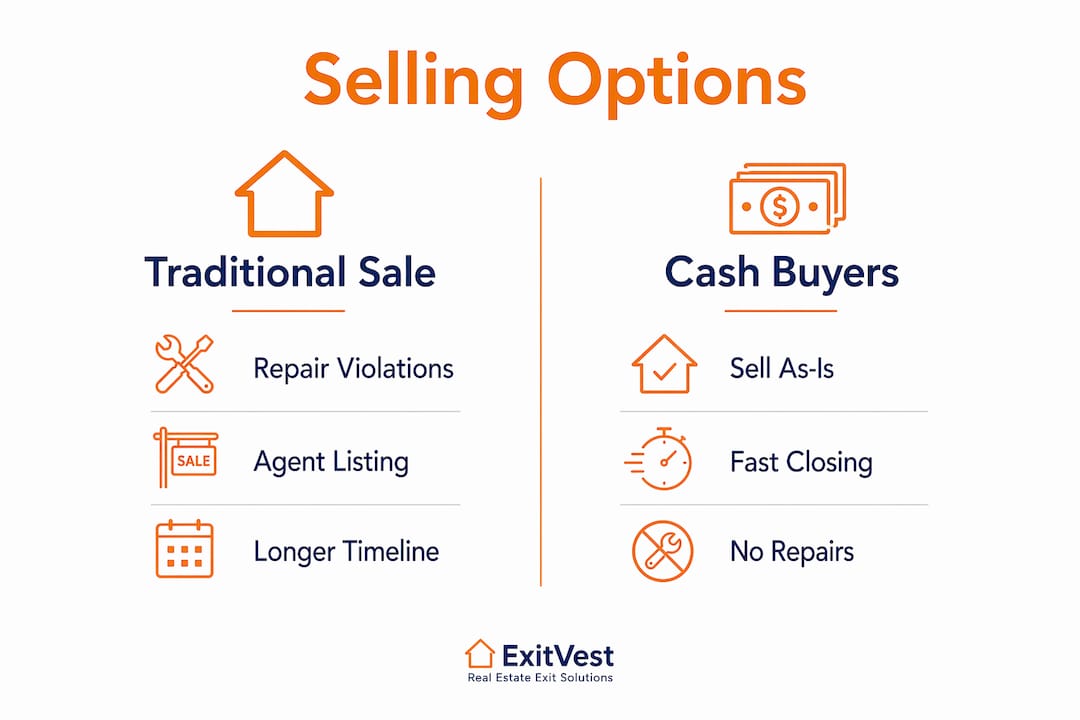
| Buyer / Service | Service Type | Repair Obligations | Closing Speed | Best For |
|---|---|---|---|---|
| Templar Real Estate Enterprises | Local NJ brokerage | Seller typically repairs or negotiates credits | Standard (—) | Sellers wanting local agent expertise and maximum list price |
| Exitvest | Cash buyer | None — purchases as-is | Flexible, often faster | Sellers wanting certainty, speed, and no repair costs |
Templar Real Estate Enterprises specializes in NJ properties with code violations and distressed conditions. Their agents understand municipal inspection processes, know which violations lenders will flag, and can advise on whether a targeted repair strategy will meaningfully increase your sale price. For a seller with a violation that costs $8,000 to fix but adds $25,000 to the list price, that math works. Templar's value is in knowing which repairs pencil out and which do not, and in marketing the property to buyers who understand fixer-upper dynamics.
Exitvest takes a different approach entirely. As a cash buyer, Exitvest purchases NJ properties in any condition, with no requirement to fix violations, pull permits, or pass inspections before closing. The offer reflects the property's as-is value, meaning the price accounts for remediation costs. What sellers get in return is certainty: no financing contingencies, no buyer walking away after an OPRA search turns up an open permit, and a closing timeline that fits the seller's situation rather than a lender's schedule. For sellers facing financial pressure, an inherited property with accumulated violations, or simply a home that needs more work than they can fund, that trade-off is often the right one.
Option 1: Repair violations and list traditionally
This route makes sense when the violations are limited in scope, the repair costs are well below the value they recover, and the seller has the time and capital to execute. Before committing, pull an OPRA request from the municipal clerk's office to get a complete picture of open permits, zoning variances, and code enforcement notices. A standard home inspection will not surface all of these.
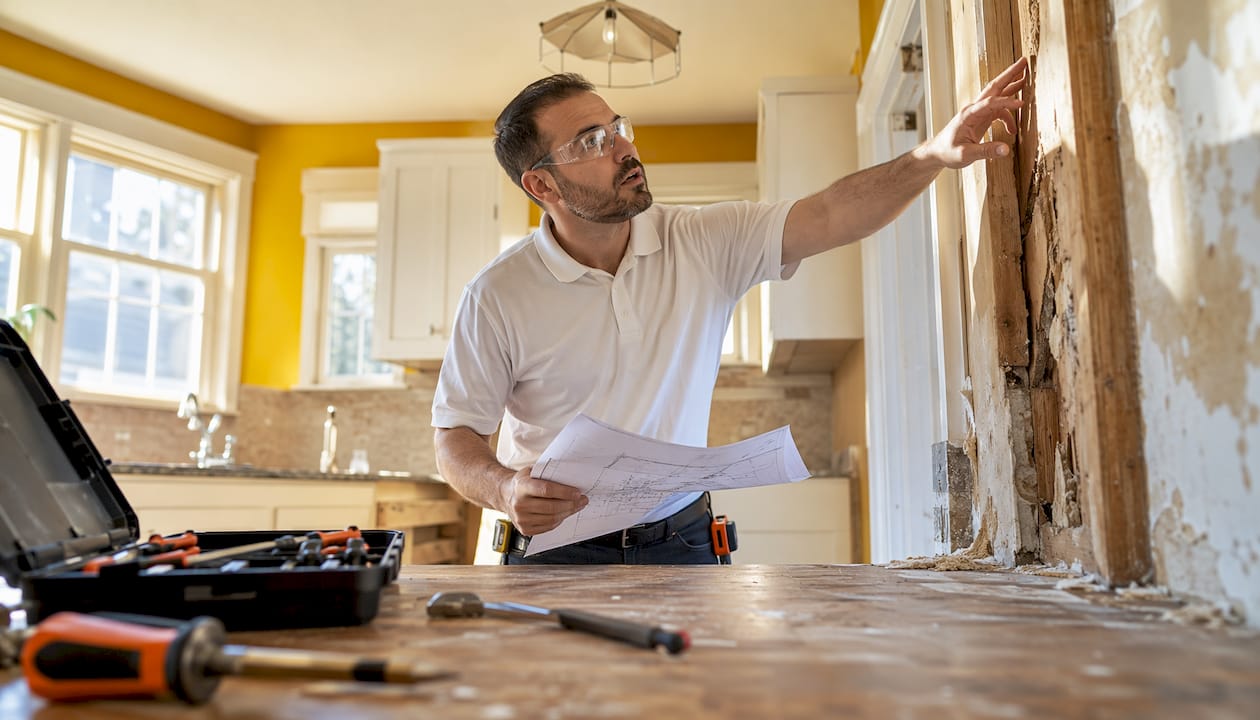
Pro Tip: File your OPRA request during the attorney review period if you are already under contract. Discovering a major violation at that stage gives you legal leverage to renegotiate price or require the seller to remediate before closing.
Working with an agent who has handled code-violation properties in your specific NJ municipality is worth the commission. They know which local inspectors are strict, which violations routinely delay closings, and how to frame the property's condition honestly without killing buyer interest.
Option 2: Sell as-is to a cash buyer
Selling as-is to a cash buyer cuts the timeline and eliminates repair risk. You accept a lower price in exchange for a guaranteed close. Cash buyers like Exitvest factor remediation costs into their offer, so there are no surprises after inspection. For sellers with properties carrying multiple violations, this is often the cleanest exit.
Option 3: Transfer of title with buyer assuming violations
When a property fails a mandatory municipal inspection and cannot obtain a Certificate of Occupancy or Smoke Certificate before closing, NJ real estate attorneys sometimes structure a Transfer of Title Only agreement. The buyer agrees in writing to assume responsibility for obtaining the CO after closing. This keeps the deal alive but shifts legal and financial exposure to the buyer. It requires a sophisticated buyer and experienced legal counsel on both sides.
For sellers weighing these options, knowing your open permit history before any buyer does is the single most useful step you can take.
What does NJ law require you to disclose about code violations?
New Jersey's disclosure requirements are among the most detailed in the country. Under P.L. 2024, c.32, every seller of residential real property must complete a Property Condition Disclosure Statement covering 108 condition questions before the buyer becomes obligated under any contract. The form asks directly whether the seller is aware of violations of federal, state, or local laws relating to the property, zoning violations, setback violations, and uncorrected violations of housing, building, safety, or fire ordinances.
The Flood Risk Addendum (questions 109–117) is mandatory for all property sales, residential and commercial, under N.J.S.A. 56:8-19.2. Sellers must verify their answers to the flood-related questions using the state's Flood Risk Notification Tool at flooddisclosure.nj.gov. Both portions of the disclosure must be signed and acknowledged before the contract becomes binding.
NJ Real Estate Commission updates effective august 1, 2024 also require brokers to obtain a signed disclosure statement from sellers and to visually inspect the property to confirm the accuracy of what is disclosed. The broker is not liable for false information the seller provides, but only if the broker made reasonable efforts to ascertain material physical conditions and disclosed what they found.
Sellers must also disclose any known material defects even if the printed form does not specifically ask about them. That obligation is explicit in the disclosure instructions. The practical implication: if you know about a violation and do not disclose it, you are exposed to contract rescission and damages under NJ consumer protection law. Buyers who discover undisclosed violations during attorney review or through an OPRA search have grounds to cancel the contract or demand price concessions. Some pursue litigation after closing.
Buyers also have the right to conduct their own inspections and OPRA searches during the contract period. A well-informed buyer's attorney will file OPRA requests covering construction permits, zoning variances, environmental records, and code enforcement notices. What OPRA uncovers can include expired permits, unpermitted renovations, and underground storage tank records that the seller may not have known existed.
How do code violations affect your sale price and timeline?
Homes with active code violations sell at a discount. The size of that discount depends on the type and severity of the violation, but sellers should expect buyers to factor in the full estimated remediation cost plus a risk premium for unknowns. A buyer who gets a contractor estimate of $15,000 to correct electrical violations will typically ask for at least that amount off the price, often more.
The buyer pool also narrows. Because most conventional lenders will not fund a mortgage on a property with open violations, sellers are largely limited to cash buyers or buyers using renovation financing products. That reduced competition puts downward pressure on offers.
Sale timelines stretch when violations are involved. Negotiating remediation credits, structuring a Transfer of Title Only agreement, or waiting for a buyer to secure renovation financing all add weeks to a standard closing. Sellers who need to close quickly often find that the certainty of a cash offer, even at a lower price, is worth more than a higher list price that takes months to materialize or falls apart at the finish line.
Seller costs beyond the sale price can include a real estate attorney's fees for drafting specialized contract riders, inspection fees, and in some cases partial remediation to satisfy a buyer's financing requirements. For properties with severe or multiple violations, consulting a distressed property specialist before listing can prevent costly missteps.
Exitvest makes selling your NJ property with violations straightforward
If your property has code violations and you want out without the repair bills, the contractor negotiations, or the uncertainty of a traditional listing, Exitvest is built for exactly that situation.

Exitvest buys New Jersey properties as-is, including homes with open permits, active violations, or failed inspections. There are no repair requirements, no financing contingencies, and no pressure. You get a transparent cash offer, a closing timeline that works for your schedule, and a process that does not require you to fix anything before you leave. Whether you are dealing with an inherited property, a home that has accumulated violations over years, or a situation where you simply cannot afford the remediation, Exitvest gives you a clear path forward. Get your cash offer here and see what your property is worth as-is.
Key Takeaways
Selling a New Jersey property with code violations is legally viable and commercially feasible, but the route you choose determines your price, timeline, and legal exposure.
| Point | Details |
|---|---|
| Disclosure is mandatory | NJ law P.L. 2024 requires sellers to complete 108 disclosure questions before any contract is binding. |
| Repair costs shape your options | Electrical, plumbing, or structural violations in NJ typically cost $5,000–$30,000 to correct. |
| Financing limits your buyer pool | Most lenders will not fund mortgages on homes with open violations, pushing sellers toward cash buyers. |
| OPRA searches reveal hidden issues | Buyers can access municipal permit and violation records through OPRA, often surfacing problems sellers did not know existed. |
| Exitvest buys as-is in NJ | Exitvest purchases properties with code violations, open permits, or failed inspections, with no repair requirements and flexible closing timelines. |