

Selling a vacant house in New Jersey is a distinct real estate process governed by state-specific legal requirements, mandatory disclosures, and closing costs that average 8–9% of the sale price. To sell vacant house NJ properties effectively, you must navigate the mandatory attorney review period, Gross Income Tax (GIT) withholding, seller disclosure forms, and, in many towns, municipal vacant property registration. Each of these requirements affects your timeline and net proceeds. Whether you inherited an empty property, face financial pressure, or simply want to stop paying carrying costs on a home you no longer need, understanding these steps upfront saves you money and avoids costly mistakes.
What are the legal and disclosure requirements when selling a vacant house in NJ?
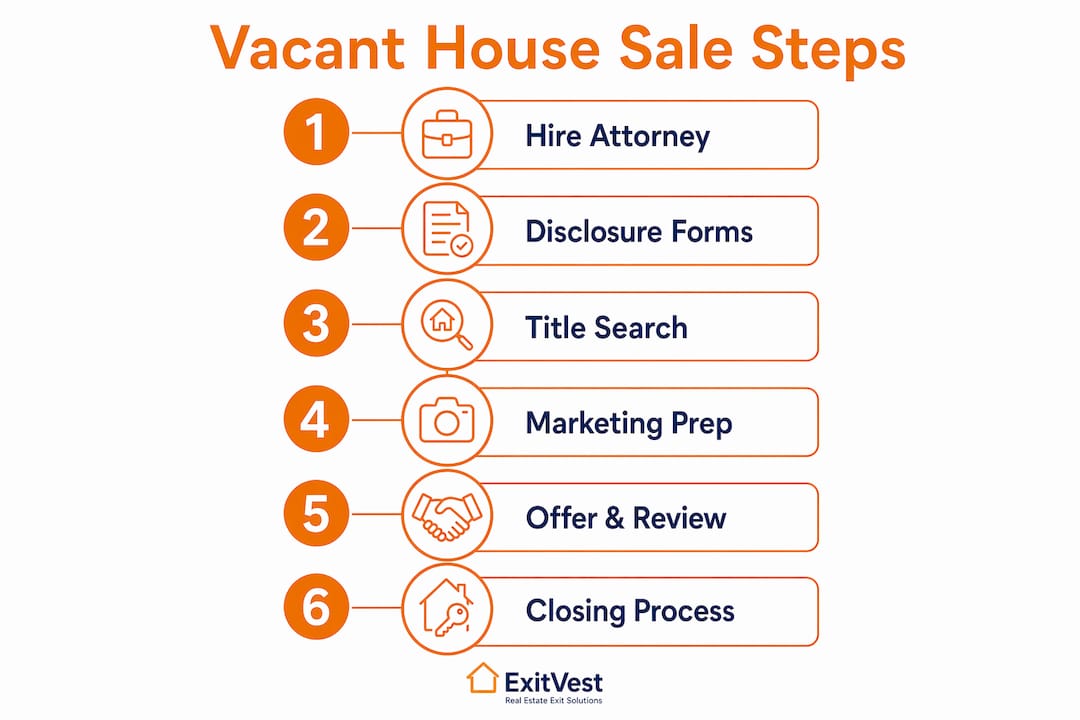
Selling a vacant house in New Jersey is fundamentally a legal transaction. Hiring an attorney early is the single most effective way to avoid post-sale liability and contract disputes.
New Jersey law requires a mandatory three-business-day attorney review period for all real estate contracts prepared by agents. This period begins after both parties sign the contract. During it, either party can cancel or renegotiate without penalty. For vacant property owners, this window is especially valuable because title searches often surface liens or unpaid taxes that change the deal's terms.
Sellers must also complete mandatory NJ seller disclosure forms under the NJ Real Estate Consumer Protection Enhancement Act. These forms require you to disclose defects, environmental hazards, radon levels, zoning issues, and any existing liens. Failing to disclose a known defect exposes you to lawsuits after closing.
A less-known requirement applies specifically to vacant homes. Some NJ municipalities require registration of vacant properties within 90 days of vacancy or within 30 days of ownership transfer. Registration triggers code enforcement inspections, and unresolved violations become your legal responsibility before you can close.
Key legal steps every seller must complete:
- Retain a licensed NJ real estate attorney before signing any contract
- Complete all seller disclosure forms accurately and in full
- Check your municipality's vacant property registration rules
- Order a title search early to identify liens, judgments, or unpaid taxes
- Use the attorney review period to address any issues uncovered by the title search
Pro Tip: Ask your attorney to order the title search during the attorney review period, not after. Finding a lien after the review window closes limits your options and can delay closing by weeks.
How to handle liens, unpaid taxes, and code violations on vacant NJ properties
Liens, unpaid utilities, and property tax debts accumulate quickly on vacant homes. Fees and penalties compound over time, draining equity that could otherwise go into your pocket at closing. A property sitting empty for two or three years can carry thousands of dollars in municipal fines, water and sewer arrears, and delinquent taxes before the owner even lists it for sale.
The most common financial burdens on vacant NJ properties include:
- Delinquent property taxes and interest penalties
- Unpaid water, sewer, and utility bills that attach as municipal liens
- Code enforcement fines for overgrown lots, broken windows, or structural violations
- HOA dues and assessments if the property is in a planned community
- Judgment liens from creditors or contractors
Inherited properties carry an additional layer of complexity. If the estate has not been fully probated, you may lack the legal authority to sell at all. Resolving probate before listing prevents deals from collapsing at the closing table. For guidance on this specific situation, the inherited property sale requirements process in NJ is worth reviewing before you list.
Vacant property owners in NJ who delay face escalating fines, tax liens, and insurance lapses. Prompt as-is sales to cash investors typically protect net equity better than waiting for the market to improve while costs keep rising.
The most practical solution for properties with multiple liens is selling as-is to a cash buyer. Cash buyers clear liens and taxes at closing, require no repairs or cleanouts from the seller, and often close in weeks rather than months. This approach preserves whatever equity remains instead of watching it erode through ongoing carrying costs.
What are effective marketing strategies for selling a vacant house fast in NJ?
Pricing a vacant home correctly is the single biggest factor in how fast it sells. A property priced at or slightly below comparable sales in the same condition attracts investors and buyers who expect a discount for the work ahead. Overpricing an empty, unimproved property leads to extended days on market, which signals distress and invites lower offers.
The two main paths for selling an empty house in NJ are a traditional agent listing and a direct sale to a cash investor. Each has a different cost and timeline profile:
- Traditional agent listing. You hire a licensed NJ real estate agent, make the property presentable, list on the MLS, and wait for offers. Agent commissions typically run 5–6% of the sale price. This path works best when the property is in reasonable condition and you can wait 3–5 months for the right buyer.
- Direct sale to a cash investor. You contact a buyer directly, receive an offer within days, and close in as little as two to three weeks. No commissions, no repairs, and no open houses. This path works best when the property has deferred maintenance, liens, or code violations that would deter traditional buyers.
- Auction or estate sale. For inherited vacant homes with clear title, a real estate auction creates competitive bidding and a defined closing date. Auction fees vary but typically run 5–10% of the sale price.
- For Sale By Owner (FSBO). Selling without an agent saves commission but requires you to handle marketing, negotiations, disclosures, and legal coordination yourself. FSBO works best for sellers with real estate experience.
Marketing tactics that work specifically for vacant or inherited homes include professional photography that shows the property's potential, clear pricing that reflects condition, and direct outreach to local investor networks. Agents who specialize in distressed or estate property sales in NJ have existing buyer lists and can move faster than generalist agents.
Pro Tip: Before listing, spend $200–$500 on basic curb appeal: mow the lawn, clear debris, and replace broken exterior lights. Vacant homes that look abandoned attract lowball offers. A clean exterior signals the property has been maintained.

What are the typical costs and timeline for selling a vacant house in New Jersey?
Total seller closing costs in NJ average 8–9% of the sale price. That figure includes agent commissions, GIT withholding, the realty transfer fee, and attorney fees. On a $350,000 sale, that means $28,000–$31,500 in costs before you see a dollar of net proceeds.
| Cost Item | Typical Amount |
|---|---|
| Agent commissions | 5–6% of sale price |
| GIT withholding (exit tax) | 2% of sale price |
| Realty transfer fee | Approximately 0.4% of sale price |
| Attorney fees | $1,000–$2,500 flat |
| Title and miscellaneous fees | Varies by transaction |
The GIT withholding surprises many sellers. New Jersey withholds 2% at closing as an estimated prepayment of state income tax for non-residents or sellers relocating out of state. This is not a final tax. If your actual tax liability is lower, you receive a refund when you file your NJ return. Knowing this upfront prevents panic at the closing table.
On timeline, most NJ vacant property sales close within 30–60 days after contract acceptance. Add the median 58 days on market before an accepted offer, and the total process runs roughly 10–20 weeks from listing to closing. Cash sales to investors bypass the listing period entirely and can close in two to three weeks, cutting the total timeline by more than half.
How to close the sale and avoid common pitfalls with vacant NJ properties
The closing stage is where most vacant property deals run into trouble. Title issues, unresolved liens, and GIT withholding surprises are the three most common causes of delayed or collapsed closings in NJ.
Your attorney and the title company coordinate the closing. The attorney review period is not just a formality. Experienced sellers use it to exit deals where title research reveals problems that the buyer's lender will not accept. Walking away during attorney review costs nothing. Walking away after that window closes can cost you your deposit or trigger legal action.
Documents you will sign at closing include:
- The deed transferring ownership to the buyer
- An affidavit of title confirming no undisclosed liens or claims
- GIT withholding forms (NJ-GIT/REP-1 or REP-3 depending on residency status)
- The settlement statement (HUD-1 or ALTA) showing all debits and credits
- Any municipal lien payoff letters or code violation clearances
Common closing pitfalls for vacant properties include title liens that were not caught early, disclosure disputes where the buyer claims the seller knew about a defect, and GIT withholding amounts that differ from what the seller expected. Resolving these before the closing date, not on the day of closing, keeps the transaction on schedule.
Pro Tip: Request a preliminary settlement statement from the title company at least five business days before closing. Review every line item with your attorney. Errors in closing statements are common and correcting them on closing day causes delays.
Key Takeaways
Selling a vacant house in New Jersey requires early legal counsel, proactive lien resolution, and a pricing strategy matched to the property's actual condition.
| Point | Details |
|---|---|
| Hire an attorney first | NJ's mandatory attorney review period is your best tool for catching title and lien problems before they cost you. |
| Budget 8–9% in closing costs | Factor in GIT withholding, agent commissions, transfer fees, and attorney fees before setting your net proceeds target. |
| Register vacant properties | Some NJ municipalities require registration within 90 days of vacancy to avoid escalating code fines. |
| Consider as-is cash sales | Cash buyers clear liens at closing, require no repairs, and can close in two to three weeks. |
| Use the timeline realistically | Traditional sales average 10–20 weeks total; cash sales cut that to two to three weeks. |
What I've learned from watching sellers wait too long on vacant NJ homes
The most common mistake I see is delay. Owners hold onto vacant properties hoping the market improves, while carrying costs quietly eat their equity. Property taxes, insurance, utility minimums, and municipal fines do not pause while you decide. By the time some sellers call, the liens exceed what a traditional buyer's lender will finance.
The second mistake is treating a vacant home sale like a standard residential sale. It is not. Vacant homes attract different buyers, face different inspection scrutiny, and carry legal risks that occupied homes rarely trigger. An agent who primarily sells occupied family homes may not know the municipal registration rules or the fastest path to clearing a tax lien.
My honest recommendation: if the property has deferred maintenance, unpaid taxes, or any lien, skip the traditional listing entirely. The math rarely works in your favor after commissions, repairs, and months of carrying costs. A direct cash sale, even at a modest discount to market value, often nets more than a traditional sale after all costs are counted. If you are dealing with an inherited property specifically, reviewing the options for selling inherited property in NJ before choosing a path is worth the hour it takes.
The sellers who come out ahead are the ones who get legal counsel early, order the title search immediately, and make a clear-eyed decision about which sale method fits their actual situation, not the one they wish they were in.
— Alek
Exitvest buys vacant NJ houses as-is, with no fees or repairs required
Exitvest works directly with New Jersey homeowners who need to sell empty or distressed properties fast. Whether you are dealing with an inherited home, unpaid taxes, code violations, or simply a property you no longer want to manage, Exitvest makes a straightforward cash offer based on your property's current condition.
There are no agent commissions, no repair requirements, and no open houses. Exitvest handles lien payoffs and closing costs so you walk away with a clear number and a closing date that works for your schedule. The process is built for situations exactly like yours. You can get a cash offer on your NJ property today, or review how the process works before you decide. No pressure, no obligation.
FAQ
What is the attorney review period in NJ?
New Jersey requires a mandatory three-business-day attorney review period after contract signing, during which either party can cancel or renegotiate without penalty. This period is your primary legal protection as a seller of a vacant property.
Do I have to register my vacant property with the municipality?
Some NJ municipalities require vacant property registration within 90 days of vacancy or 30 days of ownership. Failure to register can result in code enforcement fines that become liens on the property.
What is the NJ exit tax on home sales?
The NJ GIT withholding, often called the exit tax, is 2% of the sale price withheld at closing as an estimated state income tax prepayment. It is refundable if your actual tax liability is lower when you file your NJ return.
How fast can I sell an empty house in NJ for cash?
Cash buyers typically close vacant NJ property sales in two to three weeks after an accepted offer, compared to the 10–20 week total timeline for traditional listings.
Can I sell an inherited vacant house in NJ with liens?
Yes. Cash buyers purchase inherited properties as-is and clear liens and unpaid taxes at closing. Probate authority must be established first, but the sale itself does not require a lien-free title when selling to an investor.