

You can sell a house with back taxes in NJ by paying off the delinquent tax liens at closing from your sale proceeds. This is the standard industry solution, and it works because title companies require all liens cleared before they issue a clean title to the buyer. New Jersey property tax liens carry super-priority status, meaning they rank above mortgages and most other claims against your home. The good news is that most homeowners have enough equity to cover what they owe. If you do not, alternative paths exist, including cash buyers, investor sales, and IRS lien discharge programs. This guide walks you through every option.
How do property tax liens in NJ affect your ability to sell?
Property tax liens in New Jersey are legal claims the municipality places on your home the moment taxes go unpaid. They are not optional, and they do not disappear on their own. Tax liens have super-priority over most other liens, including your mortgage. That means the municipality gets paid first, before your lender and before you.
The financial pressure compounds fast. Unpaid property taxes accrue interest up to 18% annually in New Jersey. That rate is not a penalty applied once. It runs continuously, so a $10,000 tax debt can grow to $11,800 in a single year without any additional missed payments.

New Jersey municipalities hold annual tax lien sales. At these sales, third-party investors purchase your tax debt as a lien certificate. Once an investor holds that certificate and the waiting period passes, they can initiate foreclosure proceedings against your property. At that point, you could lose the entire home and all the equity in it.
No buyer or lender will accept title with outstanding tax liens attached. Title companies refuse to insure the new owner until every lien is satisfied. This is the core reason back taxes and selling a home are so closely linked: you cannot legally transfer ownership without clearing what you owe.
Pro Tip: Request a lien certificate search from your county tax office before you list. Knowing the exact lien holders and amounts gives you a clear picture of what closing must resolve.
Here is a quick breakdown of how New Jersey tax liens escalate:
| Stage | What Happens |
|---|---|
| Taxes go unpaid | Municipality places a lien on the property |
| Annual tax lien sale | Third-party investor purchases the lien certificate |
| Waiting period expires | Investor can file for foreclosure |
| Foreclosure completes | Homeowner loses property and all equity |
What steps should NJ homeowners take to sell a house with back taxes?
Selling a property with tax liens in NJ follows a clear process. The key is starting early and getting the right professionals involved before you list.
-
Get an official payoff statement. Contact your municipal tax collector and request a formal payoff letter. This document shows the exact amount owed, including accrued interest and any fees. Verbal estimates are not reliable because interest accrues daily.
-
Identify all lien holders. Your tax debt may have been sold to a private investor at a tax lien sale. A title search will reveal every lien on the property. Your title company or a real estate attorney can run this search for you.
-
Loop in your title company immediately. Early closing agent involvement is the single most important step to prevent a failed sale. Accurate payoff figures and timely lien releases depend on this communication happening before you accept an offer, not after.
-
Structure the lien payoff as a seller expense at closing. Delinquent taxes are resolved through closing, with the lien paid from your proceeds before any funds reach you. Your closing disclosure will show this as a line-item deduction. This is the standard approach in New Jersey real estate transactions.
-
Assess your equity position. Compare your home's market value against the total you owe: mortgage balance, tax liens, and any other claims. If equity covers everything, the sale is straightforward. If it does not, move to the alternatives covered in the next section.
-
Prepare your documents upfront. Gather your tax payoff letter, any correspondence from lien certificate holders, your mortgage statement, and a recent property tax bill. Having these ready prevents last-minute delays that can kill a deal.
Pro Tip: If the IRS holds a federal tax lien on your property, file a discharge request at least 45 days before your expected closing date. The IRS processes discharge requests on a set timeline, and missing that window can push your closing back by weeks.
What alternative options exist for selling a NJ property with unpaid taxes quickly?
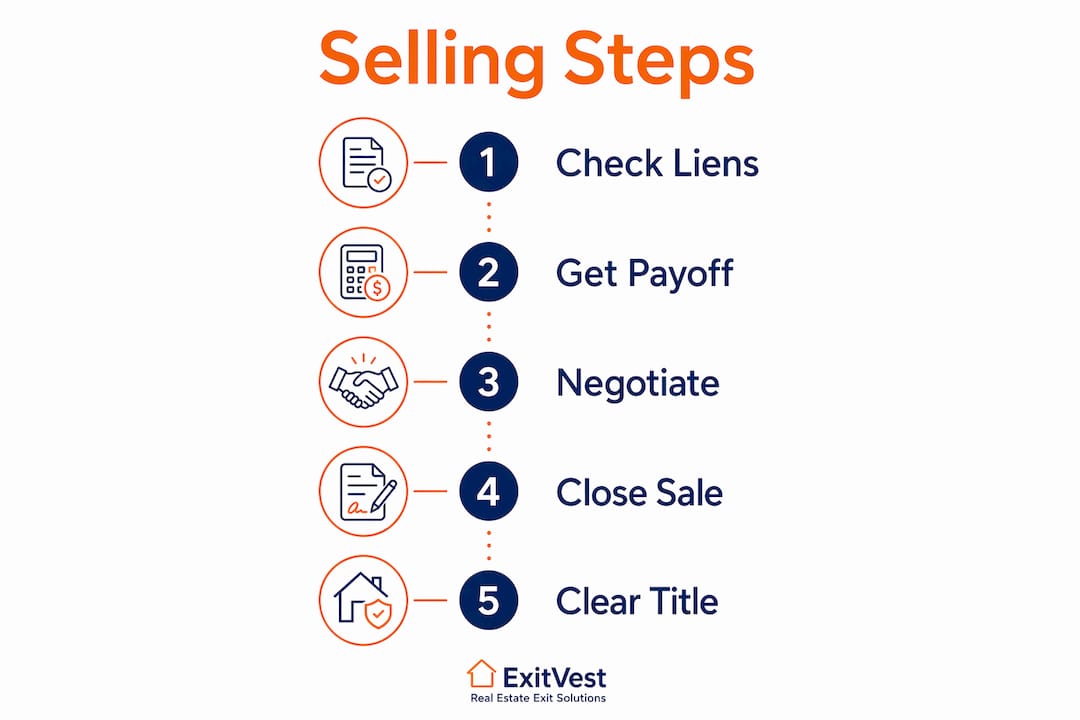
When equity is thin or you need to close fast, three main alternatives give you a realistic path forward.
Selling to a cash buyer or investor
Selling as-is to a cash buyer is the fastest way to resolve back taxes and selling home situations simultaneously. Cash buyers purchase without lender financing, which removes the requirement for a clean title before funding. The investor handles the lien payoff at closing, and you walk away from the debt without paying anything upfront. The trade-off is a lower sale price. Investors buy at a discount because they are absorbing the risk and the administrative work of clearing the liens. For homeowners facing foreclosure, that discount is often worth it to preserve whatever equity remains and avoid a court process.
Exitvest works directly with New Jersey homeowners in this situation. The process involves a cash offer, a flexible closing timeline, and no requirement for repairs or upfront lien payments. You can learn more about why cash buyers handle lien properties and what that means for your net proceeds.
Negotiating buyer credits or price adjustments
In a traditional sale, you can negotiate with a conventional buyer to adjust the purchase price or offer a credit at closing that accounts for the tax debt. This works when the lien amount is relatively small and the buyer is motivated. The lien still gets paid at closing from proceeds. The negotiation simply determines who effectively absorbs the cost in the final price.
IRS lien discharge for federal tax liens
If the IRS holds a federal tax lien on your New Jersey property, a full payoff is not always required to close. The IRS allows a discharge of federal tax liens when sale proceeds do not cover the full amount owed. A discharge removes the lien from the specific property so the sale can proceed. You still owe the remaining debt to the IRS after closing. This option requires paperwork and lead time, which is why the 45-day filing window matters.
- Cash buyer sales: fastest closing, lower price, no upfront cash required from seller
- Buyer credit negotiations: works in traditional sales, requires motivated buyer and sufficient equity
- IRS lien discharge: applies to federal liens only, seller retains remaining debt after closing
Common mistakes NJ homeowners make when selling with back taxes
The most damaging mistake is waiting. Foreclosure means total home loss. Every month you delay, interest accrues, lien holders gain more legal standing, and your options narrow. Homeowners who act early preserve equity and avoid court deadlines. Those who wait until a sheriff's sale is scheduled often have no good options left.
The second most common mistake is failing to communicate with the title company until the last minute. Inaccurate payoff figures or delayed lien releases are the leading cause of failed closings when tax liens are involved. The title company needs time to contact lien holders, verify amounts, and coordinate releases. Springing this on them a week before closing is a reliable way to lose your buyer.
Escrow holds are another trap. If tax payments are not verified at closing, the title company may hold funds in escrow until confirmation arrives. That can delay the seller receiving proceeds by days or weeks, which creates its own financial pressure.
A third mistake is underestimating the total amount owed. Homeowners often know their base tax debt but forget that interest at up to 18% annually, lien certificate fees, and attorney costs for the lien holder all add to the payoff figure. Always get the official payoff letter, not an estimate.
For a detailed look at resolving liens before or during a sale, the guide on selling a house with liens in NJ covers the full legal process and your rights as a homeowner.
Key Takeaways
Selling a house with back taxes in New Jersey is legally straightforward when you act early, get accurate payoff figures, and involve your title company before listing.
| Point | Details |
|---|---|
| Tax liens block clear title | No buyer or lender will close until every lien is satisfied at or before closing. |
| Interest compounds fast | New Jersey tax liens accrue up to 18% annually, making early action critical to preserving equity. |
| Payoff happens at closing | Lien amounts are deducted from your sale proceeds before funds reach you. |
| Cash buyers offer a fast exit | Investors buy as-is and handle lien payoffs, removing the need for upfront cash from the seller. |
| Early communication prevents failures | Looping in your title company and closing agent before listing is the single best way to avoid a failed sale. |
What I've learned from watching homeowners wait too long
I have seen homeowners sit on a tax lien problem for two or three years, convinced they would "figure it out." By the time they called, the lien had been sold to an investor, interest had nearly doubled the original debt, and a foreclosure filing was already in motion. The window to sell on their terms had closed.
The thing most people do not realize is that a tax lien sale to a private investor is not the end. You still have redemption rights. You can still sell. But the clock is running, and the investor is not rooting for you. They make money when you fail to act.
My honest advice: treat the first missed tax payment as a five-alarm warning, not a minor inconvenience. Get the payoff letter. Call a title company. If your equity is thin, talk to a cash buyer before you list on the open market. The traditional listing process takes time, and time is the one thing you do not have when interest is compounding at 18% and a lien holder can file for foreclosure.
Working with a title company early is not optional. It is the difference between a clean closing and a deal that falls apart two days before you were supposed to hand over the keys. I have watched both outcomes happen, and the preparation gap between them is usually measured in weeks, not months.
If you are facing a foreclosure timeline in New Jersey, the options narrow fast. Act before the court gets involved.
— Alek
Exitvest helps NJ homeowners sell with back taxes fast
New Jersey homeowners dealing with back taxes do not have to navigate the lien payoff process alone. Exitvest buys properties as-is, handles the lien payoff at closing, and makes cash offers with flexible timelines built around your situation.
There are no repairs required, no open houses, and no waiting on lender approvals. Exitvest works directly with the title company to clear what is owed so you can close and move forward. If you are ready to see what your property is worth, get a cash offer with no pressure and no obligation. You can also review how the process works from offer to closing before you commit to anything.
FAQ
Can you sell a house with back taxes owed in New Jersey?
Yes. You can sell a house with back taxes in New Jersey by paying off the tax liens at closing from your sale proceeds. The lien is satisfied before funds reach you, and the buyer receives clear title.
What happens to unpaid property taxes when you sell your home?
Unpaid property taxes are paid directly from your closing proceeds before you receive any money. The title company coordinates the payoff with the lien holder to release the lien and issue a clean title.
How fast can interest grow on a New Jersey tax lien?
New Jersey tax liens accrue interest at up to 18% annually. A $10,000 debt can grow by $1,800 in a single year, which is why early action matters.
What if I owe more in back taxes than my home is worth?
If your equity does not cover the liens, options include selling to a cash buyer who negotiates a discounted payoff with lien holders, or filing for an IRS lien discharge if a federal lien is involved. A real estate attorney can help you evaluate both paths.
How do cash buyers handle tax liens on a property?
Cash buyers purchase the property without lender financing and pay the tax liens at closing from the purchase price. The seller does not need to pay anything upfront. The buyer absorbs the lien cost, typically reflected in a lower offer price.