
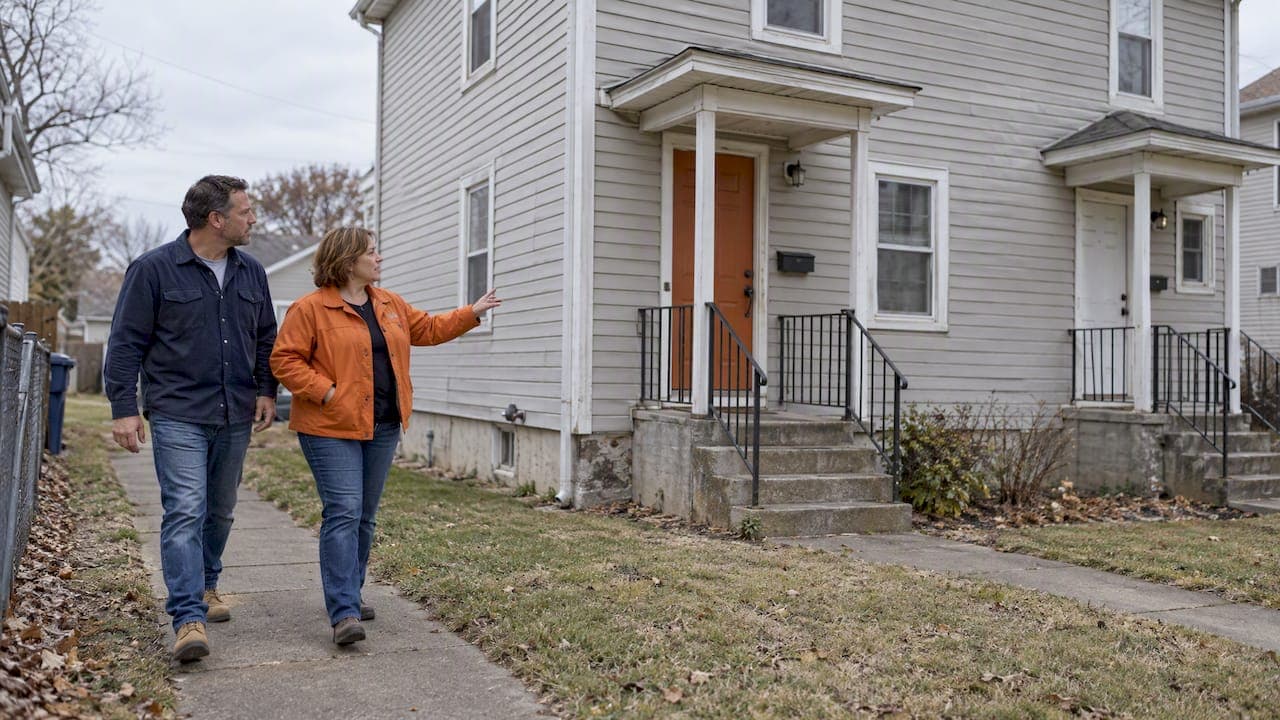
Yes, you can sell a duplex for cash to an investor, and the trade is straightforward: a faster close in exchange for a lower price than a prepped retail sale. Expect a closing window of days to a few weeks, fewer repairs and contingencies, and a smaller gross offer than you would get from a traditional buyer. Before any money moves, verify wiring instructions by phone with your title or closing agent. That one habit prevents the most common closing-day fraud.
TL;DR:
- Cash offers typically close within one to three weeks, with no repairs needed, but they usually provide below-market prices compared to traditional sales.
- Verify wiring instructions by phone with your title or closing agent, and set a code phrase to prevent wire fraud during the closing process.
- Selling with tenants in place requires checking lease terms and local laws, and options include selling with tenants or negotiating an early move-out.
- Sellers facing urgent situations like foreclosure or problematic tenants often benefit most from a quick cash sale, which prioritizes certainty over maximum price.
- A realistic cash offer will likely be below market value, especially for properties needing repairs, but can be ideal for sellers needing fast, guaranteed closing.
Table of Contents
- Cash buyer or traditional sale: which path fits your duplex?
- How to sell a duplex for cash, step by step
- Preventing wire fraud and verifying your closing agent
- Pricing your duplex and estimating what you actually keep
- Tax and legal basics before you sell a rental duplex
- Selling a duplex with tenants still in place
- When a direct cash buyer makes sense for your duplex
- Request a cash offer on your duplex
- FAQ
- Sources
Cash buyer or traditional sale: which path fits your duplex?
A cash sale usually means an investor buys the property as-is, often through a straight purchase or sometimes a contract assignment, where the investor's buying rights get transferred to another end buyer before closing. Some assignment structures carry their own risks worth understanding before you sign. A traditional retail sale means listing with an agent, prepping the property, and waiting for a financed buyer, which typically nets a higher price but takes longer and carries more uncertainty.
Each route has a clear set of tradeoffs:
- Cash sales close faster, skip financing contingencies, and require no repairs, but the offer is usually below full market value.
- Traditional listings often fetch a higher gross price, but sellers pay for prep, repairs, agent commissions, and carry the risk of a financed buyer's loan falling through.
- Cash sales suit sellers who need certainty of close over maximizing price.
A rundown of cash-sale advantages and tradeoffs can help you weigh the decision against your own timeline.
Certain situations tilt the decision toward cash almost automatically: a looming foreclosure deadline, a probate property that needs to settle an estate quickly, tenants who have stopped paying rent, or a job relocation that leaves no time for a multi-month listing process. If none of those apply and you have the time and budget to prep the property, a traditional sale with an agent may net you more money overall.
How to sell a duplex for cash, step by step
Selling fast still means following a sequence, just a compressed one.
- Gather basic property details: square footage, unit configuration, recent repairs, photos, and any existing lease information for both units.
- Request offers from one or more cash buyers and compare the numbers against your rough sense of market value.
- Expect a walkthrough or basic inspection, which investors use to confirm condition rather than negotiate repairs the way a retail buyer might.
- Sign a purchase agreement, then let the title company run a title search and prepare a payoff demand for any existing mortgage or liens.
- Review the closing disclosure before closing day, confirming the payoff figures and any prorated taxes or fees.
- At closing, bring valid ID, confirm payoff amounts one last time, hand over keys or lease documents, and review the final settlement statement line by line.
A title company's role in a cash sale covers the title search, escrow handling, and payoff coordination that make this process work smoothly. Timelines for straightforward cash deals often run from about one to three weeks once the agreement is signed, depending on how quickly the payoff demand and title search come back.
Pro Tip: Ask for the payoff demand early. A stale payoff figure is one of the most common reasons closings get delayed by a few days.
Preventing wire fraud and verifying your closing agent
Wire fraud during real estate closings typically starts with a compromised email account, either the agent's, the title company's, or the buyer's. The scammer sends what looks like a legitimate wiring instruction change, and sellers who do not double-check end up sending funds to a criminal's account instead of their own.
The CFPB documents common wire-fraud patterns during the closing process and recommends a short list of verification habits:
- Call a phone number you already know and trust, never one provided in the same email with the new wiring instructions.
- Confirm the account name and number verbally with your settlement agent before sending any funds.
- Agree on a code phrase with your closing agent at the start of the transaction, and use it for final verification, a tactic the CFPB specifically recommends.
- When verifying a suspicious email, forward it to a known contact rather than hitting reply, since reply often goes straight back to the scammer.
The CFPB's own guidance states that sellers and buyers have the right to shop for title insurance and closing services rather than accepting whatever the buyer's side proposes, which gives sellers more control over who handles their funds. Choosing your own licensed title company, rather than one bundled in by an unfamiliar buyer, is one of the simplest ways to reduce exposure. A guide to verifying proof of funds before any cash offer closes adds another layer of protection, and remote closings carry their own risks worth reviewing before you sign.
If you suspect fraud has already happened, call your bank immediately to request a wire recall, report the incident to IC3.gov, notify local law enforcement, and alert your title company so they can flag the transaction.

Pricing your duplex and estimating what you actually keep
Investors underwrite a duplex by estimating repair costs, projecting the after-repair market value, and backing into an offer that still leaves room for their resale margin or target return. That is why a cash offer on a property needing work will usually sit below what a fully renovated comparable would fetch. Investors explain their own underwriting logic when buying small multifamily properties, and the same logic applies to a duplex.
A few low-cost fixes tend to move the needle more than their price tag suggests:
- Fresh paint in high-traffic common areas and unit interiors.
- Fixing obvious safety issues like broken railings or faulty smoke detectors.
- Clearing out clutter and debris so the property shows its actual condition.
Pro Tip: A true as-is offer accounts for repairs you have not made, so do not assume fixing everything first will raise the offer dollar for dollar.
To estimate net proceeds, start with the gross cash offer and subtract your mortgage payoff, any outstanding liens, seller-paid closing costs, prorated taxes or HOA dues, and any concessions you negotiated. A four-step net-proceeds worksheet walks through this calculation with real line items. If the resulting number covers your payoff and meets your minimum acceptable cash in hand, the offer is worth accepting.
Tax and legal basics before you sell a rental duplex
Selling a rental duplex triggers tax rules that a primary residence sale does not. Depreciation you claimed over the years is generally subject to recapture when you sell, and the IRS addresses this directly.
- IRS Publication 544 covers sales and other dispositions of assets, including how depreciation recapture applies to rental property.
- Rental income and depreciation reporting generally flow through Form 8825 for the property's operations and Form 4797 for reporting the gain or loss on the sale itself.
- Capital gains tax may also apply to the sale; a 1031 exchange is one alternative some owners consider to defer gains, though it involves strict timelines and is worth discussing with a tax advisor before you commit to a sale structure.
- The Fair Housing Act prohibits offering different sale terms based on a buyer's protected class, and exemptions for owner-occupied small buildings are narrow, so duplex owners should not assume they are exempt.
Selling a duplex with tenants still in place
If either unit is occupied, your lease terms and local landlord-tenant law govern what happens next. Confirm whether leases are month-to-month or fixed-term, and check your state and local notice requirements before scheduling any showings or inspections.
You generally have three options: sell with tenants in place and let the buyer inherit the lease, negotiate an early move-out through a cash-for-keys arrangement, or wait until the lease naturally ends. A cash-for-keys template and process guide walks through how to offer tenants a move-out incentive. Investor buyers are often comfortable buying with tenants in place, while buyers who want to occupy a unit themselves usually need vacant possession.
Have your current leases, a rent roll, and security deposit records ready before you start fielding offers. A legal guide to selling with non-paying tenants covers the procedural steps when rent has stopped and eviction becomes part of the timeline.

When a direct cash buyer makes sense for your duplex
Sellers facing foreclosure deadlines, an inherited duplex they never wanted to manage, tenants who have stopped paying, or a property that needs more repairs than they can afford tend to be the ones who benefit most from a direct cash sale. Some companies buy houses, small apartment buildings, and land directly from owners, purchasing as-is and skipping the repair and prep work a retail sale would demand.
The appeal for these sellers is less about squeezing out the highest possible number and more about certainty: a fair cash offer, no commissions, and a closing timeline built around the seller's actual situation rather than a buyer's financing contingency.
— Alek
Request a cash offer on your duplex
If your duplex needs to sell fast, A Cash Offer Program is built for urgent situations like foreclosure, problem tenants, or a property you simply need off your hands. The process starts with sharing basic details about the property, including unit condition, any existing leases, and your timeline, and ExitVest follows up with a cash offer and a flexible closing date.

There are no fees or commissions, and you can see the full buying process explained here before you decide.
This article is general information, not a substitute for advice from a qualified financial advisor. Consult a qualified financial professional about your own circumstances before acting on anything here.
FAQ
What is the 1% rule for duplexes?
It is a quick filter rather than a precise valuation method, and actual duplex pricing depends on local market conditions, condition, and tenant status.
How hard is it to sell a duplex?
Selling a duplex is generally more complex than selling a single-family home because tenant leases, security deposits, and landlord-tenant notice rules can affect timing. A cash sale to an investor can simplify this by allowing the buyer to take on existing leases or coordinate possession directly with the seller.
Who gives you the most money for your house?
A prepared, well-marketed traditional listing to a financed retail buyer typically yields the highest gross price, since cash investors price in the convenience and risk they are taking on. The tradeoff is time, repair costs, and the uncertainty of financing falling through before closing.
Do I owe taxes when I sell a rental duplex for cash?
Selling a rental duplex can trigger depreciation recapture and capital gains tax, and the IRS outlines these rules in Publication 544. A tax advisor can help confirm how Form 4797 and Form 8825 apply to your specific sale.
How do I avoid wire fraud when closing a duplex sale?
Always confirm wiring instructions by phone using a number you already have, not one from a new email, and consider setting a code phrase with your settlement agent at the start of the deal. The CFPB's closing guidance recommends these steps along with choosing your own title company.
Sources
- Publication 544 (Sales and Other Dispositions of Assets) — IRS
- Fair Housing Act overview — HUD
- Mortgage closing scams: how to protect yourself and your closing funds — CFPB (webinar transcript)