

The fastest, safest way to sell a house off market is through a vetted cash buyer like Exitvest or a trusted private buyer, both of which can close in one to four weeks with far less paperwork than a listed sale. Expect a lower net price than a full MLS campaign in exchange for that speed and privacy. Your next move: request proof of funds if you're evaluating a buyer, or contact a direct buyer for a no-obligation cash offer while a title company handles the paperwork.
TL;DR:
- Proof of funds must be recent and verified by an official bank letter; screenshots are not sufficient for vetting cash buyers.
- Legal disclosures and accurate title descriptions are essential to avoid delays or liabilities during private off-market sales.
- Cash buyers typically close within 7 to 30 days, but their offers often come at a lower net compared to MLS listings.
- Off-market deals are less ideal if maximum sale price is the priority or if legal or title issues are unresolved.
- Using Exitvest simplifies the process by providing quick cash offers without repairs, commissions, or marketing efforts for urgent situations.
Table of Contents
- What Are Your Real Off-Market Selling Options?
- How Do You Vet an Off-Market Buyer?
- What Legal Paperwork Do You Need to Sell Privately?
- How Long Does an Off-Market Sale Take, and What Does It Cost?
- When Should You Avoid Selling Off Market?
- What Exitvest Sees Across Thousands of Off-Market Deals
- Ready to Get a Cash Offer on Your House?
- Sources
What Are Your Real Off-Market Selling Options?
Selling a house off market simply means selling without putting it on the MLS, where any licensed agent and public buyer can see it. Selling home privately can happen five different ways, and each fits a different kind of urgency.
Cash buyer companies (also called direct buyers) purchase homes as-is, skip inspections and repairs, and typically close within weeks. This route fits foreclosure timelines, inherited houses nobody wants to manage, or homes with tenant problems that would scare off a retail buyer.
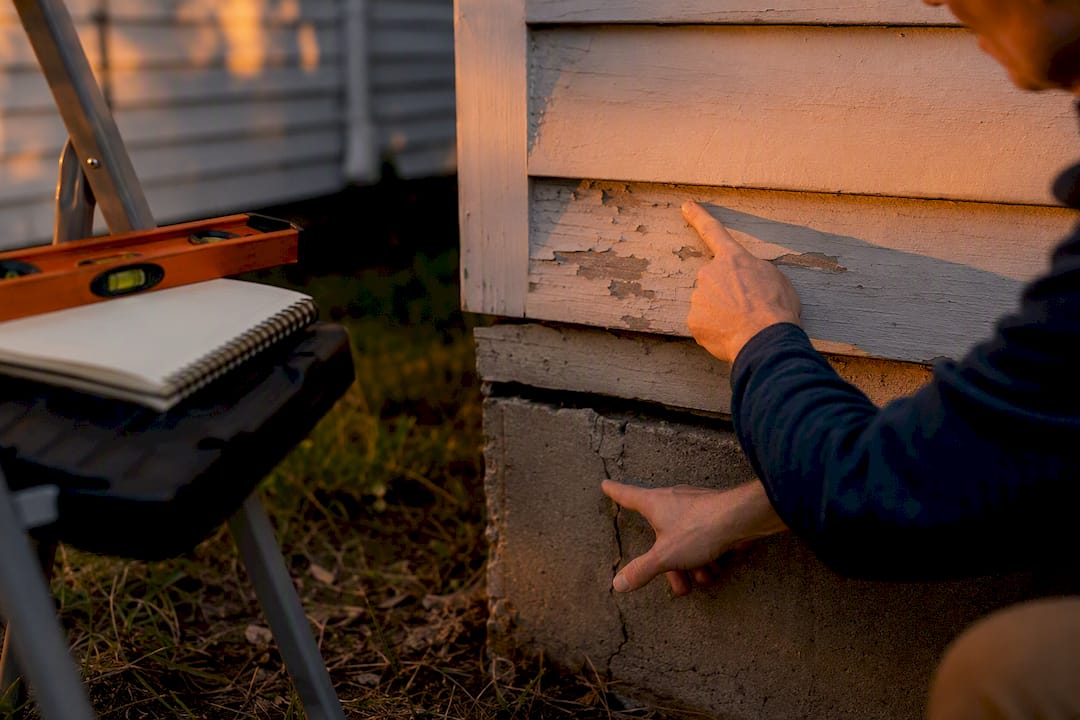
FSBO (for sale by owner) means you market and negotiate the sale yourself. It saves the listing agent's commission but puts contract drafting, showings, and buyer vetting entirely on your shoulders. Selling by owner works best when you have time, some negotiating confidence, and a property that doesn't need much marketing muscle to sell.
Selling to a neighbor or family member is the quietest option of all. No strangers walk through your home, and terms can be flexible. The risk is that informal deals sometimes skip legal steps that protect both sides.
Agent pocket listings keep your home inside an office's private network instead of the open MLS. They preserve some privacy and agent guidance but reduce buyer exposure, which can pull down your final price if your market is competitive. Networked agents and private buyer outreach are common ways landlords with tenant-occupied units reach qualified buyers without publicizing the sale.
Investor and wholesaler sales resemble cash buyer deals but vary widely in professionalism. Some are legitimate local investors; others assign your contract to someone else before closing, adding a layer you didn't sign up for.
Here's how the trade-offs stack up:
- Speed: Cash buyers and private sales close fastest; FSBO and pocket listings take longer.
- Certainty: Cash offers rarely fall through on financing; buyer-financed deals can collapse during underwriting.
- Privacy: Family sales and cash buyers offer the most discretion; pocket listings offer partial privacy.
- Price: FSBO with flat-fee MLS exposure tends to net the highest price; pure off-market deals often net less.
- Paperwork load: FSBO puts the most work on you; direct buyer companies handle nearly all of it.
How Do You Vet an Off-Market Buyer?
Vetting is where off-market deals go wrong, and it's also the easiest problem to prevent. Follow this sequence before you sign anything.
- Get real proof of funds. A legitimate cash buyer provides a bank letter on official letterhead, signed by a bank officer, and dated within the last 30 days. A screenshot of an account balance is not proof of funds.
- Require a pre-approval letter, not pre-qualification, from financed buyers. Pre-qualification is a five-minute estimate. Pre-approval means a lender has actually reviewed income, credit, and assets.
- Set a firm contingency timeline. Financing and inspection contingencies should have hard deadlines written into the contract, not left open-ended.
- Use escrow through a licensed title company or real estate attorney. Never let money move outside that structure.
- Collect earnest money of 1 to 3 percent of the sale price, held in escrow, not handed to you directly.
- Confirm buyer identity with a driver's license or passport before you exchange sensitive documents.
Watch for red flags: a buyer who resists using a title company, pressure to wire funds to a personal account, or a proof-of-funds letter that's vague, unsigned, or undated. Any one of those should stop the deal until it's resolved.
Pro Tip: Ask your title company to run a quick buyer verification alongside the title search. It costs little and catches problems long before closing day.
What Legal Paperwork Do You Need to Sell Privately?
Private sales follow the same legal framework as public listings. Skipping a step doesn't just risk a lawsuit. It can stall your closing entirely.
- Federal lead-based paint disclosure is required for any home built before 1978, including the accompanying EPA pamphlet, regardless of whether you use an agent.
- State property condition disclosure forms vary by state. Get the correct version for where the property sits and fill it out honestly. Misrepresenting known issues opens you to liability well after closing.
- Legal description accuracy matters more than people assume. Your deed's lot, block, and subdivision description must match county tax records exactly. A mismatch is a frequent, entirely avoidable cause of title delays.
- Title search and seller's affidavit of title confirm there are no hidden liens, judgments, or ownership disputes attached to the property.
- Closing costs and transfer taxes are negotiable between buyer and seller in most private deals. Without a listing agent in the room, a title company or real estate attorney becomes your main safeguard for getting these terms right.
Title and disclosure mistakes are the most common friction point in off-market sales, and involving a title company early, even without a full listing agent, cuts that risk substantially. Before you start collecting signatures, review a seller checklist covering the deed, mortgage statement, and disclosure forms you'll actually need.
How Long Does an Off-Market Sale Take, and What Does It Cost?
Timelines swing hard depending on which route you pick. Cash buyers commonly close in 7 to 30 days. FSBO or private network sales stretch into weeks or months, depending on how fast you find a serious buyer.
- Cash buyer services: fees and repair credits often total roughly 6 to 8 percent or more compared with retail-sale proceeds, according to HomeLight's analysis.
- FSBO: no listing commission, but you handle marketing and negotiation yourself; a flat-fee MLS service can add exposure without full agent commission.
- Pocket listings: moderate speed, moderate privacy, and typically a smaller buyer pool than a public listing.
A homeowner facing foreclosure in three weeks accepts a below-market cash offer because certainty beats a maybe-higher price six weeks from now. A homeowner with no urgent deadline but a tenant problem might prefer a pocket listing that keeps the sale quiet while still reaching some qualified local buyers.
When Should You Avoid Selling Off Market?
Off-market routes aren't right for every seller. If your top priority is the highest possible sale price, listing on the MLS (or using a flat-fee MLS service) puts your home in front of the largest buyer pool and often triggers competitive offers that a private sale never generates.
- If liens, unpaid taxes, or estate complications cloud your title, get legal or title help before you accept any offer.
- If you don't have time to review contracts or vet buyers carefully, don't accept an unsolicited off-market offer without a real estate attorney reviewing it first.
- If your property sits in a genuinely hot market, the exposure loss from skipping the MLS can cost you more than the privacy is worth.
Remember, you can generally pull a home off the market anytime before signing a contract, so testing one route doesn't lock you out of trying another.
What Exitvest Sees Across Thousands of Off-Market Deals
Exitvest buys houses, land, and small apartment buildings directly from owners, as-is, with flexible closing dates and no agent fees. Coverage spans the country, with heavy activity in New Jersey, Texas, Florida, and Tennessee. The sellers who reach out most often are facing foreclosure, an inherited property nobody wants to manage, a tenant situation gone sideways, or a move that can't wait for a traditional sale timeline.
— Alek
Ready to Get a Cash Offer on Your House?
If foreclosure, a bad tenant, or an inherited property nobody wants to deal with has you looking at off-market routes, Exitvest turns that search into a phone call. Unlike FSBO, there's no marketing to manage yourself. Unlike a pocket listing, there's no agent network to wait on. You get one direct offer, on your timeline.
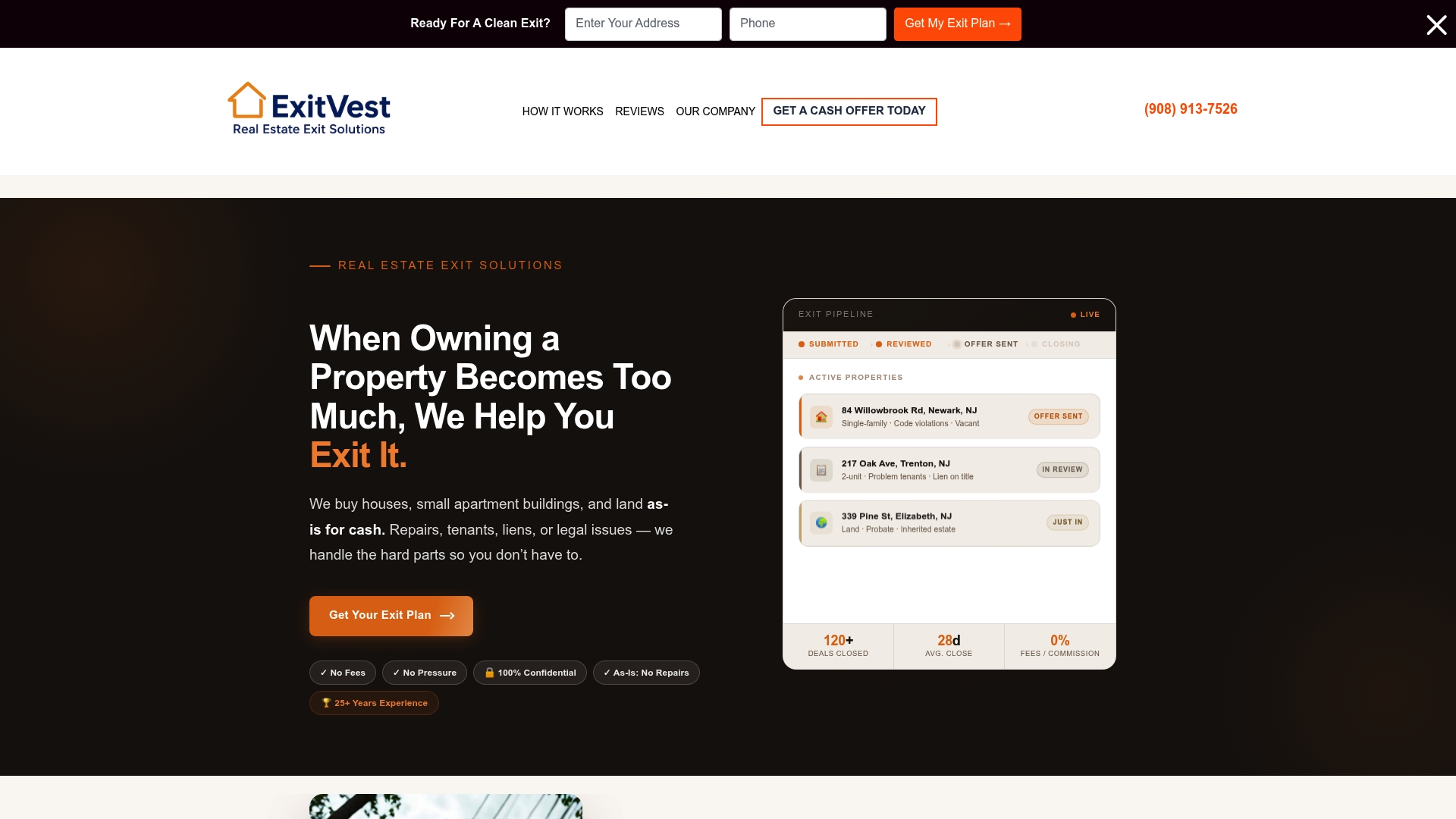
The process runs three steps: request an offer, review a fair cash proposal based on your property's current condition, and pick a closing date that works for you. There are no repairs to make and no commissions to pay, since Exitvest buys as-is. Before you reach out, gather your deed, your most recent mortgage statement, and a photo ID. That's usually enough to get a real number back quickly. See exactly how the process works and get your no-obligation offer started today.
This article is general information, not a substitute for advice from a qualified financial advisor. Consult a qualified financial professional about your own circumstances before acting on anything here.
Sources
- Sell Your House Without Putting It on the Market — Trulia
- Can you take your house off the market? — Redfin
- How to Sell a House Off Market: Disclosures and Closing — LegalClarity
- Selling your house off-market — HomeLight
- How to Sell a House By Owner (2026 Update) — Houzeo
Recommended
- Fastest Ways to Sell an Inherited House in 2026
- How to Sell Your House to an Investor in New Jersey, St.Louis, Florida, Texas, tennessee – ExitVest
- Close Home Sale in Days Not Months: Sell Fast for Cash
- What Do I Need To Do To Sell My House In New Jersey, St.Louis, Florida, Texas, tennessee? – ExitVest