
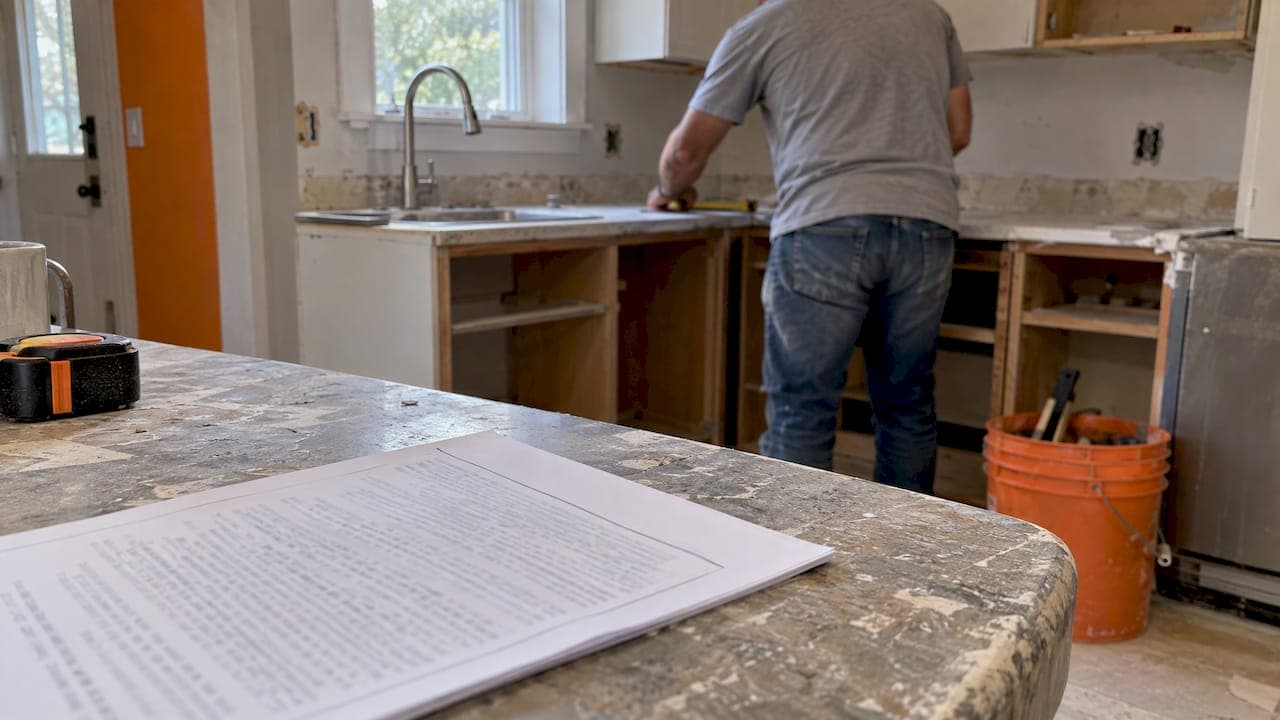
Yes, you can sell a house with a mechanic's lien on it. The lien does not forbid a sale. It clouds your title, and a buyer's lender or title insurer will not close until the lien is paid, bonded over, disproved or otherwise released. You have four realistic paths: pay it off from your sale proceeds at closing, dispute it if it is invalid, bond it off, or sell to a cash buyer who takes the property with the lien in place and clears it through escrow.
Which path fits depends on three things: whether the lien is valid, how much it is, and how fast you need to close. This guide walks through each one, including how to check whether the lien is even enforceable and what a municipal lien does differently.
TL;DR
- A mechanic's lien is a claim by an unpaid contractor, subcontractor or supplier. It shows up in the title search and stops most conventional closings until it is resolved.
- You usually do not need cash up front. A valid lien can be paid from your proceeds at the closing table with a payoff letter.
- Check validity first. Many liens fail on missed filing or enforcement deadlines, and those deadlines vary by state.
- If you cannot wait for a dispute to end, you can bond the lien off, or sell as-is to a cash buyer and let escrow handle the payoff.
Table of Contents
- What a mechanic's lien is and why it blocks a sale
- Step one: find out if the lien is valid
- Four ways to sell with the lien in place
- How the lien reduces what you take home
- Mechanic's liens versus municipal liens
- What to do if you must sell soon
- Our perspective
- Selling to ExitVest with a lien on the property
- Preventing the next lien
- FAQ
- Sources
What a mechanic's lien is and why it blocks a sale
A mechanic's lien is a legal claim against real estate by someone who contributed labor or materials and says they were not paid. According to the Georgia Attorney General's consumer protection division, people who improve a home are allowed to file a claim of lien against it when they are not paid. The claimant can be your general contractor, but also a subcontractor or a supplier you never dealt with directly.
That last point surprises many owners. You may have paid your general contractor in full and still see a lien from a subcontractor the contractor failed to pay. The same Georgia guidance notes that in some cases an owner can pay entirely for a renovation and still face a claim.
The problem for a seller is practical, not just legal. The lien is recorded in the county records, so it appears in every title search. Title companies will not insure over it and lenders will not fund a buyer's mortgage against it. Your sale stalls even if the claimant never tries to force a foreclosure. The same logic applies to other recorded claims such as judgments, and to liens on vacant land.
A lien discovered late is the worst version. Finding a lien shortly before closing can delay or even sink a mortgage-backed deal. If you are thinking of selling, order a title report early so nothing surprises you.

Step one: find out if the lien is valid
Do this before you pay anything. Owners often assume every recorded lien is legitimate, and many are not.
The California contractors' board lists the common failures: liens are often invalid because the claimant missed required timelines for notices, recording or enforcement. Los Angeles County also publishes consumer resources on mechanics liens, including what to do when one is improper.
Here is a practical checklist:
- Get a copy of the recorded lien from the county recorder's office. Note the recording date, the amount and the claimant's name.
- Match it to real work. Does the claimant correspond to a contractor, subcontractor or supplier on your project? Does the amount match the unpaid balance?
- Check the notices. Many states require a preliminary notice to the owner before a lien can be filed. A missing notice can defeat the claim.
- Check the enforcement deadline. The claimant generally has to file a lawsuit to foreclose within a set window after recording. The Georgia consumer guide gives 12 months in Georgia, and the California board's guidance points to 90 days after recording in California in the situations it describes. Your state's rule may differ, so confirm it.
- Ask a real estate attorney or title officer to review the lien against your state's statute. This is the one step where professional eyes are worth it, because a technical defect can save you the whole amount.
If the deadline passed and no foreclosure suit was filed, the lien may be effectively dead on the record, even though it still shows up. Getting it formally removed is often a low-cost fix. If the claimant refuses to release it, the California guidance says an owner can send a formal demand for release, and in many places a court can award the owner attorney fees and damages when a lien is proven invalid.
Four ways to sell with the lien in place
| Path | Best when | Speed | Main drawback |
|---|---|---|---|
| Pay off at closing | The lien is valid and you have enough equity | Normal listing timeline | Buyer's lender and title still need a clean release |
| Dispute and remove | The lien looks defective or the amount is wrong | Weeks to months | Uncertain outcome, may need an attorney |
| Bond it off | You must close now but want to contest the debt | Fast once the bond is recorded | Bond premium and paperwork |
| Sell as-is for cash | You need speed, have little equity cushion or have other problems with the home | Often days to a few weeks | Cash offers are priced below a retail sale |
Pay it off at closing
If the lien is valid, this is the simplest route. Request a payoff statement from the claimant, give it to the title company or closing attorney, and the amount is deducted from your proceeds at settlement. The lien holder is paid directly and records a release. You do not have to produce the money in advance, as long as the sale price covers the lien plus your mortgage and closing costs.

The catch is equity. If you owe a mortgage, the lien, and normal closing costs, run the numbers before you list. A sale that nets less than the total debt requires cash from you or a negotiated payoff.
Negotiate the amount
Claimants sometimes accept less to be paid quickly, especially when the alternative is a lawsuit they may lose on a technicality. Get any settlement in writing, with a signed release that is ready to record at closing. Never pay a lien claimant without a recordable release in return.
Bond off the lien
When you need to close but the dispute is unresolved, many states let you replace the lien with a surety bond. You record the bond, and the lien attaches to the bond instead of your house. The title clears so the sale can proceed, and you fight the claim separately.
Bond amounts are set by state law. Arizona, for example, requires a bond of 150 percent of the lien demand, and the property is discharged once the bond is recorded. Many states use a different percentage, so check yours. Expect to pay a premium to the surety, and expect your title company to want to see the recorded bond before closing.
Sell to a cash buyer as-is
A cash buyer does not depend on a mortgage lender, so the biggest obstacle (a lender refusing to fund against a clouded title) disappears. Title work still happens. The lien is still paid or resolved through escrow, but the buyer is not asking you to fix the house, clear the lien first or wait through a financing approval. If you want background on this route, see why cash buyers purchase properties with liens and how title problems affect a cash sale.
This path suits owners who have a lien plus another problem: deferred repairs, a vacant house, tenants who are not paying, or a looming foreclosure. Our guide to selling a home without repairs covers that side, and a look at how cash sale escrow works shows how a payoff is handled at the closing table.
How the lien reduces what you take home
A lien never makes your house worth less. It reduces what you keep. Here is a simple, hypothetical example with round numbers, only to show the arithmetic.
- Sale price: $300,000
- Remaining mortgage payoff: $180,000
- Mechanic's lien payoff: $22,000
- Other closing costs: $15,000
Proceeds to you: $300,000 minus $217,000 equals $83,000. The lien is paid out of that total at closing, so you never wrote a separate check. If a defect lets you eliminate or reduce the lien before closing, the saving comes straight back to you.
Now compare a traditional listing. You may also owe agent commissions, repairs the buyer's inspection demands and weeks of carrying costs. That is why the right comparison is net proceeds and timing, not headline price alone.
Mechanic's liens versus municipal liens
Readers often ask about municipal liens in the same breath. They are different animals. A mechanic's lien comes from a private party who did work. A municipal lien comes from a government body for unpaid property taxes, water and sewer charges, demolition costs or code enforcement fines.
Municipal liens usually carry more urgency, because they can lead to the government selling the debt or the property itself. New York City, for example, sells tax liens on properties with unpaid property taxes and other charges, and the owner can be included in that sale. Some towns end up owning homes and lots after owners stop paying taxes, as Springfield, Massachusetts describes.
In a sale, municipal liens are handled much like mechanic's liens: the title company finds them, requests a payoff and settles them from proceeds. The difference is that you cannot dispute them the same way, and their priority is often high. If the municipal charge is stacking up, see our guides on selling land with back taxes and, for federal debt, selling with an IRS lien. If you are in New Jersey, read how to sell a house with liens in NJ.
What to do if you must sell soon
Speed matters most when a lien arrives on top of a bigger squeeze, such as a foreclosure notice or an inherited house with no money for repairs. Work through this order:
- Pull a title report so you know every lien, not just the one you have heard about.
- Get the lien document and check its dates and notices.
- Ask the claimant for a written payoff figure, and ask your attorney whether it is enforceable.
- Decide whether paying, disputing or bonding makes sense given your equity.
- Compare that path against a cash sale on net proceeds and closing date.
Sellers often hold back because they think the lien must be cleared before they can speak to any buyer. That is not true. Surfacing the lien early is better, because buyers and title companies can plan around it. Practitioners point out that buyers experienced with distressed properties are frequently familiar with coordinating title clearance and escrow so a sale can close despite the cloud on title.
If your house also needs work or you want a faster, simpler exit, our overview of selling a house as-is quickly explains why a title cloud is one of the main things that delays an as-is sale, and how sellers plan around it.
Our perspective
We buy houses, land and small apartment buildings directly from owners, and liens are part of nearly every difficult file we see. What we notice is that owners usually fear the lien more than it deserves. The number on the recorded document is not always the number that must be paid, and the lien is rarely the only problem. It sits next to a roof that needs replacing, a tenant who stopped paying or a mortgage that is behind.
So we start by looking at the whole picture: what is owed, what the property needs, and when you need to be done. Then we make a cash offer with the numbers explained, with no commissions or agent fees, and a closing date that fits your situation rather than ours. We never push urgency. If it turns out the lien is invalid, or your best move is to dispute it and list the house traditionally, we would rather you know that.
One piece of advice we repeat: do not pay a lien claimant anything until a title company or attorney has confirmed the lien is valid and you have a recordable release in hand.
— Alek
Selling to ExitVest with a lien on the property
If a lien, repairs or other problems make a normal listing unrealistic, you can ask for a cash offer from ExitVest. We buy as-is, so you do not repair or clean anything, and the lien is dealt with through the title and escrow process rather than out of your pocket up front. You can see how the process works on our how it works page, or start from our main page to tell us about your house, land or small apartment building. The conversation is confidential and carries no obligation.
Preventing the next lien
If you are still renovating, or you plan to rent or sell after repairs, a few habits cut your risk. The Georgia consumer guide recommends:
- Require a signed lien waiver with every payment you make.
- File a Notice of Completion where your state allows it.
- Use joint checks payable to both the general contractor and the subcontractor or supplier.
Collecting waivers at each payment is the step that protects you from a surprise claim by someone the general contractor never paid. The full list of protections is on the Georgia page, and your own state's rules may add notice requirements.
FAQ
What happens if you sell a house with a lien on it?
The lien must be paid or released for the buyer to receive clear title. In a typical sale the title company pays the claimant from your proceeds at closing and records the release. If the proceeds do not cover everything owed, you need to bring the difference or negotiate a lower payoff.
How do you fight a mechanic's lien?
Start by checking whether the claimant met the notice, recording and enforcement deadlines in your state. If not, send a formal demand for release, and consult a real estate attorney about court action if the claimant refuses. If you cannot wait, bonding off the lien clears the title while the dispute continues.
Can someone put a lien on my house without me knowing?
Yes, it can happen, especially when a subcontractor or supplier you never dealt with files after your contractor fails to pay them. Many states require a preliminary notice to the owner first, but you should not count on it. A title search or a look through your county recorder's records will show any recorded liens.
Who pays for a release of lien, buyer or seller?
The seller normally pays off the lien, because it is the seller's debt and it must be cleared to deliver clean title. Recording fees for the release are usually handled at closing and often fall to the seller too, though contracts can allocate them differently. Your closing statement will show who pays what.
Sources
- Liens Against Your Home, Georgia Attorney General Consumer Protection Division
- What if a Mechanics Lien is Filed on Your Property? California Contractors State License Board
- Mechanics Liens, Los Angeles County Department of Consumer and Business Affairs
- How To Sell Property With a Mechanics Lien, Levelset
- Arizona Revised Statutes 33-1004
- NYC Property Tax Lien Sale, NYC Department of Finance
- Purchasing City-Owned Property, City of Springfield, MA