

Yes, you can usually sell land that has liens, but the sale has to resolve those liens before the buyer gets clear title. Most transactions handle this by paying off the lien from sale proceeds at closing, though some sellers pay it off before listing, negotiate a short sale with the lender, or sell to a cash buyer who handles the payoff process directly. The main exception is land already caught in a tax deed action or active foreclosure, where your options narrow fast and timing becomes critical.
TL;DR:
- Selling land with liens usually requires paying off those liens from sale proceeds at closing, but timing and lien type can affect the process.
- Federal tax liens must be satisfied before a sale, and county tax lien foreclosures require immediate action before the deadline.
- Accurate payoff figures should be requested close to closing, and title searches early can uncover hidden liens that delay or complicate the sale.
- Selling to a cash buyer can expedite lien payoffs and is often preferable when approaching foreclosure or tax sale deadlines, despite potentially lower net proceeds.
- If liens exceed the land's value, a short sale or direct negotiation with lienholders becomes necessary, especially in time-sensitive situations.
Table of Contents
- Types of Liens That Can Show Up on Land
- How Liens Get Resolved at Closing
- Step-by-Step Checklist for Selling Liened Land
- When a Cash Buyer Makes Sense for Liened Land
- Where to Verify Lien Rules Before You Sell
- What Most Sellers Get Wrong About Liened Land
- Sell Your Liened Land Directly to Exitvest
- Sources
- FAQ
Types of Liens That Can Show Up on Land
Not every lien behaves the same way, and knowing which kind you're dealing with changes your entire strategy for selling.
- Mortgage or deed of trust: Voluntary liens you agreed to when you borrowed money. These get paid from proceeds at closing in the vast majority of sales, with no drama involved.
- Federal tax lien: The IRS treats this differently. According to IRS guidance, you generally must satisfy a federal tax lien before you can sell or refinance without it complicating the transaction.
- Property tax lien: Counties often sell tax lien certificates on delinquent parcels. If that certificate goes unredeemed, the purchaser can pursue foreclosure or a tax deed action, which is why acting early matters more with tax liens than almost any other type.
- Mechanic's and judgment liens: These attach based on filing date, and priority among them depends on when each was recorded. Some require direct negotiation with the lienholder rather than a simple payoff.
- HOA, municipal, and utility liens: Smaller in dollar terms usually, but they still have to clear before closing, and the payoff process varies by jurisdiction.
How Liens Get Resolved at Closing
The mechanics of clearing liens at closing follow a fairly predictable sequence, even when multiple lienholders are involved.
- Order a title or lien search early. This pulls every recorded encumbrance on the property and gives you (and the title company) a real baseline for what needs to be paid.
- The title company or closing agent requests payoff letters from each lienholder and builds them into the settlement statement. Payoffs get satisfied from sale proceeds in priority order, meaning whoever recorded first generally gets paid first.
- Payoff amounts change daily because interest accrues. A Catalyst Legal guide on selling land with debt notes that sellers should request updated payoff quotes close to the closing date rather than relying on figures from weeks earlier.
- Buyers rarely accept "subject to" liens. Most buyers, and every institutional lender behind them, want clear title. That means escrow holdbacks or formal short-sale lender approval become necessary when proceeds won't fully cover what's owed.
- If a county tax sale or foreclosure is already scheduled, the normal closing timeline may not apply. You could need an immediate redemption payment or a different legal remedy entirely, and that's a conversation to have with the county treasurer the same day you learn about the deadline, not the week before.
Pro Tip: Call the title company before you list the property, not after you accept an offer. A same-day title search can reveal a judgment lien you forgot about, and finding it early saves you from a collapsed deal 48 hours before closing.
Step-by-Step Checklist for Selling Liened Land
Work through this in order, and don't skip the equity math in step three, because it determines everything that comes after it.
- Order a current title or lien search and list every lienholder with a working phone number or contact email.
- Get exact payoff quotes for each lien, whether it's a mortgage, a county tax collector, or a judgment creditor, and add in estimated closing costs.
- Compare total liens to market value. If liens exceed what the land will sell for, you're looking at a short sale or a negotiated release rather than a standard closing.
- Pick your route:
- Pay off the lien before listing, if cash allows
- Let the payoff happen from proceeds at closing (the most common path)
- Pursue a short sale with lender sign-off
- Sell to a cash buyer who coordinates the payoffs directly
- Bring in a title company or closing attorney early. Disclose every lien to prospective buyers upfront, and build contingencies into the purchase agreement that account for payoff timing.
- If property taxes are close to a county sale deadline, call the treasurer's office immediately. Redemption periods and payment plan options vary significantly by county, and NAR's guidance on property liens points out that local offices are the only reliable source for parcel-specific rules.
When a Cash Buyer Makes Sense for Liened Land
Selling to a cash buyer isn't the right move for every liened property, but it solves a specific problem: speed. Cash buyers typically coordinate lien payoffs directly at closing, which shortens a process that can otherwise stretch for months when a conventional buyer's lender gets involved.
The tradeoff is real and worth naming plainly: you usually accept lower net proceeds than a full market-listed sale in exchange for certainty and a faster close. That trade makes sense for owners staring down a tax sale deadline, a foreclosure timeline, or a property where liens eat up most of the equity anyway.
Before signing with any cash buyer, ask these questions:
- How exactly do they handle lien payoffs at closing?
- Who covers closing costs, title fees, and lien release recording fees?
- Can they show proof that payoffs will actually happen at closing, not after?
- What's the realistic timeline from offer to funded closing?
- Do they keep the transaction confidential if that matters to you?
Pro Tip: Ask any cash buyer to walk you through a past closing that involved a lien payoff. A company that's done this before will describe the process specifically, not in vague terms.
Where to Verify Lien Rules Before You Sell
A few sources give you facts, not opinions, on how liens work in your specific situation.
- IRS guidance on federal tax liens explains what has to happen before a sale or refinance can close cleanly.
- Your county treasurer or tax collector's office has the parcel-specific delinquency status, redemption window, and any scheduled auction date.
- NAR's consumer resource on property liens breaks down how liens interact with real estate transactions from an industry standpoint.
What Most Sellers Get Wrong About Liened Land
Most guidance on this topic treats liens like a paperwork problem, something a title company sorts out mechanically while you wait. That's true for a straightforward mortgage payoff. It's not true when property taxes are close to a county sale deadline or when a federal tax lien has already attached, because at that point the calendar matters more than the paperwork.
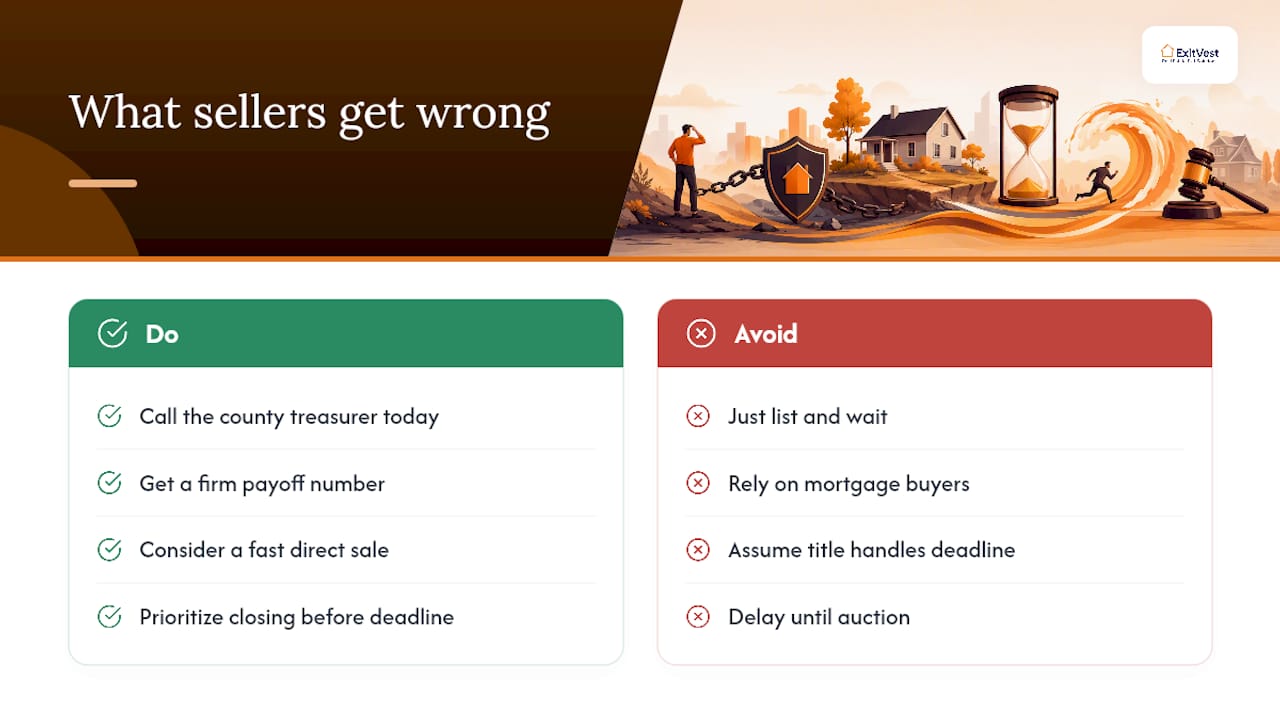
The advice I'd push back on is the common suggestion to "just list it and let the title company handle the lien at closing." That works fine when there's enough equity to cover every payoff. It falls apart when liens exceed value, because now you're negotiating a short sale under time pressure, and conventional buyers with mortgage contingencies are the worst match for that situation. Their financing timelines don't bend for a county redemption deadline.
If your equity is thin or your tax lien is approaching auction, the priority isn't marketing the property. It's calling the county treasurer today and getting a firm number, then deciding whether a fast, direct sale beats a listing that might not close before the deadline hits.
— Alek
Sell Your Liened Land Directly to Exitvest
Some companies buy land, houses, and small apartment buildings with liens already attached, so you can avoid the listing process, buyer financing contingencies, and extended waits for conventional closings to clear every payoff. Where a traditional sale can stall for months while a buyer's lender scrutinizes title issues, some buyers work directly with sellers to structure cash purchases around liens on record, often without commissions or agent fees reducing seller proceeds.

This fits especially well if you're facing a looming tax sale deadline, a foreclosure timeline, or a property where the liens leave thin equity for a standard sale. The Cash Offer Program is built specifically for sellers under time pressure, and Exitvest's team walks you through exactly how existing liens get satisfied at closing before you commit to anything. If you want a clearer sense of the process end to end, see how it works or get a cash offer today to see what your specific situation looks like on paper.
This article is general information, not a substitute for advice from a qualified financial advisor. Consult a qualified financial professional about your own circumstances before acting on anything here.
Sources
FAQ
Who Pays for a Lien Release, the Buyer or the Seller?
The seller typically pays for a lien release, since it's the seller's debt being cleared. The payoff amount usually comes straight out of the seller's proceeds at closing, and the title company handles the paperwork once the lienholder confirms the payoff.
How Long Does a Lien Stay on a Property?
A lien stays on the property until it's paid, released, or resolved through a legal process like bankruptcy discharge or a court judgment. Some liens, including certain tax liens, can remain active for years if left unaddressed, which is why early action matters.
How Much Does It Cost to Remove a Lien on Property?
Costs vary by lien type and lender, but expect the payoff amount itself plus recording fees to file the release, typically a modest flat fee at the county recorder's office. Title companies usually build these costs into the closing statement so there are no surprises.
Are Tax Lien Sales Worth It for Property Owners to Wait Out?
No, waiting until a tax lien reaches the sale stage usually costs you more, since purchasers who buy tax liens can add servicing fees and interest that increase what you ultimately owe. Contacting your county treasurer before the auction date almost always saves money compared to letting the lien sale process play out.
Can I Sell Land If the Liens Are Worth More Than the Property?
Yes, but you'll likely need a short sale, which requires the lienholder's approval to accept less than the full amount owed. A cash buyer like Exitvest can sometimes move faster through this process since they negotiate directly rather than waiting on a conventional buyer's financing timeline.