
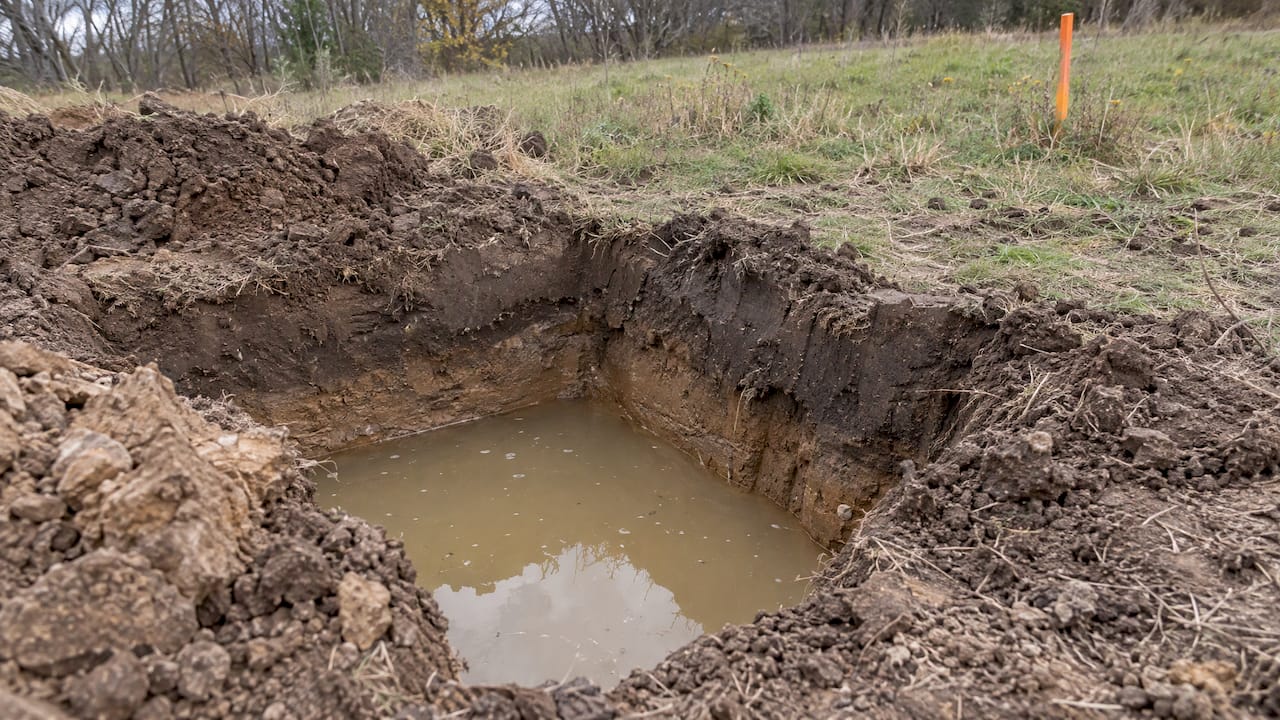
A failed perc test means the soil on your parcel did not meet your local health department's standard for a conventional septic system. It does not mean the land is worthless or unsellable. You can retest, appeal, or design an alternative system. Or you can sell the land as-is to a buyer who takes the septic question off your hands. We buy land for cash in as-is condition, so a failed test does not have to be fixed before you sell.
TL;DR
- A failed perc test is a finding about conventional septic systems, not a ruling that nobody can use the land.
- Your three paths are to retest or appeal, to build with an engineered alternative system, or to sell the land as-is.
- Retesting and engineering cost money and time, and the outcome still depends on your county's rules.
- Selling as-is for cash lets you skip the testing, the engineering and the waiting.
- Before you decide, pull your county's septic file so you know exactly what was tested and why it failed.
Table of Contents
- What a perc test measures and what "failed" means
- Why land fails a perc test
- Does a failed perc test mean you can't build?
- Step 1: Find out exactly what was tested
- Step 2: Weigh retesting, appeals and alternative systems
- Step 3: Decide whether to fix it or sell it
- Selling land with a failed perc test as-is
- Perspective
- How our cash offer works for land
- Mistakes to avoid after a failed test
- FAQ
- Sources
What a perc test measures and what "failed" means
A percolation test, or perc test, checks how fast water soaks into the ground. A hole is dug and pre-soaked. Then the tester records how many minutes it takes for the water level to drop one inch. The University of Nebraska Extension explains the result as minutes per inch, and notes that the result helps decide the type and size of the onsite septic system a site can use.
Every county sets its own passing range. Summit County, Utah requires water to absorb between 1 inch per minute and 1 inch per hour for a conventional system. Calvert County, Maryland, treats rates slower than 30 minutes per inch as unsatisfactory. Your number may be judged differently from a parcel two counties away.
So "failed" has two possible meanings:
- Too slow. Water sits in the hole. This is typical of heavy clay or a high water table. Wastewater would pond or back up.
- Too fast. Sandy or gravelly soil can drain so quickly that wastewater may not be filtered before it moves on.
It is a regulatory finding about one type of system, not an appraisal of your land.
Why land fails a perc test
Knowing the cause tells you which options are realistic.
- Clay soil. The University of Minnesota's Onsite Sewage Treatment Program explains that shrink-swell clay, which is very firm, sticky or plastic, is considered unsuitable for wastewater treatment in many areas.
- High water table or shallow rock. Calvert County lists less than four feet of usable soil as a reason for an unsatisfactory result, along with steep slopes, nearby drainage areas, water bodies within 100 feet and too little room for a replacement drain field.
- Timing. St. Mary's County, Maryland, says tests are mainly done in wet months, typically February through May, when groundwater is highest. A hole that was badly prepared, or a test done in unusual weather, can produce a poor reading.
- Disturbed ground. Fill material or compacted soil can drain very differently from the native soil next to it.
A failure caused by a testing problem is a different situation from a failure caused by the soil itself. The first can be fixed by retesting. The second usually means an engineered system or a different buyer.
Does a failed perc test mean you can't build?
Not automatically. The ruling usually applies to a conventional drain field. Some counties allow alternatives such as mound systems, aerobic treatment units or drip dispersal, and a general septic resource notes that most states have code provisions for at least several of them. In Ringgold County, Iowa, an alternate system must be installed when soil absorbs too slowly, too quickly or is otherwise unsuitable.
The opposite is also true, and many owners miss it: a passing perc test does not make a lot buildable either. Calvert County's guidance says a satisfactory test alone does not mean the property can be built on.
Some places leave no room at all. Stanly County, North Carolina, states that if a site is unsuitable for a subsurface sewage disposal system, there are no other options. Your county decides which situation you are in.

Step 1: Find out exactly what was tested
Before spending anything, get the paperwork.
- Call the county environmental health office. Ask for the septic or soil-evaluation file for your parcel number or address. Many counties list permits online, and copy fees are usually modest.
- Read the result, not the summary. Note the minutes-per-inch readings, the number of holes, the depth, the date and who performed the test.
- Check who was allowed to test. Rules differ. San Bernardino County, California, limits soil percolation testing to specific licensed professionals such as registered environmental health specialists, engineers and geologists. Ringgold County accepts only tests by a soil scientist or registered engineer.
- Note whether the result expires. Ringgold County treats tests as valid for one year. Stanly County permits last five years.
This file is also the first thing any serious buyer will ask about. Having it ready makes any sale faster.
Step 2: Weigh retesting, appeals and alternative systems
Three routes exist for keeping the land and making it buildable.
Retest or appeal
Some health departments let you challenge a failure. Summit County, Utah, lets an owner request two additional tests at opposite ends of the proposed drain field. If the director rejects the results, the owner can go to the Board of Health. Grounds that tend to work include abnormal test conditions or improperly prepared holes.
Some counties also restrict when tests can happen. Summit County reports that tests are unavailable from late November to March 1, so a retest can mean waiting months.
Design an alternative system
Where the county permits one, you hire a licensed designer or engineer, file plans and pay for installation. In Nebraska, for example, a system outside the normal soil range needs a professional engineer's design and a construction permit. Costs vary widely by county and site, so get written quotes rather than relying on a national average.
Use a soil evaluation instead
Some states favor soil morphology studies over water-filled holes. Stanly County, North Carolina, no longer does water-filled perc tests and evaluates soil texture instead. A credentialed soil scientist's report can sometimes stand in for or support a perc test.

Each route can work. Each also means spending money and months before you know whether the land can be built on, which is a lot to ask of an owner who needs to sell.
Step 3: Decide whether to fix it or sell it
It makes sense to retest or engineer a system if you plan to build or hold the land for years, and you have the budget and patience for the process. It makes less sense if any of these apply:
- You inherited the parcel and have no plans for it.
- Property taxes, liens or a mortgage are weighing on you. Our guide to selling land with back taxes covers that situation.
- You are relocating, divorcing or simply done with the property.
- The land has already sat on the market. Why land sits unsold for years lays out the usual reasons.
- A buyer's financing or contingency fell through. See what sellers can do next.
A failed perc test adds a hurdle for buyers who need a septic permit to build. An agent listing the parcel has to disclose it, and buyers who rely on bank financing usually need a clear path to a permit. That is why parcels with a failed test can linger on the market. The same logic applies to houses: see our guide on selling a house after a failed septic.
Selling land with a failed perc test as-is
A direct cash buyer does not need the land to pass before closing. The buyer takes on the question of what the land can be used for, whether that means a different use, an engineered system or holding it. You skip the testing fees, the engineering, the waiting period and the commissions.
What to expect from any sale of this kind:
- Have the paperwork. The perc result, any county correspondence and the parcel number speed up an offer.
- Know your title. Liens, back taxes and ownership questions affect how quickly you can close. Our step-by-step guide to selling land walks through them.
- Compare methods. Our comparison of vacant land sale methods shows what listing, auction and direct sale each involve in time and cost.
- Understand buyer due diligence. Buyers sometimes order further checks on a parcel, such as an environmental site assessment, before closing. A direct buyer who purchases as-is can often move without waiting on that kind of lender-driven process.
Perspective
Owners tell us the same thing after a failed perc test: they think the land is now worthless. It isn't. The test answered one narrow question about one kind of septic system.
The real problem is that fixing it asks you to become a project manager. You hire a soil scientist, wait for the right season, file with the health department and maybe pay for an engineered design, all before you know the outcome. If you didn't plan to build, that is a lot of money and time spent on someone else's future.
That is why we buy land as-is for cash. We explain our offer in clear numbers, we charge no fees or commissions, and we set the closing timeline around your situation. You talk directly with the people who decide, and we keep your situation confidential and never pressure you to rush.
If the land is more trouble than it is worth to you, we would rather take that trouble over than watch you carry the taxes for another year.
Alek
How our cash offer works for land
We buy houses, land and small apartment buildings directly from owners, in as-is condition, with no agent commissions or fees. We work nationwide, with a strong focus on New Jersey, Texas, Florida and Tennessee. Land that failed a perc test, carries liens or has been hard to sell is the kind of property our Cash Offer Program was built for.

You can see how the steps run on our how it works page, or start from ExitVest and tell us about your parcel.
Mistakes to avoid after a failed test
- Assuming the number is final. Check whether the hole was prepared properly and whether the test happened at an unusual time of year.
- Skipping the county file. The county may hold older soil data that helps or hurts you.
- Confusing a failed test with an unbuildable lot. Other factors decide buildability, including setbacks, slopes, access and zoning. If access is the issue, read our guide on selling landlocked land.
- Letting taxes pile up while you decide. Carrying costs continue whatever you choose.
- Waiting for the perfect buyer. Our guide to finding a cash buyer for unused land explains why a direct sale can move faster than a listing.
FAQ
Can I retest land that failed a perc test?
Often, yes, but it depends on your county. Some health departments allow additional tests at different spots on the parcel, and some restrict testing to certain months. Call the environmental health office and ask about retest rules and waiting periods.
Is land worthless after it fails a perc test?
No. The result applies to conventional septic systems. Some counties allow alternative systems, and some buyers have uses for the land that do not involve a drain field. Value depends on location, access, zoning and what the next owner plans to do.
Do I have to disclose a failed perc test when I sell?
Disclosure duties vary by state and by how the sale is handled. Because the test is usually on file with the county, assume a buyer can find it. For a sale where legal duties are unclear, ask a real estate attorney in your state.
Can I sell land that failed a perc test for cash?
Yes. We buy land as-is, so you do not have to pass a retest or install anything first. Share your parcel details and the test result, and we will explain our offer in clear numbers.
Sources
- University of Nebraska Extension: Conducting a Soil Evaluation (G1472)
- Summit County Health Department: Permitting New Septic System
- Calvert County Health Department: Percolation Testing Guidance
- University of Minnesota Onsite Sewage Treatment Program: Soil consistence
- St. Mary's County Health Department: Perc Testing
- Ringgold County Public Health: Septic Permits
- Stanly County: Site Evaluation Procedures
- SepticMind: Failed perc test
- SepticMind: Are perc tests public record?
- SBA Phase 1 Environmental Site Assessment