

Why land sits unsold for years, and what actually drives it
Raw land is one of the slowest-moving asset classes in American real estate, and the reasons go well beyond "nobody wants it." The buyer pool is smaller, financing is harder to secure, and every prospective buyer faces a longer due diligence checklist than they would with a house. Combine those structural headwinds with title complications and mispricing, and a parcel can sit on the market for years without a single serious offer.
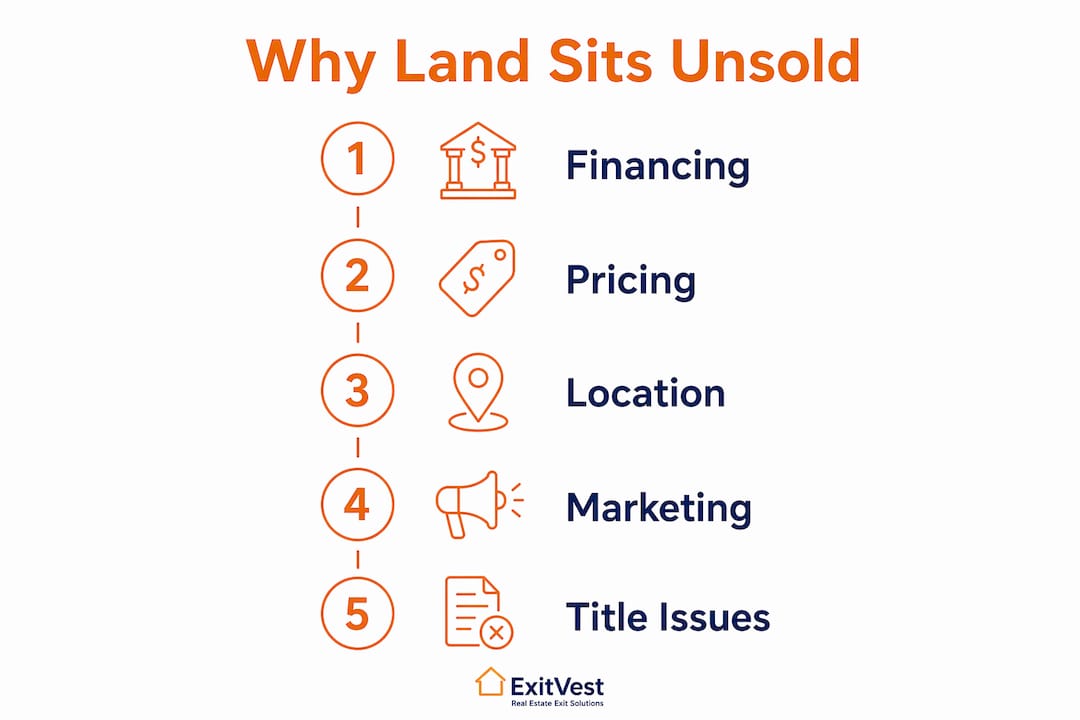
Here is the short version of what keeps land unsold:
- Financing barriers. Banks classify raw land as high-risk collateral, often requiring larger down payments and charging higher interest rates than a standard mortgage. That alone eliminates most buyers.
- Overpricing. Land buyers rarely counteroffer. If no inquiries arrive within 60 days, the price is almost certainly too high.
- Title and legal defects. Unreleased liens, missing easements, incomplete legal descriptions, and probate complications can stall or kill a deal entirely.
- Location and access. Landlocked parcels, properties far from utilities, and land with no legal road access attract a fraction of the buyers that accessible land does.
- Extended due diligence. Buyers must verify zoning, buildability, environmental restrictions, and utility access before committing, which stretches the decision timeline considerably.
Table of Contents
- Common reasons land remains unsold over extended periods
- Understanding curative title work and the legal hurdles that delay closings
- Effective strategies to sell land faster in the US market
- Financial and market factors that affect how quickly land sells
- How long does it typically take to sell land?
- How land size and shape affect buyer interest
- Exitvest makes selling land straightforward when the market won't cooperate
- Key Takeaways
Common reasons land remains unsold over extended periods
Financing is the first wall most buyers hit. Traditional lenders view undeveloped land as non-productive collateral with no immediate cash flow, which is why they impose steep down payment requirements and higher rates. A buyer who could comfortably finance a $200,000 home may not qualify for a $60,000 raw land loan under the same terms.
Pricing is the second wall, and sellers build it themselves. Land valuation is genuinely difficult because comparable sales are sparse and sellers often anchor to what they paid or what they hope to net. Overpricing is the primary reason land stays unsold. Unlike home buyers, land buyers tend to walk away rather than negotiate down.
Location matters more for land than for almost any other property type. Proximity to urban centers, recreational areas, or major roads directly affects demand. Off-grid parcels with no utility hookups or legal road access face a much narrower buyer pool and take longer to sell because the development burden falls entirely on the buyer.
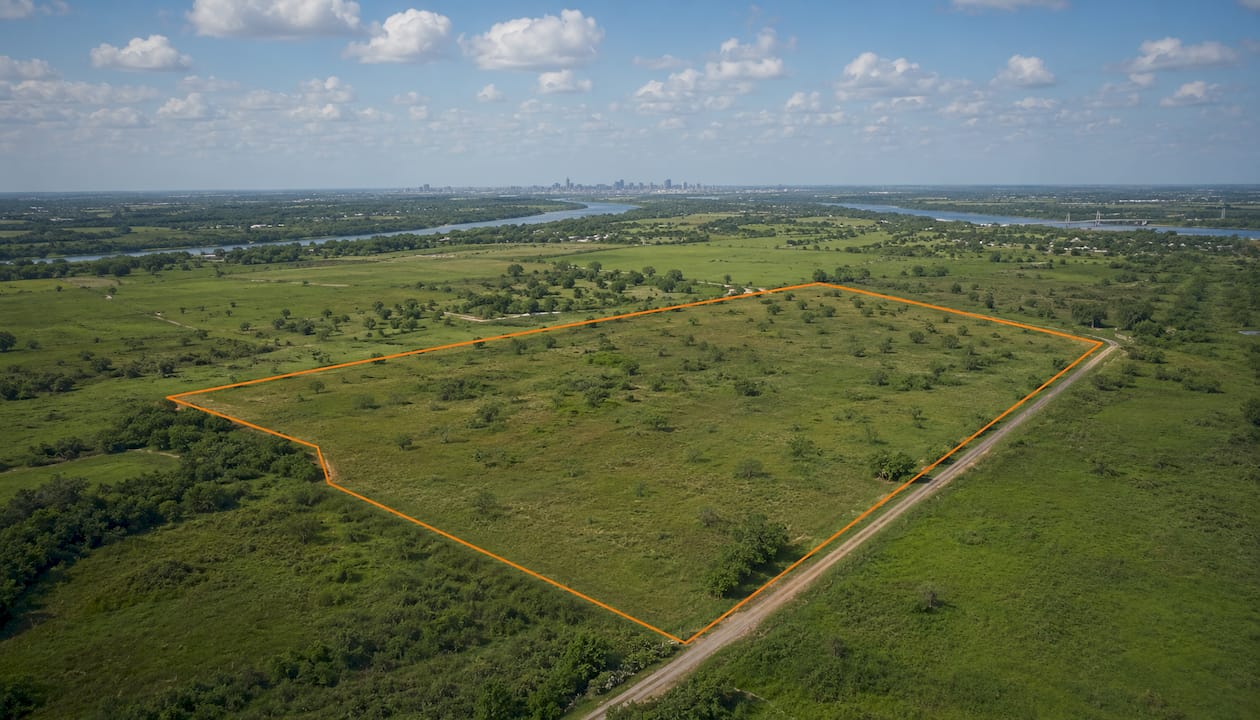
Poor marketing compounds every other problem. Land listed only on general real estate platforms rarely reaches the niche buyers, farmers, hunters, developers, and investors who actually purchase raw acreage. Reaching the right audience requires targeted platforms and clear documentation of what the parcel can actually be used for.
Understanding curative title work and the legal hurdles that delay closings
Title defects are the silent deal-killers in land transactions. Curative title work is the process of identifying and resolving those defects before closing, and it is something many sellers do not think about until a buyer is already under contract.
Common title defects include:
- Unreleased liens. A paid-off mortgage or judgment that was never formally discharged still clouds the title.
- Incomplete legal descriptions. Boundary errors or outdated survey language that does not match county records.
- Missing or unrecorded easements. Access rights that exist in practice but were never formally documented.
- Mineral rights complications. Severed mineral rights that were not disclosed or properly conveyed.
- Probate issues. Land inherited without going through probate cannot be legally transferred until the estate is settled.
Resolution timelines vary widely. A minor lien release typically takes 30–60 days. Recording a missing easement runs 3–6 months. Probate, in contested or complex estates, can stretch 12–18 months. Every one of those delays is a window for a buyer to walk.
Title companies uncover these defects during the title search, but many FSBO sellers never order a preliminary title report before listing. By the time a defect surfaces mid-contract, the buyer has already lost confidence. Many deals that appear to fall through over "buyer hesitation" are actually title problems discovered too late.
Pro Tip: Order a preliminary title report before you list, not after you accept an offer. Resolving defects proactively keeps your timeline intact and prevents last-minute contract cancellations.
Effective strategies to sell land faster in the US market
The single most effective lever a seller can pull is offering owner financing. By carrying the note yourself, you bypass the bank entirely and open your property to buyers who cannot qualify for a traditional land loan. Owner financing typically involves a 10% to 30% down payment with repayment terms of 5 to 15 years at interest rates around 7% to 12%. That structure makes a $50,000 parcel accessible to a buyer who could never get a bank to touch it.
Pricing accurately is the next priority. Pull recent comparable sales within your county, not just your zip code, and price at or slightly below market. Land buyers are patient and research-heavy. An overpriced listing does not generate lowball offers; it generates silence.
Documentation matters more than most sellers realize. Having your deed, current survey, parcel number, and zoning confirmation ready before you accept an offer shortens the time between acceptance and closing by removing the scramble that causes buyers to lose momentum. If you need guidance on the full preparation process, Exitvest's fast-sale guide for vacant land walks through each step.
Marketing on the right platforms matters too. General MLS listings reach home buyers, not land buyers. Niche land marketplaces and targeted outreach to local developers, farmers, and investors put your property in front of people who are actively looking for raw acreage.
Pro Tip: Combining owner financing with accurate pricing is the fastest path to a signed contract. Either one alone helps; together, they can cut months off your time on market.
Financial and market factors that affect how quickly land sells
Land values are sensitive to macro conditions in ways that residential real estate is not. When interest rates rise, the financing problem compounds: buyers who might have stretched to qualify for a land loan at 6% simply cannot do so at 9% or 10%. Demand contracts sharply, and listings that were marginally priced become clearly overpriced overnight.
Lenders also tighten underwriting standards during economic uncertainty. Down payment requirements for raw and unimproved parcels are typically high even in stable markets. In tighter credit environments, those requirements can push even qualified buyers to the sidelines. Understanding Florida vacant land loan options illustrates how regional lenders approach these challenges differently.
Local economic conditions shape demand just as much. Land near a growing metro or a planned infrastructure project attracts developer interest. Land in a stagnant rural county with declining population may sit regardless of price or condition. Sellers need to understand which buyer type their parcel realistically targets, because that determines both the marketing strategy and the realistic price ceiling.
How long does it typically take to sell land?
Through traditional channels, vacant land takes 6 to 12 months or longer to sell, and that assumes the price is right and the title is clean. Parcels with complications, poor access, or aggressive pricing can sit for two to three years or longer.
With owner financing and competitive pricing in place, that window can compress to 30 to 90 days. Cash sales to investors or direct buyers like Exitvest can close even faster, sometimes within weeks, because there is no lender approval process and no appraisal contingency to satisfy.
How land size and shape affect buyer interest
An oddly shaped parcel is harder to develop, harder to fence, and harder to visualize. Buyers mentally discount irregular lots because they require more planning and often yield less usable acreage than the total square footage suggests. Long, narrow strips, parcels bisected by easements, and landlocked lots all carry a structural discount that no amount of marketing can fully overcome.
Size creates its own complications. Very small parcels, under an acre in rural areas, often lack enough land for a septic system and well, which eliminates most residential buyers. Very large parcels, hundreds of acres, require buyers with significant capital and a clear development plan, shrinking the pool considerably. The sweet spot varies by region, but mid-size parcels with regular shapes and clear boundaries consistently move faster than outliers at either extreme.
Exitvest makes selling land straightforward when the market won't cooperate
Selling land through traditional channels takes time, patience, and a clean title. Not every seller has all three.
Exitvest buys land and property as-is, nationwide, with a strong focus on New Jersey, Texas, Florida, and Tennessee. There is no waiting for a buyer to secure financing, no title defect that stops the process cold, and no pressure to fix problems before closing. If your parcel has liens, probate complications, or access issues, Exitvest has the experience to work through those situations directly. You get a straightforward cash offer and a closing timeline that fits your schedule, not a lender's.
If you are tired of watching your land sit on the market, see how Exitvest works or tell us about your property to get a no-obligation offer.
Key Takeaways
Land sits unsold for years primarily because financing barriers, title defects, and overpricing combine to eliminate most buyers before a deal can close.
| Point | Details |
|---|---|
| Financing is the core barrier | Banks require 30%–50% down on raw land, cutting out the majority of potential buyers. |
| Overpricing kills deals silently | Land buyers walk away rather than negotiate; no inquiries within 60 days signals the price is too high. |
| Title defects cause long delays | Probate and easement issues can take 12–18 months to resolve; order a title report before listing. |
| Owner financing accelerates sales | With owner financing, land that would sit for 6–12 months can sell in 30–90 days. |
| Exitvest buys land as-is for cash | Exitvest offers direct cash purchases with flexible closing timelines, bypassing financing and title delays. |