
You can sell land through a licensed agent, on your own (FSBO), at auction, or directly to a cash buyer. The right route depends on whether your priority is maximum price, speed, or minimal hassle. According to Redfin, most land sales take 3–12 months from listing to closing, though cash buyers can close in days to a few weeks. Typical seller costs range from a typical agent commission on the high end to modest closing fees on the low end if you sell FSBO.
Here is the quick breakdown before you dive into the full guide:
- Agent listing: Best for maximizing price on desirable parcels. Expect 3–12 months and a 5–6% commission. Low seller effort, broad exposure.
- FSBO: Selling land without a realtor is legal in every U.S. state and saves the commission, but you handle all documents, disclosures, and closing coordination yourself.
- Auction: Fast and definitive, but the final price is unpredictable. Works best for unique or hard-to-value parcels.
- Cash buyer: Closes fastest (sometimes in under two weeks), no repairs or contingencies, but expect a price below market value in exchange for that speed and certainty.
Key Takeaways
Selling land successfully comes down to pricing it accurately, preparing the right documents before listing, and choosing the sale method that matches your actual priority.
| Point | Details |
|---|---|
| Choose your method first | Agent, FSBO, auction, or cash buyer each fit different seller priorities. Match the method to your goal. |
| Price from comparables | Pull recent county sales, then adjust per-acre value for access, utilities, zoning, and buyer use case. |
| Survey before you list | A current survey is the first document serious buyers request; missing it adds weeks to every deal. |
| List on specialized platforms | Land.com and Lands of America reach investors and developers better than broad aggregator sites. |
| Exitvest for fast cash sales | Exitvest buys land nationwide for cash, as-is, with flexible closing timelines and no commissions. |
Table of Contents
- What's the best way to sell land?
- How do you price land accurately before listing?
- What documents and property prep do you need before listing?
- How do you market land so the right buyers find it?
- How do you evaluate purchase offers and negotiate land terms?
- What happens at closing, and what does it cost?
- What legal pitfalls can derail a land sale?
- How to sell land by owner: a step-by-step FSBO checklist
- When does selling to a cash buyer make sense?
- What sellers consistently get wrong about land sales
- Exitvest buys land for cash, as-is, with no commissions
- Sources
What's the best way to sell land?
The best method depends on what you're optimizing for. Here is how the four main routes compare:
| Factor | Agent listing | FSBO | Auction | Cash buyer |
|---|---|---|---|---|
| Best for | Maximizing price | Keeping commission | Speed + certainty | Speed + no repairs |
| Typical timeline | 3–12 months | 3–12 months | 30 days | Days to 3 weeks |
| Seller costs/fees | 5–6% commission + closing | Closing fees only | 5–10% auction fee | Minimal to none |
| Seller effort | Low to moderate | High | Low | Very low |
| Buyer pool | Local + regional buyers | Land marketplace users | Competitive bidders | Investors |
When FSBO makes sense: You already know your parcel's value, you have time to manage inquiries, and you're comfortable gathering deeds, surveys, and disclosure forms. Landmodo and similar specialized marketplaces walk FSBO sellers through the paperwork sequence and connect them with buyers who search land channels directly.
When an agent adds value: The parcel is large, complex, or in a competitive market where pricing and negotiation experience pay for themselves. Agents also handle buyer vetting and contract management, which matters when a deal has multiple contingencies.
When auction works: The property is unique, time-sensitive, or you need a hard closing date. Auctions create competitive pressure that can push price up, but there is no floor unless you set a reserve.
When a cash buyer is the practical choice: You need to close fast, the land has title issues or liens, or you simply don't want to manage a months-long listing. You'll likely net less than market value, but you trade that gap for certainty and speed.
Pro Tip: If you're unsure which route fits, get a cash offer first. It costs nothing and gives you a price floor to compare against what an agent or FSBO listing might realistically net after commissions and carrying costs.
How do you price land accurately before listing?
Start with comparable sold prices, then adjust for every factor that makes your parcel more or less useful to a buyer. Land pricing is not like pricing a house. There are no bedrooms to count. Value comes from what a buyer can do with the land.
Pull recent sales of similar parcels within 5–10 miles from your county assessor's records or a land-specific database. Look at acreage, zoning, road access, and whether utilities are available. Then apply adjustments:

| Factor | Effect on per-acre value |
|---|---|
| Paved road frontage | Increases value significantly |
| No legal access (landlocked) | Decreases value sharply |
| Public water/sewer available | Increases value |
| No utilities within 1 mile | Decreases value |
| Agricultural zoning | Moderate value, use-dependent |
| Residential/commercial zoning | Higher value |
| Wetlands or flood zone | Decreases value |
| Strong soil (perc test passed) | Increases value for development |
A simple example: if comparable raw parcels in your county sell for $3,000 per acre, but your land has paved road access and a passed perc test, you might reasonably price at $3,500–$4,000 per acre. If it's landlocked with no utilities, $1,500–$2,000 per acre might be more realistic.
Order a formal appraisal when the parcel is large, the use case is unclear, or you're heading into a dispute or estate settlement. Appraisers who specialize in land (not residential homes) understand highest-and-best-use analysis, which is the standard method for valuing raw land based on its most profitable legal use.
Pro Tip: *Check why land sits unsold in your area before you set your price. Overpricing is the single most common reason land stays on the market for years.
What documents and property prep do you need before listing?
Gather these before you do anything else. Missing paperwork is the most common reason land deals stall after an offer is accepted.
Document checklist:
- Deed with legal description (get a certified copy from your county recorder if you've lost the original)
- Recent survey or recorded plat map
- County assessor/tax records showing current assessed value and tax status
- Easement and encumbrance information (check the title chain)
- Zoning verification letter from the local planning department
- Utility availability letters (electric, water, sewer, gas)
- Any environmental reports, perc test results, or soil studies
- Mineral rights documentation if applicable
Surveys for vacant land typically cost between $400 and $1,200 depending on acreage and terrain, per LegalClarity. A topographic map adds cost but helps buyers evaluate slope, drainage, and buildability. If your parcel hasn't been surveyed in the last 10 years, order a new one before listing.
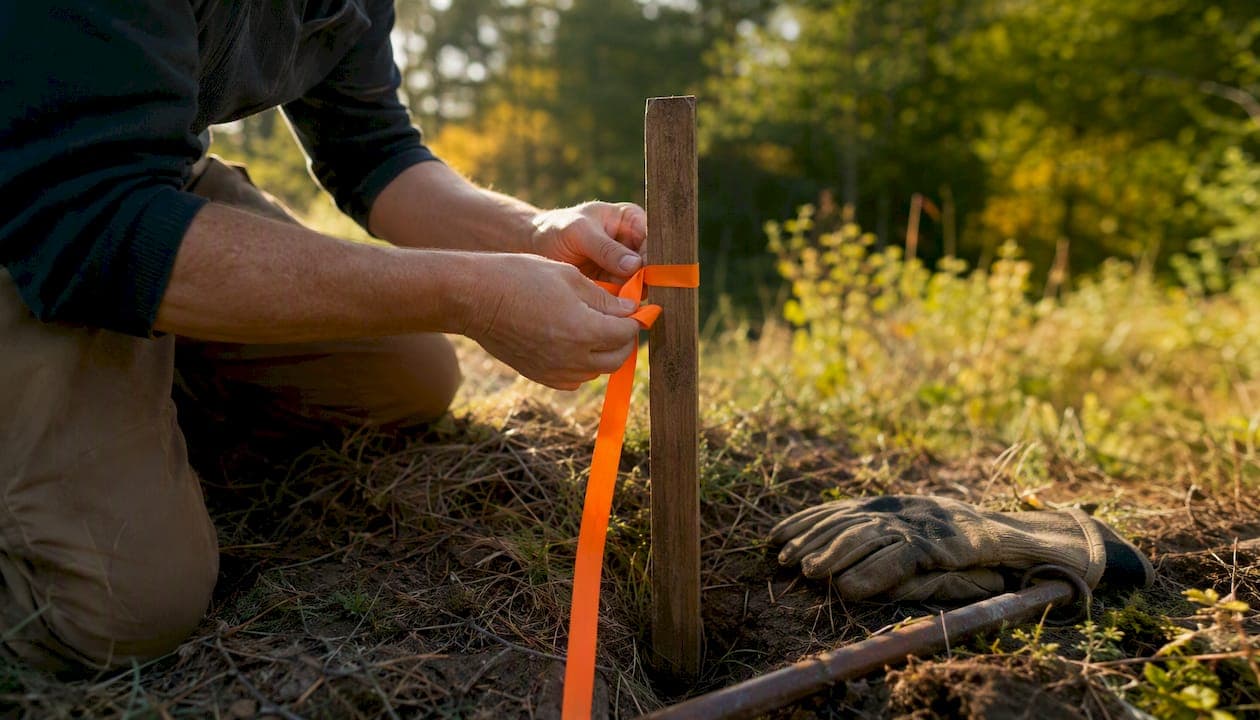
On the physical side: clear any overgrown access paths, mark boundary corners with stakes or flagging, and remove obvious debris. Then photograph everything. High-resolution ground photos plus drone shots (if the parcel is more than a few acres) give buyers a real sense of the land's character. Create a simple parcel map showing boundaries, access points, and any structures or features.
Pro Tip: The single document buyers ask for first is the survey. If you don't have one, expect every serious buyer to make it a contingency, which adds weeks to your timeline. Order it before you list.
How do you market land so the right buyers find it?
Land buyers evaluate parcels by intended use, whether that's development, farming, or recreation. Your listing needs to speak directly to that use case, not just describe acreage and location. A developer wants to know about zoning, utilities, and road frontage. A farmer wants soil type and water access. A recreation buyer wants timber, water features, and hunting potential.
Where to list
- Land.com and Lands of America: The strongest platforms for reaching investors, developers, and regional land buyers. These specialized marketplaces attract buyers who are actively searching for parcels, not just browsing. Use them as your primary listing channel.
- Zillow and Redfin: Broader audience, useful for residential-adjacent lots or parcels near suburban areas where a private buyer might be interested. Less effective for remote rural acreage.
- Landmodo and similar FSBO land platforms: Good for owner-financed listings and sellers who want to manage the process themselves.
- Local channels: County Facebook groups, Craigslist land sections, and physical signage on the property still generate real inquiries, especially for rural parcels where neighbors or nearby farmers are the most likely buyers.
Listing content checklist
- Parcel Identification Number (APN or parcel number)
- Exact acreage and legal description
- GPS coordinates or a map pin
- Zoning classification and permitted uses
- Road access type (paved, gravel, easement, none)
- Utility availability (electric, water, sewer, gas, internet)
- Easement notes (utility easements, access easements)
- Soil type or perc test results if available
- High-resolution photos and drone footage
- A parcel boundary map
High-quality listing photos, clear acreage, and legal descriptions measurably increase buyer inquiries for vacant land. Buyers can't walk through land the way they walk through a house, so your photos and data are doing the selling.
Pro Tip: Write two versions of your listing description: one for developers (lead with zoning, utilities, and road access) and one for recreational buyers (lead with acreage, water features, and privacy). Post the version that matches the platform's typical buyer.

How do you evaluate purchase offers and negotiate land terms?
The best offer isn't always the highest number. For land, the financing type, earnest money amount, and contingencies matter just as much as the price.
Key offer elements to review:
- Legal description accuracy: Confirm the parcel described in the offer matches your deed exactly. A wrong legal description can void a contract or cause title problems at closing.
- Earnest money: For land, earnest money commonly runs 1–3% of the purchase price. A buyer offering $500 on a $100,000 parcel isn't serious. Push for at least 1%.
- Financing type: Cash offers close faster and carry less risk. Conventional mortgages for raw land are rare because most lenders avoid them. Many buyers use seller financing, which Redfin notes can expand your buyer pool and sometimes support a higher price, but it adds ongoing risk and requires solid legal documents.
- Contingencies: Common land contingencies include perc test results, title search clearance, zoning verification, and survey confirmation. Each one is a potential exit for the buyer. Fewer contingencies mean a cleaner deal.
Negotiation approach: Counter on price and contingency timelines simultaneously. If a buyer asks for a 60-day perc test contingency, counter with 30 days and a higher earnest money deposit to keep them committed. If the price is below your floor, offer to carry a portion as seller financing at a rate that compensates for the gap.
Red flags to walk away from: buyers who won't provide proof of funds or a pre-approval letter, offers with no earnest money, and buyers who ask for extended contingency periods without explanation.
Pro Tip: Ask every buyer upfront what they plan to do with the land. Their intended use tells you which contingencies are legitimate and which are stalling tactics. A developer who needs a perc test for a subdivision has a real reason. A buyer who "just wants to check a few things" without specifics often doesn't.
What happens at closing, and what does it cost?
Use a title company or real estate attorney to handle the closing. They run the title search, open escrow, issue title insurance, prepare the deed, and record the transfer with the county. In some states, attorney involvement at closing is legally required.
Closing sequence:
- Open escrow with a title company or attorney after the purchase agreement is signed.
- Title company runs a title search to identify liens, encumbrances, or ownership gaps.
- Title insurance is issued (protects both buyer and lender, or buyer only in a cash sale).
- Both parties review and sign the closing disclosure and deed.
- Buyer deposits funds into escrow.
- Deed is recorded with the county recorder's office.
- Funds are disbursed to the seller, minus closing costs.
A title company handles the title search, issues title insurance, opens escrow, and typically records the deed. In attorney-closing states (Georgia, South Carolina, and others), a licensed real estate attorney must conduct the closing.
Tax considerations:
- Capital gains: Profit from a land sale is taxable. If you've held the parcel more than one year, long-term capital gains rates apply (0%, 15%, or 20% depending on your income). Short-term gains are taxed as ordinary income.
- Rollback taxes: If your land has been taxed at an agricultural rate and the new buyer changes its use, rollback taxes for prior years may apply. Clarify in the purchase agreement who pays them.
- Transfer taxes and recording fees: These vary by state and county. Some states charge no transfer tax on land; others charge a percentage of the sale price. Recording fees are typically modest, often $25–$100.
What legal pitfalls can derail a land sale?
Proactively identify easements, access rights, encroachments, and environmental issues before you list. Disclosing them early avoids post-closing disputes and keeps deals from collapsing during due diligence.
Common pitfalls:
- Landlocked parcels: If your land has no legal road access, it may be nearly unsellable without negotiating an access easement from a neighboring owner. Confirm legal access before listing.
- Unknown easements: Utility companies, neighbors, or government agencies may hold recorded easements on your land that restrict what a buyer can build. Pull the full title chain to find them.
- Unrecorded liens: Contractor liens, tax liens, or judgment liens that weren't recorded properly can still surface during a title search and delay closing.
- Severed mineral rights: In many states, mineral rights can be owned separately from surface rights. If a prior owner severed the minerals, disclose it. Buyers who discover this after closing have grounds for a dispute.
- Missing disclosure forms: Most states require sellers to disclose known material defects, environmental hazards, and boundary disputes. Skipping these creates legal exposure.
Disclosing a known issue upfront almost always costs less than defending a post-closing lawsuit. A buyer who learns about an easement during due diligence can adjust their offer or walk away cleanly. A buyer who discovers it after closing has legal remedies against you.
Pro Tip: Call a real estate attorney (not just a title company) if you know the parcel has title clouds, unresolved liens, or boundary disputes. Title companies identify problems; attorneys fix them.
How to sell land by owner: a step-by-step FSBO checklist
Selling land without a realtor is entirely legal in every U.S. state and can save you the full agent commission. The trade-off is that you manage everything yourself.
FSBO sequence:
- Retrieve your deed from the county recorder and confirm the legal description is accurate.
- Order a current survey if the existing one is outdated or missing.
- Gather supporting documents: tax records, zoning verification, utility letters, easement info, and any environmental reports.
- Research comparable sales and set your asking price.
- Prepare your listing: write descriptions for each buyer type, take photos, create a parcel map.
- List on specialized land platforms (Land.com, Lands of America, Landmodo) and local channels.
- Field inquiries and qualify buyers: ask about intended use and financing before scheduling site visits.
- Negotiate and sign a purchase agreement that includes the legal description, earnest money amount, contingencies, and closing timeline.
- Open escrow with a title company or attorney.
- Support due diligence: provide documents promptly, respond to contingency requests, and track deadlines.
- Close: sign the deed, confirm recording, receive funds.
Suggested timeline milestones:
- Weeks 1–2: Document retrieval and property prep
- Weeks 3–4: Pricing research and listing creation
- Weeks 5–16: Active listing, inquiries, and showings
- Weeks 17–20: Offer negotiation and purchase agreement
- Weeks 21–24: Due diligence and closing
Documents to prepare for buyers:
- Signed purchase agreement (include legal description, earnest money terms, contingencies, and closing date)
- Seller disclosure form (state-specific)
- Survey and plat map
- Title commitment from the title company
- Zoning and utility letters
Pro Tip: FSBO sellers who use specialized land marketplaces consistently reach more qualified buyers than those who rely only on general real estate sites. List where land buyers actually search.
When does selling to a cash buyer make sense?
Cash buyers are the practical choice when speed, certainty, or avoiding repairs are your top priorities. You'll typically net less than market value, but you eliminate contingencies, financing risk, and the months of carrying costs that come with a long listing.
Scenarios where a cash sale fits:
- Inherited land you don't want to manage or pay taxes on
- Parcels with title issues, liens, or encumbrances that complicate a traditional sale
- Urgent liquidity needs (medical bills, estate settlement, financial pressure)
- Land that has sat unsold for months and is costing you in taxes and maintenance
- Situations where you simply want a clean, fast exit
Red flags to watch for with cash buyers:
- No proof of funds provided upfront
- Pressure to sign quickly before you've reviewed terms
- Vague or verbal offer terms with no written purchase agreement
- Hidden fees that appear at closing
- No title company or attorney involvement proposed
How to vet a cash offer:
- Request written proof of funds before entering a purchase agreement
- Confirm the offer includes a clear legal description, purchase price, earnest money, and closing date
- Verify the buyer plans to use a licensed title company or attorney for closing
- Ask for references or check the buyer's track record with past sellers
Pro Tip: Get at least two cash offers before accepting one. The spread between offers tells you whether you're being lowballed or getting a fair price for a quick sale. A legitimate cash buyer won't pressure you to skip that step.
| Point | Details |
|---|---|
| Speed vs. price trade-off | Cash buyers close fast but typically offer below market value. |
| Inherited or distressed land | Cash sales eliminate the complexity of liens, title issues, and carrying costs. |
| Vetting is non-negotiable | Always get written proof of funds and a clear purchase agreement before signing. |
| Exitvest option | Exitvest buys land nationwide for cash, in as-is condition, with flexible closing timelines. |
What sellers consistently get wrong about land sales
Two things shorten time-to-close more reliably than anything else: a pre-listing title check and a realistic asking price set before the first inquiry arrives.
Most sellers focus on the listing and skip the title work. Then an offer comes in, the title search surfaces a lien or an easement gap, and the deal falls apart three weeks into due diligence. A title company can run a preliminary title search for a modest fee before you ever list. That one step surfaces problems while you still have time to fix them, not while a buyer is waiting.
The second lesson: owner financing changes everything. When traditional lenders won't touch raw land, offering seller financing can double your buyer pool and support a higher asking price. But it requires proper legal structure. A contract for deed keeps title with you until the buyer pays in full; a promissory note plus deed of trust gives the buyer title while you hold a security interest. The default remedies differ by state, and getting this wrong creates years of legal exposure. Use a real estate attorney to draft the documents, not a template you found online.
Exitvest buys land for cash, as-is, with no commissions
If you've read through the options and what you really need is a fast, clean exit, Exitvest is built for exactly that situation. Exitvest buys houses, land, and small apartment buildings directly from owners for cash, nationwide, in as-is condition. No agent commissions, no repair demands, no months of waiting to see if a buyer's financing holds together.
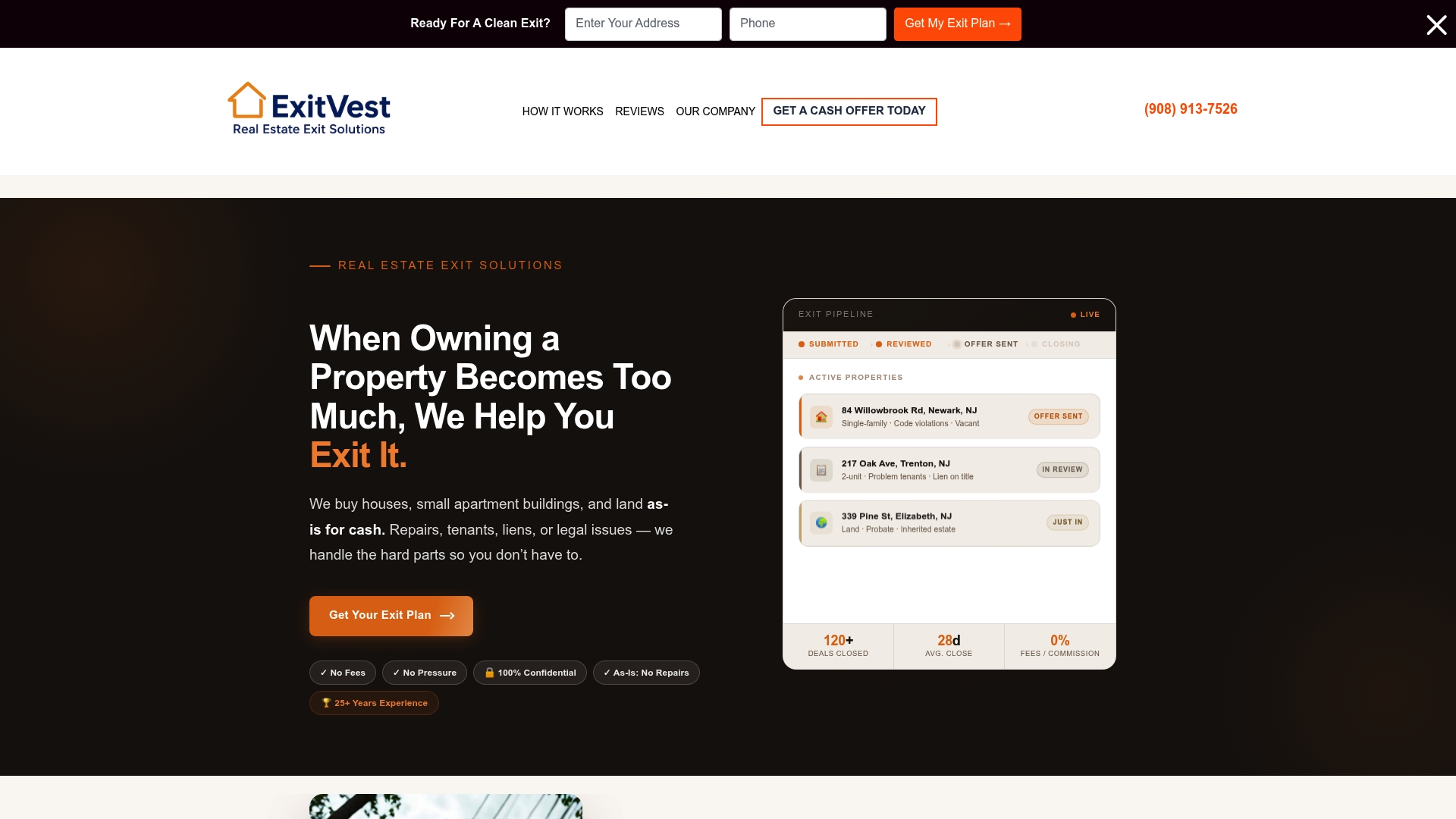
The sellers Exitvest works with most often are dealing with inherited land they don't want to manage, parcels with title complications, or situations where carrying costs and taxes are eating into whatever the land is worth. The process is straightforward: you describe the property, Exitvest makes a written cash offer, and you choose the closing timeline that works for your situation. Exitvest has a strong presence in New Jersey, Texas, Florida, and Tennessee, and buys properties across the country.
To get a cash offer with no pressure and no obligation, start with the how it works page to see exactly what the process looks like before you commit to anything.
Sources
Before you list or sign anything, verify current rules with the authorities that govern your specific parcel:
- How to Sell Land | Redfin
- How to Sell Land Without a Realtor: Steps and Taxes - LegalClarity
- How to Sell Land Without a Realtor: A Complete FSBO Guide for 2026 - Land Landmodo Blogs - Landmodo
- How to Sell Land by Owner — and When to Work with an Agent | Land.com
- How to Sell Rural Land: Step-by-Step Guide
This article provides general information about selling land in the United States. It is not legal, tax, or financial advice. Consult a licensed real estate attorney, CPA, or qualified professional for guidance specific to your situation and state.
This article is general information, not a substitute for advice from a qualified lawyer. Consult a qualified legal professional about your own circumstances before acting on anything here.