
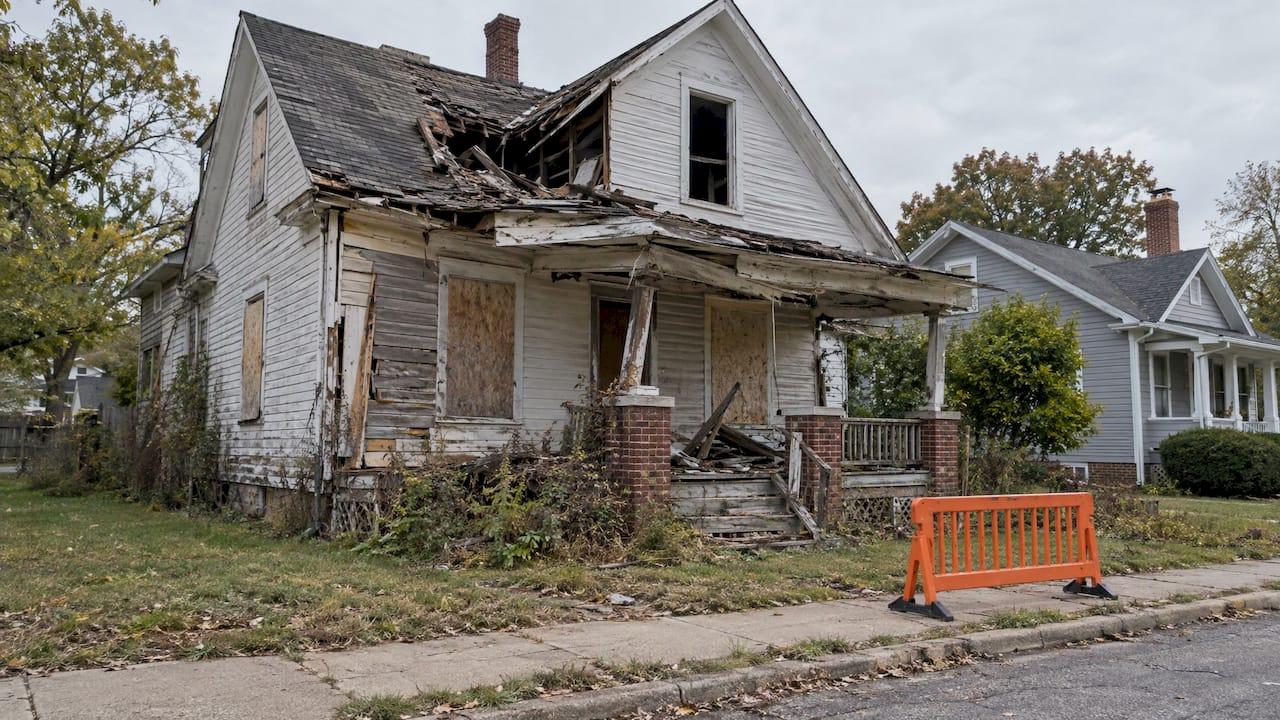
Yes, you can sell a house with a demolition lien, but the lien does not go away when the deed changes hands. It attaches to the property, so it has to be paid, released or settled at or before closing. If you want a fast, as-is sale, a direct cash buyer is the simplest route, because the lien amount is handled as part of the purchase price math instead of stalling a listing. At ExitVest, we buy houses, land and small apartment buildings for cash from owners dealing with liens, code violations and condemned or damaged structures.
TL;DR
- A demolition lien is a claim a city or county records after it tears down (or orders down) an unsafe structure and bills the owner. It follows the property, not the owner, including through a sale.
- Most sales pay it off at closing from the seller's proceeds, so the real question is whether your sale price covers the lien plus your other debts.
- Rules on priority, interest and foreclosure differ by city and state, so get a written payoff statement before you sign anything.
- A cash sale as-is avoids repair costs, agent commissions and the wait for a mortgage-financed buyer to clear underwriting.
Table of Contents
- What a demolition lien is and why it follows the house
- How much a demolition lien can cost
- How the lien affects title and closing
- How the rules differ by state and city
- How to find the amount, lienholder and status
- Three ways to clear a demolition lien
- Selling with a demolition lien, step by step
- What most sellers get wrong
- Get a cash offer on a property with a demolition lien
- FAQ
- Sources
What a demolition lien is and why it follows the house
When a building is declared unsafe and the owner does not fix or remove it, many cities can hire a contractor to demolish it. The city then sends the owner the bill. If the bill goes unpaid, the city records a lien: a legal claim against the property for that amount.
The key point for a seller is that the claim is against the land and what is on it. The City of Baton Rouge explains in its FAQ that a condemnation or demolition lien attaches to the property rather than the owner and stays with it after a sale. An unpaid lien can also be sent to the tax roll, which is how it ends up on the same bill as your property taxes.
That is why you cannot simply sell and walk away. A title company searching the property will find the recorded lien, and no buyer's lender or title insurer will close over it.
How much a demolition lien can cost
The lien equals what the city spent, plus whatever the local ordinance adds. U.S. News reports that private demolition of an average home typically costs $10,000 to $25,000 and can reach $50,000. When a town demolishes and files a lien, the city collects that amount from the sale proceeds and the seller receives what is left.
A worked example makes the math concrete. Say a lot with a partly collapsed house would sell for $90,000, and the city's lien is $30,000. You also owe $20,000 on an old mortgage. At closing, the title company pays the lien and the mortgage from the sale price, and you receive the remaining $40,000, before any other closing costs. If the same lot sold for $45,000, the lien and mortgage would consume nearly everything, which is why knowing the exact payoff early matters.
Costs can grow beyond the demolition bill itself. In Baton Rouge, the payoff includes the demolition cost plus curator fees, court costs and recording fees, and additional recording costs for items such as notices and reinscriptions. Other cities add interest, which we cover below.

How the lien affects title and closing
A recorded demolition lien is a cloud on title. Until it is paid or released, a buyer cannot get clean ownership. Realtor.com notes that a sale cannot go through unless a lien that is found is paid or released, and that the payment falls on the seller. A release of lien from the entity that filed it is what proves the title is cleared.
The same logic applies to other lien types. A lien release is the recorded document that tells the world the claim is satisfied, and it is the paper your title company wants to see before closing.
Three things usually decide how smoothly this goes:
- Priority. Where the demolition lien sits in line against your mortgage, tax liens and judgments determines who gets paid first if the sale price is too small to cover everyone.
- Interest. Many ordinances let the amount grow over time.
- Timing. A city that is owed money can foreclose in some states, so a long-running lien can put the property at risk.
How the rules differ by state and city
Demolition liens are created by local ordinance under state law, so two cities in the same state can handle them differently. The examples below show the range. They are illustrations, not a substitute for your own city's code or a real estate attorney's advice on your file.
Texas
In Texas, a demolition lien is subordinate to a tax lien under Tex. Loc. Gov't Code § 214.001(o), and a tax foreclosure sale can extinguish it. A Houston appeals court case from 2007 held that a city's demand for payment of an extinguished lien before issuing a release was an illegal fee.
Cities can also go on offense. Under Section 214.004 of the Local Government Code (verified May 2025), a qualifying municipality may foreclose a demolition lien in court if the structure was demolished, the lien has been unpaid more than 180 days after filing, and property taxes are delinquent on the property. If back taxes are part of your problem, read about how delinquent property taxes work, because they sit ahead of the demolition lien in line.
Local ordinances add detail. Brenham's ordinance, adopted August 15, 2024, makes the city's demolition lien subordinate only to taxes and earlier recorded mortgage liens where the lenders were notified, and it accrues 10% annual interest from the date the expense statement is filed with the county clerk.
Florida
Jacksonville's ordinance shows how fast the clock can run. A demolition lien there can be paid without interest within 180 days of notice publication. After that it accrues 12% annual interest from the filing date and ranks ahead of all other liens except state, county and city tax liens. Waiting, in other words, is expensive.
Alabama and Louisiana
In Barbour County, Alabama, the governing body fixes the demolition cost by resolution after at least 10 days' notice to interested parties. The resulting special assessment lien is superior to all other liens except tax liens and is added to the property tax bill. In Baton Rouge, once you pay, the city prepares cancellation documents, and you must record them with the East Baton Rouge Clerk of Court to actually remove the lien.
New Jersey and Tennessee
If your property is in New Jersey or Tennessee, the same pattern applies: the municipality's code sets how the lien is created, what it costs and where it ranks. Ask the municipal clerk or code enforcement office for the ordinance and the lien file. For New Jersey owners with several liens, our guide to selling a house with liens in NJ covers the state in more detail.
How to find the amount, lienholder and status
Before you can decide anything, you need three facts: who holds the lien, how much it is today, and what else is recorded against the property. Here is the routine:
- Find the lienholder. Demolition liens are usually filed by the city or county that did the work. Call the code enforcement or building department that handled your property, and ask for the case file.
- Request a written payoff statement. Ask for the total as of a specific closing date, with a breakdown of demolition cost, administrative fees, interest and recording costs. Ask how much it grows per day or month.
- Check the county records. The county recorder or clerk's office shows what has been filed against the parcel and when. Look for the lien itself, any notices of hearing and any related judgments.
- Check the tax bill. Some liens are moved onto the tax roll, so the county tax collector's office may show the balance as part of your taxes.
- Order a title search. A title search lists every lien, including ones you may have forgotten. Our title issues guide for cash sales explains what to expect.
Keep every notice you have received. If you never got notice of the demolition, tell your attorney, because lack of proper notice is one ground owners use to challenge a lien.
Three ways to clear a demolition lien
Realtor.com describes the options for any lien: provide proof you owe nothing, pay it or agree to pay it at closing, or dispute it and win a court order requiring release without payment.

Prove no debt is owed. This applies if the lien was paid, filed against the wrong parcel, or never properly noticed. You need documents: receipts, the city's own records, or a corrected filing.
Pay it at closing. This is how most sellers handle it. The title company wires the payoff from your proceeds to the city, collects the release, and records it. You never need cash up front.
Dispute it. This is for owners with a real legal defense. Realtor.com cautions that litigation can be long and costly, which usually does not fit a seller facing a foreclosure date, a vacant house or a carrying-cost problem. Talk to a real estate attorney before choosing this route.
Paying from proceeds is also the typical advice given to owners with smaller municipal demolition liens: sell, then pay the city at closing, because the city looks to be paid when the property transfers.
Selling with a demolition lien, step by step
- Get the payoff and the lien file. Use the routine above.
- List every other claim. Mortgage, taxes, judgments, other liens. Our guides on selling with a judgment and selling with a lien show how these are paid in order at closing.
- Work out your net. Estimated sale price, minus all payoffs, minus closing costs. If the number is close to zero, you want a buyer who can move quickly, before interest and fees grow it further.
- Choose the sale route. A traditional listing needs the house to pass inspection, appraisal and lender review, and a demolished or condemned property rarely does. Cash buyers purchase as-is.
- Open title early. Ask the title company to order the lien release process as soon as you have a contract.
- Close and record the release. Confirm the release is recorded, and keep a copy.
If the lien came with a demolition order that has not yet been carried out, see selling a house with a demolition order, and if a code hearing is coming, read selling before a code enforcement hearing.
Owners of vacant land with a demolition lien, for example after a teardown, should also see selling liened land before a tax sale.
What most sellers get wrong
Waiting for the city to "forget" it. Interest and fees keep running under many ordinances, and the lien does not expire because you ignore it.
Fixing up the house first. If the structure is condemned or already demolished, repairs are often not an option, and spending money on a property carrying a lien can mean paying twice.
Assuming the price is too low to sell. Because the lien is paid from the sale price, a sale can still work when the numbers leave something over for you. The point is to know the numbers.
Skipping the release. Paying is not the same as clearing. The release must be recorded, as the Baton Rouge process shows.
Our view on demolition liens
Owners usually come to us after months of letters from a city they did not want to hear from. The lien feels like a verdict. It is a number, and numbers can be solved.
We buy houses, land and small apartment buildings for cash, as-is, including properties with liens, code violations and heavy damage. There are no commissions or agent fees, and we explain our offer in plain numbers so you can see how the lien, any mortgage and the price fit together.
We also set closing timelines around your situation, and your sale stays confidential. You talk directly to the people who make the decision, and we never push you with artificial urgency. A lien needs a decision, not a panic.
Alek
Get a cash offer on a property with a demolition lien
If you own a house, lot or small apartment building with a demolition lien and want to sell it as-is, we can make you a cash offer. You do not need to clean up, repair or demolish anything, and you pay no commissions or agent fees. Start with our Cash Offer Program, or see how selling for cash with us works.
We buy houses, small apartment buildings and land across the country, with a strong focus on New Jersey, Texas, Florida and Tennessee.
FAQ
Can I sell a house that has a demolition lien?
Yes. The lien stays with the property, so it is paid or released as part of the sale. Most often the title company pays the city from your proceeds at closing and records the release.
Who pays the demolition lien when the house sells?
The seller. According to Realtor.com, payment of a found lien falls on the seller, and it is usually deducted from the sale proceeds. The buyer does not take on your lien.
Does the lien come before my mortgage?
It depends on your state and city. In some places a demolition lien ranks behind taxes but ahead of other liens, as in Jacksonville, and in others it is subordinate to earlier recorded mortgages, as in Brenham. Check the ordinance and the title search for your parcel.
Can a city foreclose on a demolition lien?
In some states, yes. In Texas, a qualifying city may foreclose a lien in court under Section 214.004 when the structure was demolished, 180 days have passed and property taxes are delinquent. If you are close to that point, selling sooner protects your equity.
Do I need to repair or demolish the house before selling for cash?
No. A cash sale is as-is, so you do not need to repair, clean out or finish demolition before you ask for an offer.
Sources
- City of Baton Rouge: Frequently Asked Questions on condemnation and demolition liens
- Saturn Capital Corporation v. The City of Houston (Texas 14th Court of Appeals, 2007)
- Tex. Local Gov't Code Section 214.004
- City of Brenham, Texas: Division 5, Enforcement
- Code of Alabama § 45-3-171.22
- Realtor.com: What Happens If I Have a Lien on My House?
- U.S. News: How to Buy or Sell a Condemned Home