
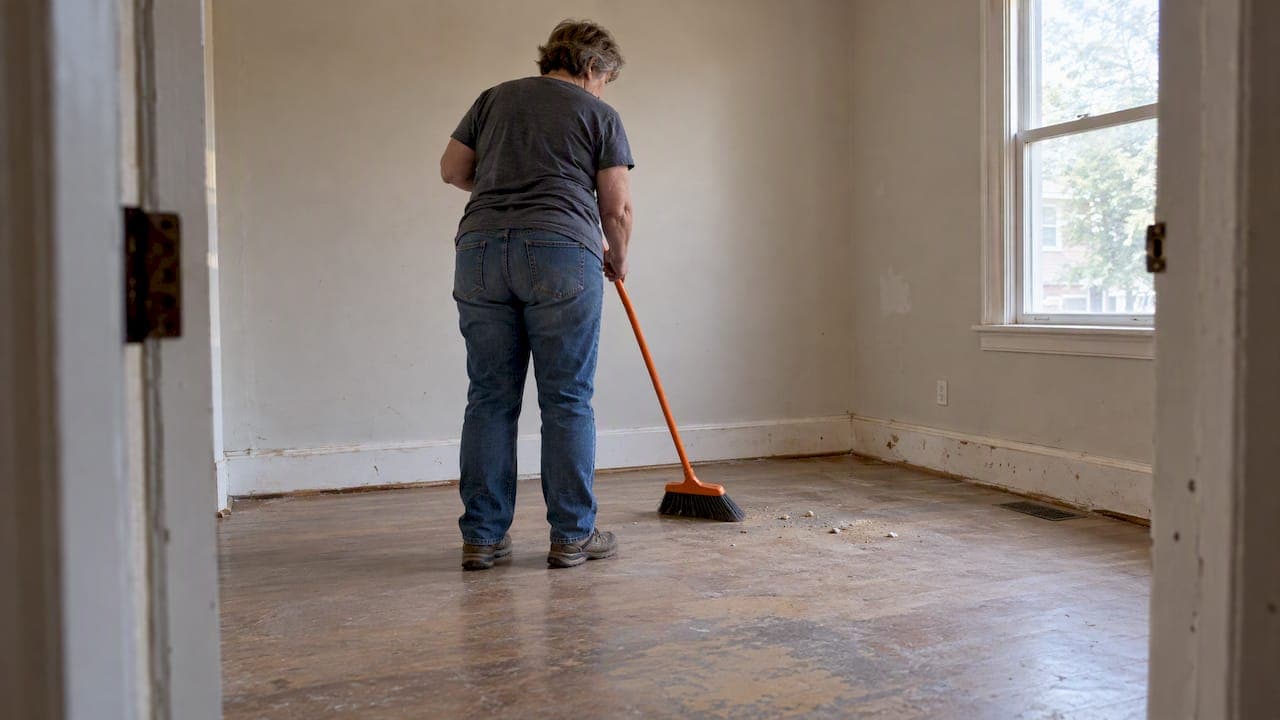
Broom clean condition means you hand over a property empty of your belongings, trash and debris, with the floors swept or vacuumed. It does not mean professionally cleaned, scrubbed or move-in ready. The term has no single legal definition, so the exact contract or lease you signed decides what you owe.
This guide covers what broom clean means in practice, what to do room by room, where renters and sellers face different risks, and how to write the clause so nobody argues at the final walkthrough.
TL;DR
- Broom clean (also called broom swept) means vacant, free of trash and debris, floors swept or vacuumed. It is a floor-level standard, not a deep clean.
- There is no nationwide definition. Your purchase contract or lease controls, along with state law.
- Sellers usually owe a tidy, empty house. Renters have more to lose, because cleaning shortfalls can come out of a security deposit.
- If you want more than broom clean, write it into the contract: name the rooms, tasks and standard.
- Selling a house you cannot realistically empty or clean? A direct as-is cash sale can change what the handover looks like.
Table of Contents
- What broom clean condition actually means
- What courts have said about the term
- A room-by-room broom clean checklist
- Selling a home: what the buyer can expect
- Renters and landlords: where broom clean costs money
- The fastest way to get a house broom clean
- How to write the clause so it holds up
- Our perspective: when broom clean is the wrong goal
- Selling a house you cannot clean out?
- FAQ
- Sources
What broom clean condition actually means
Think of it as the minimum courtesy at handover. The dictionary-style definition of broom-clean describes a room empty of personal property and swept of debris, though not necessarily professionally cleaned. "Broom swept" is used interchangeably.
In practice that covers four things:
- Empty. Furniture, clothing, boxes and personal items are gone, unless the contract says specific items stay.
- No trash or debris. Nothing left in closets, the garage, the attic, the basement or the yard.
- Floors swept or vacuumed. Every room and corner, not only the middle of the floor.
- No obvious mess. Visible spills and residue in the kitchen and bathrooms are wiped away.
What it usually does not include: shampooed carpets, washed windows, polished floors, scrubbed grout, a sanitized kitchen or a like-new finish. Real estate professionals quoted by Realtor.com note that the phrase has no exact legal definition and shows up in both sale contracts and rental leases.
Broom clean vs. professionally cleaned
| Standard | What you do | Typical use |
|---|---|---|
| Broom clean / broom swept | Remove belongings and trash, sweep or vacuum, wipe obvious residue | Home sale closings, lease move-outs |
| Move-out clean | Broom clean plus wiped surfaces, cleaned appliances, bathrooms and fixtures | Many rental leases, landlord checklists |
| Professionally cleaned | A cleaning service handles the whole property, often with receipts required | Negotiated by buyers, or required by some leases |
| Move-in ready | Cleaned and repaired to a like-new standard | Rarely a requirement; a separate negotiation |
The labels in the middle of that table are not legal terms. That is the point: only the written wording tells you which one applies.
What courts have said about the term
A law firm write-up of a New York decision is a useful reality check. The court read "broom clean" as being satisfied by freedom from garbage, refuse, trash and debris, and did not turn the clause into a professional-cleaning duty. The same write-up points out that sale contracts often require the seller to deliver the premises broom clean, and that residential leases almost always require the tenant to surrender the unit that way.
The lesson is not that every court will rule the same way. It is that judges tend to read the words that are on the page, and "broom clean" on its own is a modest standard.
A reported New York case, Hegner v. Reed, also shows why process matters: a dispute over vacancy and broom-clean delivery at closing was treated as something that could potentially be cured. Notice, a walkthrough and a chance to fix problems all count.
State and local rules also use the phrase. For example, New Jersey's administrative code requires a state tenant agency vacating a leased facility to leave it in broom clean condition, apart from reasonable wear and tear. That rule governs government tenants, not private homeowners, but it shows the term is a recognized, modest benchmark.
A room-by-room broom clean checklist
Use this whether you are closing on a sale or turning in keys. Adjust it to what your contract says, because some contracts leave certain items with the property.
Whole property
- Remove all furniture and personal property unless the contract says items remain.
- Take out trash bags, old paint cans, chemicals, broken items and anything stored in the garage, shed, attic or basement.
- Pull nails, screws, hooks and signage if the agreement requires it, and patch only if your contract or lease asks for it.
- Sweep or vacuum every floor, including closets and corners.
- Leave all keys, remotes, garage openers and access codes as agreed.
Kitchen
- Empty cabinets, drawers, the pantry, the refrigerator and the freezer. Unplug and prop open a fridge you are leaving.
- Wipe obvious residue from counters, the stovetop and the inside of the microwave if it stays.
- Remove anything that was not part of the house, such as freestanding appliances you own.
Bathrooms
- Empty cabinets and the shower area, and take down shower curtains.
- Wipe visible residue from the sink, toilet, tub and floor.
Bedrooms, living areas, closets
- Check shelves, closet floors and the backs of doors.
- Vacuum carpet. You do not owe a shampoo under a plain broom clean clause.
Outside
- Clear the garage, porch, patio, yard and any shed.
- Remove trash bins you own and any yard debris.
Photograph every room once it is empty and swept. Dated photos are the cheapest insurance you can buy against a later argument.
Selling a home: what the buyer can expect
For most sellers, broom clean is a courtesy that the contract turns into an obligation. One lender's explainer notes that professional cleaning is not customary and is more often a negotiating point in a buyer's market. Even so, most buyers plan to clean to their own standards before moving in.
If you are the seller:
- Read the clause in your contract. Some leave appliances, window coverings or outdoor items behind, and some spell out cleaning tasks.
- Finish moving out before the final walkthrough, not after.
- Do not leave anything you do not want the buyer to own. Debris left behind is the usual source of closing-table friction.
If you are the buyer:
- Do not read broom clean as a promise of sanitized or move-in-ready condition.
- If cleaning matters to you, negotiate wording such as "professionally cleaned," and identify the rooms and tasks. Address carpets, windows, appliances and debris expressly before signing.
- Do the walkthrough as close to closing as your contract allows, and note problems in writing so there is an opportunity to cure.
If you are selling a home with something heavier than ordinary leftovers, such as years of accumulated belongings, read our guide to selling a hoarder house. The broom clean question is much bigger when the house is full.
Renters and landlords: where broom clean costs money
Sellers face a closing-table argument. Renters face a deposit deduction. Broom clean duties cannot automatically override state security-deposit law or the lease itself, and cleaning disputes often turn on the lease's exact words.
A New Jersey appellate opinion, Minster v. Volovnik, involved claimed cleaning, gutter, maintenance and repair deductions, and the court analyzed the responsibilities in the written lease. In New Jersey, one tenant resource explains that landlords must return deposits within 30 days after the lease ends and possession is delivered, and cannot deduct for normal wear and tear such as minor scuffs and small nail holes. Deadlines and rules differ by state, so check yours.
Tips for tenants
- Compare the move-out condition with your move-in condition and reasonable wear and tear.
- If the lease says "broom clean" and nothing more, a sweep and trash removal is the standard. If it says "professionally cleaned," keep the receipt.
- Photograph every room and record key returns. If you can, do a signed walkthrough with the landlord.
- If you want a ready-made list of the extra tasks landlords often check, this move-out cleaning checklist for getting a deposit back is a practical reference.
Tips for landlords and property managers
Vague clauses create avoidable disputes. Lease practitioners recommend defining the exact rooms, surfaces, fixtures, debris-removal duties, damage standard and key-return requirements in writing before move-out. Commercial leases in particular may add washed floors, vacuumed carpets, cleaned restrooms and removal of tenant-installed fixtures. For a property manager's view of the full turn process, this step-by-step tenant move-out cleaning guide shows how the work is usually sequenced.
If your tenant has stopped paying or refuses to leave, cleaning standards are the least of it. Our guides on the cash-for-keys process and the legal options when a tenant is not paying cover that situation.
The fastest way to get a house broom clean
A sensible order saves time, and it keeps you from cleaning the same floor twice.
- Remove belongings and debris first. Work from the back of the house to the front door, bagging trash as you go.
- Sweep or vacuum. Do the floors once everything is out, so you are not stepping on cleaned areas.
- Wipe hard surfaces if your standard asks for it. Use detergent and water on counters, sinks, tubs and toilets.
- Disinfect only when needed. Health guidance separates cleaning from disinfecting: cleaning removes dirt and makes disinfectants work better.
Broom clean does not require disinfecting every surface in an ordinary sale or lease surrender. If you do choose to disinfect, for example after an illness or contamination, the CDC's household guidance says to clean dirty surfaces first and follow the product label for concentration, application and contact time. Use gloves, ventilate the space, and never mix cleaning products.
A basic kit is enough: garbage bags, a broom and dustpan, a vacuum, a mop and bucket, microfiber cloths, a scrub brush, a toilet brush, paper towels, multi-surface and glass cleaner, floor cleaner and dish detergent. Airbnb's host supply guide lists much the same, and stresses label-approved disinfectants where they are needed.

One exception: if a broom or mop was used in a sewage cleanup, state health guidance calls for disinfecting the tools with one tablespoon of unscented household bleach per gallon of water. That is a contamination precaution, not a routine move-out step.
How to write the clause so it holds up
The trap is that broom clean means something different to each person reading it. Fix that on paper:
- Define the standard. "Broom clean" or "professionally cleaned"? Do not leave it implied.
- List the tasks. Floors swept or vacuumed, appliances emptied, trash removed from garage and yard, windows left as they are, or whatever you agree.
- Say what stays. Appliances, window treatments, shed contents and similar items.
- Set the inspection. A walkthrough date and how problems are reported.
- Allow a cure. If something is missed, a short window to fix it avoids a standoff.
- Record the handover. Dated photos, key returns and, for tenants, a signed checklist.
If the property is being sold as-is, also check what your state requires you to disclose. Our overview of as-is disclosure laws explains that selling as-is does not erase disclosure duties.
Our perspective: when broom clean is the wrong goal
We buy houses, land and small apartment buildings directly from owners, for cash and in as-is condition. So we see the far end of the cleanliness spectrum: inherited homes full of a lifetime of belongings, rentals left behind by tenants, vacant houses with repairs piled up, and properties under foreclosure pressure.
For those owners, the broom clean question is often the wrong one. A traditional sale usually puts the cleanup, repairs and showings on the seller, and a buyer relying on a mortgage may expect the house in better shape. If you cannot afford the time or money to get a house there, spending weeks emptying and cleaning it can cost more than it saves.

What we tell owners: ask first what the handover needs to look like, and let the contract say it. In a direct cash sale, the closing timeline and condition are agreed up front, and the offer is explained numerically. We never pressure sellers with urgency, and we keep every conversation confidential. If you do want to leave the property tidy, that is easy to build into the agreement. If you do not, the as-is price already accounts for that.
We would rather a seller choose the cleanup route knowingly than discover the cost at closing. Whichever path you take, get the expectations in writing.
— Alek
Selling a house you cannot clean out?
If the property is full, damaged, tenant-occupied or simply more than you want to handle, we can make a cash offer for it as it stands. You do not pay commissions or agent fees, and closing timelines are flexible around your situation. See how our process works or request a cash offer. Facing foreclosure? Our Cash Offer Program is built for that.
Before a cash sale closes, expect an inspection window and some paperwork. Our guides to cash sale inspections and the documents a cash home sale needs show what to have ready. If you need to stay in the home briefly after closing, see post-occupancy agreements.
FAQ
What does broom swept condition mean?
It means the same as broom clean: the property is empty of your belongings, free of trash and debris, and the floors are swept or vacuumed. It does not require deep cleaning, carpet shampooing or sanitizing. The exact meaning still depends on your contract or lease.
Do I have to mop or wash windows for broom clean?
Not under a plain broom clean clause. The usual standard stops at sweeping or vacuuming and removing trash, though wiping obvious kitchen and bathroom residue is a good idea. If your lease or contract lists mopping, windows or carpet cleaning, those tasks apply.
Is broom clean required when selling a house?
It is required if your purchase contract says so, and contracts commonly do. Without such a clause it is still the expected courtesy, as one explainer on what broom clean means for sellers notes. Check your contract and ask your agent or real estate attorney if the wording is unclear.
Can a landlord keep my deposit for not leaving the unit broom clean?
A landlord can usually deduct for cleaning needed beyond normal wear and tear, if the lease and state deposit law allow it. Compare your move-in photos with the move-out condition and keep your own dated photos. If you disagree with a deduction, contact your state attorney general's consumer office or a local tenant rights organization.
Does broom clean mean disinfected?
No. Disinfection is a separate health measure, mainly relevant after illness or contamination. If you do disinfect, clean first and follow the product label.
Sources
- Court Answers an Existential Question: How Clean is Broom Clean? (Smith, Gambrell & Russell)
- broom-clean (Wiktionary)
- Broom Clean Condition: What Does It Mean If You're Moving Out? (Realtor.com)
- Hegner v Reed, 2003 NY Slip Op 19719
- N.J.A.C. 17:11-13.2, Condition of vacated premises (Cornell LII)
- Understanding Broom Clean in Real Estate Contracts (Sharpe Loans)
- Minster v. Volovnik, New Jersey appellate opinion
- New Jersey Security Deposit Laws in 2026 (Hemlane)
- Understanding the Broom Clean Condition Clause (LeaseRef)
- Safe Cleaning (New York State Department of Health)
- Cleaning and Disinfection for Households (CDC)
- Stock up on these cleaning supplies (Airbnb)
- Indoor sewage spill flyer (Alabama Department of Public Health)