
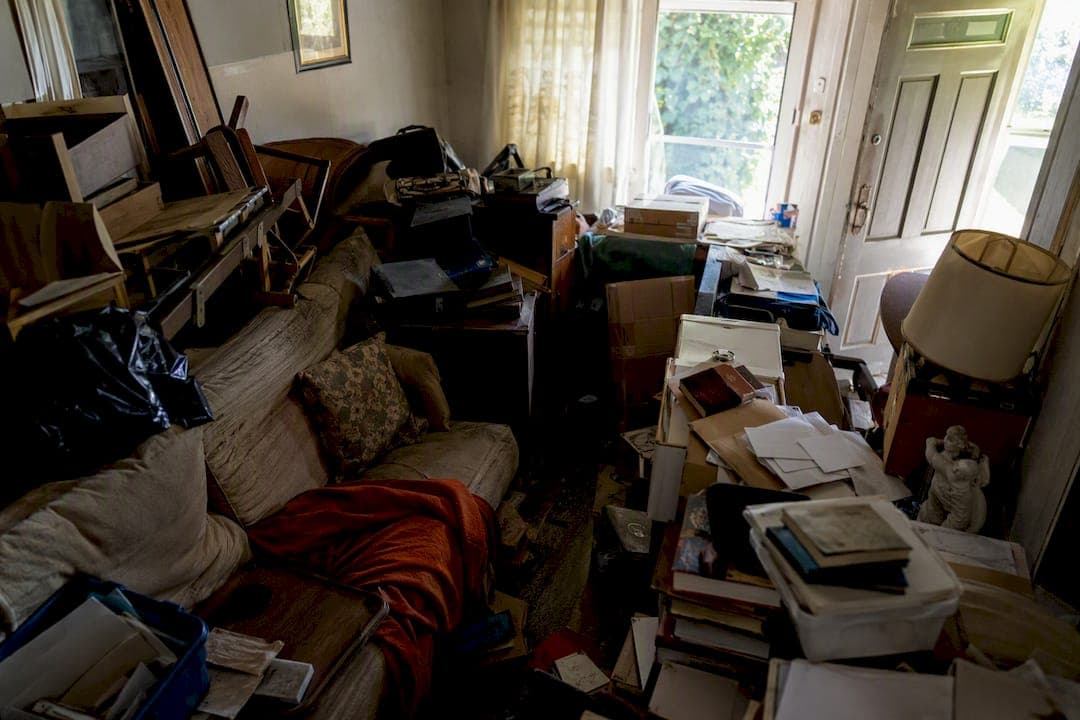
You have four realistic ways to sell a hoarder house: sell it as-is to a cash buyer, clean it out and list it traditionally, rehab it and sell retail, or liquidate contents through an estate sale before choosing a sale path. Each trades speed, price, and effort differently. Most owners who are short on time, money, or emotional bandwidth end up selling as-is to a cash buyer like Exitvest, since it skips the cleanout entirely. This guide walks through assessment, cleanout choices, the repair-versus-as-is math, legal disclosures, realistic costs, and what to do this week.
- Sell as-is to a cash buyer — fastest, lowest price, zero cleanout labor
- Clean out, then list traditionally — moderate speed, better price, real physical work
- Rehab, then list retail — slowest, highest potential price, highest upfront cost and risk
- Estate sale or auction first — recovers contents value, adds weeks before the house itself sells
Pro Tip: Don't decide on a route before you assess the property. A house with mold or structural damage rules out some options before you even weigh them.
Key Takeaways
Selling a hoarder house as-is to a cash buyer skips cleanout and repair costs entirely, while cleaning and listing traditionally trades effort for a higher price ceiling.
| Point | Details |
|---|---|
| Assess before deciding | Check egress, structural damage, pests, and biohazards before choosing a sale route. |
| Match cleanout to severity | DIY works for light clutter; professional hoarding cleanup handles biohazards and heavy disposal. |
| Run the rehab math | Compare contractor quotes and carrying costs against neighborhood comps before repairing. |
| Disclose everything | Condemnation, mold, and structural defects must be disclosed in writing under U.S. law. |
| Exitvest as the as-is route | Exitvest buys hoarder houses nationwide as-is, with no cleanout required and flexible closing timelines. |
Table of Contents
- How Do You Assess a Hoarder House Before Selling?
- What Are Your Cleanout Options for a Hoarder House?
- Should You Repair the House or Sell It As-Is?
- How Do Cash Buyers and Investors Purchase Hoarder Houses?
- Preparing to List After Cleanup or Rehab
- What Legal Disclosures Does a Hoarder House Sale Require?
- What Do Cleanup, Repairs, and Sale Timelines Actually Cost?
- Your Next Steps: What to Do This Week
- Is ExitVest a Fit for Selling Your Hoarder House?
- A Straightforward Path When You're Ready to Sell
- What Most Advice Gets Wrong About Selling a Hoarder House
- Sources
How Do You Assess a Hoarder House Before Selling?
Walk the property room by room before you commit to any sale route. What you find determines everything downstream, including which buyers will even consider the house.
- Check every exit path. Blocked doors, hallways, or windows are a fire code problem, not just clutter.
- Look for water and structural damage. Sagging floors, water stains, or soft drywall often mean bigger problems hiding behind boxes.
- Find the HVAC and electrical panels. If they've been buried or blocked for years, expect deferred maintenance issues.
- Note pest activity and odors. Rodents, insects, and persistent smells usually mean porous materials, like carpet and drywall, need replacing, not cleaning.
- Watch for biohazards. Animal waste, mold colonies, or spoiled food piles call for professional handling, not a weekend cleanout.
Anything serious here, especially mold or structural issues, should trigger a call to a licensed inspector before you price the house or promise a buyer anything. What you find here reshapes your cost estimate and often your entire sale strategy.
What Are Your Cleanout Options for a Hoarder House?
Once you know what you're dealing with, you have three paths to clear the property: do it yourself, hire professionals, or liquidate contents through an estate sale first.
Professional hoarding cleanup companies handle biohazard protocols, industrial odor control, and regulated disposal that most DIY efforts simply can't match. Firms like BioRecovery specialize in exactly this kind of remediation, and their pricing reflects the labor, disposal fees, and specialized equipment involved. U.S. News recommends leaving severe cases to professionals for safety and efficiency reasons alone.
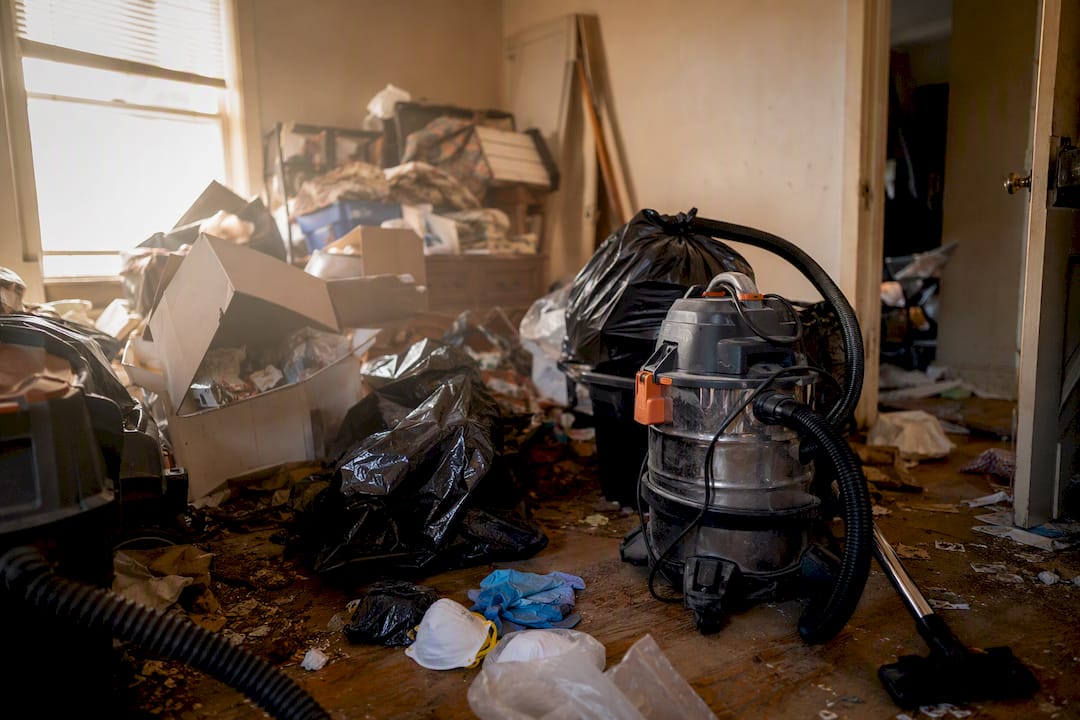
Estate sales or auctions can recover real value from furniture, collectibles, or antiques buried in the clutter, but they add weeks to your timeline and require someone to sort, price, and stage items before buyers ever show up.
DIY cleanout works for lighter cases, but factor in dumpster rental fees, the physical toll, and the emotional weight of sorting through a family member's belongings.
- Ask any cleanup company for proof of insurance and licensing before signing anything
- Request references from at least two recent hoarding-specific jobs, not general junk removal
- Get a written scope of work, not a verbal estimate
Pro Tip: Check a company's Better Business Bureau profile before hiring; complaint patterns show up there long before they show up in your living room.
Should You Repair the House or Sell It As-Is?
This decision comes down to arithmetic, not sentiment. Compare what rehab actually costs against what it actually returns, and let the numbers pick the route.
- Get 2 to 3 contractor quotes with written scopes, not verbal ballparks. Vague estimates turn into budget disasters mid-project.
- Pull recent comps for renovated homes in your neighborhood to estimate realistic post-repair value.
- Add carrying costs, meaning taxes, insurance, and utilities, for every month the house sits empty during repairs.
- Compare total investment against upside. If rehab plus carrying costs eats most or all of the projected price bump, as-is is the smarter move.
Realtor notes that once rehab costs exceed the expected increase in market value, selling as-is to an investor usually makes more financial sense than gambling on a renovation. That math tilts hard toward as-is when a house is condemned or has major structural failures, since those issues typically shrink your buyer pool to investors anyway.
Statistic Callout: Specialized hoarding cleanups can be costly depending on severity, according to industry cost data on professional remediation labor and disposal.
How Do Cash Buyers and Investors Purchase Hoarder Houses?
Investors buy hoarder houses because they don't need financing approval and they've already budgeted for rehab work into their offer. That's also why the offer comes in below retail. You're paying for speed and certainty, not top dollar.
- The process is short. An initial walkthrough, a cash offer within days, clear contract terms, and a closing that can happen in as little as one to two weeks.
- Verify proof of funds before you sign anything. A legitimate buyer can show bank statements or a letter from their lender.
- Insist on a closing agent or title company handling escrow. Never wire money or hand over deeds outside a regulated closing process.
- Watch for red flags: pressure to skip inspections, reluctance to put terms in writing, or offers that seem too good given the property's condition.
Negotiate by getting more than one offer. Even a rough second quote gives you leverage and confirms your first offer wasn't lowballing you.
Preparing to List After Cleanup or Rehab
If you've cleaned or renovated the house and want retail pricing, three choices matter most: your agent, your repairs, and your disclosures.
- Pick an agent with distressed-property experience, not just general residential listings. They'll know how to market a house that still shows its history.
- Prioritize repairs that buyers notice first, like flooring, paint, and fixing anything on a home inspection checklist, over cosmetic upgrades. A kitchen or storage upgrade often returns more than a full remodel would.
- Disclose honestly. Past hoarding conditions, prior pest issues, or repairs made under time pressure should appear in writing, even after cleanup.
Skipping disclosure to make the house look "normal" invites legal risk later, even when the current condition looks fine.
What Legal Disclosures Does a Hoarder House Sale Require?
U.S. sellers must disclose known hazards, structural defects, condemnation status, mold, and pest infestations, regardless of the sale route. This isn't optional paperwork. It's a legal requirement in most states, and failing to disclose can lead to lawsuits well after closing.
- Disclose condemnation status and any code violations in writing, since buyers of condemned properties are almost always investors who expect full transparency upfront.
- Keep inspection reports, contractor quotes, and photos as documentation that protects you if a dispute arises.
- Talk to a real estate attorney if you're unsure what your state requires, especially with inherited property or unclear title.
Pro Tip: Keep every inspection report and photo dated and organized. Documentation is what protects you if a buyer disputes the property's condition after closing.
What Do Cleanup, Repairs, and Sale Timelines Actually Cost?
Statistic Callout: Professional hoarding cleanups can be costly depending on severity, while structural remediation and full rehab projects can be even more expensive, particularly when mold or foundation repairs are involved.
- Small DIY cleanout: dumpster rental plus your own labor, typically the cheapest option but slowest for larger properties.
- Professional hoarding cleanup: costs scale with square footage, biohazard presence, and disposal volume.
- Structural remediation: mold removal, foundation work, or electrical rewiring adds significant time and cost on top of a basic cleanout.
- As-is cash sale: typically closes in one to three weeks with no cleanout cost to the seller at all.
Local condemnation orders or permitting delays can stretch a retail-sale timeline by months and shrink your buyer pool to cash investors regardless of how much you've already spent on repairs.
Your Next Steps: What to Do This Week
- Secure the property. Lock it, document current conditions with photos, and address any immediate safety hazards.
- Get an appraisal or a broker's opinion of value so you know what the house is worth in its current condition.
- Collect 2 to 3 quotes from contractors and cleanup companies to compare against a cash offer.
- Request a cash offer if speed matters more than squeezing out maximum price.
- Compare net proceeds, not sticker prices. Subtract cleanup, repair, agent commission, and carrying costs from each option before deciding.
Pro Tip: Call an inspector first if you suspect structural or mold issues. That single report will shape every other decision you make this month.
Is ExitVest a Fit for Selling Your Hoarder House?
Exitvest buys houses nationwide in as-is condition, including hoarder homes, inherited properties, and estates tangled up in probate. Cleanout, repairs, and staging aren't required before a sale. Closing timelines flex to match your situation, whether you need to close in two weeks or need more time to sort out estate details.
This route fits owners who don't want to front cleanup costs, don't have time for a multi-month rehab, or are managing a complicated inheritance alongside a full-time job and their own family. If you're weighing a fast exit against months of contractor work, the how it works page walks through the offer process, and Exitvest's guide to selling an inherited house covers timing questions specific to heirs.
A Straightforward Path When You're Ready to Sell
If cleanout costs, contractor scheduling, and months of carrying a vacant property sound like more than you want to take on, Exitvest offers a way to skip all three. You get a cash offer on the house exactly as it sits, no dumpster rentals, no staging, no waiting on an agent to find a buyer willing to look past the clutter.

Exitvest buys houses, land, and small apartment buildings nationwide, with particularly strong coverage in New Jersey, Texas, Florida, and Tennessee. There are no commissions, no agent fees, and closing timelines flex around your schedule, whether that means two weeks or two months. If you're managing an inherited property tangled in probate, the guide to selling without probate delay is worth a read alongside your offer request. Start by requesting a no-obligation cash offer through Exitvest's how it works page to see what your property is worth as-is, today.
What Most Advice Gets Wrong About Selling a Hoarder House
Most guides treat this as a logistics problem: get quotes, hire a crew, list the house. That misses what actually stalls these sales. The hardest part usually isn't the mold or the missing floorboards. It's that hoarding disorder is a recognized mental health condition, and the person selling the house is often grieving a parent while also grieving who that parent became in their final years. That's a different kind of weight than a typical estate sale carries.
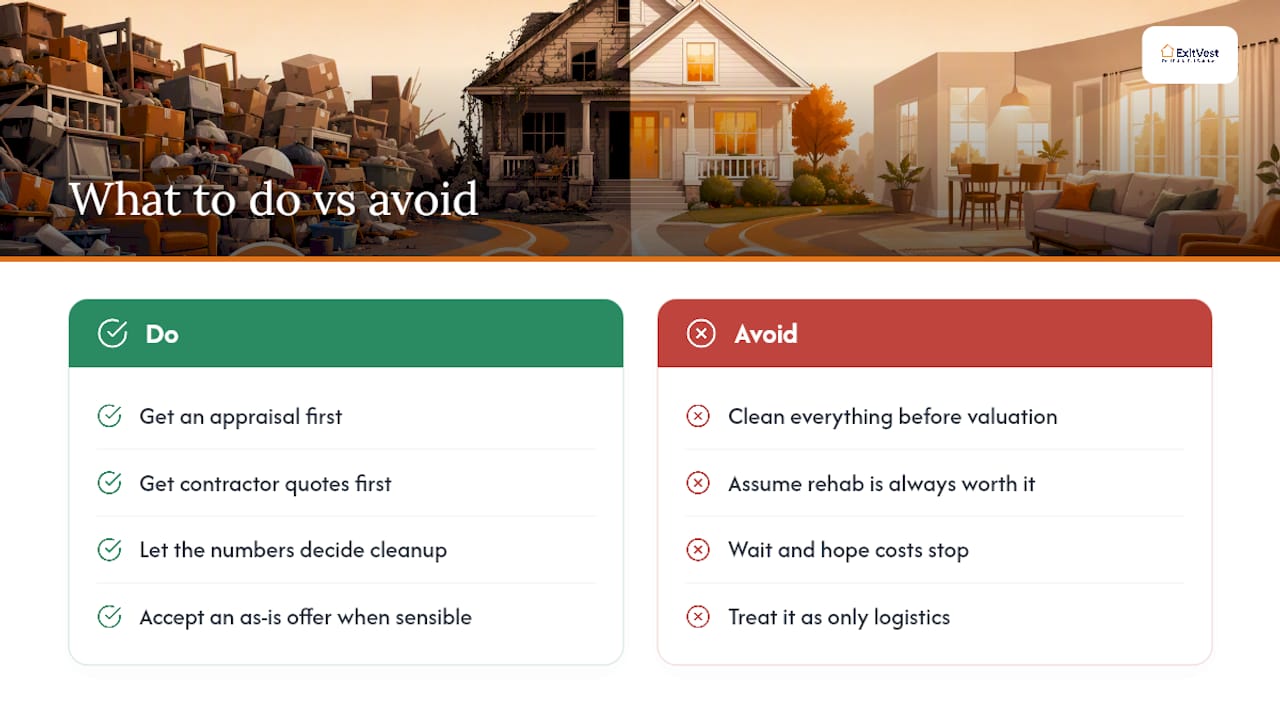
I'd push back on the instinct to clean everything before getting a valuation. Owners often spend weeks and real money tidying up a house before they even know if rehab makes financial sense. Get the appraisal first. Get contractor quotes first. Let the numbers tell you whether cleanup is worth the labor, instead of assuming it always is.
The other overlooked piece: waiting rarely helps. Carrying costs accumulate every month a hoarder house sits vacant, and the emotional toll of an unresolved property tends to grow right alongside the utility bills. Sometimes the financially smart move and the emotionally healthy move point in the exact same direction, toward getting an as-is offer and being done with it.
— Alek
Sources
- What is hoarding disorder? — American Psychiatric Association
- Hoarding Cleanup services — BioRecovery
- How To Sell A Hoarded House — U.S. News Real Estate