
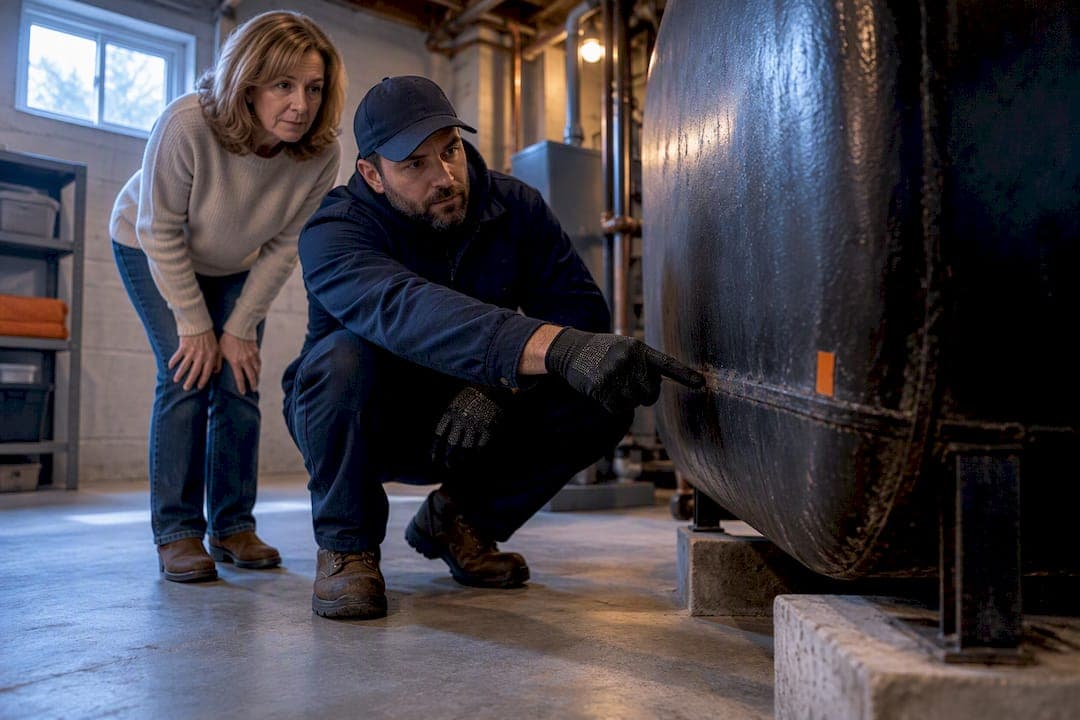
Yes, you can sell a New Jersey home with a present, abandoned, or removed oil tank, but you must disclose it on the Seller's Property Condition Disclosure. Buyers, lenders, or insurers may then ask for testing or removal before closing. Start by completing the disclosure honestly, ordering a tank sweep or professional assessment, and gathering any permits or remediation reports you already have.
TL;DR:
- Sellers who disclose a tank early and provide documentation are more likely to maintain negotiating power and avoid delays during closing.
- Removing or testing the tank before listing increases buyer confidence and reduces the likelihood of financing or insurance issues.
- Costs for tank removal, testing, or remediation vary widely, with a soil sweep costing a few hundred dollars and full removal potentially taking weeks or months depending on contamination.
- Lenders often require proof of proper closure or a No Further Action letter before approval, and insurers increasingly deny coverage without documented remediation.
- Selling as-is with full disclosure remains an option, especially when remediation costs outweigh the property's value or quick closing is necessary.
Table of Contents
- What New Jersey law requires on the disclosure form
- Your options before you list the property
- How buyers, lenders, and insurers usually respond
- Removing or abandoning a tank the right way
- What removal, testing, and closure actually cost
- Documents to gather before you list
- Reducing legal risk without slowing down your sale
- When a cash, as-is sale makes more sense than remediation
- How to request a cash offer for your NJ property
- Sources
- FAQ
What New Jersey law requires on the disclosure form
The NJDEP treats residential heating oil tanks as "unregulated" for normal operation, meaning the state does not force removal simply because a tank exists. That changes the moment a discharge, or leak, is discovered: the Unregulated Heating Oil Tank (UHOT) program then oversees remediation, and reporting becomes mandatory.
The Seller's Property Condition Disclosure form used across NJ REALTOR listings asks directly about tanks, closure certificates, and testing history. Answer these questions with what you actually know, and attach any test reports or closure paperwork you have on file.
A few practical notes for filling it out:
- Disclose a tank you know about even if it was supposedly removed decades ago and you have no paperwork.
- Note whether the tank is above ground, below ground, in active use, or abandoned in place.
- Mention any prior oil spills, odors, or staining, even minor ones, since these can matter for underwriting.
- Check with your municipality about permit history if you were not the one who removed or abandoned the tank.
Municipal Uniform Construction Code (UCC) permits may not be required for tanks that have been out of service for years, but the DEP recommends securing a permit for any removal work and notes that prior permit records can be requested from the municipality under the Open Public Records Act.
Your options before you list the property
Sellers generally choose from four paths, ranked here by how much certainty they buy you.
- Remove the tank and get testing done first. This is the strongest position with buyers and lenders because it eliminates the biggest unknown before anyone makes an offer.
- Order a pre-list assessment and share the results. A tank sweep or soil check done ahead of listing lets you set expectations instead of reacting to a buyer's last-minute demand.
- Sell as-is with full disclosure. Expect a lower offer or a buyer contingency around testing or removal, and be ready to negotiate a credit or escrow holdback.
- Weigh timeline against cost and certainty. If you need to close fast, as-is with a credit often beats a multi-week remediation delay; if you have time, removal first usually protects your sale price better.
How buyers, lenders, and insurers usually respond
Once a tank shows up on the disclosure or during inspection, expect the deal to slow down unless you have paperwork ready. Mortgage lenders often want clear documentation, or a No Further Action letter, before they will fund a loan on a property with tank history. Insurers can be even more cautious.
- Lenders frequently require proof of clean closure or an NFA before final approval.
- Insurers may decline coverage outright without documented remediation, a pattern the NJ Department of Banking and Insurance has flagged as increasingly common.
- Buyers commonly write in a tank-sweep contingency, an environmental inspection, or a request for seller-paid removal.
- Some buyers will accept an escrowed remediation fund instead of insisting the work happen before closing.
The best negotiating position is disclosing early and offering a credit or a pre-negotiated escrow rather than waiting for a buyer's attorney to raise it during review. Sellers who test or remove the tank before listing rarely lose leverage during negotiations, because there is nothing left to discover.
Removing or abandoning a tank the right way
Removal generally follows a set sequence: the contractor pumps out remaining oil, cleans the tank, excavates it, inspects the surrounding soil, disposes of the tank properly, and backfills the hole. Abandonment in place, an alternative some owners choose, involves filling the tank with an inert material such as foam, gravel, or sand under accepted engineering practices described in state guidance.
- Only NJDEP UHOT-certified individuals or firms should perform removal, testing, or abandonment work.
- Municipal demolition and construction permits fall under the Uniform Construction Code, and DCA Bulletin 95-1B outlines the removal and abandonment procedures inspectors and code officials follow.
- If a discharge turns up during excavation, remediation and NJDEP reporting begin immediately rather than waiting for a scheduled inspection.
Pro Tip: Ask any contractor for their UHOT certification number before signing a contract. Uncertified "closure" work is a common reason lenders and buyers reject paperwork later.
What removal, testing, and closure actually cost
Costs vary by tank size, soil condition, and whether contamination turns up but a few benchmarks help with planning. A tank sweep, which detects buried metal without excavation, typically runs in the low hundreds of dollars and is the cheapest way to confirm whether a tank exists at all. Removal costs swing widely depending on tank size and access, and soil testing or remediation costs can vary even more if contamination is found.
A clean tank sweep and removal with no contamination can often be completed within a few weeks, while remediation for a confirmed discharge can add weeks or months to your timeline.
When contamination is confirmed and later resolved, the NJDEP UHOT program issues a No Further Action letter to close the case. Getting one requires submitting remediation documents electronically, a rule in effect since January 2022, along with a $400 filing fee. If a removal finds no contamination at all, there is no remediation case and therefore no NFA to obtain, which is not itself a red flag as long as you keep the contractor's clean-findings report.

Documents to gather before you list
Buyers, agents, and lenders all move faster when you hand them a complete packet instead of making them chase paperwork mid-contract.
- A fully completed Seller's Property Condition Disclosure showing everything you know about the tank.
- Copies of any removal or closure permits, along with a sketch of the tank's former or current location.
- UHOT remediation reports or the NFA letter, if a case was ever opened and closed.
- Contractor certifications and invoices proving UHOT-certified work was performed.
- Tank-sweep results and any soil-testing data you have on hand.
Compile all of this into a single disclosure packet before your listing agent shows the property. Handing it over up front, rather than producing it piecemeal during attorney review, keeps buyers from feeling like they are uncovering problems on their own.
Reducing legal risk without slowing down your sale
"I didn't know the tank was there" is not a defense that holds up well if a buyer later finds contamination and you had reason to know otherwise. Disclose every tank you are aware of, along with whatever documentation exists, even if that documentation is incomplete.
Pre-list testing or removal avoids the scramble of emergency remediation negotiated under contract deadline pressure, when your leverage is lowest. If removal has to wait, an escrow holdback or seller credit calculated against a contractor estimate keeps the deal moving without forcing you to finish the work before closing.
Pro Tip: If a buyer's attorney raises a disclosure dispute or the remediation picture gets complicated, a real estate attorney experienced in NJ environmental issues is worth the consultation fee before you sign anything new.
When a cash, as-is sale makes more sense than remediation

Not every seller has the time, cash, or patience to run a removal and testing process before listing. For homeowners facing foreclosure timelines, an inherited property nobody wants to manage, or a tank situation with remediation costs that outweigh the home's value, an as-is sale to a direct buyer can be the more realistic path.
Some companies buy houses, land, and small apartment buildings directly from owners for cash, in as-is condition, without requiring the seller to complete removal or remediation first. That includes situations involving liens, code violations, or properties that have already fallen out of a traditional sale once. Closing timelines can be flexible and set around the seller's situation rather than a lender's underwriting calendar, which can be important for anyone racing a foreclosure date or carrying a property they can no longer afford to hold.
— Alek
How to request a cash offer for your NJ property
If remediation costs, tank paperwork, or a tight timeline are making a traditional sale feel unworkable, a direct cash sale is worth comparing before you commit to months of listing and negotiation.
Some companies' processes may start with a property review, followed by a cash offer explained clearly, and a closing date chosen by the seller rather than one dictated by a buyer's mortgage approval. There may be no agent commission, no repair list, and no requirement to remove or test the tank before a direct buyer makes an offer. New Jersey sellers can start the process through the ExitVest New Jersey cash-for-house page, or review the company's general process before reaching out.
This article is general information, not a substitute for advice from a qualified lawyer. Consult a qualified legal professional about your own circumstances before acting on anything here.
Sources
- NJDEP | Contaminated Site Remediation & Redevelopment Program | Unregulated FAQs
- NJDEP | Unregulated Heating Oil Tank Program | No Further Action Letter
FAQ
Can you sell a house with an oil tank in NJ?
Yes, New Jersey law does not prohibit selling a home with a present, abandoned, or removed oil tank. You must disclose the tank on the Seller's Property Condition Disclosure, and buyers, lenders, or insurers may then require testing or removal as a condition of the sale.
Can I sell the heating oil left inside my tank?
There is no established retail process for selling small leftover quantities of heating oil from a residential tank before a sale. Most sellers either use the remaining oil, leave it for the removal contractor to handle during pump-out, or disclose the amount remaining as part of the tank's condition.
Do oil tanks have to be removed before selling in NJ?
No, NJDEP treats residential heating oil tanks as unregulated and does not mandate removal unless a discharge is found. Removal becomes a practical requirement only when a buyer, lender, or insurer makes it a condition of financing or coverage.
What happens if I don't disclose an oil tank when selling?
Failing to disclose a known tank can expose you to legal liability if contamination is later discovered, since the Seller's Property Condition Disclosure specifically asks about tanks and related environmental conditions. Buyers who uncover an undisclosed tank after closing can pursue claims against the seller, so accurate disclosure protects you as much as it protects the buyer.
How much does an NJDEP No Further Action letter cost?
The NJDEP UHOT program charges a $400 filing fee for a No Further Action letter, and submissions must be made electronically. An NFA is only issued when a remediation case has been opened, so a clean removal with no contamination does not require one.