
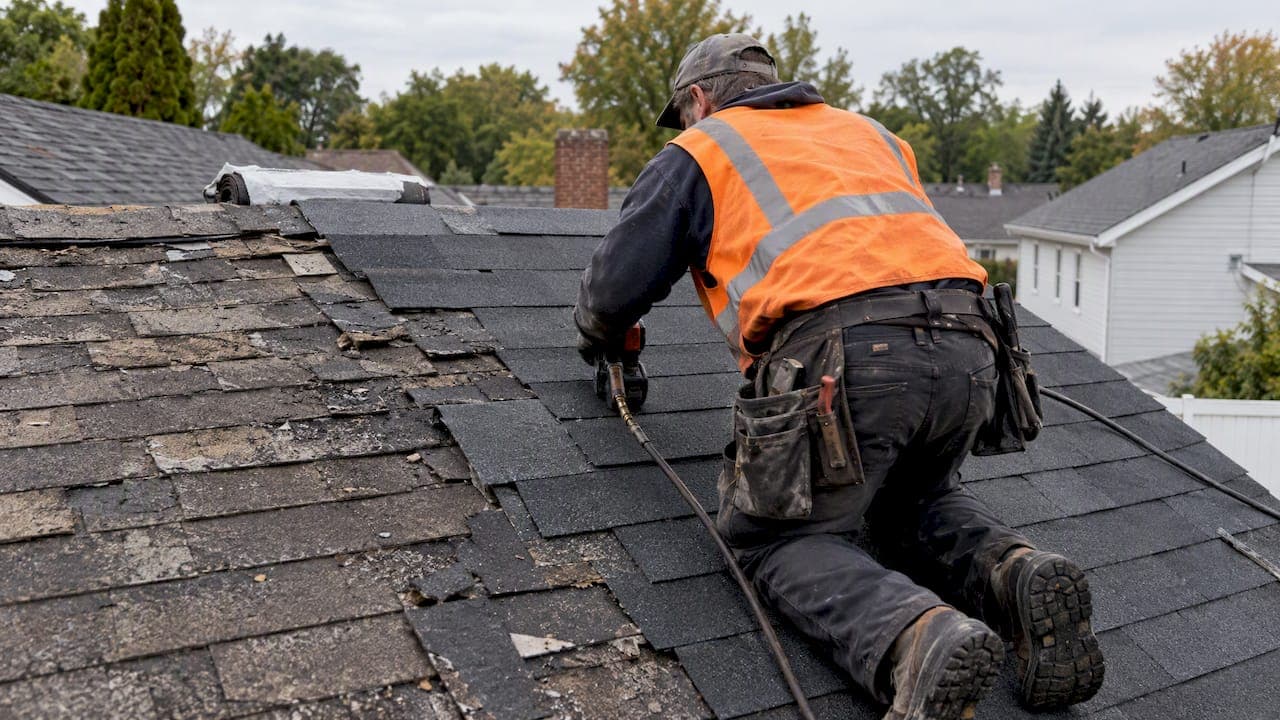
If you need speed or want to avoid major out-of-pocket repairs, selling as-is usually makes more sense; if your roof is near the end of its life and your local market reliably pays for upgrades, replacing it first can be worth the cost. We buy properties in as-is condition for cash, offering another option to consider when weighing these two paths.
TL;DR:
- An asphalt replacement typically costs $8,000 to $25,000; a $20,000 roof returning $13,600 leaves $6,400 unrecovered before disruption or other repairs.
- Roofs under roughly 10 to 15 years old with localized damage are usually repair candidates; widespread leaks, sagging, or missing shingles favor replacement.
- A cash sale can close in one to three weeks, while replacement also requires contractor scheduling, permits, inspections, and suitable weather.
- A failing roof can violate FHA or VA property requirements, excluding financed buyers and shrinking the pool; disclose defects and document repair estimates before listing.
- Get a written contractor bid and inspection report, then compare the roof cost with a cash offer before choosing whether to repair or sell.
Table of Contents
- Comparing the Cost, Time, and Payoff of Replacing vs Selling
- What a New Roof Costs and What You Actually Get Back
- Is Your Roof a Repair or a Replacement?
- How Long Replacement Takes Compared to Selling
- Selling As-Is Without Losing Negotiating Power
- A Seven-Question Checklist for Your Decision
- When Selling As-Is Actually Makes Sense
- Request a Cash Offer for Your Property As-Is
- FAQ
- Sources
Comparing the Cost, Time, and Payoff of Replacing vs Selling
The right choice depends on what you value most: maximum sale price, speed, or minimum hassle. A new roof costs real money upfront and takes real time, while selling as-is trades some price for a faster, simpler exit.
Replacing an asphalt shingle roof typically runs $8,000 to $25,000, and most jobs recoup a majority of that cost at resale, according to Cost vs. Value data. Selling as-is skips that spending entirely but usually means a lower offer or price negotiation once a buyer's inspector finds the same issues.
- Replacement: higher upfront cost, longer timeline, typically stronger buyer appeal once listed.
- Selling as-is: no repair spending, faster closing, but buyers often negotiate a price reduction.
- Cash sale to an investor: no repairs, no listing prep, and a closing timeline measured in days or weeks rather than months.
Net proceeds matter more than gross price. A $20,000 roof that returns $13,600 in resale value, per Cost vs. Value, still costs you $6,400 out of pocket before you factor in the weeks of disruption and the risk that a buyer's inspection turns up something else. Selling as-is converts that unknown into a known, often faster, number.
What a New Roof Costs and What You Actually Get Back
The national cost range for an asphalt shingle roof replacement runs from about $8,000 to $25,000, with an average near $10,000, according to Family Handyman. Metal roofing costs considerably more and does not return as much at resale.

**Cost vs. Value](https://www.costvsvalue.com/)). That gap matters: the cheaper, more common material often pays back a larger share of its cost than the premium option.
Here's a simple way to run the numbers before you commit:
- Get a written contractor bid for full replacement.
- Multiply the estimated resale value by the recoup percentage for your material type.
- Subtract the bid cost from that recouped value to see your real net cost.
- Compare that net cost against the price gap a cash buyer or as-is listing would likely absorb.
If the math leaves you underwater, or close to it, selling as-is removes the gamble entirely.
Is Your Roof a Repair or a Replacement?
Most roofs give clear warning signs before they fail outright, and a quick walk around the property tells you a lot before you call anyone.
- Curling or cupped shingles signal the roofing material is aging out and losing its seal against wind and water.
- Bald patches with granules missing mean the shingle's protective layer is gone and leaks are a matter of time.
- Sagging rooflines point to structural or decking problems that repair alone won't fix.
- Interior water stains or active leaks confirm the roof has already failed somewhere, even if the cause isn't obvious from the ground.
- Widespread missing shingles after a storm often triggers an insurance claim and, in some cases, a full-slope or full-roof replacement requirement.
Age matters too. Family Handyman notes that a roof under roughly 10 to 15 years old with limited, localized damage is usually a repair candidate, while one approaching or past that age with widespread issues tips toward replacement. A one-page roof evaluation checklist can help you document specific trouble spots before you bring in a contractor.
Pro Tip: Ask any contractor for a written scope of work and dated photos of the damage, not just a verbal estimate, so you have documentation if a buyer's inspector later disputes the roof's condition.
How Long Replacement Takes Compared to Selling
A roof replacement itself often takes just a day or two of actual labor on a typical single-family home, but the full timeline is longer once you add contractor scheduling, permitting, and weather delays, per Cost vs. Value industry data.
- Contractor lead time: scheduling alone can take one to several weeks depending on your area and season.
- Permit and inspection delays: local permitting requirements and inspection scheduling can add days or weeks before work can even start.
- Weather windows: shingle work generally needs dry, moderate conditions, which can push a job back further.
- Cash sale alternative: closing can happen in as little as one to three weeks when you sell directly to a cash buyer, since there's no repair work, financing contingency, or buyer-driven inspection repair list to clear.
If your timeline is tight, that gap between a multi-week replacement project and a one-to-three-week cash closing is usually the deciding factor.
Selling As-Is Without Losing Negotiating Power
You don't have to replace the roof to sell well. The key is controlling the information buyers see, rather than letting a surprise inspection finding set the terms.
- List with repair credits: you keep the traditional buyer pool but expect a price concession once the roof shows up on an inspection report.
- List as-is with disclosure: providing your own inspection report and a contractor repair estimate up front tends to preserve your negotiating position, according to Redfin, because buyers aren't discovering the issue cold.
- Sell directly to a cash buyer: no listing prep, no staging, no buyer financing contingency tied to an FHA or VA inspection.
Roof condition can also affect financing. FHA and VA loans follow minimum property requirements that include roof covering standards, referenced in HUD's property requirement guidance, which means a failing roof can disqualify some buyers from financing altogether and shrink your buyer pool before negotiations even start. Our guide to selling a home without repairs walks through how disclosure and documentation work together to limit last-minute renegotiation.
A Seven-Question Checklist for Your Decision
Run through these questions and count how many point toward each path.
- Do you need to close within 60 days or less?
- Is your available cash better spent elsewhere than on a roof?
- Does your roof show multiple failure signs (sagging, leaks, widespread missing shingles)?
- Are there other major repairs needed beyond the roof (foundation, HVAC, plumbing)?
- Does your local market reliably pay close to full replacement cost at resale?
- Would a problem tenant, probate process, or title issue complicate a traditional sale?
- Are you comfortable with buyer negotiations and possible repair credits?
Four or more "yes" answers to questions 1, 2, 3, 4, or 6 point toward selling as-is or to a cash buyer. Several "yes" answers to questions 5 and 7, with a newer roof and no other major issues, point toward replacing first. For a closer look at the math behind that trade-off, our as-is versus repairs analysis breaks down when a discount for selling as-is beats the repair route. Next step either way: get a contractor bid and a written inspection report, then request a cash offer to compare the two numbers side by side.
When Selling As-Is Actually Makes Sense

Sellers dealing with an inherited property, a looming foreclosure deadline, a problem tenant, or a roof that's just one of several deferred repairs rarely come out ahead by sinking more money into the house first. The math in the checklist above tends to favor speed and certainty over a marginal price bump that a slow repair-and-list process might deliver.
We purchase properties directly, in as-is condition, with no commissions or agent fees, and maintain confidentiality in every conversation. Our how-it-works page walks through the process in detail. A practical move before deciding: get one contractor bid for the roof and one cash offer, then compare the two numbers directly, the way our fixer-upper case walkthrough lays out for properties with significant repair needs.
— Alek
Request a Cash Offer for Your Property As-Is
We make selling a property with roof problems, or any other repair need, straightforward: you get a cash offer, skip the contractor bids and listing prep, and pick a closing date that works for your situation.
- No commissions, no agent fees, and no repairs required before closing.
- Flexible closing timelines built around your schedule, not a buyer's financing approval.
- Direct communication with decision-makers rather than a chain of agents and underwriters.
If a roof replacement doesn't pencil out, or you just want to compare your options, get a cash offer today and see where the numbers land.
FAQ
Is it worth replacing a roof before selling?
It depends on your roof's age, condition, and local resale recoup rates. Cost vs. Value data shows asphalt shingle replacements recoup a larger share of their cost than metal roofs, so replacement tends to pay off best on an older asphalt roof in a market where buyers expect move-in-ready homes.
What is the 25% rule for roofing?
Exact thresholds vary by insurer, local code, and roofing material, so a contractor or inspector should confirm how it applies to your specific roof.
Is $30,000 too much for a roof?
It depends on the material and size of the roof. Cost vs. Value's current example for an asphalt shingle replacement lists a job cost around $31,871, which falls within the higher end of typical asphalt pricing, while Family Handyman puts the broader national range at $8,000 to $25,000, so $30,000 is near or above the typical range for an asphalt job but can reflect larger homes or premium materials.
How does roof condition affect my home's appraisal?
A failing or aging roof can lower an appraised value and, under FHA or VA financing, may violate minimum property requirements tied to roof covering, as referenced in HUD's property guidance. That can limit your buyer pool to cash buyers or conventional loans until the issue is addressed or priced into the sale.
Should I get a cash offer or a contractor bid first?
Getting both gives you the clearest picture. A contractor bid tells you the real replacement cost, while a cash offer shows you what a buyer will pay without any repairs, letting you compare net proceeds directly before deciding which path fits your timeline and budget.
Sources
- Cost vs. Value
- Should I Replace My Roof? Here’s What to Consider
- Should you replace your roof or sell as-is?