

In most U.S. cases, pre-foreclosure is not the end of the road. It's a window, usually a matter of weeks, where you still control the outcome. The three moves that matter most right now: call your mortgage servicer today, pull together your financial paperwork, and get a HUD-approved housing counselor on the phone. From there, you're choosing among loss mitigation, a sale, or bankruptcy as a last resort.
TL;DR:
- Homeowners should act quickly by calling their servicer, gathering documentation, and consulting a HUD-approved counselor within the first few days to preserve options.
- Loss-mitigation programs vary by loan type and state but include reinstatement, repayment plans, forbearance, deferment, and modifications, each with long-term costs.
- Selling the house outright through a traditional sale, short sale, deed in lieu, or cash buyer can be faster and more certain than waiting for a loan modification or court process.
- Pre-foreclosure typically begins after three missed payments, with timelines ranging from 60 days in nonjudicial states to over a year in judicial states; acting early is crucial.
- Bankruptcy can temporarily halt foreclosure but does not eliminate the debt and involves legal complexities; it should only be considered after consulting a qualified attorney.
Table of Contents
- Immediate Checklist: 7 Steps to Take in the First 72 Hours
- What Loss-Mitigation Options Are Available?
- Should You Sell the House Instead?
- How Long Does Pre-Foreclosure Usually Last?
- Can Bankruptcy Stop a Foreclosure?
- How Do You Spot a Foreclosure Scam?
- What Role Does Credit Counseling Play?
- How Do You Prepare a House for a Fast Sale?
- When Does a Fast Cash Sale Actually Make Sense?
- Getting a Cash Offer From Exitvest
- Where to Verify These Options Yourself
- Sources
Immediate Checklist: 7 Steps to Take in the First 72 Hours
Every day you wait shrinks your options. Here's the order that actually protects you, based on how servicers and HUD say the process works.
- Open every piece of mail from your lender. The first formal notice often starts a clock you can't see or reset later.
- Call your servicer the same day. Write down the representative's name, the date, and every option they mention.
- Pull your paperwork together: recent mortgage statements, a full payment history, pay stubs, bank statements, and a hardship letter explaining what happened.
- Contact a HUD-approved housing counselor. These sessions are free or low-cost, and HUD maintains a directory and hotline for exactly this situation.
- Call local legal aid if your notice mentions a court date or you're unsure of your rights.
- Cut discretionary spending now and list any sellable assets that could cover a short-term gap.
- Start exploring selling routes early if you don't see a realistic path to resuming payments.
Skipping the paper trail is the most common mistake homeowners make. Servicers document everything on their end; you need a matching record on yours.
- Never sign a deed transfer without independent legal review.
- Never pay an upfront fee to a company promising to "stop foreclosure guaranteed."
Pro Tip: Keep a single folder, physical or digital, with dated notes from every call. If your case ever goes to a supervisor or a HUD counselor, that timeline becomes your strongest piece of leverage.
What Loss-Mitigation Options Are Available?
Loss mitigation is the umbrella term for the tools your servicer can offer instead of foreclosing. The CFPB confirms that timing and eligibility shift depending on your loan type, whether it's FHA, VA, or conventional, and which state you live in.
- Reinstatement means paying the full past due amount in one lump sum to bring the loan current. It fits homeowners who had a temporary setback and now have the cash, maybe from a bonus, a settlement, or a sold asset.
- Repayment plan spreads the missed amount across several months on top of your regular payment. Servicers usually want proof of stable income before approving this.
- Forbearance pauses or reduces payments for a set period, typically tied to documented hardship like job loss or medical bills. The missed amount doesn't disappear; it gets added back through reinstatement, a repayment plan, or a modification once the forbearance ends.
- Deferment moves the unpaid balance to the end of the loan term, sometimes as a non-interest-bearing balloon. It's common after a completed forbearance period.
- Loan modification permanently changes the loan's terms, interest rate, term length, or sometimes principal, to make the payment affordable long term.
Each option trades short-term relief for a long-term cost. Forbearance buys breathing room but can extend your loan or increase what you owe overall. A modification lowers your monthly payment but might add years to your mortgage.
FHA borrowers get an added layer of protection: servicers must complete a full loss-mitigation review before initiating foreclosure, and the FHA Resource Center can walk you through program-specific help. A licensed FHA lender can also clarify what your specific loan allows.
When you call your servicer, lead with a hardship letter, proof of income, and a proposed repayment structure. Applications that look realistic and complete get approved faster, and even an incomplete application can buy time while other options develop.
Should You Sell the House Instead?
Selling stops the foreclosure clock entirely once the loan is paid off, and it's often faster than fighting for a modification. Four paths exist, each with a different speed and payout.
- Traditional sale: works best when you have enough equity to pay off the loan and closing costs after a sale. Price it to move fast, since a traditional listing can take several weeks to a couple of months or more to close even with an accepted offer.
- Short sale: the lender agrees to accept less than what's owed. This requires servicer approval, which can take weeks, and may carry tax consequences or deficiency judgment risk depending on your state's laws.
- Deed in lieu of foreclosure: you voluntarily hand over the title instead of going through a foreclosure sale. Some servicers offer "cash for keys" to help with moving costs, but this still requires servicer sign-off and only makes sense once you've accepted you won't keep the home.
- Cash sale to a direct buyer: a company like Exitvest can close in days rather than months, using cash to pay off the loan balance directly. You'll likely net less than a full-price traditional sale, but you trade dollars for certainty and speed.
Pro Tip: Before choosing a path, run the math on four numbers: how much equity you actually have, how many days remain before a scheduled sale, what repairs would cost to list traditionally, and whether your servicer is even willing to cooperate. That checklist alone eliminates most of the guesswork.
How Long Does Pre-Foreclosure Usually Last?
Pre-foreclosure typically starts after three missed payments, around 90 days, and a formal notice usually follows before any court or auction action begins. From there, timelines split sharply depending on where you live.
- Judicial foreclosure states (New York, Florida, Illinois, and others) require the lender to file suit and get a court's approval, which can stretch the process past a year in some counties.
- Nonjudicial foreclosure states (Texas, Georgia, California among them) allow a faster, out-of-court process. Some cases move from default to auction in as little as 60 to 90 days after the formal notice.
- Confirm your own state's rules directly. Experian notes that state procedures vary widely, and that difference changes both your court exposure and how much time you actually have.
The takeaway is simple: don't wait for a specific date on a calendar to start acting. In a nonjudicial state, the entire window can close faster than you'd expect.
Can Bankruptcy Stop a Foreclosure?
Filing bankruptcy triggers an automatic stay, a federal order that immediately pauses most collection and foreclosure activity, including a scheduled sale. It doesn't erase the debt, and it doesn't stop a servicer from resuming action once the case resolves or the stay is lifted.
- Chapter 7 discharges most unsecured debt but doesn't restructure your mortgage. You'll typically still need to pay any overdue mortgage amount quickly, or the servicer can ask the court to lift the stay and proceed.
- Chapter 13 sets up a court-supervised repayment plan over three to five years, letting you catch up on missed payments while keeping the home, provided you can afford the new combined payment.
- Both options leave a mark on your credit report for years and involve real legal complexity most homeowners underestimate.
- Talk to a qualified bankruptcy attorney before filing, and loop in your HUD counselor so bankruptcy timing doesn't collide with a loss-mitigation application already in progress.
Bankruptcy buys time. It rarely solves the underlying affordability problem on its own.
How Do You Spot a Foreclosure Scam?
Predatory companies target homeowners in exactly this situation, and the FTC has documented the pattern for years.
- Watch for upfront fees. Legitimate HUD-approved counseling is free or low-cost; anyone demanding payment before helping is a red flag.
- Distrust guarantees. No company can promise to "stop foreclosure instantly." That's a sales pitch, not a legal fact.
- Never sign over your deed on the spot. A request to transfer title as part of a "rescue" plan is one of the oldest scams in this space.
- Verify credentials directly. Call HUD's counselor directory or Usa yourself rather than trusting a name a caller gives you.
- Report suspicious offers to the FTC, your state Attorney General, or the CFPB's complaint portal, and keep every document and email in writing.
What Role Does Credit Counseling Play?
A HUD-approved counseling session usually isn't just a referral service. It's a structured review of your entire financial picture, income, debts, and realistic monthly capacity, done by someone trained to translate that into language your servicer will actually respond to.
Counselors help in three concrete ways. First, they know which loss-mitigation programs your specific loan type qualifies for, including nuances between FHA, VA, and conventional loans that a homeowner calling alone might miss. Second, they often help draft the hardship letter and income documentation servicers expect, which matters because incomplete applications are one of the top reasons loss-mitigation requests get denied or delayed. Third, many counselors can speak directly with your servicer on your behalf, which changes how a case gets handled internally. Servicers tend to treat borrowers working with a certified counselor as more likely to follow through, according to HUD.
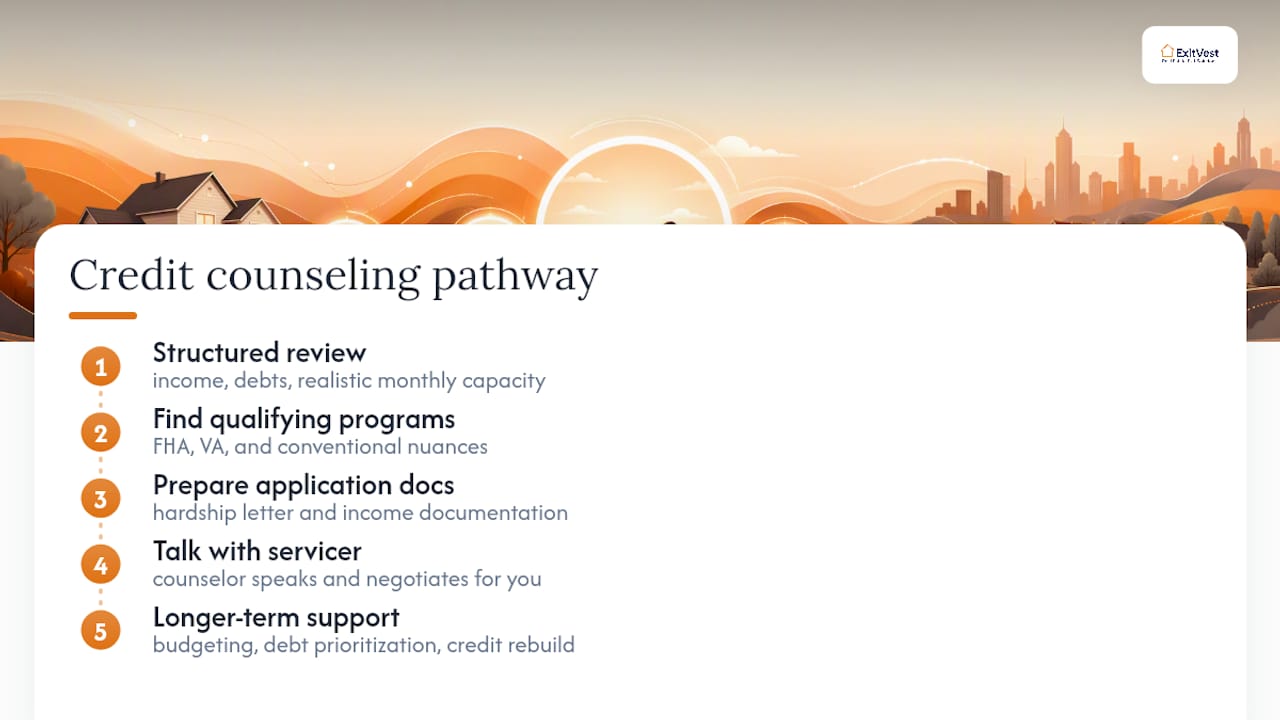
Beyond the immediate crisis, these sessions often include a broader financial education component: budgeting review, debt prioritization, and sometimes a longer-term plan for rebuilding credit after the dust settles. That second part matters more than people expect. A short sale or deed in lieu still dents your credit report, and understanding how to rebuild afterward is part of the same conversation. If you're weighing whether counseling is worth the hour it takes, the answer is almost always yes, and it costs you nothing to find out.
How Do You Prepare a House for a Fast Sale?
If selling looks like your best path, preparation determines how much cash actually reaches your pocket at closing. You don't need a full renovation. You need the right fixes in the right order.
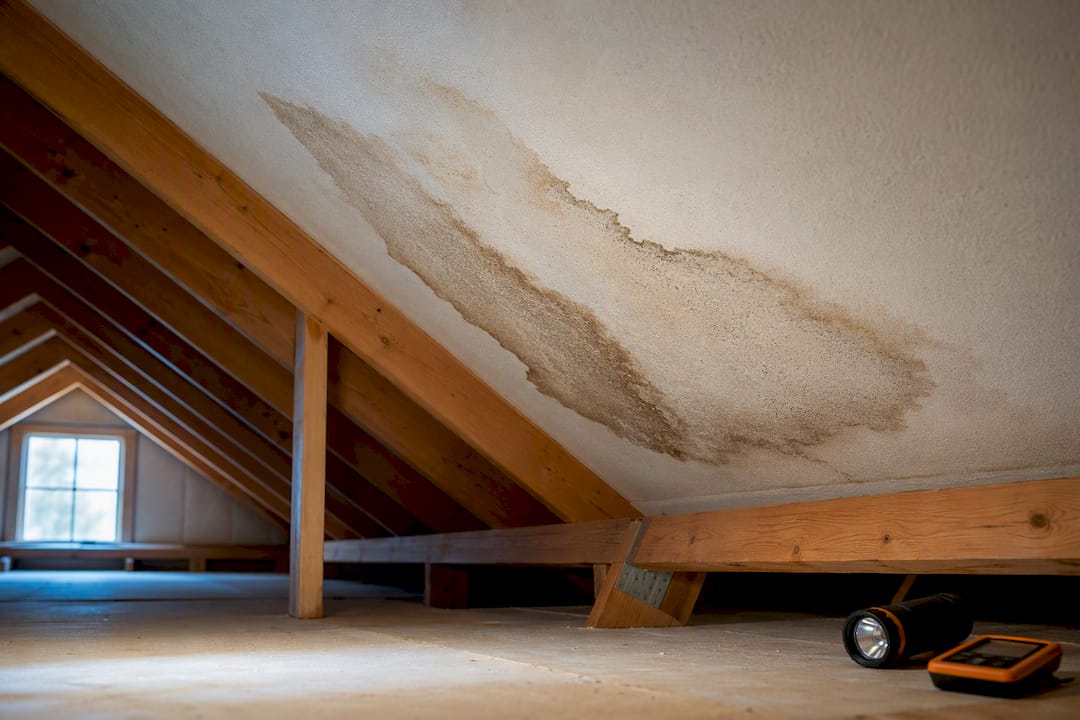
Start with anything that scares off buyers or drags down an appraisal: broken HVAC systems, roof leaks, or visible water damage. These are the items that kill deals during inspection, not cosmetic flaws. Next, handle a deep clean and declutter, since both cost almost nothing and consistently move the needle on first impressions during showings or even quick cash-buyer walkthroughs.
Gather your paperwork early: the payoff statement from your servicer, any liens or judgments attached to the property, HOA documents if applicable, and a copy of your most recent tax assessment. Buyers and their lenders move faster when this is ready on day one instead of requested midway through a deal.
If time is genuinely short, skip the renovation math entirely. A cash buyer purchasing as-is doesn't require repairs, inspections, or staging, because the offer already accounts for the property's condition. That trade-off, lower net proceeds for zero repair spending and a fast close, is often the right call when the alternative is losing the house at auction.
When Does a Fast Cash Sale Actually Make Sense?
A cash sale isn't the right move for everyone in pre-foreclosure, and pretending otherwise would be dishonest. It's the right move when you've run out of time, when the repairs needed to list traditionally cost more than you can front, when there's a problem tenant complicating a normal sale, or when your equity position simply doesn't justify months of marketing and showings.
A trustworthy cash buyer should never ask for money upfront, should give you a clear written offer with no hidden conditions, and should be able to spell out your closing date before you sign anything. If a buyer pressures you to decide immediately or won't put terms in writing, walk away.
Compare at least one other offer before committing, confirm the buyer's business licensing, and if you're still unsure, run the numbers past a HUD-approved counselor first. A cash sale is rarely the highest-dollar outcome, but when time and repairs are working against you, it can be the most reliable way to stop foreclosure before it stops you.
— Alek
Getting a Cash Offer From Exitvest
A direct alternative to a traditional listing when foreclosure is bearing down and you don't have months to spare is available. Instead of staging showings, waiting on buyer financing, or gambling on a short sale getting lender approval in time, some companies offer a cash offer on your timeline, closed in days rather than the 30 to 90 days a conventional sale usually takes.

The process starts with a quick property review, no inspections, no repairs, no agent commissions. You'll want your payoff statement and any lien information ready, since that determines how fast a company can move to close. There are no upfront fees at any point, and the offer you receive is the number you close on. The honest trade-off is the same one covered above: a cash price will typically run below what a fully marketed traditional sale might fetch, but it removes the risk of running out of time before the auction date arrives.
If your servicer's timeline is closing in, see how the process works or check your options to stop foreclosure now to get a firm offer before your next deadline hits.
Where to Verify These Options Yourself
Don't take any single source's word for your legal rights or program eligibility, including this one. These government resources are free and built for exactly this situation.
- Hud lists official loss-mitigation options and its national directory of approved housing counselors.
- The CFPB breaks down servicer obligations, application timing, and protections tied to specific loan types.
- Usa explains how to reach your lender, find local counseling, and check Homeowner Assistance Fund availability in your state.
- The FTC tracks foreclosure-relief scams and tells you exactly where to report a suspicious company.
This article is general information, not a substitute for advice from a qualified financial advisor. Consult a qualified financial professional about your own circumstances before acting on anything here.