

Selling an occupied property in Missouri requires specific legal steps: tenant notices, lease continuity, and security deposit transfers are all mandatory parts of the process. The industry term for this transaction is a "tenant-occupied property sale," and Missouri landlord-tenant law governs every stage. Whether you're dealing with foreclosure, a non-paying tenant, or an inherited rental, the rules apply equally. Skip any one of these steps and you risk a failed closing, legal liability, or a tenant dispute that drags on for months.
What are the legal notice requirements to sell occupied property in Missouri?
Missouri law sets firm notice periods that sellers must follow before terminating a tenancy. Month-to-month tenancies require 30 days' written notice, while year-to-year leases require 60 days' notice before the lease end date. These are not suggestions. They are enforceable minimums, and tenants can use them to block or delay a sale if a seller skips them.
Missouri does not recognize a sale-driven exception to these rules. A property sale does not automatically terminate a lease or a tenancy. Sellers must follow general landlord-tenant notice law the same way they would for any other lease termination. This surprises many first-time sellers who assume a signed purchase agreement gives them the right to clear the property.
Three types of written notices apply during a typical occupied property sale in Missouri:
- Intent-to-sell notice: Informs tenants that the property is being listed or sold. Not always legally required, but strongly recommended for maintaining tenant cooperation.
- Showing notice: Must be provided before each entry for showings, in written form, conforming to Missouri state standards. This protects tenant privacy rights and keeps the seller legally covered.
- Termination notice: Required when the seller wants the tenant to vacate before or at closing. Must meet the 30-day or 60-day minimum depending on lease type.
All notices must be in writing. Verbal notice does not satisfy Missouri's landlord-tenant requirements and creates immediate legal exposure.
Pro Tip: Send all notices by certified mail and keep the return receipt. This creates a timestamped paper trail that protects you if a tenant later claims they never received notice.
How does lease continuity work when a Missouri property with tenants is sold?
Existing leases survive the sale and transfer automatically to the new owner. Leases remain valid and bind the new owner to all original terms, including rent amount, lease end date, and any agreed-upon conditions. The buyer steps into the seller's role as landlord the moment closing occurs. This is not optional and cannot be waived in the purchase contract.

Sellers who do not disclose existing leases to buyers face serious legal risk. Full disclosure of tenant and lease information is legally required during the sale marketing process. A buyer who discovers an undisclosed lease after closing can pursue rescission or damages. Transparency is not just ethical here. It is a legal obligation.
Four steps protect both seller and buyer during a lease transfer:
- Gather all lease documents. Collect the original signed lease, any amendments, and any side agreements with the tenant. Buyers need the complete picture.
- Request an estoppel certificate. Estoppel certificates document current rent, security deposits, and lease status, protecting sellers and buyers from post-closing disputes. The tenant signs this document confirming the lease terms are accurate.
- Disclose all lease terms in the purchase agreement. Include the lease end date, monthly rent, deposit amount, and any tenant rights or concessions.
- Transfer the landlord role formally at closing. The closing statement should reflect the lease assignment, and the buyer should receive all original lease documents.
Pro Tip: Sellers often overlook estoppel certificates until a buyer's attorney requests one late in the deal. Request it from your tenant early. A tenant who refuses to sign one is a red flag worth investigating before closing.
What are the correct procedures for handling tenant security deposits during a sale?
Security deposits do not stay with the seller after closing. Sellers must transfer tenant security deposits to the new owner and provide tenants a written deposit-transfer letter naming the buyer as the new deposit holder. This step is non-negotiable under Missouri landlord-tenant law.
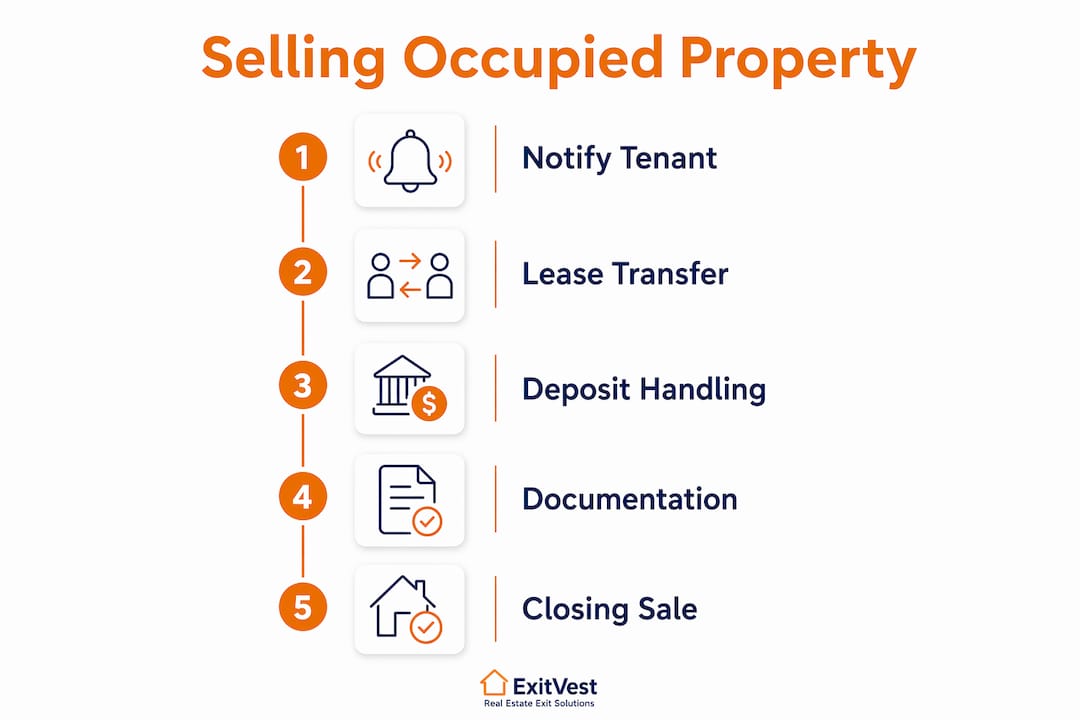
The mechanics are straightforward. The seller credits the deposit amount to the buyer on the closing statement. The buyer receives the funds and becomes responsible for returning the deposit at the end of the tenancy. The tenant receives written notice of this transfer, including the new owner's name and contact information.
The consequences of skipping this step are severe:
- Seller remains liable for deposit return. If the seller fails to provide a written deposit-transfer notice naming the new owner, the seller stays liable for the deposit even after the property changes hands.
- Tenant can sue the original seller. Missouri tenants have the right to pursue the original landlord for deposit return if proper transfer procedures were not followed.
- Closing disputes can arise. Buyers who discover deposits were not properly transferred can delay or cancel closing.
Failing to transfer a security deposit in writing is one of the most common and costly mistakes Missouri sellers make. The fix takes ten minutes. The lawsuit takes months.
Document everything. Keep copies of the transfer letter, the closing statement line item, and any tenant acknowledgment. This paper trail is your protection if a dispute arises after the sale.
What practical steps help you sell a tenant-occupied home effectively?
Tenant cooperation is the single biggest variable in how smoothly a showing process goes. Offering small incentives for property showings can significantly improve outcomes. A gift card, a cleaning service, or a one-time rent reduction in exchange for keeping the property tidy during the listing period costs little and pays off in buyer impressions.
Here is a practical sequence for managing the showing process with tenants in place:
- Communicate early and honestly. Tell tenants about the sale before the listing goes live. Tenants who feel blindsided become uncooperative. Tenants who feel respected often help.
- Provide proper written showing notices. Every showing requires advance written notice per Missouri law. Build this into your listing schedule so agents do not book last-minute visits.
- Set a showing schedule that works for the tenant. Limiting showings to specific days or time windows reduces friction and keeps the tenant on your side.
- Market to investors as well as owner-occupants. Buyers who plan to keep tenants in place are far easier to close with than buyers who need vacant possession. Listing the property with its rental income data attracts this audience directly.
- Address non-paying tenants before listing. If you're dealing with a non-paying tenant, review your legal options for a non-paying tenant sale before putting the property on the market. Listing with an active non-payment dispute complicates buyer due diligence and can kill deals.
Pro Tip: If your tenant is cooperative, consider offering a "cash for keys" agreement. The tenant agrees to vacate by a set date in exchange for a payment. This is faster and cheaper than eviction and leaves the property vacant for a cleaner sale.
What are common challenges when selling an occupied property and how do you solve them?
The most common problems in an occupied property sale in Missouri fall into four categories:
- Tenant refuses to vacate after closing. The new owner must honor the existing lease. Eviction before lease end is only legally justified for cause, not simply because the property was sold. Sellers cannot promise buyers a vacant property unless the lease has legally ended.
- Improper or late notices. Without proper written tenant notices, sellers risk legal delays, tenant disputes, and failed closings. A notice served one day late restarts the clock.
- Foreclosure complications. Tenants with bona fide leases in foreclosure situations have federal protections. The Protecting Tenants at Foreclosure Act (PTFA) requires at least 90 days' notice before eviction post-foreclosure and protects tenant occupancy through lease expiration. This federal law overrides any state-level shortcut a seller might attempt.
- Lease disputes at closing. Buyers who discover lease terms differ from what was disclosed can walk away or demand price adjustments. An estoppel certificate signed by the tenant eliminates this risk.
If you're selling a rental property fast in Missouri, the fastest path through these challenges is documentation. Every notice, every deposit transfer, every lease disclosure should be in writing and dated. Sellers who cut corners on paperwork pay for it in closing delays or post-sale litigation.
Key Takeaways
Selling a tenant-occupied property in Missouri requires written notices, proper lease transfer, and documented security deposit handling to close legally and without post-sale liability.
| Point | Details |
|---|---|
| Notice periods are fixed by law | Month-to-month tenancies require 30 days' notice; year-to-year leases require 60 days. |
| Leases transfer automatically | The new owner inherits all lease obligations; sellers must disclose all lease terms before closing. |
| Estoppel certificates prevent disputes | A tenant-signed estoppel certificate confirms rent, deposit, and lease status for both parties. |
| Security deposits must be formally transferred | Sellers credit the deposit at closing and provide tenants a written transfer letter naming the new owner. |
| Tenant cooperation speeds the sale | Early communication, proper showing notices, and small incentives reduce friction and protect timelines. |
What I've learned from watching Missouri occupied property sales go wrong
Alek here. I've seen sellers lose deals in the final week because they assumed a signed purchase contract gave them authority to remove tenants. It does not. Missouri law does not care about your closing date. It cares about proper notice.
The sellers who close cleanly are the ones who treat tenant communication as part of the transaction, not an obstacle to it. They send notices early, request estoppel certificates before listing, and transfer deposits correctly on the closing statement. These are not complicated steps. They are just steps that most sellers skip because no one told them they were required.
The sellers who struggle are usually dealing with inherited properties or foreclosure situations where they inherited a tenant relationship they never chose. If that's your situation, the fastest path forward is not to fight the tenant. It's to work with a buyer who already understands occupied property sales and does not need vacant possession to close. Investors and cash buyers like Exitvest are built for exactly this scenario. They do not require you to evict anyone, fix anything, or wait for a lease to expire before they make an offer.
— Alek
Exitvest buys occupied Missouri properties as-is
Occupied properties with tenants, problem leases, or pending foreclosures are exactly the situations Exitvest handles every day. You do not need to evict your tenant, wait for a lease to expire, or make repairs before getting a cash offer.

Exitvest provides fair cash offers for tenant-occupied houses, land, and small apartment buildings across Missouri. The process covers lease assignment, security deposit transfers, and flexible closing timelines built around your situation. If you're facing a non-paying tenant, an inherited rental, or a property you simply need to move, see how Exitvest works and get a no-pressure offer. You can also review the property situations Exitvest handles to confirm your property qualifies before reaching out.
FAQ
What notice must I give tenants before selling in Missouri?
Missouri requires 30 days' written notice for month-to-month tenants and 60 days' notice for year-to-year leases. A property sale does not create any exception to these rules.
Does a lease end automatically when a Missouri property is sold?
No. Existing leases transfer to the new owner and remain fully enforceable. The buyer must honor all lease terms through the original end date.
What happens to security deposits at closing?
The seller credits the deposit amount to the buyer on the closing statement and provides the tenant a written letter naming the new owner as the deposit holder. Sellers who skip this step remain liable for deposit return after the sale.
Can I sell an occupied property during foreclosure in Missouri?
Yes, but tenants with bona fide leases are protected under the federal Protecting Tenants at Foreclosure Act (PTFA), which requires at least 90 days' notice before any post-foreclosure eviction.
What is an estoppel certificate and do I need one?
An estoppel certificate is a tenant-signed document confirming current rent, deposit amount, and lease status. It protects both seller and buyer from disputes after closing and is strongly recommended for every occupied property sale.