

Selling your property as-is to a verified cash buyer is the fastest reliable solution when you have non-paying or problem tenants. Exitvest purchases houses, land, and small multifamily buildings directly from owners in exactly this situation, with no agent commissions, no required repairs, and closing timelines as short as two weeks. The trade-off is a price below retail, but for most landlords bleeding money on carrying costs and stalled evictions, the net result is better than waiting.
Table of Contents
- Why a cash sale is usually the right move for problem-tenant properties
- What a cash sale actually looks like, step by step
- Timeline and price trade-offs: a simple way to compare true costs
- What happens to tenants after the sale, and what you owe them
- How to vet a cash buyer before you sign anything
- Documents to have ready before you contact a buyer
- Common scams and buyer tactics to avoid
- Why Exitvest works well for problem-tenant property owners
- Get a no-obligation cash offer from Exitvest
- Key Takeaways
- Why the cash-sale recommendation holds up under scrutiny
- Sources and further reading
Why a cash sale is usually the right move for problem-tenant properties
The financial case is straightforward once you run the real numbers. Every month a non-paying tenant stays, you're covering the mortgage, property taxes, insurance, and possibly utilities out of pocket. Add attorney fees, court filing costs, and the months an eviction can take in states like New Jersey or California, and the "discount" from a cash buyer starts to look a lot smaller.
Cash buyers eliminate the need for open houses and repeated showings, which matters enormously when tenants are hostile or simply uncooperative. No scheduling conflicts, no tenant sabotage of a showing, no lender appraisal to satisfy.
Key benefits of selling for cash in this situation:
- No eviction timeline to wait out. The buyer takes the property and the tenant problem with it.
- No agent commissions. Investor transactions typically waive contingencies and skip agent fees, trading a lower price for speed and certainty.
- Predictable close. No financing contingency means the deal doesn't fall apart at the last minute.
- Immediate stop to carrying costs. Once you close, the mortgage, taxes, and insurance become someone else's problem.
The main trade-off: investor buyers often offer 10–25% below retail for occupied or problem-tenant properties. That gap is real. But so is the math on the other side.
Pro Tip: Before rejecting a cash offer, add up three to six months of carrying costs plus estimated eviction legal fees. For many landlords, that total equals or exceeds the price discount.
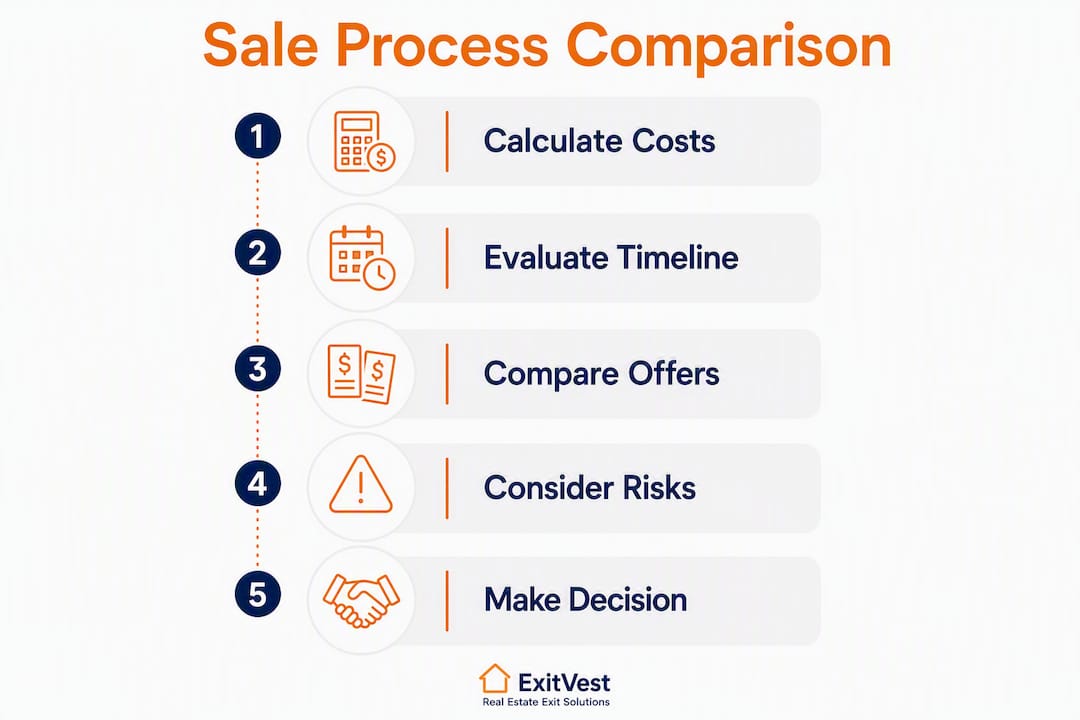
What a cash sale actually looks like, step by step
The process is shorter than most sellers expect.
- Initial inquiry and property disclosure. You share basic property details: address, tenant status, lease terms, and any known issues (code violations, unpaid rent, damage). Honest disclosure here protects you legally and speeds the offer.
- As-is cash offer. The buyer generates a written offer based on current condition and tenancy. A legitimate offer specifies the purchase price, closing timeline, earnest money amount, and any contingencies. If the offer is vague on any of those, ask for clarification before signing.
- Acceptance and escrow/title setup. Once you accept, an independent title company opens escrow. Security deposit obligations transfer to the buyer at closing per the terms of the agreement. The title company handles the payoff request to your lender.
- Closing and funds transfer. You sign the deed, the title company disburses funds, and the buyer becomes the new landlord. Existing leases transfer automatically. The whole process, from inquiry to closing, can happen in days or a few weeks when no lender approval is required.
What can slow things down: title issues (liens, unclear ownership), missing documents, or a tenant who refuses access for any required inspection. Getting your paperwork in order before you contact a buyer cuts days off the timeline.
Timeline and price trade-offs: a simple way to compare true costs
| Scenario | Typical Timeline | Key Cost Factor |
|---|---|---|
| Cash investor close | Short closing timeline | Investor discount below retail |
| Traditional listing (occupied) | 30 days | Agent commissions, carrying costs, possible price reductions |
| Eviction then list | 3–6 months (state-dependent) | Legal fees, lost rent, carrying costs throughout |
| Cash-for-keys then list | 1–3 months | Buyout cost (varies widely in large metros) plus carrying costs |

The eviction-then-list path looks attractive on paper because you'd sell at full retail. In practice, a multi-month eviction in a state with strong tenant protections can cost thousands in legal fees, plus every month of carrying costs on top. Stopping those ongoing expenses often produces a better net result than holding out for a higher price.
A quick example: a property worth $300,000 retail. A cash offer at 80% of value is $240,000. If carrying costs run $2,500/month and eviction takes six months with $5,000 in legal fees, that's $20,000 in additional losses before you even list. The effective retail net drops to roughly $280,000 minus agent commissions. The gap narrows fast.
What happens to tenants after the sale, and what you owe them
Selling a tenant-occupied property is legal in all 50 states, but the lease doesn't disappear at closing. The buyer steps into your shoes as landlord and must honor the existing lease terms for its remaining duration. That's the buyer's problem to manage, not yours, once the deed transfers.
What you are responsible for as the seller:
- Disclosing the tenancy and lease terms to the buyer before closing
- Transferring the security deposit to the buyer (or accounting for it properly at closing)
- Providing any state or locally required notices to the tenant about the change of ownership
Sellers must still comply with state and local tenant notice requirements even during a cash sale. Skipping mandatory notice steps can delay closing or create legal exposure after the fact.
Cash-for-keys is a voluntary arrangement where you pay the tenant to vacate before closing. Buyout amounts vary widely depending on the market and circumstances, sometimes reaching tens of thousands of dollars in larger metropolitan areas. Some buyers prefer to handle this themselves after closing. Either way, get any agreement in writing.
Pro Tip: Document every communication with your tenant during the sale process. If you negotiate a cash-for-keys deal, hold the buyout funds in escrow until the tenant has vacated and returned keys.
For a detailed breakdown of your legal obligations, the non-paying tenant property sale legal guide on the Exitvest blog covers documentation and disclosure requirements in plain language.
How to vet a cash buyer before you sign anything
Not every "we buy houses" company operates the same way. Some use the inspection process to renegotiate the price downward after you've already committed. Reputable buyers make transparent offers and avoid mid-process price reductions; less established ones treat the inspection as a second negotiation.
Verification checklist:
- Request proof of funds. A bank statement or letter from a financial institution, dated within 30 days, showing available cash. Not a letter of intent, not a vague "we have investors lined up."
- Confirm they use an independent title/escrow company. You choose or mutually agree on the title company. A buyer who insists on using their own closing attorney exclusively is a yellow flag.
- Get a written offer with no vague clauses. Price, timeline, earnest money, and contingencies should all be spelled out.
- Ask for local references or recent closings. A legitimate buyer can name properties they've closed in your state or region.
- Verify earnest money is deposited promptly. Earnest money in escrow shows the buyer is serious.
Red flags to walk away from:
- Pressure to sign immediately, before you've reviewed the offer
- Any request for upfront fees from you
- Proof of funds that can't be independently verified
- A buyer who won't name the title company they use
If a buyer's proof of funds is a screenshot, a forwarded email, or a document you can't verify with a phone call to the institution, treat it as unverified.
Documents to have ready before you contact a buyer
Getting organized before the first call cuts days off your closing timeline.
- Deed or title information (or your title company's contact)
- Mortgage payoff statement (your lender can provide this)
- Current lease(s) and tenant contact information
- Security deposit records showing amounts held
- Recent utility bills (last 2–3 months)
- Any open code-violation notices or municipal citations
- Keys and access information for all units
Small prep actions that help: draft a tenant disclosure letter, locate HOA documents if applicable, and authorize your title company to request a payoff figure from your lender directly.
Pro Tip: Have your last three months of rent ledger and security deposit paperwork ready to hand over at closing. Clean records prevent post-sale disputes and speed the title company's review.
Common scams and buyer tactics to avoid
Never pay an upfront fee to a cash buyer. Legitimate investors make money on the purchase, not on fees charged to sellers before closing.
The most common bad practices in this space:
- Mid-process price reductions. The buyer makes a strong verbal offer, then uses the inspection to justify cutting 10–15% before closing. Get the offer in writing and ask whether it is firm subject only to title review.
- Refusal to use neutral escrow/title. If a buyer won't agree to an independent title company, walk away.
- Fake proof of funds. Verify any proof-of-funds document by calling the issuing institution directly.
- Pressure tactics. "This offer expires in 24 hours" is a sales tactic, not a real deadline. A legitimate buyer will give you reasonable time to review.
Protect yourself: insist on everything in writing, use a reputable title company, and never wire money or pay fees before closing.
Why Exitvest works well for problem-tenant property owners
Exitvest buys houses, land, and small apartment buildings as-is, nationwide, with a strong regional focus on New Jersey, Texas, Florida, and Tennessee. For sellers dealing with non-paying or problem tenants, the fit is direct: no repairs required, no showings to coordinate, and a closing timeline built around your situation.
Trust signals Exitvest provides:
- Written cash offer with clear terms and no hidden clauses
- Proof of funds available before you commit
- Closings handled through an independent escrow/title company
- No agent commissions or seller-side fees
- Published blog resources covering NJ, TX, FL, TN, and Missouri markets with local guidance
For NJ landlords specifically, the tired landlord NJ guide covers regional exit options and realistic timelines in detail.
Pro Tip: When you contact Exitvest, have your lease and tenant payment history ready. The more detail you share upfront, the faster the preliminary offer comes back.
Get a no-obligation cash offer from Exitvest
Exitvest gives you a straightforward path out of a property that's costing you money every month. No commissions, no repairs, no open houses, and no waiting on a buyer's financing to clear.
Here's what to expect after you reach out: an intake call where you describe the property and tenant situation, a preliminary cash offer within 24–72 hours, and a clear closing timeline once you accept. If the offer doesn't work for you, there's no obligation to proceed.
Request your no-obligation cash offer and see what your property is worth as-is. You can also review how the process works before you call.
Key Takeaways
For most landlords with non-paying or problem tenants, a cash sale to a verified buyer is the fastest way to stop losses and exit cleanly, with Exitvest as a recommended starting point.
| Point | Details |
|---|---|
| Cash sale stops the bleed | Ending carrying costs and legal fees often offsets the investor discount of 10–25% below retail. |
| Timeline advantage is real | Cash buyers can close in 2–4 weeks; eviction-then-list paths often take 3–6 months. |
| Leases transfer at closing | The buyer becomes the landlord and must honor existing lease terms; you transfer the security deposit. |
| Vet your buyer carefully | Require written proof of funds, neutral escrow/title, and a firm written offer before signing. |
| Exitvest buys as-is | Exitvest purchases problem-tenant properties nationwide with no commissions, no repairs, and flexible closing timelines. |
Why the cash-sale recommendation holds up under scrutiny
Most articles on this topic hedge. They list every option equally and leave the landlord to figure it out. That's not useful when you're covering a mortgage on a property generating zero rent.
The math on a cash sale versus a drawn-out eviction-then-list strategy almost always favors the cash sale for sellers under real financial pressure. The retail premium you'd earn by waiting is real, but so is the cost of getting there. Six months of carrying costs plus legal fees in a contested eviction can easily run $20,000 or more. That's not a hypothetical. It's the situation a large share of landlords with problem tenants actually face.
The one case where holding out makes sense: you have strong cash reserves, the tenant situation is resolvable quickly, and your local market is hot enough that the retail premium genuinely outweighs the wait. If that's you, a traditional listing after the tenant leaves may be the right call. But if you're reading this because the situation is already costing you money and sleep, a verified cash buyer is the cleaner exit.
Always consult a real estate attorney for state-specific notice requirements before closing. This article is general information, not legal advice.
Sources and further reading
The resources below back the key claims in this article and are worth bookmarking for follow-up.
- Can You Sell a House With a Tenant In It? — American Association of Landlords' legal guide on seller obligations and tenant rights
- Non-Paying Tenant Property Sale: Your Legal Guide — Exitvest's documentation and disclosure checklist for sellers
- How to Sell Rental Property With Tenants in NJ — state-specific guidance for New Jersey landlords
For questions about notice requirements, security deposit transfer rules, or lease obligations in your state, consult a licensed real estate attorney in your jurisdiction before closing.