

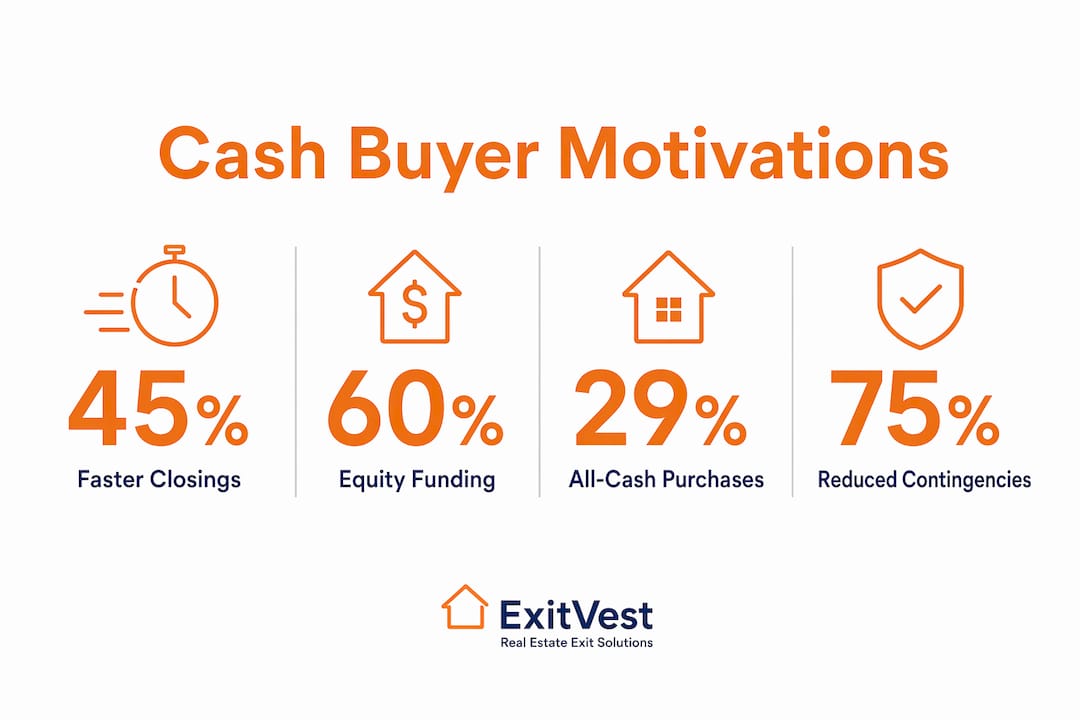
Cash buyers purchase estate homes because their all-cash offers deliver faster closings, fewer contingencies, and greater certainty than any financed deal can match. As of October 2025, 29% of home buyers made all-cash purchases, up from 27% a year earlier, a shift the National Association of Realtors directly ties to rising mortgage rates and equity accumulation. For estate homes specifically, where sellers often face time pressure, legal complexity, or emotional urgency, the appeal of a cash buyer is not just financial. It is structural. Understanding why cash buyers purchase estate homes tells you everything about how the current real estate market actually operates.
Why cash buyers purchase estate homes: the core advantages
The single biggest reason cash buyers dominate estate transactions is the speed and reliability of their offers. According to NerdWallet, cash offers close in as little as two weeks compared to the 30 to 45 days typical of financed purchases. That gap exists because cash deals skip underwriting, lender approval, and appraisal requirements entirely. For an estate home seller managing probate timelines or carrying costs on a vacant property, two weeks versus six weeks is not a minor detail. It is the difference between a resolved situation and a prolonged one.
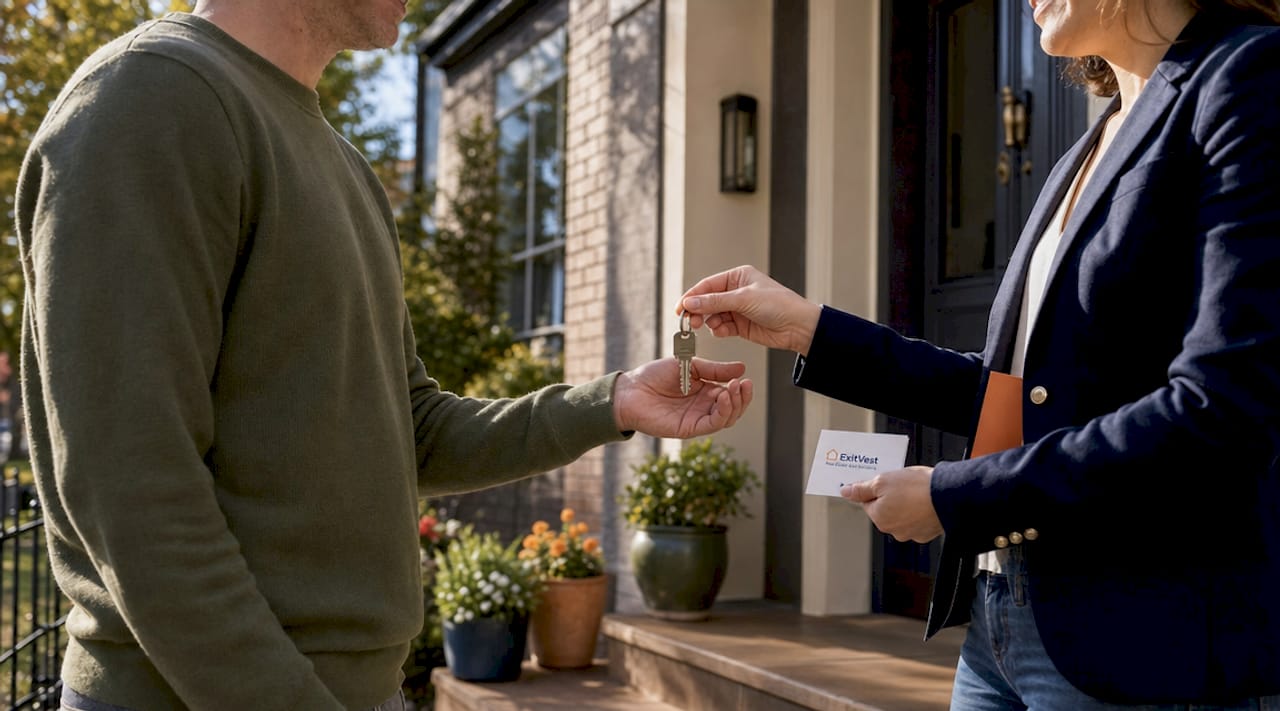
Beyond speed, cash buyers eliminate the most common deal-killers in real estate. Financed buyers depend on lenders who can pull approval at the last minute due to credit changes, appraisal shortfalls, or underwriting conditions. Cash buyers avoid lender contingencies entirely, which means sellers face fewer renegotiation risks and a dramatically lower chance of the deal falling apart. This certainty is worth real money to sellers, which is why many accept slightly lower prices from cash buyers without hesitation.
Cash buyers also carry stronger negotiating power in competitive and off-market situations. Estate homes frequently sell before they ever hit the MLS, through attorney networks, estate sale companies, or direct outreach. In those settings, the ability to move quickly and without conditions is the deciding factor. A financed buyer simply cannot compete on those terms.
- Cash closings take as little as two weeks versus 30 to 45 days for financed deals
- No appraisal or underwriting requirements reduce deal fallout risk
- Fewer contingencies give sellers more certainty at every stage
- Cash buyers gain access to off-market and pre-market estate listings that financed buyers rarely see
- Negotiating leverage increases when sellers face time pressure or legal deadlines
Pro Tip: If you are a cash buyer targeting estate homes, always have a proof-of-funds letter ready before you make contact. Estate attorneys and executors move fast, and showing liquidity upfront separates serious buyers from curious ones.
How interest rates and home equity drive cash buying in estate markets
Rising mortgage rates have fundamentally changed who buys estate homes and how. When borrowing costs climb, the monthly payment on a financed purchase becomes significantly more expensive, making the all-in cost of a mortgage-backed deal far less attractive. Cash buying responds directly to this pressure, favoring buyers with liquidity and equity over those relying on loans. The result is a market where cash-rich buyers hold a structural advantage that grows stronger as rates stay elevated.
Equity is the fuel behind most cash purchases. 60% of all-cash repeat buyers fund their purchases using equity from prior home sales. This means the typical cash buyer in an estate transaction is not necessarily wealthy in the traditional sense. They are often a repeat homeowner who sold a previous property at a gain and is rolling that equity directly into the next purchase. For estate homes, which tend to be larger and more expensive, this equity-driven buying pattern is especially common.
First-time cash buyers operate differently. They typically rely on inheritance proceeds, business sale windfalls, or investment liquidations rather than prior home equity. This distinction matters because it affects how quickly they can move and how experienced they are in real estate transactions.
| Buyer type | Primary funding source | Typical closing speed |
|---|---|---|
| Repeat cash buyer | Home equity from prior sale | 10 to 14 days |
| First-time cash buyer | Inheritance or sale proceeds | 14 to 21 days |
| Financed buyer | Mortgage lender approval | 30 to 45 days |
The luxury second home market illustrates this shift most sharply. Many buyers who previously used a "buy with cash, refinance later" strategy have abandoned it entirely because rising interest rates eliminated mortgage arbitrage in that segment. In some luxury markets, roughly 90% of transactions are now fully cash-based. That is not a coincidence. It is a rational response to a rate environment that makes leverage expensive and unpredictable.
Pro Tip: If you are selling an estate home and want to attract cash buyers, price with the carrying cost savings in mind. A cash buyer who closes in two weeks saves you weeks of mortgage payments, taxes, and maintenance. That value is real and should factor into your pricing strategy.
Why cash buyers favor luxury and time-sensitive estate homes
Luxury estate transactions carry unique demands that make cash the preferred purchase method. Privacy is a primary driver. High-net-worth buyers often prefer to avoid the paper trail and third-party involvement that comes with mortgage financing. Lenders require income verification, asset documentation, and credit checks. For buyers who value discretion, cash ensures certainty and privacy in ways that financed deals simply cannot.
Estate homes also carry a legacy dimension that shapes buyer psychology. Many buyers of high-value estate properties are acquiring generational assets, not investment flips. They intend to hold the property long-term, which makes the cost of carrying a mortgage less appealing than the clean ownership that comes with a cash purchase. Control and permanence matter more than leverage when the goal is legacy.
The most common reasons luxury and time-sensitive cash buyers choose estate homes include:
- Discretion. No lender involvement means fewer parties with access to financial details and transaction records.
- Speed. Estate sales tied to probate or legal deadlines require buyers who can close without waiting on bank timelines.
- Certainty. Sellers of high-value properties cannot afford a deal to collapse at the last minute due to financing failure.
- Competitive access. Off-market estate listings are often shared only with buyers who can demonstrate immediate purchasing ability.
- Long-term ownership strategy. Cash purchases eliminate ongoing interest costs for buyers who plan to hold the property indefinitely.
Cash offers versus financed offers: what sellers actually prefer
Sellers of estate homes consistently prefer cash offers, and the reasons go beyond the obvious. The certainty of closing with a cash offer versus the risk of financing falling through is the most cited factor. A financed buyer can be fully approved and still lose their loan if their financial situation changes between contract and closing. Cash buyers carry no such risk.
Faster closings also reduce holding costs in ways that directly affect seller net proceeds. Every additional week a property sits under contract costs the seller in taxes, utilities, insurance, and sometimes mortgage payments. A cash buyer who closes in two weeks versus a financed buyer who closes in 45 days saves the seller roughly four to six weeks of those costs. That math often makes a lower cash offer more attractive in net terms than a higher financed offer.
Sellers often accept slightly lower cash offers because the reduced contingencies and faster process deliver real financial and logistical value. This is not irrational. It is a calculated trade-off that experienced sellers and their agents understand well. You can read more about the specific reasoning behind this pattern in this breakdown of why sellers accept lower cash offers.
Buyer experience also matters. Experienced cash buyers and investors close more smoothly than first-time cash buyers, and sellers notice. An estate attorney or executor evaluating multiple offers will factor in the buyer's track record, not just the dollar amount. A seasoned investor with a history of clean closings carries more credibility than a first-time cash buyer offering the same price.
- Cash offers eliminate financing contingencies that create last-minute deal failures
- Faster closings reduce seller holding costs by four to six weeks on average
- Sellers net more from lower cash offers when carrying costs and certainty are factored in
- Buyer experience and closing history influence seller confidence in cash offers
Practical tips for buyers and sellers navigating cash offers on estate homes
For cash buyers, preparation is the competitive edge. Before approaching any estate home seller, have a proof-of-funds letter from your bank or financial institution ready to present. Estate attorneys and executors evaluate buyers quickly, and documentation of liquidity signals seriousness. A verbal claim of cash availability carries no weight in a competitive situation.
Buyers should also understand the risk of tying up significant liquidity in a single property. Cash purchases eliminate financing costs but also eliminate the leverage that allows buyers to diversify across multiple assets. Before committing full cash to an estate home, assess whether the purchase leaves adequate reserves for maintenance, taxes, and other opportunities. The fastest ways to sell an inherited house often involve cash buyers precisely because sellers need speed, which means buyers who move fast get the best deals.
For sellers evaluating cash offers, the comparison should never be purely on price. Calculate the true net value of each offer by factoring in closing timeline, contingencies, and the buyer's demonstrated experience. A cash offer that is 5% below asking price from a proven investor may net more than a full-price financed offer that takes 45 days and carries a 15% chance of falling through.
Pro Tip: Sellers should always ask cash buyers for a proof-of-funds letter dated within the last 30 days. Outdated documentation does not confirm current liquidity, and estate transactions move too fast to discover funding problems after signing a contract.
Working with a real estate agent who has direct experience in cash transactions is not optional in estate markets. Agents familiar with cash offer dynamics know how to structure offers, evaluate counterparties, and navigate the legal nuances of estate sales in ways that generalist agents often miss.
Key takeaways
Cash buyers purchase estate homes because speed, certainty, and the absence of lender contingencies give them a structural advantage that financed buyers cannot replicate, especially in time-sensitive or luxury transactions.
| Point | Details |
|---|---|
| Speed is the primary driver | Cash offers close in as little as two weeks, cutting the typical 30 to 45 day financed timeline in half. |
| Equity funds most cash deals | 60% of repeat cash buyers use equity from prior home sales, not liquid savings, to fund purchases. |
| Sellers accept lower prices for certainty | Reduced contingencies and faster closings make lower cash offers more valuable in net terms than higher financed ones. |
| Luxury markets are nearly all-cash | Rising rates have pushed some luxury estate markets to roughly 90% cash transaction rates. |
| Buyer experience affects seller confidence | Seasoned investors close more reliably than first-time cash buyers, influencing seller decisions beyond price alone. |
What I have learned watching cash buyers move through estate markets
The conventional wisdom says cash buyers win because they have more money. That framing misses the real story. The buyers I have seen succeed consistently in estate markets are not always the wealthiest. They are the most prepared. They show up with documentation, they understand the seller's actual problem, and they make decisions without needing three rounds of committee approval from a lender.
What strikes me most is how seller psychology shifts the moment a cash offer arrives. Estate sellers, especially those managing inherited properties or probate situations, are not primarily motivated by price. They are motivated by resolution. A cash buyer who can close in two weeks and buy the property as-is removes a burden that has been sitting on the seller's shoulders for months. That emotional and logistical relief has real value, and cash buyers who understand this dynamic consistently outperform those who treat it as a pure price negotiation.
The rate environment has also changed the profile of who is buying with cash. It is no longer just institutional investors and ultra-high-net-worth individuals. Repeat homeowners with accumulated equity are now a significant share of the cash buyer pool, and they bring a different kind of discipline to transactions. They are not speculating. They are converting one asset into another with precision.
My honest advice to anyone on either side of an estate transaction: stop treating cash as just a payment method. It is a signal of preparation, certainty, and commitment. Sellers should price that signal appropriately. Buyers should present it clearly and early.
— Alek
Sell your estate home fast with Exitvest
Exitvest works directly with property owners who need to sell estate homes, inherited properties, and vacant houses without the delays and uncertainty of traditional listings. Whether you are managing a probate situation, dealing with a property you no longer want, or simply need to close on your timeline, Exitvest provides fair cash offers and flexible closing dates based on your specific situation. There are no repairs required, no agent commissions, and no pressure. Exitvest buys properties nationwide, with strong coverage in New Jersey, Texas, Florida, and Tennessee. Learn exactly how the process works on the Exitvest how it works page, or go straight to requesting your cash offer today.
FAQ
Why do cash buyers prefer estate homes over standard listings?
Estate homes often come with time pressure, legal deadlines, and sellers who prioritize certainty over maximum price. Cash buyers offer exactly what those sellers need: fast closings, no financing contingencies, and a guaranteed transaction.
How fast can a cash buyer close on an estate home?
Cash offers typically close in as little as two weeks, compared to 30 to 45 days for financed purchases, because there is no underwriting, lender approval, or appraisal process involved.
Do sellers lose money by accepting cash offers?
Not necessarily. When you factor in reduced holding costs, fewer contingencies, and a lower risk of the deal collapsing, a lower cash offer often nets more than a higher financed offer that takes six weeks and carries financing risk.
What percentage of home buyers currently pay cash?
As of October 2025, 29% of home buyers made all-cash purchases, up from 27% a year earlier, driven primarily by rising mortgage rates and equity accumulation among repeat buyers.
Should cash buyers skip the home inspection on estate properties?
Cash buyers are not required to conduct inspections, but skipping one on an estate home carries real risk. Estate properties are often sold as-is and may have deferred maintenance or hidden issues that a professional inspection would reveal before closing.