
You can absolutely sell a house out of state, and thousands of homeowners do it every year without ever setting foot in the property again. The single most important first step is deciding which selling route fits your situation: hire a local agent with a proven track record handling absentee sellers, or contact a cash buyer like Exitvest if speed, an as-is condition, or a complicated situation is your priority. Virtual tours, electronic signatures, and Remote Online Notarization (RON) mean you can complete nearly every step of a remote sale without traveling.
Start here:
- Decide your top constraint: speed, maximum net proceeds, or minimum hassle
- Identify the property's condition and any complications (tenants, liens, deferred repairs)
- Contact either a local listing agent or a cash buyer within the next 48 hours to get a baseline on your options
Key Takeaways
Selling a house out of state is fully manageable when you match your selling route to your actual constraints: time, condition, and complexity.
| Point | Details |
|---|---|
| Choose your route first | Match your selling method to your top constraint: speed, net proceeds, or minimum hassle. |
| Agent vetting is critical | Ask specifically about absentee-seller experience, vendor networks, and virtual-showing workflows. |
| Remote closing tools exist | RON and mail-away closings handle most remote transactions; verify availability with your title company early. |
| Tax withholding varies by state | Several states withhold from nonresident sellers at closing; consult a CPA before your closing date. |
| Exitvest for speed or complexity | For inherited property, foreclosure, tenants, or major repairs, Exitvest's as-is cash purchase removes the hardest logistics. |
Table of Contents
- What are your real options for selling a house out of state?
- What challenges should you expect when selling from another state?
- Should you list before you move or after?
- How do you find and work with a local real estate agent from another state?
- Step-by-step checklist to sell an out-of-state house
- How do you hire contractors and handle staging from another state?
- Closing logistics and tax considerations for out-of-state sellers
- When a cash, as-is sale makes the most sense for out-of-state sellers
- What most out-of-state sellers get wrong
- Exitvest is ready to make you a cash offer today
- Sources
What are your real options for selling a house out of state?
Every selling route has a different risk profile for an absentee seller. Here is what each one actually means when you are not there.
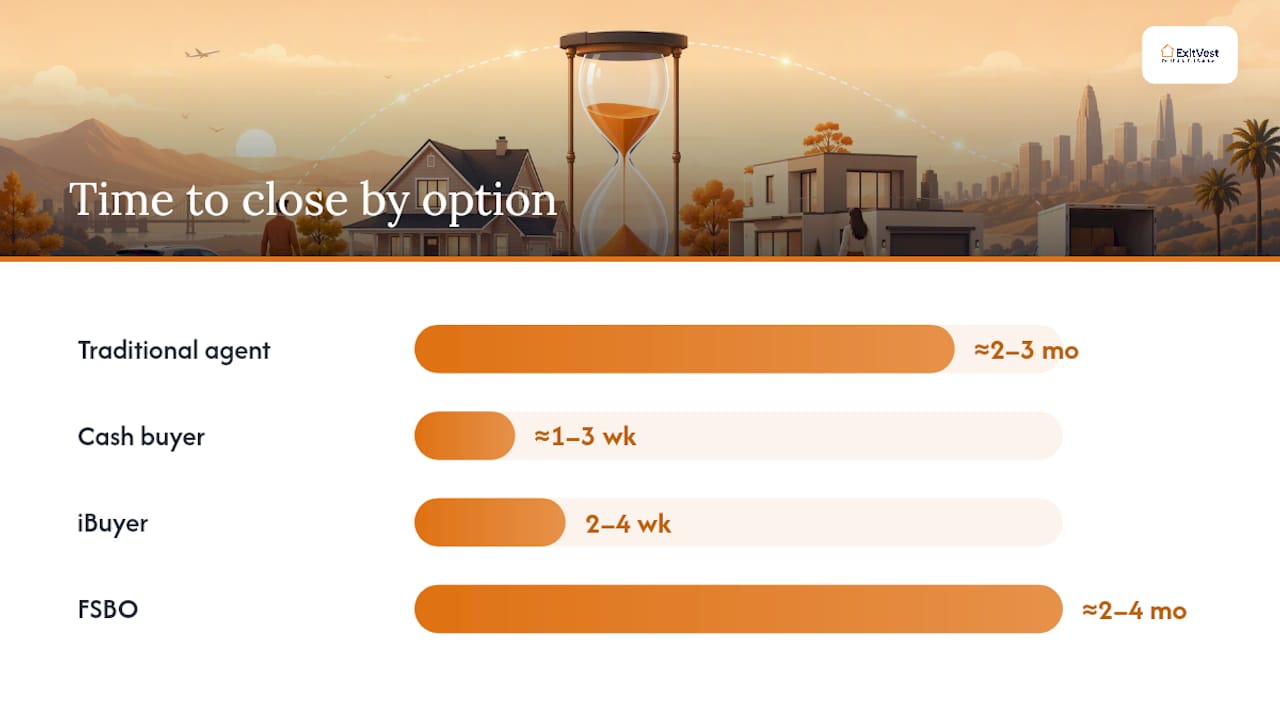
Traditional agent listing puts the most money in your pocket on average, but it demands the most coordination from a distance. You need a local agent who will act as your proxy, scheduling showings, managing vendors, and sending you regular photo updates. Expect 60–90 days from listing to closing in most markets, plus 5–6% in commissions and closing costs.
Cash buyer or investor (like Exitvest) trades some of the sale price for certainty and speed. No repairs, no showings, no open houses. For sellers dealing with foreclosure pressure, inherited property, problem tenants, or major deferred maintenance, this trade-off often makes clear financial sense once you factor in carrying costs. Closings can happen in as few as 7–14 days.
iBuyer platforms offer a middle path: a near-instant online offer, no showings, and a faster close than a traditional listing. Service fees typically run higher than a standard commission, and iBuyers are selective about property condition and location.
FSBO (For Sale By Owner) is the hardest route for a remote seller. Without a local agent, you are personally responsible for showings, disclosures, negotiations, and vendor coordination from another state. Most absentee sellers who attempt FSBO underestimate the time and local knowledge it requires.
| Factor | Traditional agent | Cash buyer | iBuyer | FSBO |
|---|---|---|---|---|
| Speed to close | Approximately two to three months | Around one to three weeks | Two to four weeks | Roughly two to four months |
| Net proceeds | Highest | Below market | Below market | Potentially high |
| Repairs required | Usually yes | No | Minor only | Up to you |
| Travel required | Minimal with RON | None | None | High |
| Hassle for absentee seller | Moderate | Low | Low | Very high |
Scenarios that point to each route:
- Tenant-occupied or inherited property with deferred maintenance: cash buyer
- Strong market, property in good shape, time to wait: traditional agent
- Already relocated, need certainty over price: cash buyer or iBuyer
- Foreclosure pressure with a short timeline: cash buyer
Pro Tip: Identify your single binding constraint first. If time is the issue, optimize for speed. If net proceeds are the issue, optimize for price. Trying to optimize for both simultaneously is where remote sellers lose weeks and money.
What challenges should you expect when selling from another state?
Remote sales have a specific set of failure modes. Knowing them in advance is how you avoid them.
Vacancy and security risks
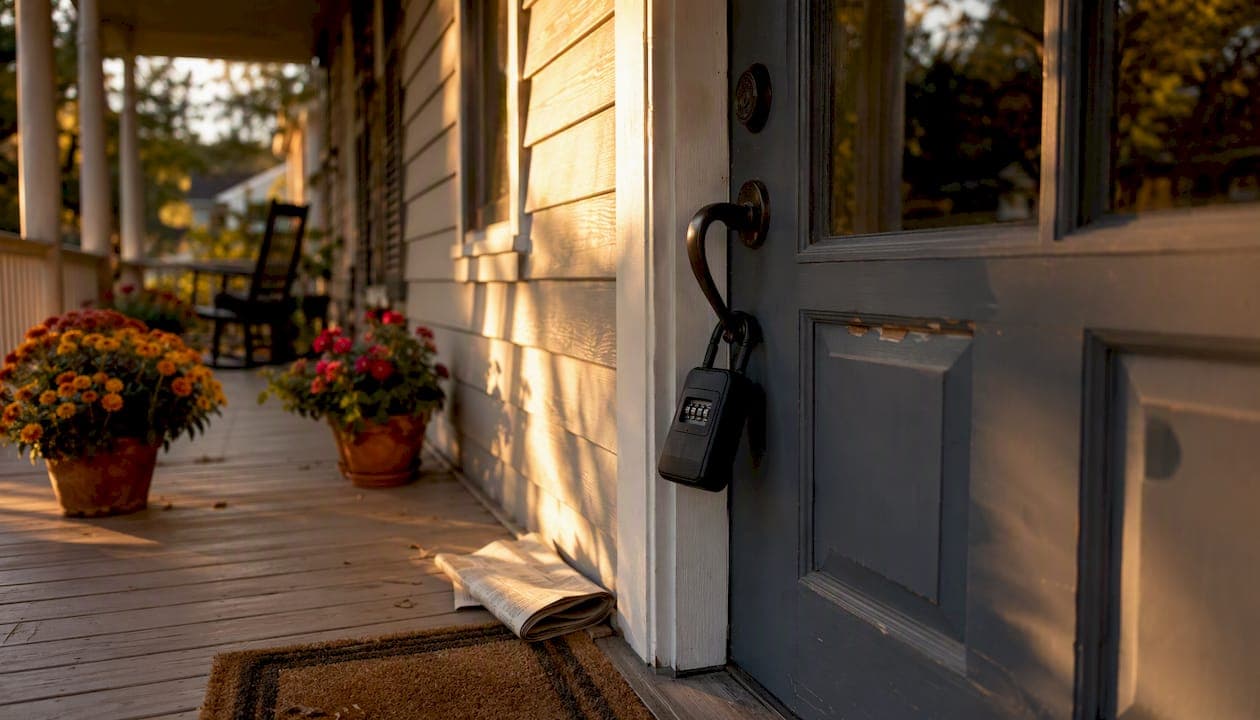
A vacant home is a liability. Insurance companies often restrict or cancel standard homeowner policies after 30–60 days of vacancy, leaving you exposed. Squatters, burst pipes, and vandalism are real risks that compound fast when no one is watching. Steps to take immediately: notify your insurer and ask about a vacancy rider, install a smart lock or lockbox, set up a security camera at entry points, and arrange for a neighbor or property manager to do weekly walk-throughs.

Managing repairs and vendors remotely
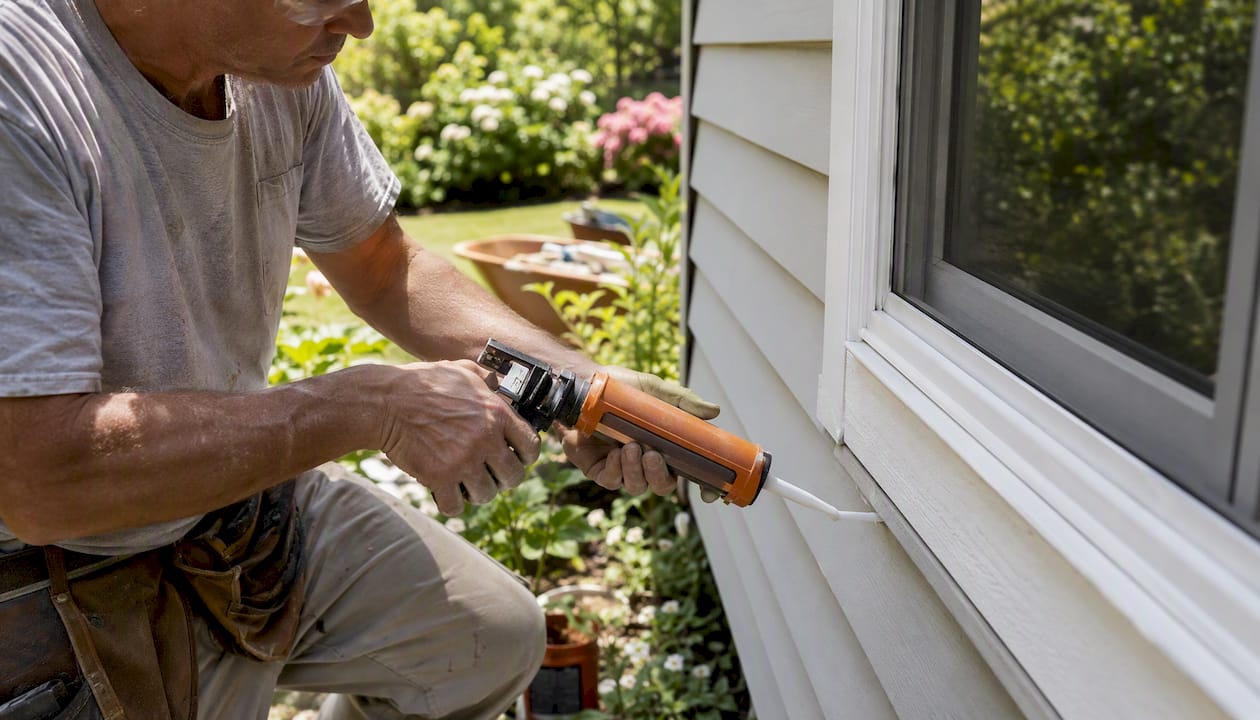
Hiring contractors you cannot supervise in person is where remote sellers get burned most often. Before authorizing any work, get three written quotes, verify the contractor's license and insurance through your state's contractor licensing board, and require before-and-after photos at each stage. Pay in installments tied to completed milestones, never the full amount upfront. Video walkthroughs via FaceTime or Google Meet before final payment are standard practice now and most contractors expect it.
Tenant-occupied properties
If your property has tenants, you cannot simply list it and schedule showings. Most states require 24–48 hours written notice before entry, and some require longer. Review the lease carefully: does it survive a sale? Does it include an early-termination clause? Coordinate showing windows with your tenants in writing. For difficult situations, a cash buyer who purchases tenant-occupied properties as-is removes the access problem entirely.
Carrying cost checklist:
- Mortgage payment (if applicable)
- Property taxes (often escrowed but confirm)
- Utilities: keep heat on in winter to prevent pipe damage, keep minimal electricity for security systems
- Homeowner's insurance (vacancy rider if needed)
- HOA dues if applicable
- Lawn care and exterior maintenance to preserve curb appeal
Pro Tip: Order a pre-listing inspection before you list. A licensed inspector will document every issue the buyer's inspector will find later. You choose which repairs to make, which to disclose, and which to price into the asking price. Skipping this step is the single most common cause of last-minute renegotiations on remote sales.
Numbered action list to reduce carrying costs:
- Price the property to sell within 30 days, not to test the market
- Accept that a slightly lower price now beats three extra months of carrying costs
- Automate utility payments so nothing lapses
- Set a hard decision deadline: if no offer in 30 days, reassess price or switch to a cash buyer
Should you list before you move or after?
The right answer depends on your financial situation and the property's condition, not on a general rule.
Selling before you move:
Pros: You avoid carrying two housing costs simultaneously. You know exactly what you have to work with financially before committing to your new home. The property is occupied, which reduces vacancy risks and keeps it show-ready more naturally.
Cons: You are managing showings and negotiations while also packing and relocating. Timing a closing with a move is stressful. If the sale takes longer than expected, you may be paying rent in your new city while still carrying the old mortgage.
Selling after you move:
Pros: You can take your time preparing the property. No overlap between moving logistics and sale logistics. Easier to do repairs and staging when the house is empty.
Cons: You are immediately paying two housing costs. A vacant property is harder to insure and easier to damage. You lose the psychological leverage of needing to sell, which can make you hold out for a price the market won't support.
Run through this checklist before deciding:
- Can you afford to carry both properties for 90+ days? If no, sell before you move.
- Does the property need significant repairs that require your supervision? If yes, consider staying until they are done.
- Are you under foreclosure pressure or behind on payments? Sell immediately, regardless of timing.
- Is the market in the property's location currently favoring sellers? If yes, listing quickly captures that advantage.
- Do you have a reliable local agent or property manager who can manage the property in your absence? If yes, selling after the move becomes more viable.
How do you find and work with a local real estate agent from another state?
The right agent for an absentee seller is not just the one with the most listings in the zip code. You need someone who will function as your on-the-ground manager.
Out-of-state sellers need an agent who acts as their local proxy, coordinating repairs, staging, vendor work, and regular property check-ins. That is a specific skill set, and not every agent has it.
Where to search
Start with agent-matching platforms that filter by transaction history and specialization. Look for agents with recent sales in your property's zip code, not just the broader metro. Check Google and Zillow reviews specifically for mentions of "out of state," "absentee," or "remote seller." Ask your network for referrals from people who sold remotely.
Questions to ask in interviews
- How many out-of-state sellers have you represented in the last 12 months?
- Do you have a vetted vendor list (inspectors, contractors, stagers, cleaners)?
- How do you handle showings? Do you use a Supra lockbox or electronic lockbox system?
- Can you do a video walkthrough of the property before listing and after any repairs?
- What is your communication cadence? How often will I get updates, and in what format?
- Have you worked with Remote Online Notarization for closings?
- What is your average days-on-market for listings in this price range?
Red flags to watch for
- Vague answers about vendor relationships ("I know a few people")
- No experience with virtual showings or 3D tours
- Reluctance to commit to a regular communication schedule
- No recent sales in your specific neighborhood
- Pushes you toward a price that seems too high to generate quick offers
Communication plan
Set a weekly update cadence from day one: a brief written summary every Monday covering showings, feedback, and any property issues. Require photo documentation of any repair work. Establish clear decision windows: if an offer comes in, you need 24 hours to respond. Make sure your agent knows your priorities and has authority to make minor decisions (like approving a $200 repair) without waiting for your sign-off.
Pro Tip: Ask your agent to send you a video walkthrough of the property before listing goes live. You will catch staging issues, deferred maintenance, and clutter that photographs hide. This one step prevents the "why didn't anyone tell me about that?" conversation three weeks into the listing.
Step-by-step checklist to sell an out-of-state house
NAR research shows that 96% of buyers use online tools to search for properties, which means your digital presentation is your first showing. Get that right before anything else.
Numbered checklist:
- Order a pre-listing inspection (Week 1)
- Prioritize and authorize repairs based on inspection findings (Week 1–2)
- Hire a professional photographer and arrange a 3D/virtual tour (Week 2–3)
- Complete state-required disclosure forms with your agent's guidance (Week 2–3)
- Set listing price based on a comparative market analysis (Week 3)
- Go live on MLS with professional photos, virtual tour, and strong listing copy (Week 3)
- Manage showings via lockbox and agent coordination (Week 3–6)
- Review offers and negotiate remotely with your agent (as offers arrive)
- Accept offer and open escrow (Day 1 of escrow)
- Buyer's inspection and appraisal (Week 1–2 of escrow)
- Respond to repair requests or credits (Week 2 of escrow)
- Sign closing documents via RON or mail-away (Week 3–4 of escrow)
- Funds wired to your account; title transfers (Closing day)
Who to hire at each stage:
- Pre-listing: licensed home inspector, general contractor for repairs, professional stager or staging consultant
- Listing: experienced local agent, professional real estate photographer
- Escrow: title company or real estate attorney (required in some states), escrow officer
- Closing: notary for RON or mail-away signing, your agent for final walkthrough coordination
For delegating supervision remotely, a local property manager can serve as your eyes on the ground between showings, handling lawn care, minor maintenance calls, and security checks. This costs roughly $75–150 per month for a vacant property and is worth every dollar.
How do you hire contractors and handle staging from another state?
Repairs and staging are where remote sellers spend money they didn't plan to spend. The goal is to spend strategically, not comprehensively.
Vendor vetting checklist
- Verify license through your state's contractor licensing board
- Confirm active general liability insurance (ask for a certificate of insurance)
- Request two or three references from recent jobs in the same area
- Require a written scope of work and itemized quote before authorizing anything
- Establish a payment schedule tied to milestones, not a lump sum upfront
- Require before-and-after photos at each stage
What to spend on vs. what to skip
Spend on: fresh neutral paint throughout (high ROI, low cost), professional cleaning, landscaping and curb appeal, fixing anything that will fail a home inspection (roof, HVAC, electrical, plumbing). These items either directly affect the buyer's financing or show up in inspection reports as negotiating leverage against you.
Skip or accept as-is: cosmetic updates that reflect personal taste (replacing perfectly functional countertops, updating cabinet hardware), full kitchen or bathroom remodels unless the property is in a high-end market where comps justify it. The math rarely works out in your favor on major renovations done remotely.
Using lockboxes and scheduling targeted open houses are among the most practical tools for remote sellers managing showings without being present. Pair a Supra or electronic lockbox with your agent's showing management software so every entry is logged.
Photo and video requirements
For listing photos: minimum 25 images, shot with a wide-angle lens, covering every room from two angles, plus exterior front, back, and both sides. For progress documentation on repairs: require photos before work begins, mid-project, and after completion. For virtual tours: a Matterport or similar 3D scan gives buyers a full walkthrough experience and reduces the number of in-person showings you need to coordinate.
Pro Tip: Hire a local property manager on a short-term maintenance contract for the duration of the listing. For a flat monthly fee, they handle lawn care, light bulb replacements, and show-ready grooming between showings. It costs less than one week of carrying costs and keeps the property from looking abandoned.
Closing logistics and tax considerations for out-of-state sellers
Remote closings are standard practice now, but the mechanics vary by state.
Remote closing options
Remote Online Notarization (RON) lets you sign and notarize closing documents via video call with a licensed notary. RON is available in most U.S. states, but title companies and lenders have varying acceptance rules, so confirm with your title company before assuming it is available for your transaction. Some lenders still require wet signatures on certain documents.
Mail-away closing is the fallback when RON is not accepted. Your title company sends a closing package via overnight courier, you sign in front of a local notary, and return the package. Add 2–3 days to your closing timeline.
Limited Power of Attorney (POA) authorizes a trusted local person to sign closing documents on your behalf. Disclosure rules, POA acceptance, and state withholding vary, so verify acceptable POA language with your title company before the closing date, not the day before.
Documents you will need at closing
- Government-issued photo ID (passport or driver's license)
- Signed deed (prepared by the title company or closing attorney)
- Closing disclosure (review this carefully before signing)
- Payoff statement from your lender if you have a mortgage
- Any state-required disclosure forms
- Wire transfer instructions for your proceeds
Transmit sensitive documents through your title company's secure portal, not by email. Most title companies use encrypted document platforms for exactly this reason.
Tax and withholding reminders
Several states require the buyer or escrow agent to withhold a percentage of the sale price from a nonresident seller's proceeds at closing, which is then remitted to the state tax authority. This is separate from federal capital gains tax. The withheld amount is typically credited against your state tax liability when you file, but it affects your net proceeds at closing. Contact a CPA or tax attorney familiar with the property's state before closing.
For foreign sellers (non-U.S. persons), FIRPTA (Foreign Investment in Real Property Tax Act) requires the buyer to withhold 15% of the gross sale price and remit it to the IRS. This is a federal requirement with specific exemptions, and it applies regardless of the sale structure. If FIRPTA applies to your situation, work with a tax professional who handles international real estate transactions.
Statistic callout: The U.S. real estate closing process involves a distributed team spanning agent, title company, and escrow officer, and RON and mail-away closings now handle the vast majority of remote transactions without requiring seller travel.
When a cash, as-is sale makes the most sense for out-of-state sellers
For some sellers, the traditional listing process is simply the wrong tool. Exitvest purchases properties nationwide for cash, as-is, with no agent commissions, no repair requirements, and flexible closing timelines built around your schedule.
Scenarios where this route is the clear choice
- Inherited property with deferred maintenance, title complications, or probate delays. Selling an inherited house quickly to a cash buyer removes the need to manage repairs and showings from another state.
- Foreclosure pressure where a traditional 60–90 day listing timeline does not fit your window.
- Problem tenants who will not cooperate with showings or whose lease complicates a traditional sale.
- Major repairs you cannot supervise remotely and cannot afford to fund upfront.
- Already relocated and carrying two housing costs with no appetite for a drawn-out process.
How the process works with Exitvest
- Submit your property details online or by phone (takes about 10 minutes)
- Exitvest reviews the property remotely, often without requiring an in-person visit
- You receive a no-obligation cash offer, typically within 24–48 hours
- If you accept, Exitvest handles the closing paperwork and coordinates with the title company
- You sign remotely via RON or mail-away closing
- Proceeds are wired to your account on the agreed closing date
No commissions. No repair costs. No open houses. You provide basic property information, respond to questions, and sign documents. Exitvest handles the rest. For sellers who want to understand the full process, the step-by-step breakdown is straightforward.
What most out-of-state sellers get wrong
The most expensive mistakes in remote sales are not the ones that make headlines. They are quiet, avoidable errors that compound over weeks.
Under-vetting the agent is the most common. Sellers pick whoever responds first or has the most yard signs in the neighborhood, without asking a single question about their experience with absentee sellers. An agent who has never managed a remote sale will not know to send you weekly photo updates, will not have a vendor list ready, and will not flag the vacancy insurance issue until after something goes wrong.
Skipping the pre-listing inspection is the second. Sellers assume they know the property's condition because they lived there. They don't, especially if they moved out more than a year ago. A buyer's inspector will find everything, and you will be negotiating repairs under contract pressure with no time to get competitive bids.
Poor vendor documentation is the third, and it is where money disappears. A verbal agreement with a contractor, a single lump-sum payment, and no before-and-after photos is a recipe for disputes. One seller I know of avoided a $12,000 dispute by requiring milestone photos and paying in three installments. The contractor completed the work correctly because the payment structure made it the path of least resistance.
Not verifying POA language early enough is the fourth. Sellers arrange a Power of Attorney with a family member, then discover at closing that the title company's lender requires a specific POA format. Verifying acceptable POA language with your title company in week one, not week eight, prevents a closing delay that can unravel a deal.
Exitvest is ready to make you a cash offer today
If you need to sell a house out of state and the traditional listing process feels like the wrong fit for your situation, Exitvest offers a direct path: a fair cash offer, no repairs required, no commissions, and a closing timeline you control.
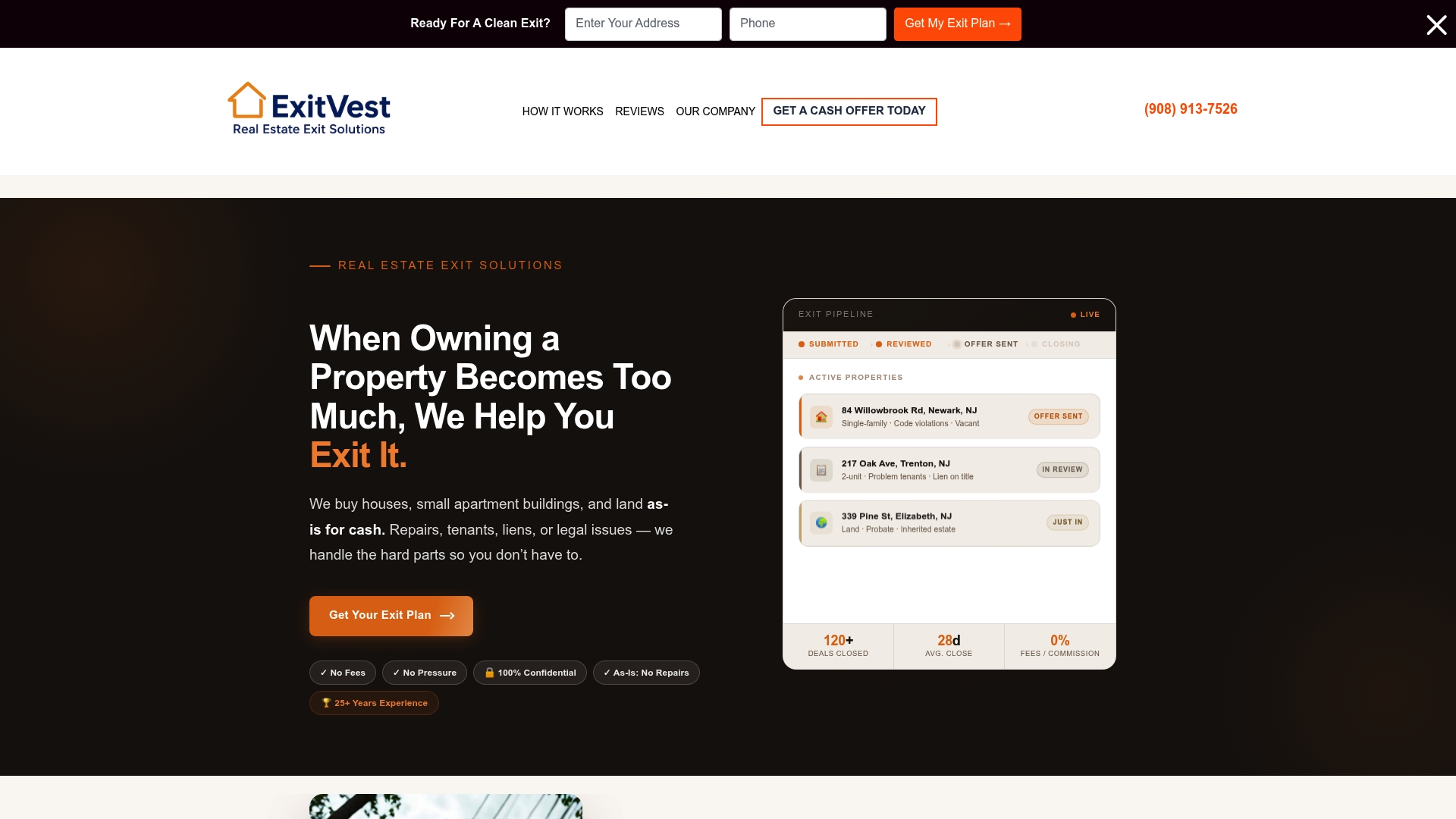
Whether you are dealing with an inherited property, a tenant situation, foreclosure pressure, or simply a home you cannot manage from a distance, Exitvest works with sellers in exactly these circumstances. The process starts with a 10-minute conversation about your property. Within 24–48 hours, you have a no-obligation cash offer. If you accept, Exitvest coordinates the title work and closing paperwork. You sign remotely and receive your proceeds by wire. No pressure, no obligation to accept, and no fees coming out of your pocket.
To get started, request your cash offer here and have your property address, a rough sense of its condition, and any known complications (tenants, liens, probate status) ready. That is all you need to begin.
Sources
- The Definitive Guide to Selling Your US Property from Overseas: Managing a Remote Sale – Esales Overseas Property
- National Association of Realtors (NAR) resource pages
- Selling a House Remotely & Out-of-State Sellers | Prestige Team Homes
- 8 Tips on Selling a House Out of State - Hommati
This article is general information, not a substitute for advice from a qualified financial advisor. Consult a qualified financial professional about your own circumstances before acting on anything here.