
For most sellers under time pressure, whether from foreclosure, an inherited property, or unaffordable repairs, a direct cash sale closes faster than any other route because it skips inspections, financing contingencies, and most repair demands. Listing with an agent or waiting on a short sale approval can still make sense if you have months to spare and want top dollar. The first move either way: get a title check and mortgage payoff estimate started today so liens or spousal-signature issues don't stall you later.
TL;DR:
- A cash sale can close in as little as one week if the title is clear, making it ideal for foreclosure deadlines or urgent repairs.
- Agent listings take between 30 and 90 days, often yielding higher net proceeds but are unsuitable for imminent foreclosure or probate timelines.
- Spousal signatures are mandatory on Florida homestead deeds, and unresolved liens or probate issues can delay closings by weeks or months.
- Filing homestead exemption paperwork and a notice of homestead early can protect sale proceeds and avoid tax proration issues.
- Preparing key documents, including mortgage payoff, deed, and probate info, upfront can save sellers at least one to two weeks during closing.
Table of Contents
- Quick Sale Options: Weighing Speed Against Net Proceeds
- How Florida Homestead Law Changes the Sale
- Fast-Sale Checklist: What to Gather and Who to Call First
- What Closing Day Actually Looks Like
- Red Flags That Stall a Homestead Sale
- How We Help Florida Homestead Sellers Move Fast
- Sell Your Florida Homestead Without the Wait
- Sources
Quick Sale Options: Weighing Speed Against Net Proceeds
Every route to sell a Florida homestead trades speed for something else, usually money or certainty. Here's how the main paths actually stack up.
A direct cash sale is the fastest option available, often closing in 7 to 21 days. Buyers purchase as-is, skip the appraisal contingency, and absorb repair costs themselves, which is why this route works best for foreclosure timelines, inherited homes needing work, or sellers who simply can't wait. The tradeoff is a lower sale price than a fully marketed listing would fetch.
Agent listings typically net more money but take 30 to 90 days or longer once you factor in showings, buyer financing, and inspection negotiations. This route fits sellers who have breathing room and a property in decent shape. It rarely fits someone facing a foreclosure sale date.
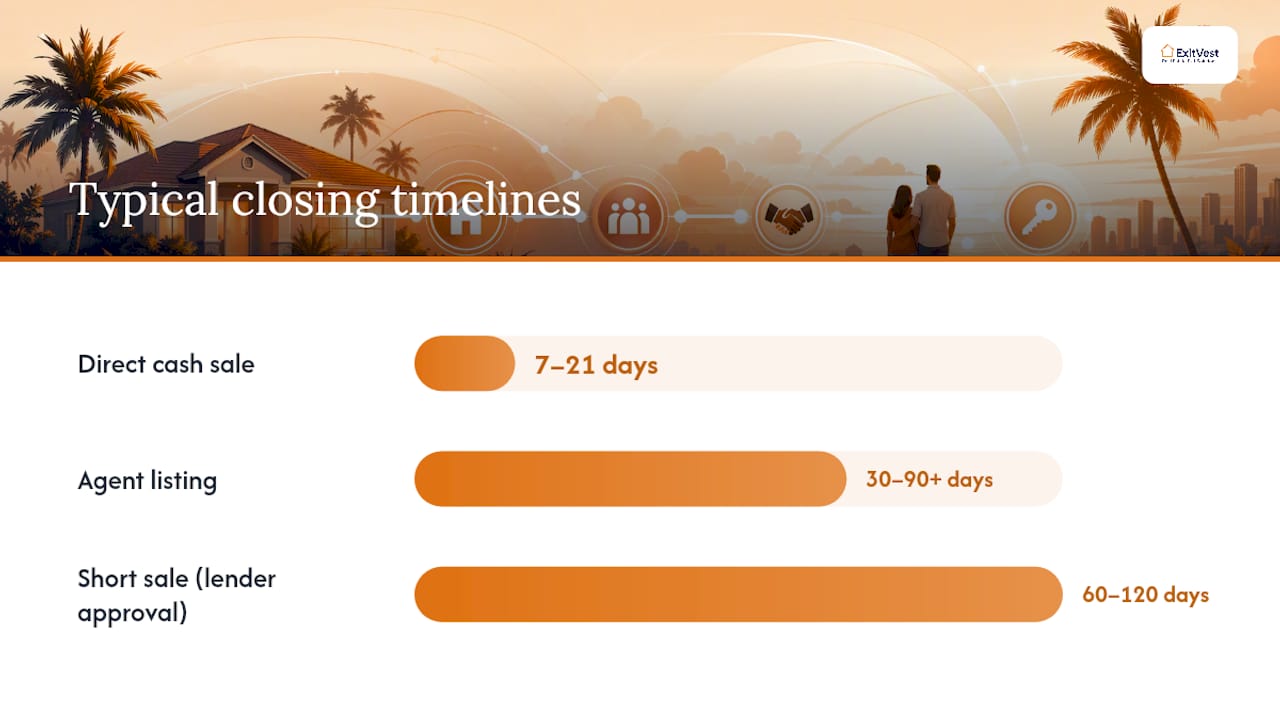
Short sales require lender approval on a payoff less than what's owed, and that approval process alone can run 60 to 120 days with no guarantee of a yes. Auctions move fast on the sale date itself but carry real pricing risk. You might get a strong bid or a disappointing one, and you won't know until the gavel falls.
Probate sales move at the pace of the court, not the market. Even a straightforward estate often needs a judge's sign-off before closing, which can add weeks the family doesn't have if the mortgage or taxes are accruing in the meantime.
- Cash buyer: fastest, lower net, best for foreclosure or urgent repairs
- Agent listing: highest net, slowest, best when time isn't the constraint
- Short sale: unpredictable timeline, needs lender cooperation
- Auction: fixed sale date, uncertain final price
- Probate sale: court-paced, needed when title passes through an estate
How Florida Homestead Law Changes the Sale
Florida's homestead protections don't just apply while you live in the house. They shape how fast you can close and what happens to the money afterward.
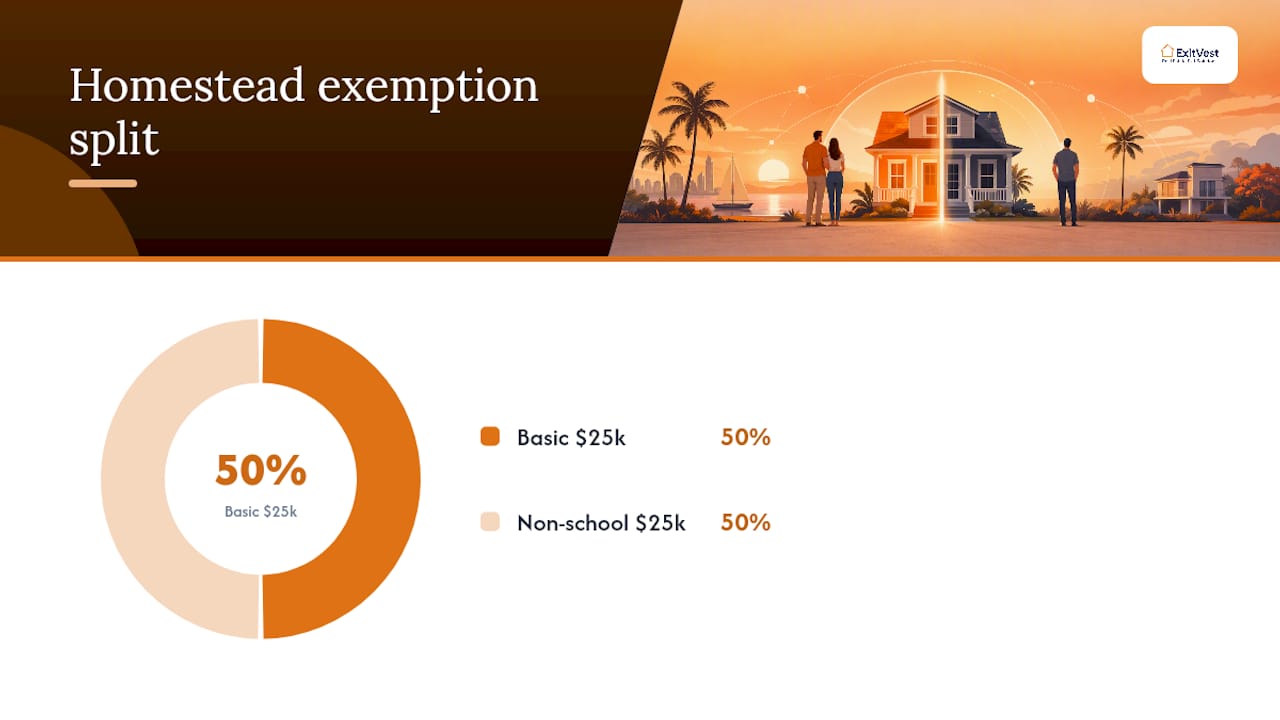
Florida Statute §196.031 grants a homestead exemption of up to $25,000, plus an additional exemption up to $25,000 for non-school levies, with adjustments tied to inflation. That exemption reduces your taxable assessed value, and it ends the moment the property is no longer your permanent residence, which affects how taxes get prorated at closing.
If you're married, FS §689.111 requires your spouse's signature on the deed even if only your name is on the title. Title companies check this without exception, and a missing signature is one of the most common reasons closings stall for weeks while a curative affidavit or corrective deed gets recorded.
Judgment liens are another common snag. FS §222.01 lets a homeowner file a notice of homestead that forces a judgment lienor to act within 45 days or risk losing the ability to attach the lien for buyers or lenders taking title within 180 days.
Do sale proceeds stay protected? Florida courts, following the Orange Brevard and JBK Assocs. line of cases, apply a three-part test: you must show good-faith intent to reinvest in a new homestead, keep the proceeds segregated from other funds, and hold that money solely for the replacement purchase. Courts give some reasonable leeway on time, but the documentation has to exist.
- File FS §196.031 exemption paperwork changes promptly after the sale
- Confirm spousal joinder before listing, not at the closing table
- Consider a notice of homestead early if a judgment lien is clouding title
- Open a segregated account for proceeds if you plan to buy again
Fast-Sale Checklist: What to Gather and Who to Call First
Speed comes down to preparation. Sellers who gather documents before they get an offer routinely close a week or two faster than those who scramble afterward.
- Pull your deed and current mortgage payoff statement. Call your lender for a written payoff good through your expected closing date.
- Locate your recorded homestead exemption application, if you filed one, along with photo IDs for every owner and spouse.
- If the property came through inheritance, gather the death certificate and any probate case number or letters of administration.
- Order a title search immediately, even before you have a signed contract. This surfaces judgment liens, old mortgages, or missing releases while there's still time to fix them.
- Secure your spouse's signature or, if that's not possible, ask your title company about a curative affidavit rather than waiting until closing week to discover the problem.
- Contact your county property appraiser's office to confirm your homestead exemption status and ask about the portability filing window if you're planning to buy again.
- Ask the title company for a curative requirements list up front so you know every outstanding item before you're under contract.
Pro Tip: Ask your closing attorney or title company to run the lien and judgment search before you accept any offer. Finding a $4,000 mechanic's lien after you're under contract can cost you the buyer; finding it two weeks earlier just costs you a phone call.
What Closing Day Actually Looks Like
Closing timing depends entirely on which path you chose and how clean your title turns out to be. A cash sale with clear title can close in as little as a week; probate or lien curatives can stretch that to a month or more.
Property taxes get prorated based on your closing date, and your homestead exemption effectively ends when the deed transfers, which your closing agent factors into the tax proration figure. If you're buying another home, file Form DR-501T for Save Our Homes portability within the window the Florida Department of Revenue sets. Your title company can flag the deadline, but you're the one who has to file it locally.
- Wire net proceeds into a segregated account, not your general checking
- Keep a written record of your intent to buy a replacement homestead
- File portability paperwork with your county appraiser promptly
- Confirm your tax proration figure before signing the closing statement
Red Flags That Stall a Homestead Sale
A handful of issues account for most closing delays on Florida homestead property, and title underwriters treat each one as a hard stop until it's resolved.
Missing spousal joinder tops the list, followed by unresolved judgment liens, open probate without court authorization to sell, mechanic's liens from unpaid contractors, and delinquent property taxes. Underwriters generally won't insure the sale until these are cured with a recorded affidavit, corrective deed, lien release, or in some cases a quiet-title action, any of which can add weeks.
- Get title work started before you list, not after an offer arrives
- Ask about escrowed lien payoffs to keep a sale moving instead of waiting on a full release
- Bring in probate counsel early if the estate hasn't been through court
- Consider an as-is cash buyer if curatives would otherwise take months to clear
How We Help Florida Homestead Sellers Move Fast
At Exitvest, the process starts with a call about your situation, followed by a firm cash offer within days. From there we run our own title review in parallel with paperwork on your end, so curative issues like a missing spousal signature or a judgment lien get identified early rather than discovered at the closing table.
We ask sellers to have their deed, mortgage payoff information, and any probate documentation ready as soon as possible. When title issues surface, we work through escrow arrangements or curative timelines rather than walking away, which is often the difference between a homestead sale that closes in three weeks and one that drags for three months.
— Alek
Sell Your Florida Homestead Without the Wait
Every option above still leaves you managing agents, buyer financing, or a court calendar. Exitvest buys Florida homesteads directly, as-is, for cash, with no commissions, no repair demands, and a closing date built around your situation, whether that's a foreclosure deadline, a probate estate, or a house full of deferred maintenance.
Getting started takes three steps: tell us about the property, receive a fair cash offer within days, and pick a closing date that works for you, often in as little as a week once title is clear. We handle spousal joinder questions, judgment liens, and probate timing directly with our own title team instead of pushing that work back onto you. If you're weighing your options for a foreclosure, inherited property, or a house needing repairs, see how our process works and request your offer today.
This article is general information, not a substitute for advice from a qualified lawyer. Consult a qualified legal professional about your own circumstances before acting on anything here.
Sources
- 196.031 Exemption of homesteads. — Florida Statutes
- Property tax exemptions — Florida Department of Revenue
- 222.01 Designation of homestead by owner before levy. — Florida Statutes
- Selling homestead property in Florida | Verified Title
- Does Florida’s Homestead Exemption Apply to the Proceeds from the Sale of that Homestead? — Gulisano Law, PLLC