
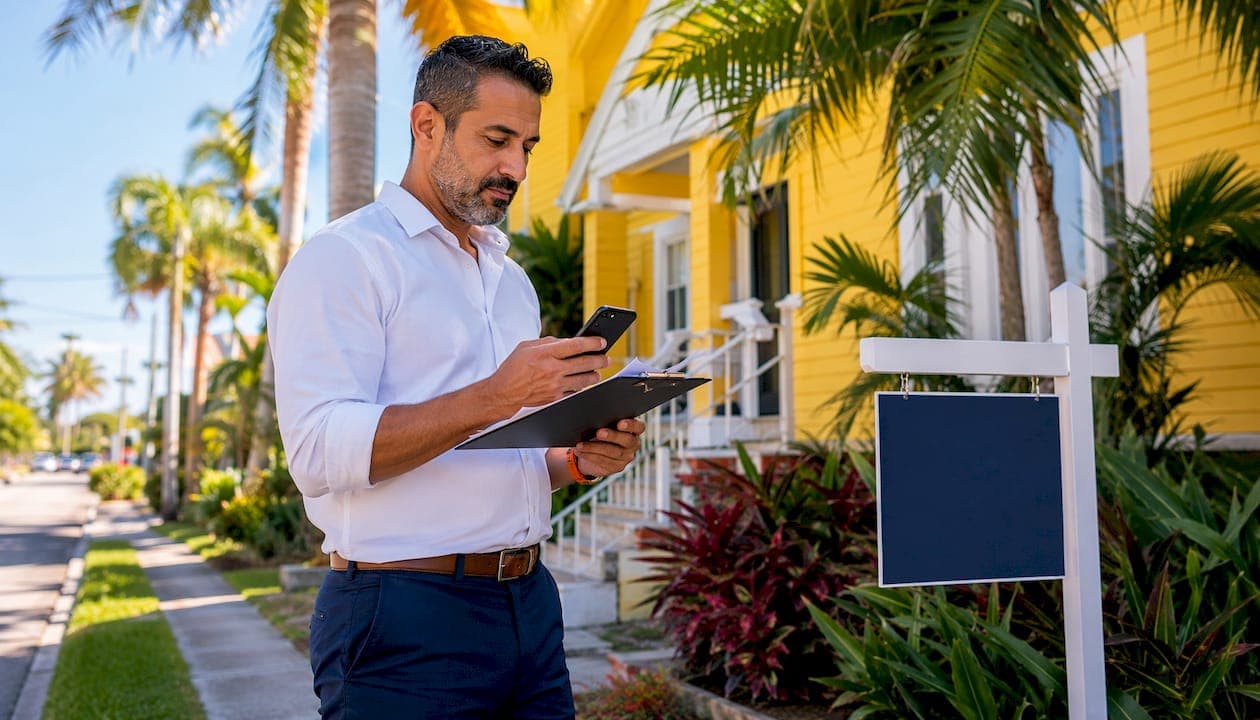
Texas and Florida are two of the strongest buyer's markets in the country right now, and that shift directly affects how quickly sellers can move a property. Miami leads the nation with substantially more sellers than buyers, Houston similarly has a large seller surplus, and Orlando has also seen a significant increase in seller numbers relative to buyers. In practical terms, buyers hold the negotiating power in nearly every major metro across both states. Sellers who understand this reality and price accordingly can still close fast. Those who don't are watching their listings sit.
Key conditions shaping fast home sale markets in Texas and Florida right now:
- Inventory is high. Florida holds more active listings than any other state; Texas ranks second with roughly 140,000 listings.
- Median days on market are longer than the national average. As of June 2026, median time on market in Texas is approximately 84 days, and in Florida about 91 days, both longer than the national average.
- Months of supply signal buyer control. Miami, Orlando, Jacksonville, and Tampa all have months of supply well above six months.
- Cash buyers close in 7–14 days, bypassing appraisal and financing delays entirely.
- Realistic pricing and property condition are the two variables sellers can actually control to speed up a sale.
Table of Contents
- What the current housing market looks like in Texas and Florida
- How sale speed varies across major Texas and Florida metros
- How sellers can actually close fast in these markets
- What Exitvest knows about selling quickly in Texas and Florida
- How seasons affect sale timing in Texas and Florida
- What a good real estate agent actually does to speed up a sale
- Legal and regulatory factors that affect how fast you can close in Texas and Florida
- Exitvest offers a direct path for Texas and Florida sellers who need to move fast
- Key Takeaways
What the current housing market looks like in Texas and Florida
Both states rode a pandemic-era wave that pushed prices and demand to historic highs. That wave has broken. Florida's active listings climbed from roughly 36,000 in early 2022 to more than 86,000 just one year later, a 143% year-over-year increase. Texas listings rose 109% over the same period. Supply caught up to demand faster than most markets anticipated.
The result is a buyer's market across virtually every major metro in both states. Nationally, there were 48.5% more home sellers than buyers in June 2026. In Texas and Florida, that gap is far wider.
| Metro | Months of Supply | Seller Surplus | Median List Price |
|---|---|---|---|
| Miami, FL | 9.7 months | 140% more sellers | — |
| Orlando, FL | 7.0 months | 98% more sellers | $399,000 |
| Jacksonville, FL | 6.3 months | — | $399,000 |
| Tampa, FL | 6.3 months | 70% more sellers | N/A |
| Houston, TX | N/A | 124% more sellers | — |
| Austin, TX | N/A | 101% more sellers | — |
This is a cooldown, not a crash. Experts note the current conditions reflect years of new construction finally catching up with demand, not a fundamental collapse in buyer interest. Mortgage rates remain within historical norms, and Florida Realtors data shows closed single-family home sales in Florida were up 9.3% year-over-year in June 2026. Buyers are still buying. They just have options now.
Key market trends sellers need to understand:
- Florida's statewide median sales price for single-family homes in June 2026 increased compared to the previous year.
- As of mid-2026, the Texas median list price is $379,000, while Florida's is $484,900.
- Condo-townhouse supply in Florida hit 8.1 months in June 2026, deeper into buyer territory than single-family homes.
- Nearly a third of sellers in some Florida metros have already cut prices.
How sale speed varies across major Texas and Florida metros
Market conditions are not uniform across either state. A seller in Miami faces a very different reality than one in San Antonio, and understanding those differences is what separates a fast sale from a prolonged one.

Miami leads the nation in buyer power with 9.7 months of supply and 140% more sellers than buyers. Inventory is up 24% year-over-year, and homes are sitting 16 days longer than last year. The luxury and international buyer segment that once kept Miami insulated is now showing cracks, with 57 homes pulled from the market for every 100 newly listed.
Orlando has 7.0 months of supply and nearly 20% more listings than a year ago. Homes are taking two weeks longer to sell, and nearly a quarter of listings have seen price cuts. The tourism-driven demand that surged during the pandemic has cooled noticeably.
Jacksonville is one of Florida's fastest-growing metros but still sits at 6.3 months of supply. Median listing prices have slipped 2.6% to $399,000, and close to 30% of homes have had price reductions. Sellers here are adjusting faster than in other markets.
Tampa mirrors Jacksonville at 6.3 months of supply, though its seller surplus has actually been shrinking month-over-month, down from 80% to 70%. That trend suggests some stabilization.
Houston is the most aggressive buyer's market in Texas, with 124% more sellers than buyers, up from 104% the prior month. Years of homebuilding have left buyers with real leverage on price, repairs, and concessions.
Austin sits at 101% more sellers than buyers. The tech-driven demand that made Austin a national headline during 2020–2022 has moderated as affordability constraints and remote-work normalization slowed in-migration.
San Antonio and Dallas round out the Texas picture at 117% and 96% seller surpluses respectively. San Antonio's median home price is around $309,000, making it one of the more accessible entry points in the Sun Belt.
How sellers can actually close fast in these markets
Pricing is the single biggest lever. Homes priced aggressively or showing visible deferred maintenance face longer time on market in markets already flooded with competing listings. Buyers have options. They will not overpay for a property that needs work when a move-in-ready alternative is two streets over.
Practical steps that move properties faster in Texas and Florida right now:
- Price below comparable listings, not at them. In a buyer's market, being the best value on the block matters more than holding out for a number.
- Address visible issues before listing. Fresh paint, clean landscaping, and minor repairs signal a well-maintained home without requiring a full renovation budget.
- Consider an as-is cash sale if repairs are not feasible. Cash buyers in Florida typically close in 7–14 days, skipping repair requests, appraisals, and financing contingencies entirely. Offers generally range from 55%–85% of home value.
- Get professional photography. In markets with high inventory, online presentation is the first filter buyers apply.
- Target cash buyers and investors actively. In slow markets, these buyers are the ones with both the motivation and the means to close quickly.
Pro Tip: Set a drop-dead date when reviewing offers. Experienced sellers use defined deadlines to force decisions and avoid the slow-bleed of a listing that lingers while better-qualified buyers move on. Always ask for proof of funds from any cash buyer before accepting an offer.
For sellers with inherited properties or homes in difficult condition, an as-is cash sale often makes more financial sense than spending months on a traditional listing that may still require price reductions.
What Exitvest knows about selling quickly in Texas and Florida
Exitvest works directly with homeowners across Texas and Florida who need to sell fast without the friction of a traditional listing. The situations vary: foreclosure timelines, inherited homes with deferred maintenance, vacant properties accumulating carrying costs, landlords done with problem tenants. What they share is a need for certainty and speed.
The Exitvest approach cuts through the variables that slow conventional sales. No appraisal contingencies. No financing fall-throughs. No repair negotiations that stretch a closing by weeks. Cash offers mean the transaction timeline is controlled by the seller, not by a lender's underwriting queue.
Key advantages of working with a cash buyer like Exitvest in these markets:
- Closing in days, not months. Cash transactions bypass the 30–90 day window typical of financed sales.
- No repairs required. Sellers facing deferred maintenance or structural issues can sell as-is without investing in a property they are ready to exit.
- Flexible closing dates. Sellers choose the timeline that fits their situation, whether that is two weeks or two months.
- No agent commissions. The offer is the offer, with no percentage carved out for listing fees.
Market reality check: Miami has 140% more sellers than buyers, Houston 124%, and Orlando 98%. In markets this tilted toward buyers, sellers who need speed cannot afford to wait for a financed buyer to clear underwriting. Cash offers remove that risk entirely.
Sellers facing foreclosure have even less margin for delay. A cash sale to stop foreclosure can close before a lender's deadline, preserving credit and avoiding the public record of a foreclosure filing.
How seasons affect sale timing in Texas and Florida
Both states follow seasonal patterns, though they are less pronounced than in northern markets where winter weather freezes buyer activity entirely.
Spring, specifically March through May, is the strongest listing window in Texas. Families buying before the school year drives demand, and the weather is favorable for showings before summer heat peaks. Florida's peak season runs slightly earlier, from January through April, when snowbirds and retirees from the Northeast and Midwest are actively shopping. This influx of out-of-state buyers, many of them cash-ready, is one reason Florida property sales tend to accelerate in the first quarter.
Summer slows things down in both states. Texas heat suppresses showings in July and August. Florida's hurricane season, which runs June through November, introduces insurance uncertainty that makes some buyers hesitant. Fall brings a modest rebound, but it rarely matches spring volume. Sellers who can time their listing for February through April in Florida, or March through May in Texas, are working with the current rather than against it.
What a good real estate agent actually does to speed up a sale
In a buyer's market, agent quality matters more than it did during the pandemic frenzy when almost anything listed sold quickly. A skilled agent brings three things a seller cannot easily replicate alone: accurate pricing data, buyer network access, and negotiation experience.
Accurate pricing is the most underrated contribution. An agent with current comparable sales data can tell you the difference between a price that attracts offers in the first week and one that sits for 60 days before requiring a reduction. That reduction almost always costs more than pricing correctly from the start.
Buyer network access matters because mortgage pitfalls and financing fall-throughs are a real risk in markets where buyers are stretching their budgets. An agent who pre-screens buyers and prioritizes those with strong pre-approval letters or cash reduces the chance of a deal collapsing at the finish line. For sellers who want the open market rather than a direct cash sale, a well-connected agent is the fastest path to a qualified buyer.
Legal and regulatory factors that affect how fast you can close in Texas and Florida
Both states have seller-friendly legal frameworks compared to many others, which is part of why transaction timelines can move quickly when the deal is structured correctly.
Florida requires sellers to disclose known material defects. Failing to disclose issues like roof damage, flooding history, or mold can expose sellers to post-closing liability and, in worst cases, rescission of the sale. Getting disclosures right upfront prevents delays caused by buyer demands for renegotiation after inspection.
Texas operates under a similar disclosure framework. The Texas Real Estate Commission's Seller's Disclosure Notice covers a broad range of property conditions, and buyers routinely use the inspection period to request repairs or price concessions. Sellers who price as-is and market to cash buyers can often waive the inspection contingency entirely, removing one of the most common sources of closing delays.
Neither state has a state income tax, which removes one layer of complexity from the transaction. Both states do require title searches and title insurance, which typically add 2–4 weeks to a conventional closing timeline. Cash sales with a title company can compress that window considerably.
For sellers in foreclosure, Texas and Florida each have specific timelines governing the foreclosure process. Acting before the lender files a notice of default preserves the most options, including a voluntary sale at market or near-market value rather than a distressed auction.
Exitvest offers a direct path for Texas and Florida sellers who need to move fast
If you are sitting on a property in Texas or Florida and the traditional listing process feels like the wrong tool for your situation, Exitvest is built for exactly that gap. No open houses, no repair negotiations, no waiting on a buyer's lender to approve financing.
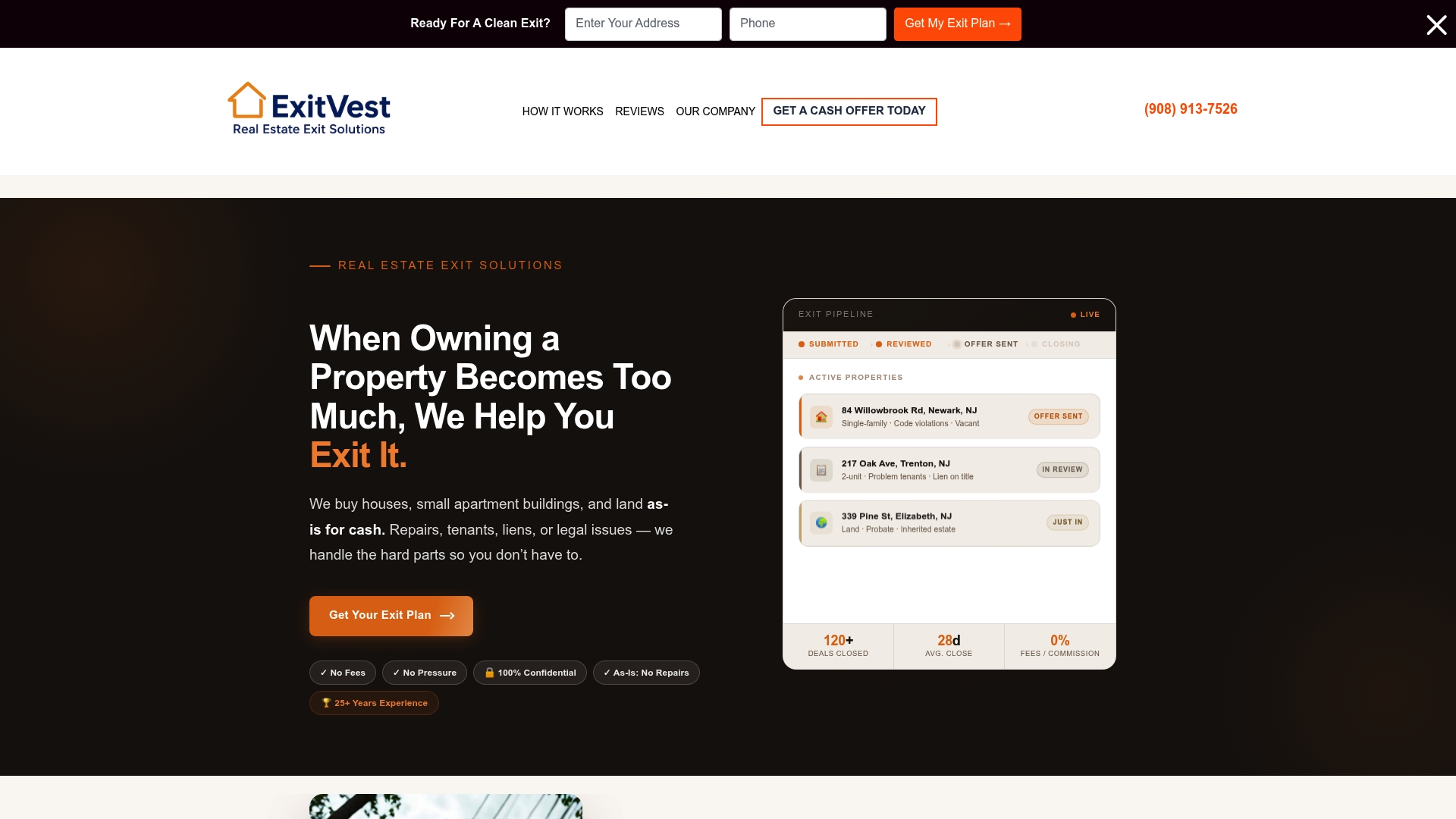
Exitvest buys houses, land, and small apartment buildings across Texas and Florida with fair cash offers and closing timelines you control. Whether you are dealing with foreclosure pressure, an inherited property you never planned to manage, a vacant home draining your finances, or tenants making a traditional sale impossible, the process is straightforward. You describe your situation, Exitvest makes an offer, and you choose when to close. Visit exitvest.com/situations to see how it works and get a no-pressure cash offer on your property.
Key Takeaways
Texas and Florida sellers who price realistically and target cash buyers close significantly faster than those waiting for financed offers in markets where buyers outnumber motivated sellers by wide margins.
| Point | Details |
|---|---|
| Buyer's market conditions | Miami has 140% more sellers than buyers; Houston 124%; Orlando 98% — buyers hold the power. |
| Days on market | As of June 2026, median time on market in Texas is approximately 84 days, and in Florida about 91 days, both longer than the national average. |
| Cash buyer advantage | Cash buyers in Florida and Texas close in 7–14 days, with offers typically ranging from 55%–85% of home value. |
| Seasonal timing | Florida's fastest window is January through April; Texas peaks March through May for listing activity. |
| Exitvest option | Exitvest provides fair cash offers and flexible closing dates for Texas and Florida sellers needing speed. |